In September 2026, Geby Jaff, a researcher at cryptanalysis benchmark firm Vals AI, fed an unsolved 370-year-old historical cipher into Claude Fable 5.1. With zero human intervention, the model consumed 176k tokens and recovered the complete plaintext in just 44 minutes. High-throughput, long-horizon reasoning compressed days of tedious, soul-crushing human inspection into the span of a lunch break.
44 Minutes to Crack a Three-Century Mystery
The cipher itself is rooted in a unique historical context. In 1653, Scottish Royalist Sir Thomas Urquhart concluded his eccentric treatise Logopandecteision with an encrypted epilogue known as the Cyphral Distich. The cryptogram consists of two lines of 32 numbers each—64 numbers in total. Short ciphertext samples are notoriously resistant to pure mathematical attacks: with such a small set of characters, standard statistical frequency tools have virtually nothing to latch onto.
In 1899, the authoritative journal Notes and Queries published the cipher as an open challenge to the public. Over the ensuing century and a quarter, it lingered as an irritating thorn in the side of historical cryptanalysis. Renowned crypto-historian Klaus Schmeh included it on his prestigious list of the Top 50 unsolved encrypted messages. Generation after generation of expert cryptographers tried their hand at cracking it, exhausting classical methods: letter frequency analysis, substitution checks, and complex polyalphabetic and homophonic substitution schemes. Human experts had instinctively assumed an intricate mathematical labyrinth, squandering immense energy and compute on convoluted algebraic verification.
Fable 5.1 approached the problem with a completely different logic. Free from the entrenched academic biases of human experts, it refused to get bogged down in any single mathematical dead end. Over the course of the entire 44-minute run, the operator provided zero hints or nudges. This autonomous, zero-interjection reasoning demonstrated an emerging reality: in vast, cross-domain information retrieval tasks, machine resilience in trial and error cuts deeper than narrow algorithmic depth.
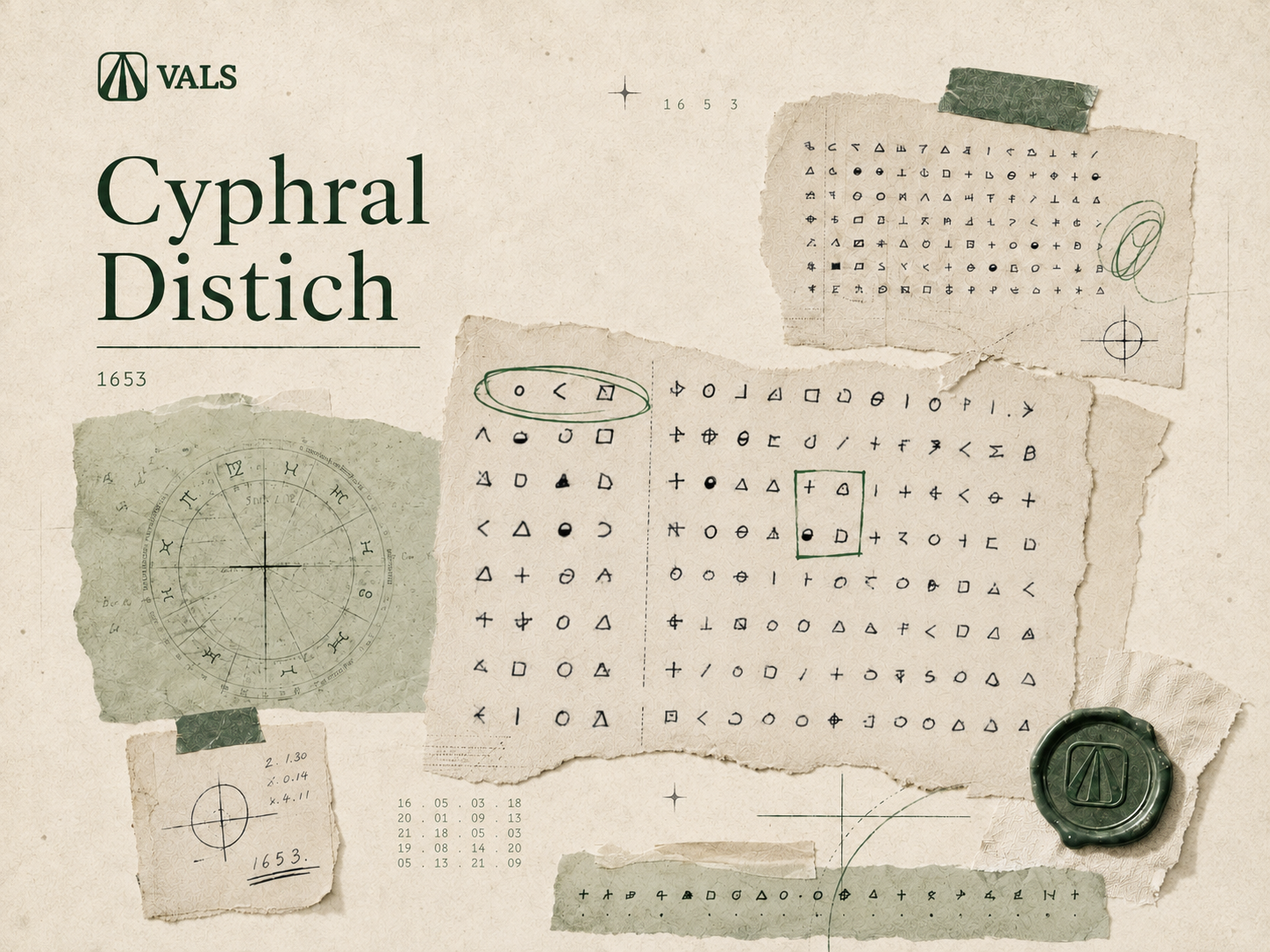 Figure: System interaction interface used by Geby Jaff to solve the cipher with Fable 5.1. Source: Vals AI
The Secret Hidden in Plain Book Pages
When the secret behind the 64 numbers finally surfaced, the key turned out to reside in the textual arrangement of the book itself. In his post-mortem report, Jaff noted that the solution was “quite embarrassing for humans in hindsight.” A clever acrostic word-index game had outwitted generations of scholars whose sophisticated academic frameworks had blinded them to the obvious.
The model seized upon two ordinary clues tucked away in the text. First was a glaring numerical coincidence: earlier in the book, Urquhart had gone out of his way to emphasize the number thirty-two, remarking that “there can no number like that of two and thirty … be pitched upon.” Crucially, the cipher was printed immediately after 32 lengthy “Proquiritations” (formal petitions). Second, the verse accompanying the cipher explicitly promised that an honest reader would discover “his own heart’s wishes, and the Author’s minde.” To a human reader, this might have seemed like flowery rhetorical filler; but the model treated every block of text with equal weight, refusing to skim past seemingly trivial prose.
The decoding mechanism was disarmingly simple: the i-th number in each cipher line serves as a word index into the i-th Proquiritation, taking the first letter of that word. The resulting plaintext read: “O GOD UPHOLD KING CHARLS THE SECOND AND / MAKE HIM THE SUPREME RULER OF THIS LAND” The two 32-letter lines form a rhyming couplet (and / land), perfectly matching the promised “distich.” The staunchly Royalist prayer aligned cleanly with Urquhart’s known political sympathies. This self-verifying structure provided the system with an unambiguous reward signal, allowing it to converge rapidly once it hit upon the correct hypothesis.
Compute Wipes Out the Cost of Patience
Fable 5.1 bridged the attentional gap that so often stalls historical inquiry. As Jaff pointed out, many problems of this caliber have historically been bottlenecked by human attention. Cracking them requires someone willing to dedicate hours or days to trudging through obscure, arcane literature and testing ideas that initially look unpromising.
Actual historical cipher research is fraught with exhausting, unglamorous friction. Researchers must navigate erratic 17th-century typesetting, decipher archaic Early Modern English, and chase endless citation threads that lead directly into brick walls. This painstaking physical labor rapidly depletes the scarce attentional reserves of biological researchers. When an expert spends three grueling days without making an inch of progress—unable even to verify the preliminary assumptions of a hypothesis—cutting one’s losses is often the only rational choice.
LLMs relieve humans of this war of attrition. A throughput of 176k tokens is a trivial task dispatch for modern cloud infrastructure. The model tirelessly tests every branching path until it uncovers the right thread. When compute replaces scholars in combing through monotonous historical archives, neglected puzzles buried by time can finally be cleared at scale.
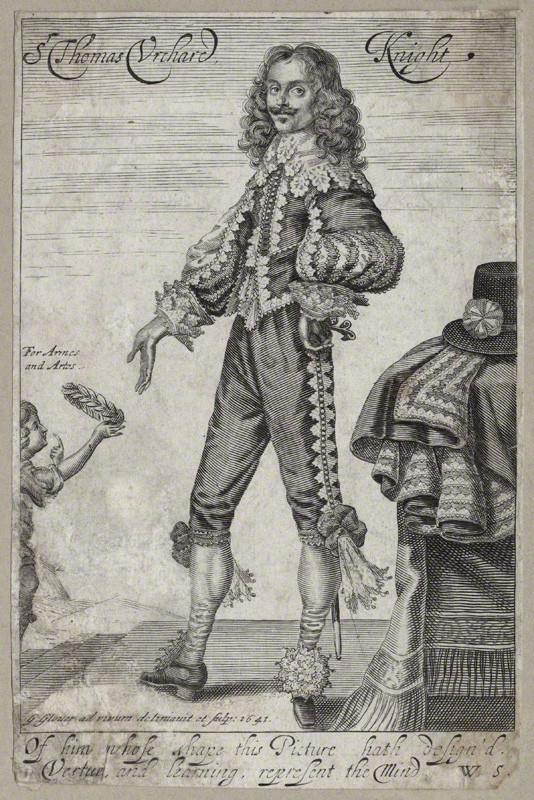 Figure: Portrait of Sir Thomas Urquhart engraved by George Glover in 1641. Source: Wikimedia Commons
Deciphering 285 More Numbers in a Second Cryptogram
The system demonstrated that this breakthrough was reproducible. Following its initial triumph, the model turned to a second, larger cryptogram by Urquhart: the Cyphral Octastich from his 1652 work The Jewel. Spanning 285 numbers, this much longer cipher served as a rigorous test of algorithmic generalization, confirming that the initial success was an engineering methodology rather than a fluke.
In this second cipher, the rule had adapted. Instead of indexing into paragraphs, the k-th number indexed into page k of the book. Across 275 readable positions, the model scored 231 exact first-occurrence hits—an 84% hit rate that confirmed the validity of the decoding scheme. The machine’s retrieval precision across massive texts far exceeded what unaided human eyes could achieve.
Nine letters remained unresolved. Early movable type printing was plagued by mismatched pagination, ink smudges, and untranscribed Greek passages. Jaff noted that resolving those final positions with ±1 page-offset discrepancies would require physical access to an original copy or the 1983 Jack & Lyall facsimile edition. Where digital compute hits the physical archive, historical printing defects construct a hard boundary.
Near-Zero Trial-and-Error Costs Change the Game
Over the preceding months, Jaff had attempted to elicit solutions to unsolved ciphers from multiple frontier models, but none had produced a cross-verified solve. Single-turn reasoning networks lacking long-horizon reflective feedback loops simply cannot handle complex tasks requiring iterative self-correction.
Fable 5.1 dramatically reduced the overhead of exploring dead ends. Its problem-solving loop was fundamentally straightforward: generate a hypothesis, read the source text, verify against constraints, and pivot immediately upon failure. By driving the marginal cost of trial and error down toward zero, the cluster invalidated in a single second paths that would have cost a human researcher a full week of manual toil.
This breakthrough spotlights a new reality at the technological frontier: what blocks discovery is rarely a lack of intelligence, but the finite bandwidth and fragile patience of human beings. As long as compute can absorb the heavy tax of exhaustive trial and error, obscure historical riddles and neglected conjectures will increasingly fall to autonomous agents.
Reference Links:
- Vals AI Report
- Hacker News Discussion (item?id=49688695)
- Klaus Schmeh’s List of Unsolved Ciphers