Donate Half a Liver and It Regrows to Full Size Within Months
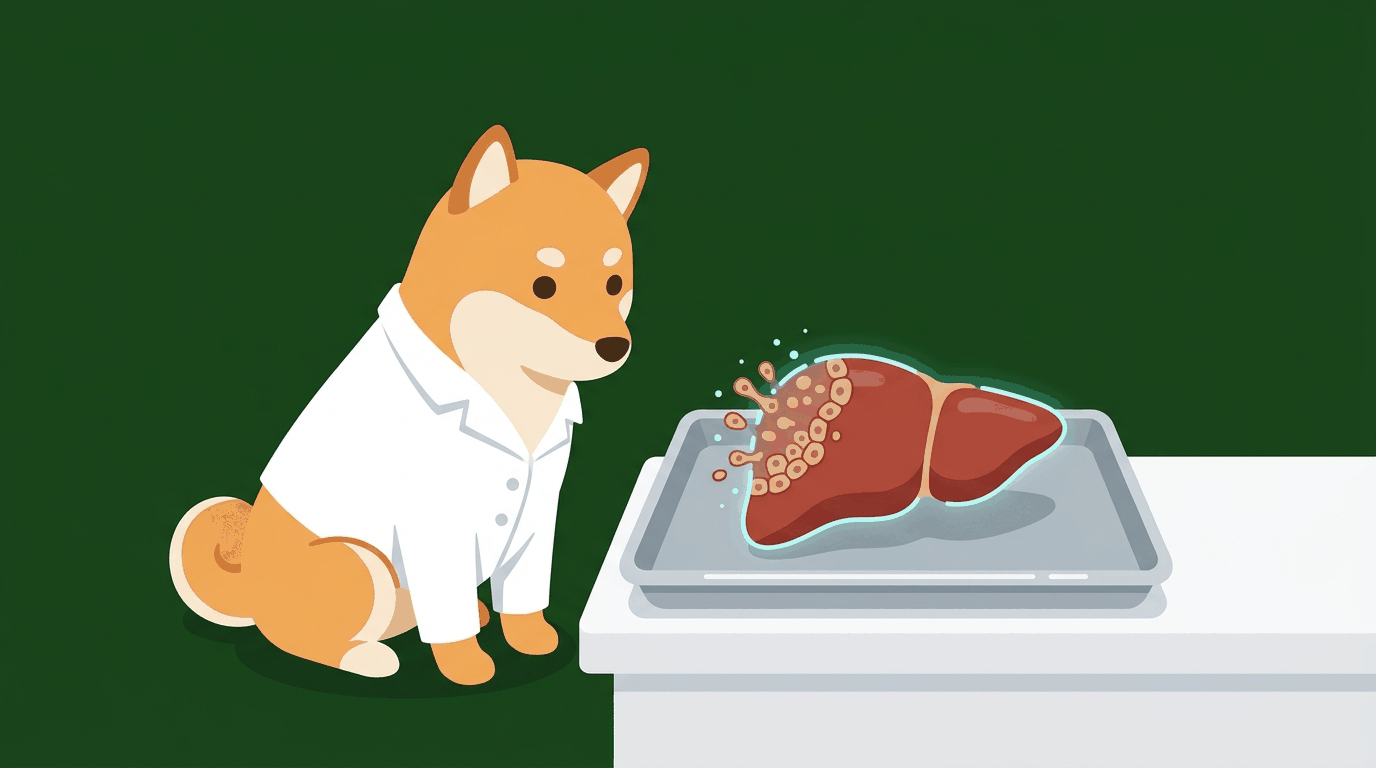
Donate half of your liver to someone else, and within just a few months, the remaining tissue will autonomously regrow back to its original mass and volume. When damaged, it rarely leaves behind fibrous scar tissue; even as the human body ages, the liver’s capacity to process toxins diminishes remarkably slowly. This staggering regenerative prowess can easily lead one to believe that biological organisms are capable of continuous, hot-swappable updates. In biological systems architecture, however, the liver is an astonishingly rare exception.
Most other visceral modules in the body behave far more like consumable hardware, steadily depreciating from the moment they are powered on. Adult kidneys enter an irreversible, lifelong decline. Everyday missteps—like consuming excessive vitamin D during a cold or popping ibuprofen while dehydrated—can inflict lasting damage on renal tubules. Once sustained, this injury generates permanent scar tissue, locking in a lifelong drop in filtration capacity. Similarly, receding gums never creep back up your teeth.
This performance disparity sparked intense discussion on Hacker News, racking up 186 upvotes and 128 comments. Developers with engineering backgrounds honed in on a singular question: why is the liver uniquely endowed with this superpower? A post by dynomight laid out the core thesis: most organs lack regenerative capacity because the body wires tissue renewal and runaway cancer to the exact same circuit breaker. The liver was granted an exorbitant regenerative budget, but it pays for it with a drastically elevated vulnerability to oncogenic mutations caused by relentless toxin filtration.
The 70-Division Limit: Cellular Failsafes and Telomere Burnout
Deep inside every cell nucleus lies an immutable hard-coded limit. The tips of our chromosomes carry repetitive sequences known as telomeres, which lose a fragment every time a cell undergoes division and replication. Once a cell exhausts 50 to 70 replication cycles—the classic Hayflick limit—its telomere reserve hits zero, triggering an immediate shutdown of division commands and locking the cell into permanent senescence. This molecular pedometer is precisely why most human tissues cannot regenerate lost limbs. While a severed salamander leg sprouts brand-new bone and muscle, a lost human limb can only be patched over with crude scar tissue.
The human genome does carry telomerase, an enzyme capable of extending telomeres indefinitely. Yet once embryonic development is complete, this cellular fountain of youth is locked away in cold storage. With the exception of hematopoietic stem cells, germline cells, and a select handful of immune cells, conventional somatic tissues are completely stripped of execution privileges. The organism does not lack the technical stack for perpetual self-repair; rather, it deliberately shuts down these API endpoints in adulthood to safeguard system stability.
Allowing telomeres to burn out with each division serves as the body’s primary firewall. Any cancerous cell attempting to secure an evolutionary advantage of infinite proliferation must forcibly breach these permission boundaries to reactivate telomerase. By strictly curbing the regenerative bandwidth of healthy tissue, the body starves burgeoning tumors of their primary fuel.
Arrested Neurons: Trading Permanent Scars for Tumor Immunity
Once human development reaches maturity, cardiomyocytes in the heart and neurons in the brain permanently cease cell division. This evolutionary tradeoff means that cell death from a myocardial infarction leaves an unpatchable void—dead cells leave behind structural defects that can never be restored. Yet this heavy hardware depreciation buys a definitive defensive payoff: primary heart cancers are virtually nonexistent in clinical oncology, and the brain tumors we frequently hear of rarely arise from mature neurons themselves.
Organ repair fundamentally relies on rapid cell proliferation. But every time a DNA strand unwinds and replicates, the odds of transcriptional and copying errors climb. This cumulative probability forms the raw feedstock of oncogenesis. On the same day, The Economist published an editorial arguing that orthopedic surgeries for back and shoulder pain frequently do more harm than good. From a clinical perspective, the analysis arrived at the same underlying conclusion: for biological structures that require time to heal slowly, aggressive external intervention often yields negative returns. Evolutionary algorithms calculated long ago where high-frequency updates are worth the cost.
Organ transplant rejection statistics underscore the severity of this conservative architecture. Even when a kidney transplant recipient adheres strictly to lifelong immunosuppressive therapy, the 10-year rejection rate still hovers near 30%. The immune system’s defensive thresholds are tuned to extreme sensitivity, maintaining maximum hostility against foreign, actively proliferating cell clusters—even when those clusters are the very filtration pumps keeping the host alive.
Cramming 100 Square Meters into 5 Liters: The Lung’s Architectural Trap
Among all anatomical modular assignments, the lung was dealt a catastrophic hand. To fit roughly 100 square meters of gas exchange surface area inside a physical thoracic cavity of barely 5 liters, the lungs evolved into a hyper-compressed fractal network of microscopic airways. Pushing spatial packing to its absolute physical limits makes the design acutely fragile. Unlike the liver, the lung cannot simply hyperproliferate massive blocks of replacement tissue when injured locally, all while being bombarded daily by ambient airborne chemical toxins.
Frequent exposure to a hazardous environment, coupled with an intricate geometry that forbids high-frequency cell turnover, leaves the lungs at an extreme disadvantage in the war on cancer. They bear an oncological risk profile that dwarfs that of the heart or kidneys.
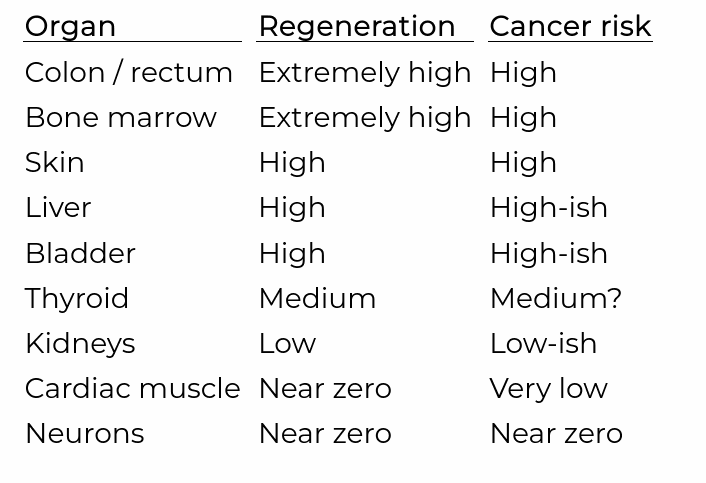 Figure: The trade-off between regenerative capacity and cancer risk across organs. Source: dynomight.net
Examined through a systems engineering lens, however, the body’s most ingenious defense mechanism belongs not to the liver, but to the small intestine coiled within the abdomen. The small intestine accounts for roughly 90% of the digestive tract’s surface area, and its epithelial lining undergoes a complete overhaul every few days. Despite directly confronting concentrated digestive sludges and astronomical bacterial loads, small intestinal tissue almost never develops primary carcinomas.
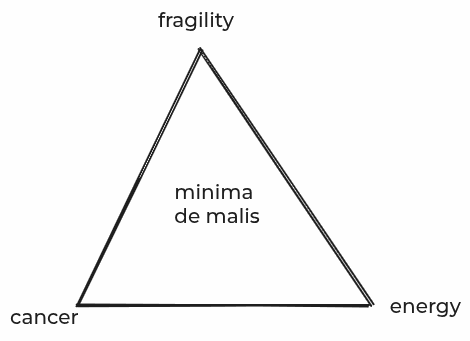 Figure: The three-way trade-off between tissue regeneration, cancer prevention, and energy expenditure. Source: dynomight.net
The intestine’s architectural solution decouples “producing new cells” from “facing environmental hazards” into two completely isolated pipelines. The outermost cells lining the gut lumen never undergo mitosis; their proliferative authority is securely sequestered within stem cell depots buried at the base of the intestinal crypts. These stem cells slowly churn out transit-amplifying cells, which divide 4 to 6 consecutive times as they migrate upward toward the villus tip, producing a batch of 16 to 64 mature epithelial cells.
The differentiated cells pushed to the front line to absorb nutrients live for merely a few days. They are shed from the tips of the villi and promptly broken down by digestive enzymes. Even if a cell incurs dangerous oncogenic mutations under toxic insult while on duty, it is already riding a one-way conveyor belt toward dissolution. By shielding master genomic copies in a protected subterranean vault and assigning disposable short-lived containers to absorb high-risk traffic, the small intestine sustains an astonishing turnover rate while eliminating the time window necessary for malignant mutations to accumulate.
Menopause as a System Circuit Breaker: Halting Germline Mutation
Beyond cellular firewalls, evolution has deployed an identical circuit-breaker pattern across entire life spans. Almost all known non-human great ape populations retain reproductive viability for nearly their entire adult lives. Humans, by contrast, uniquely evolved menopause. Across the mammalian class, this trait is exceptionally rare, shared only with five toothed whale species—killer whales, short-finned pilot whales, belugas, false killer whales, and narwhals—as well as an isolated population of wild chimpanzees in Uganda.
Pulling the plug on reproductive machinery at a specific age shuts down the compounding burden of germline mutations that accompany advancing years. In his essay, dynomight characterizes this antagonistic relationship between regeneration and malignancy as an ambitious, speculative unifying theory of biology—even while conceding that the framework cannot yet neatly explain the confounding mechanics of pancreatic cancer.
The human liver is battered daily by a deluge of metabolic toxins. It clings to its immense regenerative potential because, without rapid structural rebuilding, continuous biochemical onslaught would cause immediate death from acute toxic overload. It pays a punishing oncological toll merely to skate along the survival threshold. While the small intestine relies on decoupled architecture to cleanly isolate regenerative throughput from cancer risk, the liver survives by leaning directly into unfettered cell division, bearing the daily risk of lethal failure.
References:
- Hacker News Discussion (item?id=49832938)
- dynomight.net Original Post
- The Economist: Why surgery for back and shoulder pain often does more harm than good