Scooping litter boxes and topping up bowls for domestic companions, most pet owners assume cats are among the most thoroughly cataloged creatures on Earth. From British Shorthairs napping in living rooms to lions prowling savannas and zoos, every member of the felid family tree appears long accounted for.
In 2026, however, geneticists extracting DNA from an unassuming cat at a South American wildlife sanctuary completely upended that certainty. Genetic data revealed that the tiny feline, weighing just two kilograms, represents an entirely new living species of wildcat.
This milestone marks the first time in more than a century that science has formally identified and described a new living wild felid species. The last such taxonomic discovery dates back roughly a hundred years to the Uruguayan pampas cat. Even among our most familiar animal families, living wild members have managed to stay hidden from science for generations.
A Decade in a Shelter: A Bolivian Stray Breaks a Century of Taxonomic Silence
The discovery began at a local wildlife rescue center in Bolivia. Among its residents was a 10-year-old male cat named Tigrino. Tigrino had spent roughly a year kept as a domestic pet before being surrendered to the rescue center, where dedicated caretakers looked after him for the next decade.
To sanctuary staff, Tigrino appeared to be an ordinary tiger cat (Leopardus, a genus of small spotted wildcats native to Central and South America). But conservation biologist Paola Nogales-Ascarrunz looked closer. During routine care, she noted subtle variations in Tigrino’s spot arrangement, tail rings, and facial contours that did not quite match known tiger cat species.
To resolve his ancestry, researchers took a blood sample from Tigrino, alongside tissue from another wild female cat that had been rehabilitated and released into the wild. These two ordinary rescue cats would soon become the pivotal keys to untangling a century-old taxonomic puzzle.
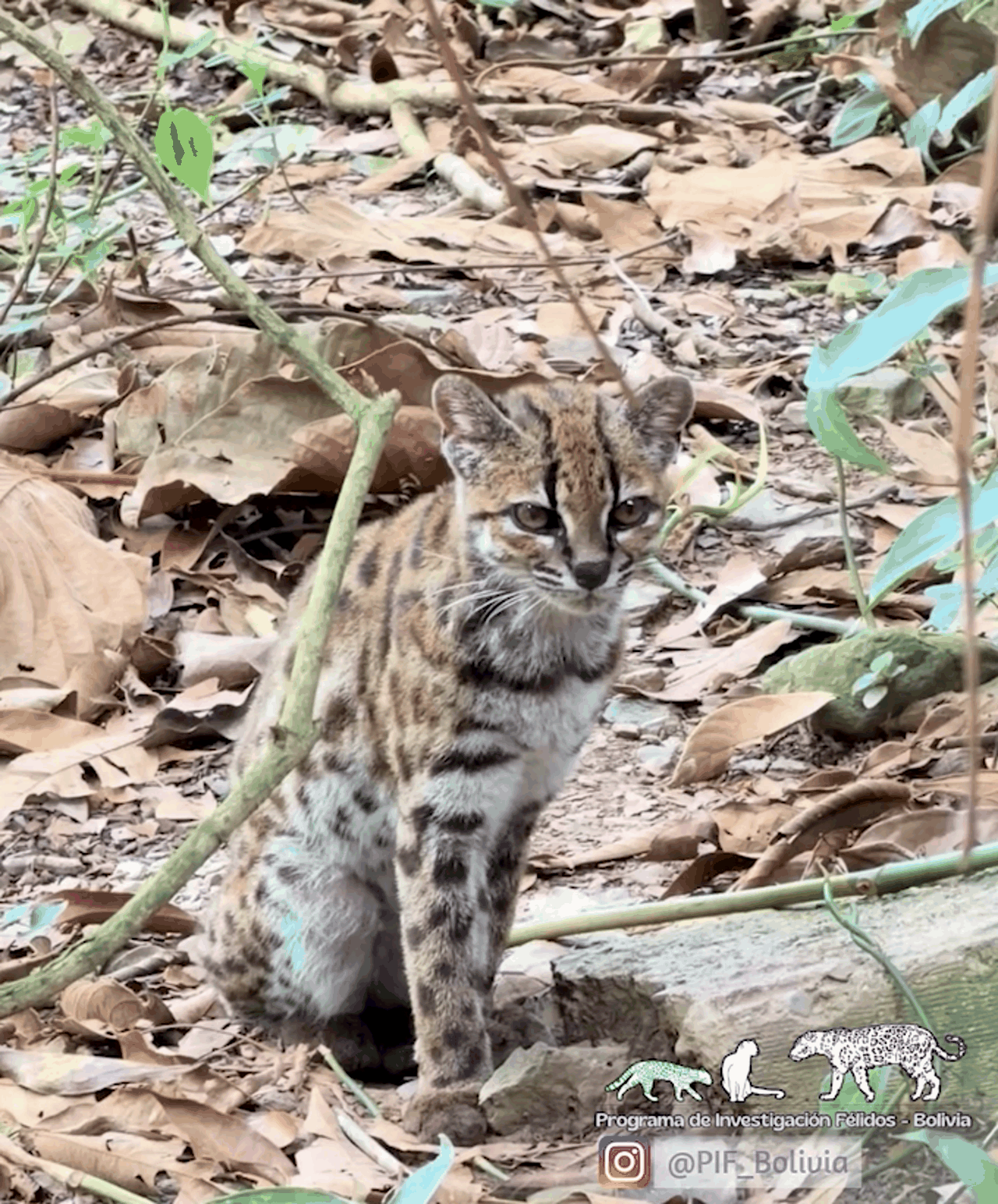 Figure: Tigrino, a male individual who lived for years at a Bolivian wildlife rescue center. Source: Science News (Rescue Center footage)
Museomics Meets Genetics: How Researchers Uncovered an Unexpected Fifth Species
The genetic investigation was spearheaded by evolutionary biologist Jonas Lescroart and his colleagues at the University of Antwerp in Belgium. The team initially set out to apply whole-genome sequencing (phylogenomics) to resolve the tangled evolutionary relationships across South American tiger cats.
Historically, wild tiger cats have displayed immense coat variation across wide geographical ranges, sparking long-running taxonomic debates. Lescroart’s team expected the complex to resolve into two to four distinct species.
When the genomic analyses finished, the outcome surprised everyone involved. The phylogenetic tree cleanly branched into five distinct lineages—and one of them matched no known tiger cat species. The newly uncovered species has been formally described as Leopardus tilcayo (the Bolivian cloud forest tiger cat).
Weighing Just Two Kilograms: High-Altitude Cloud Forests Hid the Secret Feline
In physical stature, Leopardus tilcayo is genuinely miniature. Adult individuals average only about two kilograms (roughly 4.4 pounds)—comparable to a two-month-old domestic kitten or a pair of one-liter water bottles.
The cat features a slender body, an intricate spotted coat, and a long tail banded with dense rings. Its native home lies within the Yungas cloud forests of Bolivia, high-altitude ecosystems cloaked in near-perpetual fog and rain.
The cloud forest environment is rugged, steep, humid, and covered in dense canopy. These formidable natural barriers severely restrict human encroachment, creating an isolated refuge where Leopardus tilcayo managed to elude scientific detection for more than a hundred years.
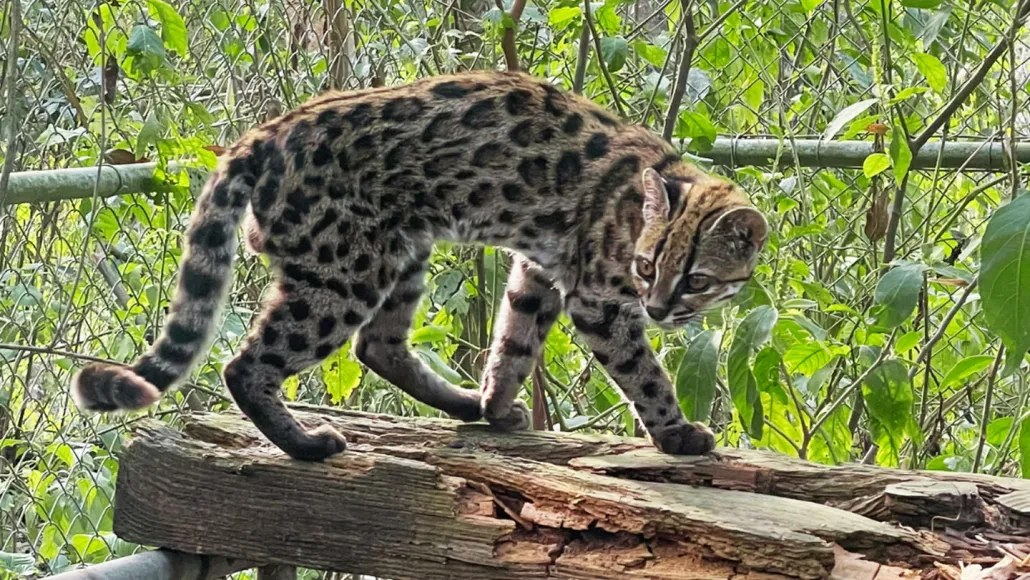 Figure: The newly confirmed wildcat species, Leopardus tilcayo, identified in the Bolivian cloud forests. Source: Science News
Revisiting Century-Old Museum Specimens to Pierce the Fog of Misidentification
Two shelter cats were not enough on their own to establish a new species. To substantiate their findings, the research team turned to museomics—extracting and analyzing ancient and historical DNA from long-preserved museum specimens.
The researchers surveyed historical tiger cat specimens housed in natural history museums across the globe, some collected decades or even a century ago. They combed through archives and matched excavation records, discovering that specimens of Leopardus tilcayo had been preserved in museum collections for generations. Because they closely resembled ordinary tiger cats, past curators had consistently misidentified them as known species.
Where human eyes were misled by convergent coat patterns, genomic sequencing stripped away the disguise. Comparing historical specimens with modern DNA data finally allowed this overlooked cat to emerge from the archives.
Wild Populations Remain a Mystery: A Belated Discovery Spotlights Forest Conservation
While Leopardus tilcayo has earned formal taxonomic recognition, our understanding of its biology is only just starting. Biologists cannot yet provide reliable estimates of its wild population or map the precise boundaries of its remaining range.
The Yungas cloud forests of Bolivia face severe threats from ongoing deforestation and regional climate change. The newly confirmed species may already be endangered before scientists have the opportunity to study its wild behavior and ecological role. Safeguarding South America’s montane forests is crucial for preserving this delicate biodiversity.
Lead researcher Jonas Lescroart remarked that the team never anticipated such intense global interest, adding that he hopes humanity will not have to wait another century to describe the next cat species. This two-kilogram wildcat stands as a humbling reminder of nature’s hidden complexity, emphasizing that habitat preservation remains an urgent priority.
DNA sequencing from two shelter cats broke a century-long silence on the felid evolutionary tree. The confirmation of Leopardus tilcayo shows that even within our most celebrated and familiar animal lineages, the wild corners of our world still hold undiscovered wonders.
References:
- Science News report: New living tiger cat species described for the first time in over 100 years
- Research paper: Phylogenomics and museomics reveal five distinct species of tiger cats in South America