Out-of-State Plates Yield 91 Pounds of Meth
In May 2026, Tulsa County Sheriff’s Deputy Freddie Alaniz pulled over a Mazda SUV bearing California license plates on the highway. A subsequent search uncovered 91 pounds of methamphetamine. On paper, the seizure looked like a textbook law enforcement triumph.
In the courtroom, however, the narrative unraveled. The initial stop was not triggered by speeding, reckless driving, or any identifiable traffic violation. As the deputy admitted during testimony, he initiated the stop simply because “other than having California plates, he couldn’t see any other reason.” Faced with that admission, the judge ruled the 91 pounds of methamphetamine fruit of an unlawful search and threw out the evidence entirely.
Immediately after the stop, the deputy turned to his patrol car terminal to search the Flock automated license plate reader (ALPR) network. The system instantly returned more than 50 cross-country travel records for the woman over the preceding month. The deputy used that historical tracking data to spot supposed discrepancies with her verbal itinerary, using them as pretext to tear through the vehicle. Law enforcement’s frictionless access to mass surveillance transformed what should have been an ordinary traffic stop into an unconstitutional interrogation.
Tracking the Entire Public Without a Warrant
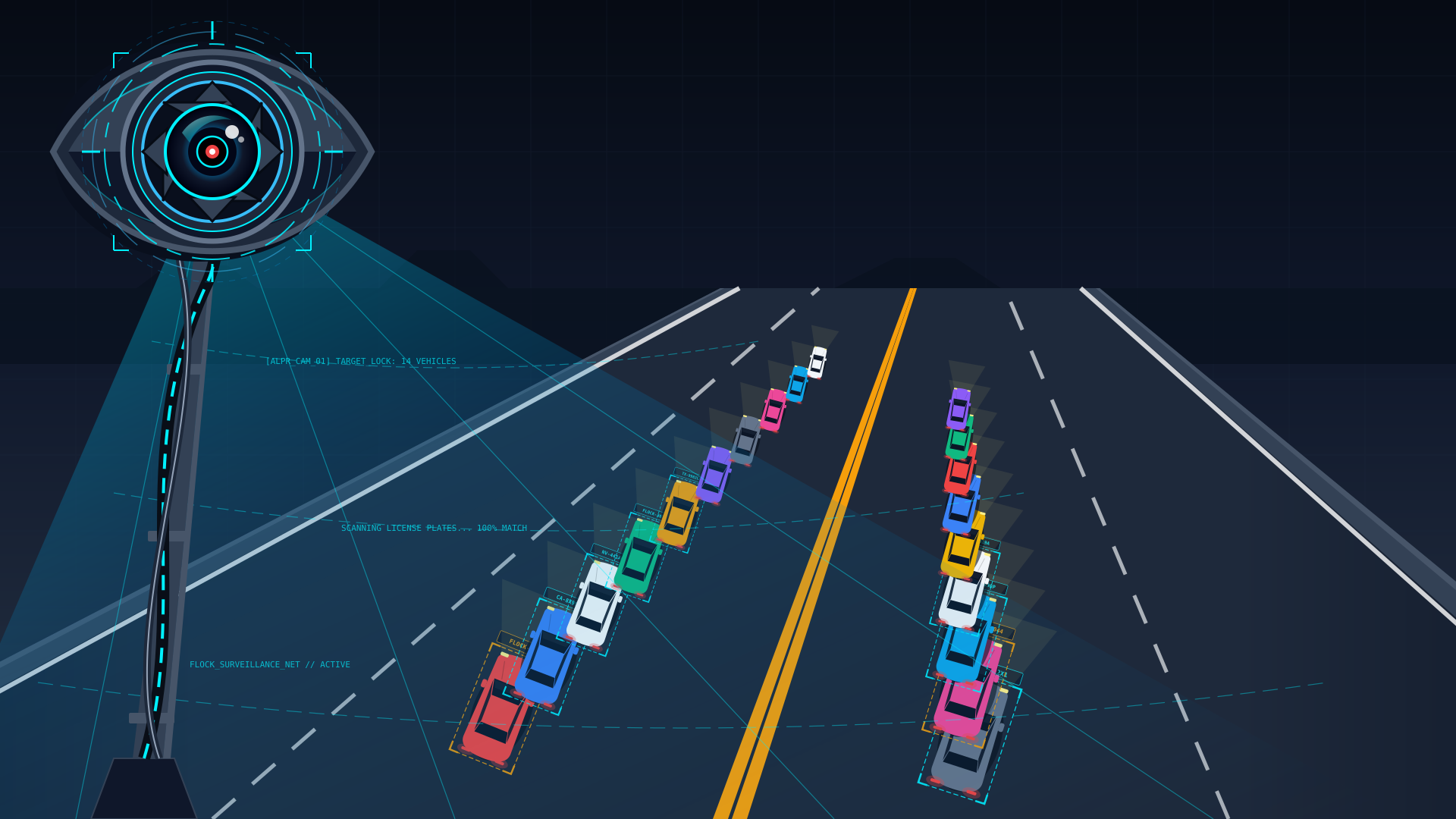
Flock has quietly expanded into an always-on, nationwide dragnet. Audit logs reveal that law enforcement agencies execute more than 100,000 queries through Flock’s system every month—none of which require a warrant. When the marginal cost of tracking falls to zero, government surveillance inevitably expands to occupy every unpoliced space.
U.S. District Judge Sara Hill of Oklahoma ruled that police searches of the Flock database violate the Fourth Amendment, explicitly characterizing the network as “indiscriminate mass surveillance.” Under the “fruit of the poisonous tree” doctrine, both the surveillance records and the seized narcotics were formally suppressed. The prosecution’s cornerstone evidence was severed at the root.
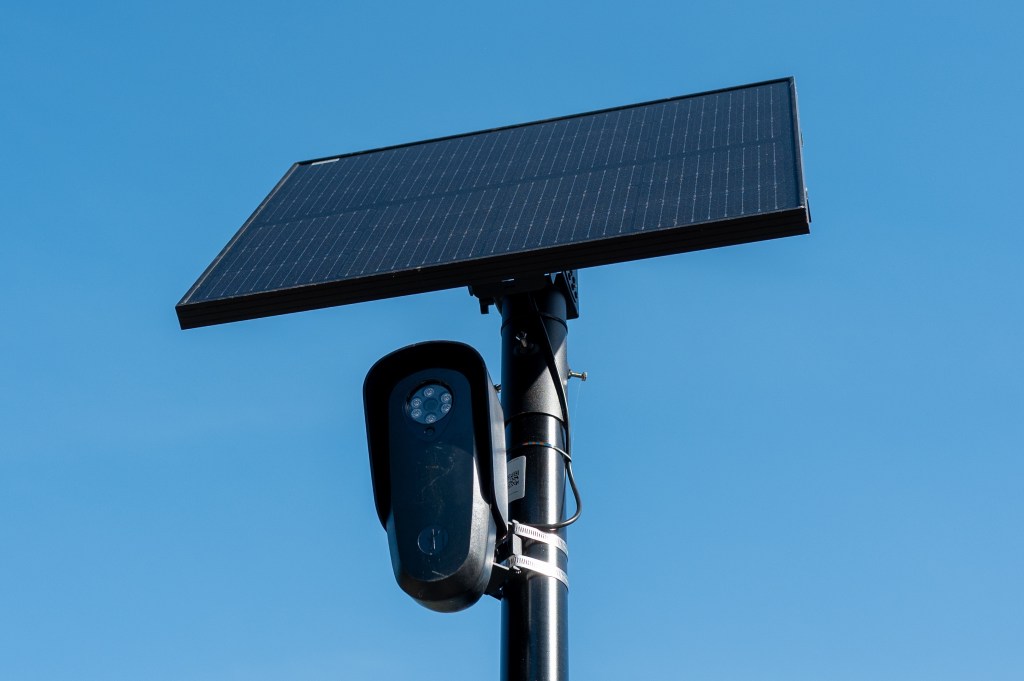 Figure: A solar-powered Flock automated license plate reader mounted on a roadside pole in Pleasant Hill, California. Source: Smith Collection/Gado via Getty Images / TechCrunch
A 1983 Precedent Cannot Support a Modern Surveillance Dragnet
During the suppression hearing, the government rested its defense on a 1983 Supreme Court precedent (United States v. Knotts), which asserted that an individual traveling on public thoroughfares has no reasonable expectation of privacy in their movements from place to place. The argument was simple: whatever happens in public view is fair game.
Judge Hill rejected that antiquated reasoning. In 1983, police officers could not blanket every street corner with millions of connected, automated cameras capable of logging, recognizing, and permanently cataloging the public’s movements. Using pre-internet legal theories to endorse a modern automated dragnet allows emerging technology to quietly dismantle core constitutional protections.
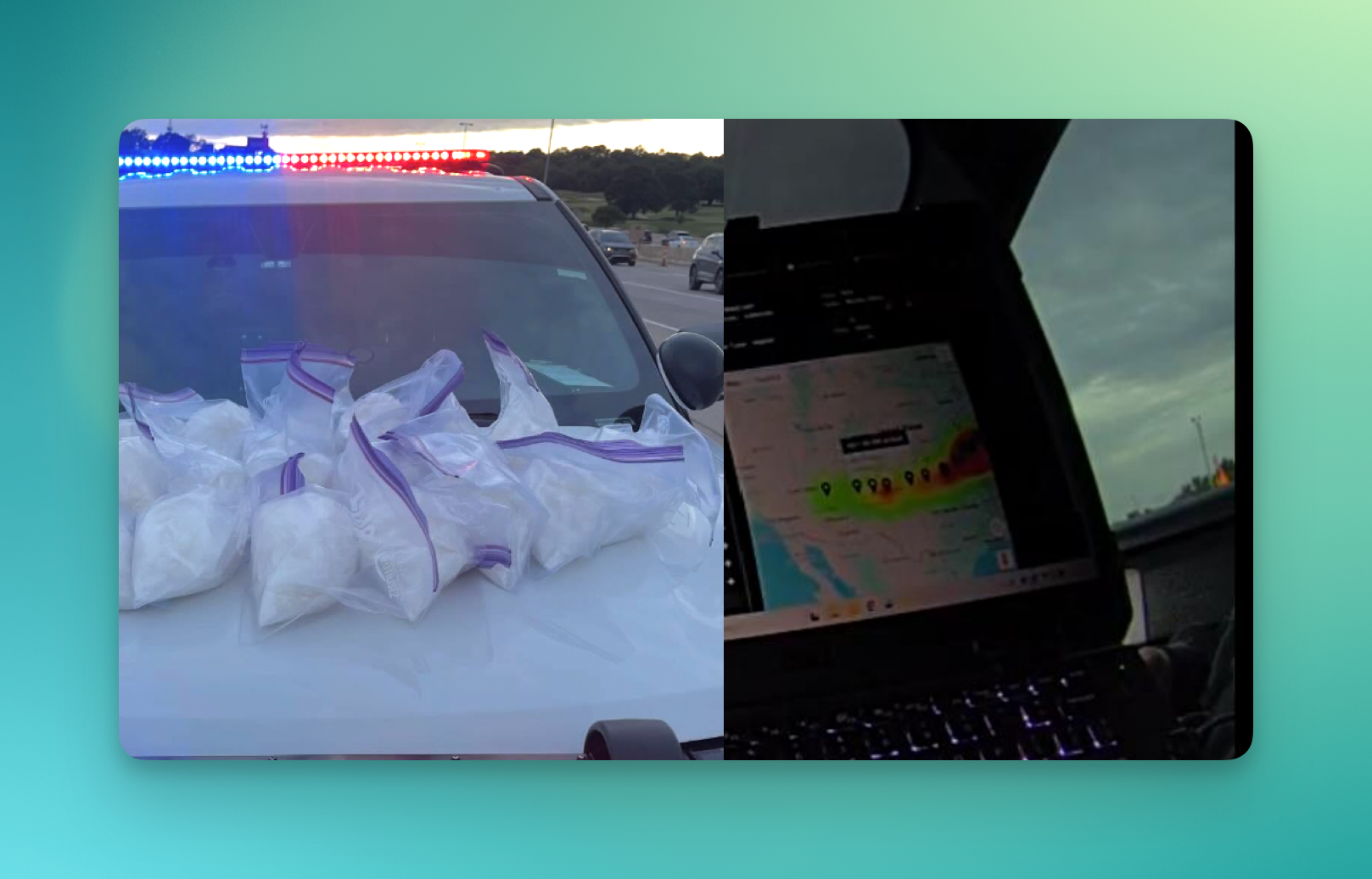 Figure: Screenshot of court records holding the warrantless Flock search unconstitutional. Source: 404 Media
Backlash Spreads to Lawmakers
At its core, Flock functions as a comprehensive registry of everyday life. It passively captures every vehicle passing in front of any connected camera, retaining those whereabouts to be queried on demand by law enforcement.
A Flock spokesperson stated that the company was not a party to the criminal proceeding and expressed confidence that the ruling would be overturned on appeal. Flock’s CEO has previously defended the system as lawful, maintaining that no court had found its operations to constitute an unconstitutional warrantless search. Yet momentum across several states tells a different story. Jurisdictions in Florida and Texas have moved to suspend or dismantle Flock deployments, while federal lawmakers have introduced legislation to prohibit federal agencies from tapping into such automated recognition networks.
What determines whether a technology is unconstitutional is its default architecture. Marketed as a harmless “license plate reader”—a phrase that implies merely reading a strip of metal—the system passively records, indefinitely retains, and instantly indexes every vehicle on the road. It is precisely that default behavior that turned it into indiscriminate mass surveillance in the eyes of the law.
Reference Links:
- 404 Media Coverage
- TechCrunch Report
- Court Docket Records