Two Prototype Clocks Power Up on the Same Day
On October 7, 2026, two independent research groups—one led by TU Wien in Austria and the other by Tsinghua University in China—published back-to-back papers in the journal Nature. They announced the realization of the world’s first two functional nuclear clocks. A theoretical vision that physicists had pursued for nearly 50 years materialized on the exact same day as two physical, autonomously ticking instruments.
Shiqian Ding, a physicist at Tsinghua University and a co-lead of the Beijing team, emphasized that two independent routes crossing the finish line simultaneously proves the robustness of the underlying physics. The two groups deployed entirely different laser architectures and sourced their crystals from separate pipelines—demonstrating that this pathway is not tethered to any single proprietary hardware stack.
The Vienna prototype was constructed through a long-term collaboration between TU Wien and Germany’s National Metrology Institute (PTB Braunschweig), culminating an intensive development effort that accelerated in 2024.
Why Nuclear Clocks Kept Metrology Waiting for Fifty Years
Until now, the pinnacle of human timekeeping has been the optical atomic clock. Optical clocks calibrate time using electron transitions between atomic shells, drifting by merely one second across 100 billion years. The newly unveiled nuclear clocks abandon peripheral electrons altogether, tracking instead the quantum oscillation between two isomeric states of the thorium-229 atomic nucleus. Because the atomic nucleus is more than 10,000 times smaller than the atom itself, it is vastly less susceptible to stray electromagnetic fields, providing an intrinsically pristine foundation for ultra-stable timekeeping.
Physicists had been hunting for the exact resonance frequency of thorium-229 since 2003, attempting to induce nuclear transitions directly with a laser. It took more than two decades of experimental effort to pin down this elusive transition frequency to the vacuum-ultraviolet (VUV) spectrum at 148 nanometers. The nuclear isomer of thorium-229 features an exceptionally narrow energy gap, making it the only known atomic nucleus accessible to direct excitation with optical lasers.
Researchers from TU Wien and PTB first succeeded in driving the thorium nuclear transition with a laser in April 2024. By autumn 2024, they coupled the excitation setup to a conventional optical frequency comb, referencing the thorium resonance against existing optical standards. Yet bridging the gap between observing isolated transitions and building an autonomous, self-ticking clock required another two years—work devoted almost entirely to closing the feedback loop.
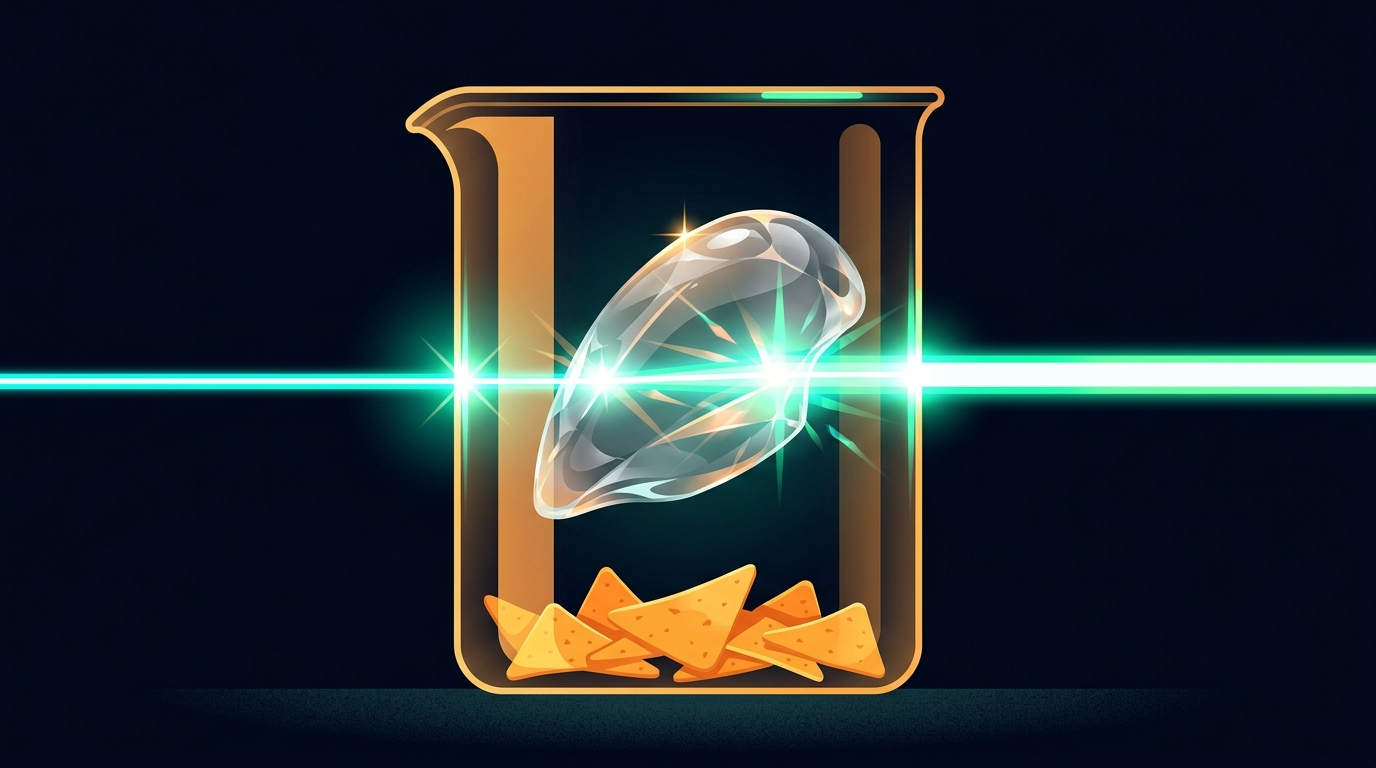
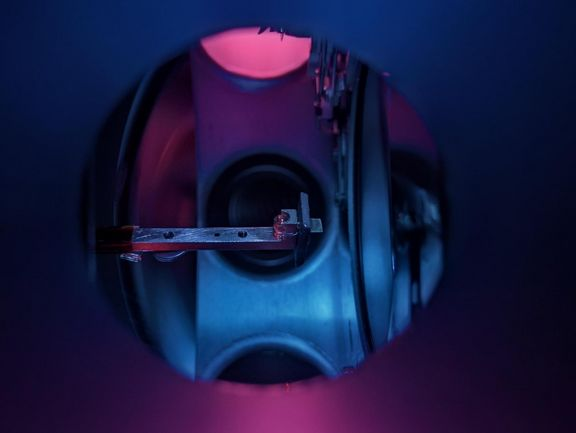 Figure: A calcium fluoride crystal doped with thorium-229 held inside a vacuum chamber, probed by laser light. Source: Thorsten Schumm / TU Wien
Shifting the Nucleus with 148-Nanometer Ultraviolet Light
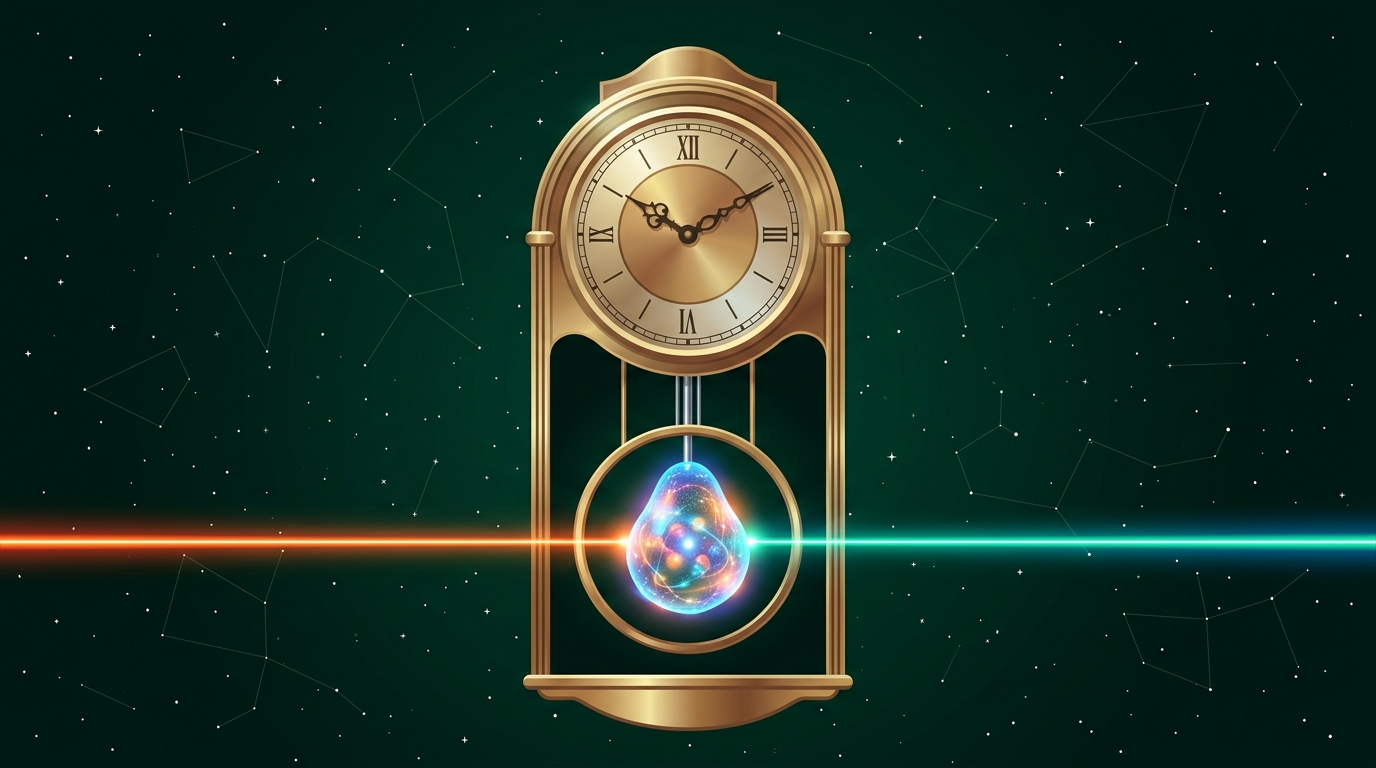
When struck by 148-nanometer light, the thorium nucleus flips between an elongated “squashed” state and its ground state. Counting the rapid cycles of this geometric transition constitutes the fundamental mechanism through which the nuclear clock keeps time.
Corresponding author Thorsten Schumm explained the system’s self-stabilizing feedback mechanism: the laser alters the nuclear state, and the thorium nuclei are in turn used to lock the laser frequency. If the laser drifts off-resonance, the photon absorption rate drops precipitously, prompting the system to steer the laser back to the target wavelength automatically. By uniting laser emission and crystal absorption into an automated feedback network, disturbances like thermal fluctuations are dampened directly at the hardware layer.
The prototype currently achieves an intraday fractional frequency stability of roughly 10^-15, equivalent to losing one second every 30 million years. That stability remains an order of magnitude behind primary cesium fountain standards and four orders behind cutting-edge optical lattice clocks. However, this prototype successfully runs through the complete end-to-end operational cycle of nuclear timekeeping, turning fundamental physics theory into an iterative engineering platform ready for component-level optimization.
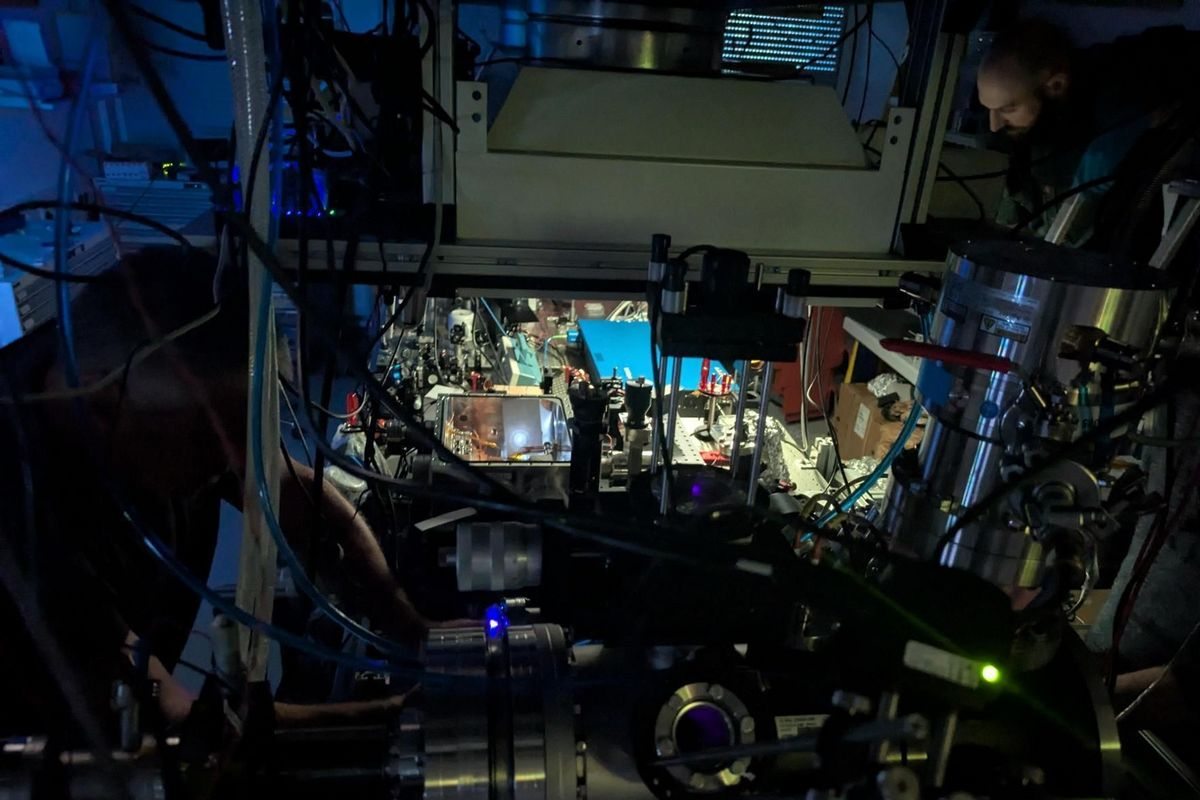 Figure: The darkened Vienna laboratory where researchers work at an optical bench. In the same room, a self-stabilizing nuclear clock keeps continuous time. Source: Matthias Heisler / TU Wien
Trading One Microgram of Thorium for High-Power Lasers
The two simultaneously unveiled prototypes arrived with strikingly complementary trade-offs. The nuclear isomer of thorium-229 has a half-life of roughly 8,000 years and is virtually nonexistent in nature; researchers must painstakingly extract it from the decay chains of weapons-grade uranium. The severe scarcity of the isotope dictated the engineering trajectory of each team: whoever held less thorium was forced to push laser output power significantly higher.
The Beijing team had access to merely 1 microgram of thorium-229. To extract a robust resonance signal from such a microscopic sample, they developed a high-power 148-nanometer continuous-wave laser via four-wave mixing in heated cadmium vapor. Published data indicates that Beijing’s high-power excitation approach delivered approximately six times the short-term timing stability of the Vienna prototype.
While the Vienna group currently lacks such high-power VUV laser hardware, they command calcium fluoride crystals with markedly higher thorium doping concentrations and superior optical clarity. With one team breaking through the laser power ceiling and the other perfecting crystal purity, cross-pollinating components between both designs will directly benefit next-generation systems.
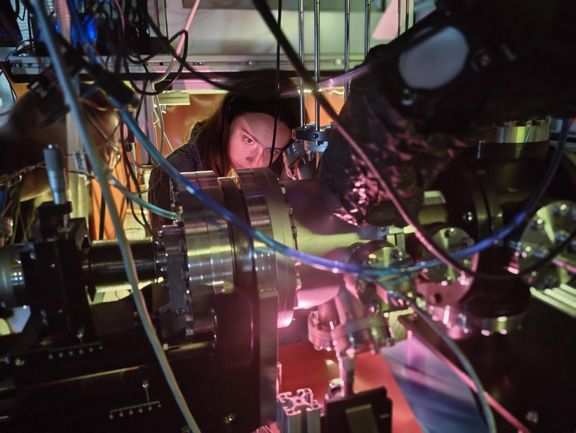 Figure: The vacuum chamber housing the thorium crystal alongside optical alignment controls in the laboratory. Source: Thorsten Schumm / TU Wien
The Challenge Shifts from Fundamental Physics to Hardware Components
Schumm described the current parallel development as an intense yet friendly global competition. The central challenge is no longer verifying whether a novel physical mechanism exists; it has become a resource and engineering sprint to assemble the optimal system architecture.
Next-generation performance leaps will not require laboratories to work in isolation for decades. Researchers can now combine high-power cadmium-vapor lasers directly with high-purity calcium fluoride crystals. The focal point of competition has decisively shifted from uncovering fundamental physical principles to manufacturing purer crystals and more powerful lasers.
Detecting Dark Matter with Microscopic Heartbeats
The anticipated application horizon for nuclear clocks covers satellite navigation systems, high-speed data synchronization networks, and ultra-precise geodesy and metrology. UCLA physicist Eric Hudson, who was not involved in the research, noted that the field is moving at breathtaking speed. The critical dependence of satellite navigation and telecommunications on timing accuracy means the next hurdle for nuclear clocks is proving they can leave the laboratory and operate in the field.
Over a longer horizon, nuclear clocks could serve as direct sensors for dark matter and tests of fundamental physical constants. If dark matter particles interact with thorium nuclei, they would imprint a tiny, detectable tremor onto the clock’s steady rhythm. Theoretical physicist Elina Fuchs of Leibniz University Hannover pointed out that nuclear clocks open a brand-new window to observe the impact of dark matter on atomic nuclei.
For now, capturing dark matter remains out of reach. Uncertain nuclear parameters currently prevent exact sensitivity calculations, while internal crystal field perturbations, system miniaturization, and field deployability remain active engineering hurdles. Yet by transitioning from a 50-year theoretical concept into two operational instruments running in parallel, nuclear timekeeping has officially proven itself as a repeatable engineering path. The rules of the competition have changed: whichever team first achieves industrial-grade production for crystals and lasers will define the future of time.
References:
- TU Wien / PTB Nature paper
- Tsinghua University Nature paper
- TU Wien official press release
- Hacker News discussion