To carve out a few uninterrupted hours of quiet work, today’s knowledge workers are increasingly forced to pretend they are in a meeting. A web tool called Fleeting has tapped directly into this demand. Its sole purpose: playing hyper-realistic meeting background audio to prove to everyone within earshot that you are unavailable.
It sounds like dark office comedy, but Fleeting packages it as an off-the-shelf defense mechanism. On community forums, users even complained about browser compatibility quirks where switching to American-accented audio resulted in complete silence—nearly blowing their cover in front of passing coworkers.
14 Fictional Scenarios to Build a Personal Defense Line
Open Fleeting, and you are served an audio clip running roughly 12 minutes. Playback starts at a randomized timestamp, preventing desk neighbors from noticing you replay the exact same opening line day after day. Enable the “back-to-back” option, and once a meeting wraps up with simulated goodbyes, the tool seamlessly routes you into another time-appropriate session just seconds later.
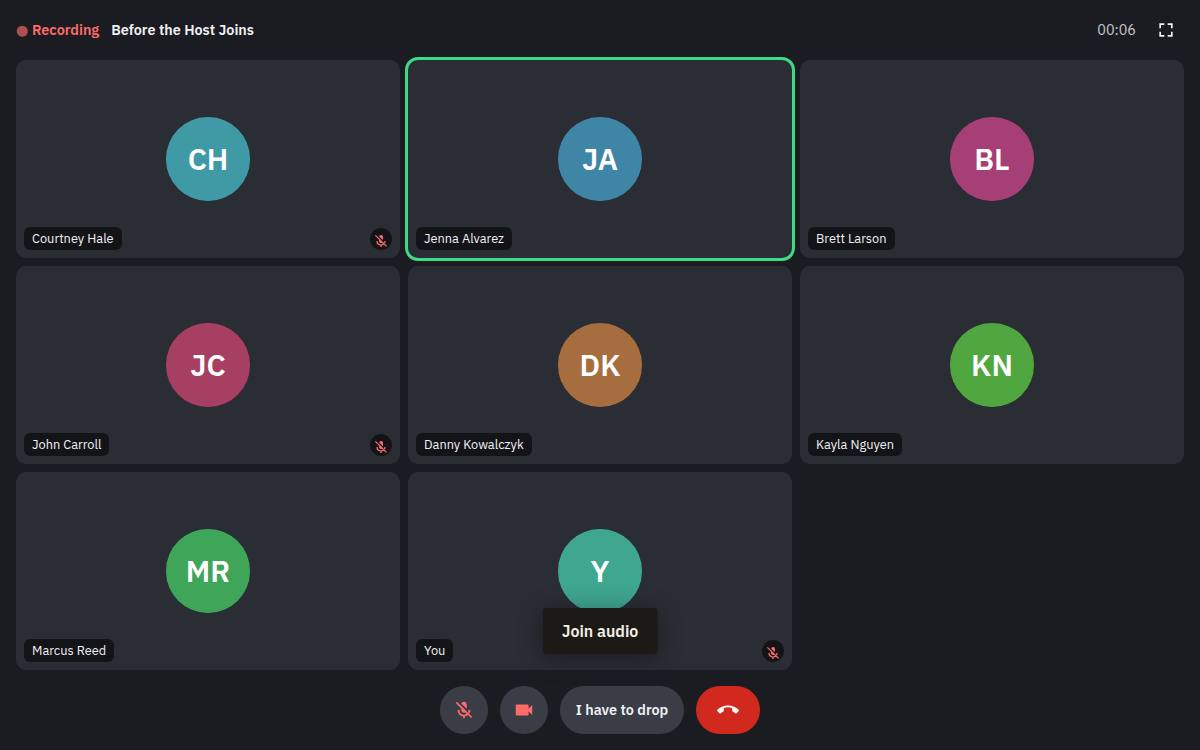 Figure: Fleeting’s virtual meeting interface, showing synthetic participants and controls. Source: Screenshot from Fleeting
The web app includes 14 granularly tailored corporate scenarios. If you need a technical alibi, pick the “IT War Room,” complete with clattering mechanical keyboards and tense inquiries about who deployed last. If dodging administrative check-ins, choose “API Design Review” or “Wellness Committee.” Every face on screen and voice on audio is entirely AI-generated, with zero actual conference audio recorded.
Fleeting’s creator explicitly markets the service as “workplace self-defense against the people who steal your time.” In the modern office, deep work alone carries no inherent boundary; only a scheduled meeting commands enough authority to keep interrupters at bay.
Calendars as the Tragedy of the Commons: Faking Schedules in One Click
Simulating background audio is merely the first layer; Fleeting also automates schedule counterfeiting. It generates downloadable .ics calendar files, letting users import synthetic meetings into Google Calendar or Outlook with a single click.
To make the illusion airtight, each calendar invite contains a join link that redirects back to the tool, ensuring anyone inspecting your schedule sees a sacred, unassailable “Busy” block. Should a suspicious colleague click through the invite link, they land on a deceptive holding screen that appears perpetually stuck waiting for the host to admit them.
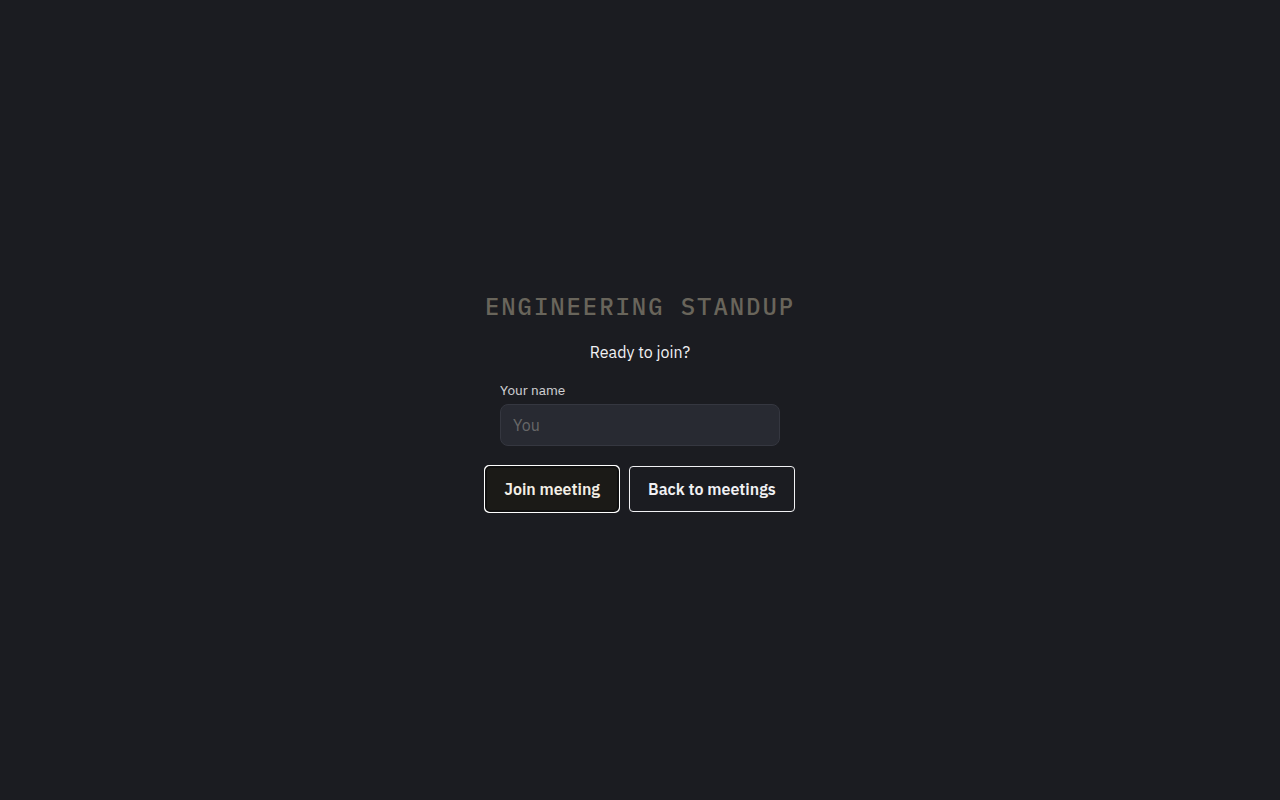 Figure: Pre-meeting entry screen allowing users to pick a name and meeting room. Source: Screenshot from Fleeting
Tools like this lay bare an uncomfortable truth management often refuses to acknowledge: corporate calendars have become an unregulated public commons. Open calendar slots are universally presumed to mean “available to pick up work” or “free for a quick chat.” Powerless to overturn organizational inertia on their own, individual contributors resort to theater to fence off private territory.
Silence Beyond the British Accent: Illusion Relies on Mutual Unspoken Trust
To heighten verisimilitude, the platform offers British, American, and international accent options, recently adding beta support for Spanish, French, German, and Italian. The site’s FAQ clarifies that every voice is machine-generated, no real humans were recorded without consent, and all visible avatars are synthetic or licensed stock models. The lone real person across the entire roster is the creator himself, who occasionally joins as a silent spectator with his webcam on.
Yet relying on synthetic assets exposed browser compatibility cracks almost immediately. Multiple Hacker News users reported that only British audio played reliably, while selecting American or international tracks caused the player to fall dead silent. Firefox and Brave users saw console errors flagging missing audio assets, leaving behind a frozen, unresponsive “Join Audio” button. The unexpected bug prompted the creator to jump into the comments, promising to patch the missing accent files.
The silence caused by failed audio assets reveals the core premise behind such software. A product whose primary selling point is realism depends entirely on the person on the other side of your screen never testing its validity. The barricade built by synthetic audio holds up only because coworkers maintain an implicit social contract never to verify the ruse in person.
Managers Staging Fake Outages Just to Reclaim Three Focused Hours
Long before Fleeting appeared, defensive guerrilla tactics were already rampant. One SRE manager admitted to scheduling mandatory Friday morning “team syncs” from 8 AM to 11 AM just to shield their engineers from corporate distractions and carve out uninterrupted troubleshooting time. Another engineer attempted to block their calendar with explicit warnings like “Critical: Customer Outage,” only for outside departments to disregard the note and double-book over it anyway. Management is increasingly backed into lying simply to safeguard output.
When fabricating a meeting becomes the only viable route to protect concentration, the failure moves from systemic organizational culture down to the individual. Fleeting has essentially industrialized “looking busy” into an off-the-shelf consumable. Workers retreat behind theatrical fences, yet because those same barriers apply to everyone, no one can tell how many densely packed calendar blocks represent genuine work—and how many are just colleagues looping a 12-minute audio file.
References:
- Hacker News discussion thread
- Official Fleeting website