On October 1, 2026, New York City’s “Click to Cancel” rule officially took effect, marking the first municipal regulation in the United States specifically targeting subscription traps. Mayor Zohran Mamdani summed it up plainly: “If you can sign up with one click, you should be able to cancel with one click.” Businesses that deliberately raise cancellation hurdles now face civil penalties starting at $525 per violation.
The regulation cuts straight to an entrenched industry norm. For years, countless platforms have engineered frictionless onboarding while turning cancellation into an obstacle course. New York did not treat cancellation friction as a routine customer service dispute; officials classified it directly as an unlawful act subject to administrative penalties.
One Click to Join, a 40-Minute Phone Call to Leave
Starting a subscription usually takes just seconds. A quick facial scan or fingerprint touch authorizes the payment instantly. Access is granted immediately, without a single extra hurdle in the path.
When users decide to leave, however, the experience is completely different. The cancellation link almost never appears on the main account page; companies bury it deep within nested settings. Many websites have stripped the cancellation button from their web interfaces entirely, leaving behind only a faint line of grey text directing customers to call customer support.
 Figure: Official NYC government campaign visual for “Click to Cancel”: One click to sign up, one click to cancel. Source: City of New York
Forcing cancellation into phone queues is an industry-standard playbook. Users sign up smoothly online, only to be told that terminating the service requires placing a phone call. Once dialed in, they wait on hold, sit through scripted retention pitches, and only then might see their cancellation processed.
This asymmetry is a deliberately engineered one-way funnel. A flattering retention curve does not prove product satisfaction; it merely shows that the cost of leaving has been shifted onto the user. Wasting a little more of the customer’s time and energy preserves one more monthly recurring bill.
Turning Friction into Profit: When Leaving Becomes Technical Warfare
This deliberate creation of obstacles is known as a “dark pattern”—with the “Roach Motel” design being its most notorious archetype. Its defining characteristic: easy to get into, but virtually impossible to escape.
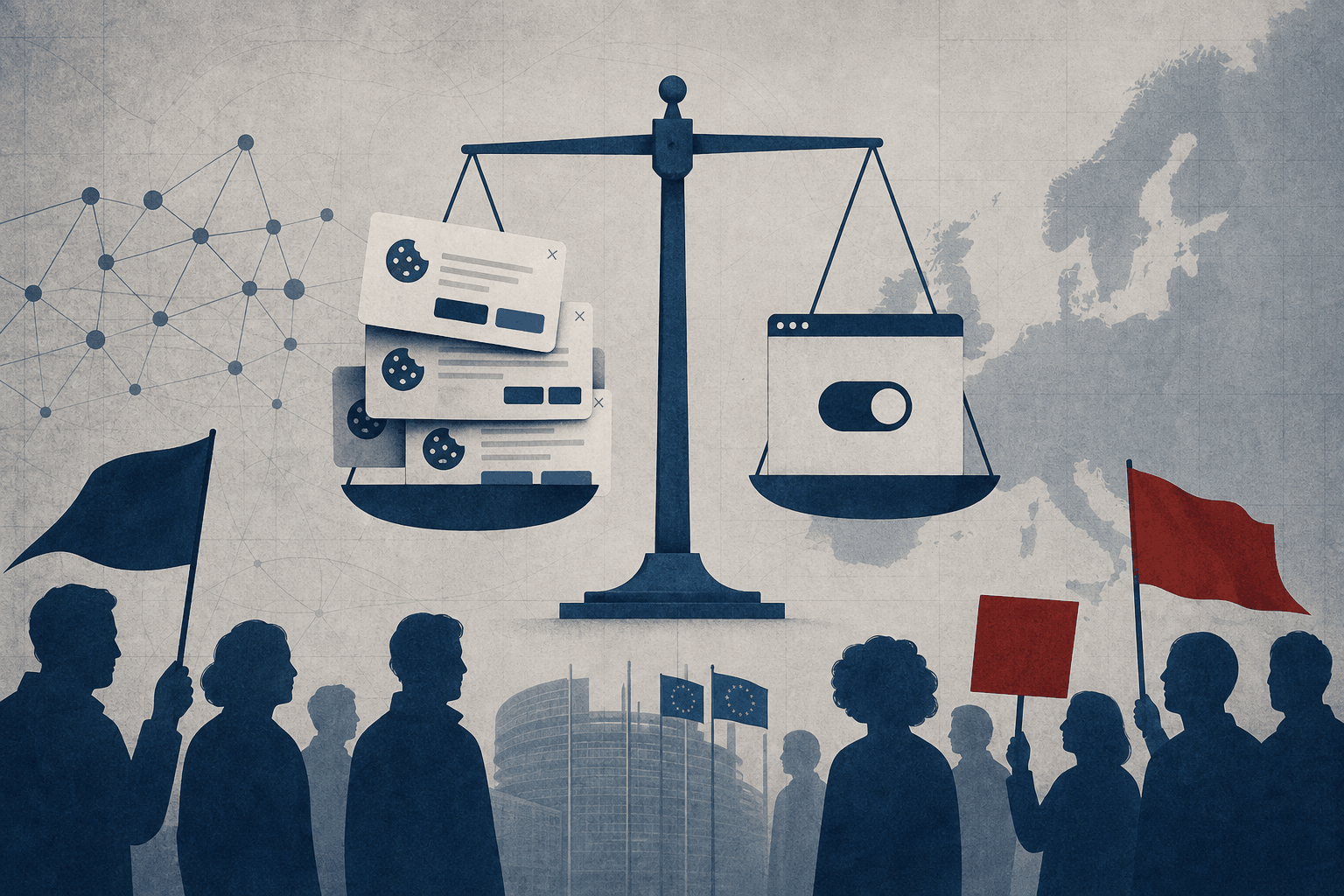
Growth teams pour substantial engineering resources into cancellation flows. Color manipulation is among the most widespread tactics: the platform renders “Give up discount and cancel” in muted, low-contrast text that blends into the background, while “Keep subscription” is styled as an oversized, brightly colored button. If a user persists, retention surveys pop up, forcing multi-step confirmation screens before letting them go.
Another common tactic is forced device switching. Many services allow instant sign-ups via desktop browsers, yet demand that cancellation occur exclusively inside a mobile app. This cross-channel friction breaks user flow; every platform jump wears down consumer determination.
This playbook thrives because of the profit model behind subscriptions. Churn is the critical variable in corporate valuation models, and suppressing churn by erecting hurdles is far cheaper than actually improving the service. Consequently, engineering resources are diverted toward obstructing departures rather than building products users genuinely want to keep.
Fines from $525: NYC Designates Cancellation Friction as Unlawful
The new rules issued by the New York City Department of Consumer and Worker Protection (DCWP) directly dismantle this algorithmic arbitrage. The city’s mandate is unequivocal: if a business offers online sign-up, it must provide a cancellation method through the exact same online channel. Platforms may not force online subscribers to cancel via phone or in-person visits.
 Figure: NYC Mayor Zohran Mamdani announces “If you can sign up with one click, you must be able to cancel with one click.” Source: City of New York
The regulation lays down an exacting enforcement checklist. Failing to clearly disclose auto-renewal terms constitutes a violation. Deliberately delaying cancellation requests is a violation. Altering service terms without prior notice triggers penalties. Furthermore, if a business ships unsolicited merchandise, it cannot require consumers to pay return shipping. Violating businesses face civil penalties starting at $525 per infraction, alongside mandatory full refunds.
The decisive breakthrough here lies in rewriting the economics of consumer protection. Individual consumers wrongfully billed an extra ten or twenty dollars rarely hire a lawyer to sue. NYC launched a dedicated online portal—available in multiple languages, including Chinese—where residents receive a tracking number upon filing a complaint. The DCWP assigns mediators and requires businesses to respond within strict deadlines. A $525 fine per violation easily punctures the profit margin of malicious retention tactics.
Federal Lawsuits Drag On While Municipal Regulators Strike First
Targeting exit friction inevitably confronts entrenched corporate interests. The U.S. federal government previously introduced nationwide click-to-cancel rules, only to see them bogged down in extended legal battles without uniform nationwide enforcement. Industry trade groups argued that retention dialogues provide adequate disclosure and that mandatory one-click cancellation infringes upon commercial freedom.
While federal initiatives remain trapped in protracted litigation, New York City broke through using municipal jurisdiction. The new regulation directly governs any business charging local residents, bypassing the convoluted legislative and litigation quagmires of Washington. What was once a murky debate over business ethics has transformed into a concrete, territorial compliance red line.
Municipal oversight still has clear jurisdictional limits. New York’s rules currently protect only local transactions, leaving out-of-state markets uncovered. Whether this municipal breakthrough can expand nationwide will depend on the enforcement appetite and regulatory resources of authorities across the country.
Subscriptions were always supposed to operate on mutual freedom of entry and exit. Now that exit friction carries a minimum $525 penalty, at least within New York City, trapping users is no longer a zero-cost product design decision.
Reference Links:
- Official Gazette of the New York City Department of Consumer and Worker Protection
- City of New York “Click to Cancel” Implementation Rules
- U.S. Federal Trade Commission Staff Report on Negative Option Marketing and Dark Patterns