On October 26, 2026, Anthropic—the creator of Claude—filed its Form S-1 registration statement preparing for a Nasdaq public listing. Across hundreds of pages of filings, one section instantly stunned the market: a massive hardware procurement ledger. Anthropic has committed to approximately $637 billion in compute purchases across seven major vendors. The overwhelming majority of these agreements contain strict take-or-pay clauses: whether Anthropic actually uses the computing capacity or lets it sit idle, the full balance must be settled on schedule.
For years, the artificial intelligence industry brushed aside bubble concerns with grand narratives of exponential capability. Anthropic’s S-1 filing strips away every layer of rhetorical ambiguity. Once payment obligations are uncoupled from actual usage, compute ceases to be a flexible operating cost and becomes an irrevocable debt burden. Written irrevocably into legal agreements, this staggering balance sheet obligation thrusts the debate over real enterprise AI demand directly into the harsh spotlight of Wall Street.
$637 Billion Locked in Contracts: Pay in Full, Compute or Not
The hardware procurement ledger leaves no room for interpretation. In dedicated sections of the filing, management itemizes commitments vendor by vendor. At the top of the table sits Broadcom with $161.2 billion in dedicated hardware lease agreements. SpaceXAI follows closely with commitments capped at up to $120.5 billion. Cloud compute obligations with Google and Amazon stand at more than $114.5 billion and $110.0 billion, respectively.
Add in $44.9 billion committed to Microsoft, $44.6 billion to Nscale, and $41.3 billion to Lambda, and the tally across these seven partners reaches roughly $637 billion. Beyond this primary roster, the company discloses more than $120 billion in additional pipeline compute not yet formally tallied into the primary table. Unlike standard cloud infrastructure where clients pay dynamically for provisioned compute hours, these deals operate under strict take-or-pay principles. Even if rows of GPU racks sit dark and idle in secure server halls, the invoice will not drop by a single cent.
Across the entire vendor matrix, only SpaceXAI offers a sliver of contractual flexibility. That capacity is slated for delivery toward the end of 2026, triggering monthly payments of approximately $3.1 billion from Anthropic. The contract permits early termination on 90 days’ notice—but only after March 2027. Every other single dollar across the hundreds of billions is completely locked in, with no early exit or downward renegotiation terms.
 Anthropic founder Dario Amodei has repeatedly highlighted the colossal R&D scale required for frontier foundation models. Looking at this photo, the stark contrast between grand vision on stage and the unyielding legal contracts in the S-1 becomes evident: commercial commitments leave no blank space, and every petaflop of planned compute now corresponds to an absolute repayment obligation. Source: CNBC / Getty Images.
A $63B Banking Syndicate: How Hardware Vendors Offloaded All Risk
Wall Street’s financial engineering surfaced in tandem with the S-1 disclosures. According to reports from Reuters and The Wall Street Journal, a syndicate of major global investment banks orchestrated a colossal $63 billion financing vehicle. The banking syndicate purchased Broadcom’s silicon and high-throughput networking gear outright, leasing the equipment back to Anthropic.
The financial architecture mirrors commercial aircraft leasing. Broadcom secures guaranteed upfront revenue and washes its hands of inventory risk, while the syndicate earns predictable yields from guaranteed lease payments. Through structured debt, both parties pushed the risks of technological obsolescence, capacity idleness, and hardware depreciation entirely onto the lessee. Capital arrangers locked in their returns; the AI lab shouldered the entire operational burden.
Physical depreciation makes this structural trap even more unforgiving. Frontier accelerators and advanced networking fabrics have a practical competitive shelf life of barely three years. If superior, significantly more cost-efficient silicon architectures launch in two years, Anthropic will still be legally bound to pay top dollar for obsolete silicon until the final month of the lease. The faster hardware evolves, the heavier the financial anchor becomes for anyone caught holding earlier generations.
Customer Acquisition Costs Surge 25x: Enterprise Conversion Lags Infrastructure Buildout
On paper, Anthropic’s top-line trajectory looks explosive. Annual revenue climbed from just $41 million in 2023 to $4.585 billion in 2025. In the first half of 2026 alone, revenue crossed $16.3 billion—a tenfold leap compared to $1.16 billion in the same period a year earlier.
On a trailing twelve-month basis, Anthropic’s annualized revenue per employee exceeded $6.6 million. Deep enterprise customers paying over $100,000 annually expanded to 11,900 accounts. The rapid accumulation of high-ticket corporate clients demonstrates undeniable enterprise traction, particularly across automated software engineering, high-volume code generation, and complex long-context reasoning.
Yet beneath that rapid expansion lies an alarming surge in customer acquisition costs (CAC). In the first half of 2026, sales and marketing expenses skyrocketed to $3.17 billion—an astronomical 2,540% increase year-over-year. Sales and marketing has ballooned into Anthropic’s second-largest expenditure behind compute itself. The reality that marketing spending is compounding far faster than revenue growth highlights steep friction in bringing generative models into mission-critical corporate operations.
Procuring frontier AI systems requires prolonged internal security reviews, governance audits, data lineage validation, and deep systems re-engineering. Compute infrastructure can be locked down overnight with the stroke of a pen; actual corporate consumption ramps up gradually over years. A 25x surge in customer acquisition costs exposes just how difficult real, recurring business monetization remains.
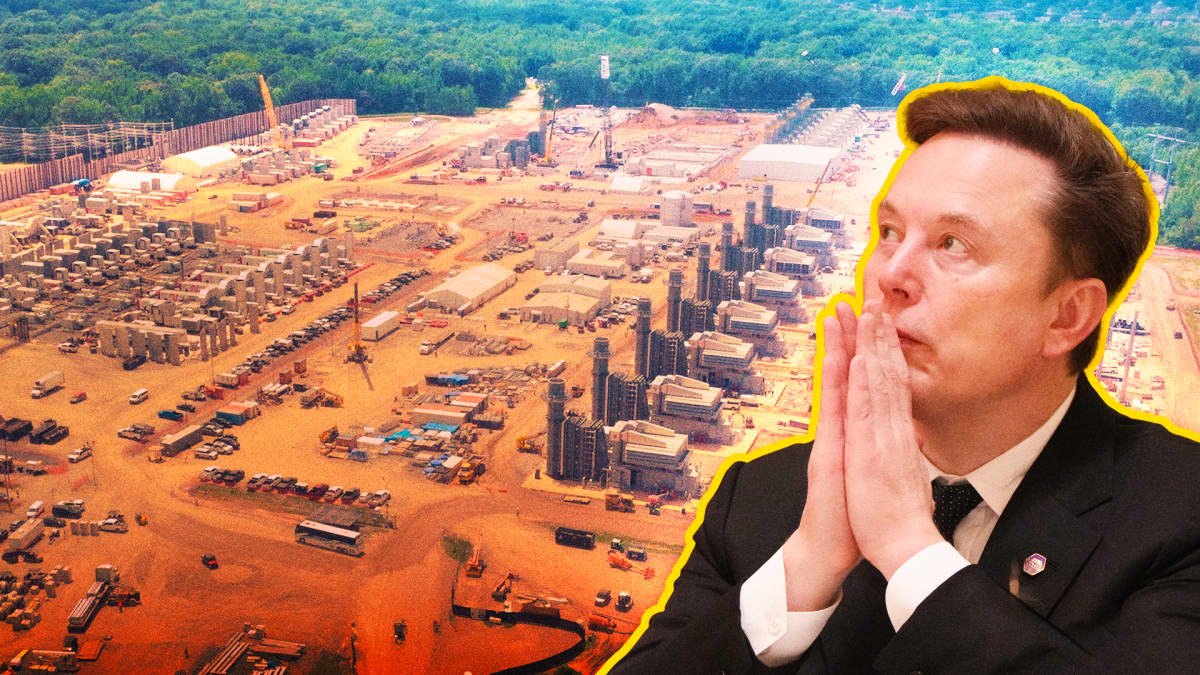 Exterior view of a hyperscale AI data center facility in Memphis. Notice the dense electrical substation network and extensive cooling infrastructure: heavy industrial-scale physical assets generate constant fixed overhead day after day, perfectly mirroring the rigid take-or-pay clauses that mandate payment regardless of uptime or utilization. Source: CNBC.
Public Markets Tighten Credit: Compute Narratives Meet Hard Financial Reality
Public markets are radically shifting how they evaluate the AI ecosystem. Entering October 2026, credit risk spreads across AI infrastructure providers climbed noticeably. Specialized neo-cloud providers like CoreWeave and Nebius saw their equity market valuations drop over 30% in a single month.
The business model of borrowing heavily to hoard GPUs and rent them out has proven fragile against shifting cost-of-capital tides. As financing costs tick upward, debt service squeezes cash flows across the entire stack. SpaceX, which completed an $85.7 billion listing in June 2026, has already fallen below its IPO offering price. Investors are running out of patience for capex-heavy promises unbacked by durable positive cash flows.
Institutional investors are beginning to scrutinize frontier tech companies like regulated capital utilities. The staggering net losses and extreme supplier concentration detailed in Anthropic’s prospectus are now under direct scrutiny. Free cash flow can no longer be papered over with benchmark breakthroughs or parameter counts. Public shareholders are asking the only question that matters: will enterprise subscription renewals ramp fast enough to cover billions in fixed monthly compute obligations?
Heavy Obligations Loom: Public Markets Demand the Truth About AI Demand
Anthropic entered the tech world defined by a mission for AI safety and measured research; it now prepares to go public carrying the single heaviest commercial promissory note in tech history. A $637 billion procurement obligation transforms ideological conviction into an auditable legal ledger. With ironclad take-or-pay terms requiring full payment regardless of usage, this mountain of fixed cost has forced the entire industry’s debate over real AI demand to its day of reckoning.
If generative AI enterprise demand expands at an exponential pace, Anthropic’s vast reservoir of reserved compute will become an unbeatable moat. But if enterprise adoption plateaus or decelerates, billions of dollars in monthly shortfall payments will rapidly drain operational liquidity. Once a company steps out of private venture backing and into the public market, server idle rates belong to institutional shareholders. Compute is no longer merely an engineering metric; it is a life-or-death financial constraint.
The $637 billion bill has been signed. Once publicly listed, visionary roadmaps cannot substitute for a clean balance sheet. The commercial world always returns to the fundamental reality of cash in versus cash out. Whether this compute reservoir becomes Anthropic’s ultimate growth engine or a crushing financial bind will soon be answered in full view of the public markets.
References:
- U.S. Securities and Exchange Commission: Form S-1 Registration Statement (Anthropic, PBC)
- CNBC: World Economic Forum coverage and AI data center tracking
- Reuters: Wall Street banking syndicate arranges $63B AI equipment lease financing
- The Wall Street Journal: Anthropic compute commitments and supply chain risk disclosures
- Hacker News: Technical line-by-line breakdown of S-1 infrastructure commitments