Dark Silicon Shuts Out Crops: Agrivoltaics Trapped in a Zero-Sum Game
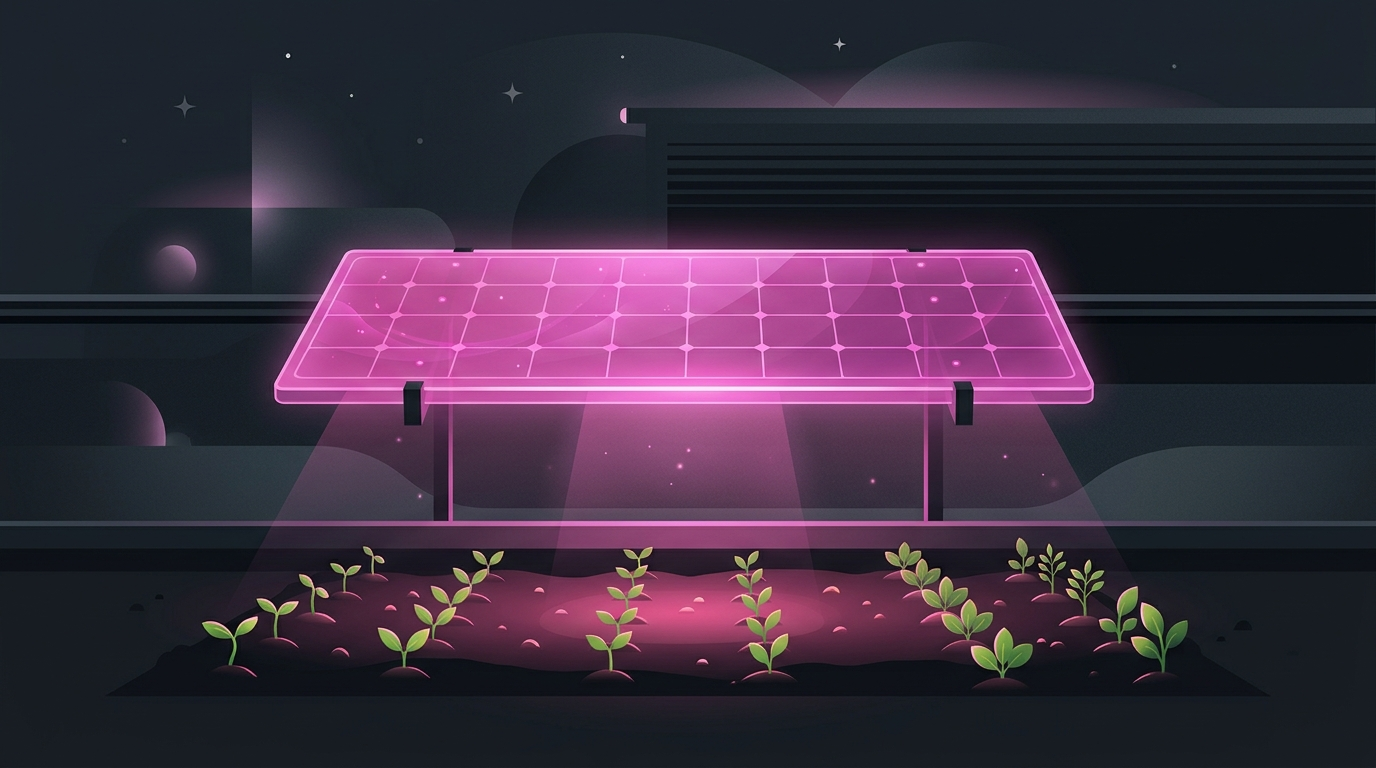
At Kärrbo vicarage in Sweden, solar panels erected above an experimental field cast a deep, vivid magenta glow. Sunlight filters through the film onto the beds below, bathing broccoli leaves in pinkish-purple shadow. By conventional agricultural logic, cutting out the bulk of incident light should trigger a sharp drop in harvest yields. Yet field measurements revealed a surprise: broccoli cultivated beneath the magenta shadow matched the yields of the open-field control group.
For over a decade, agrivoltaics has remained locked in a tug-of-war between land and light. Standard opaque monocrystalline silicon panels act like heavy awnings across cropland. Solar developers seek high packing densities to maximize electricity revenue, while crops under their shade turn yellow and wither from light deprivation. To salvage yields, engineers are forced to space panels wide apart, leaving wide gaps of unshaded soil.
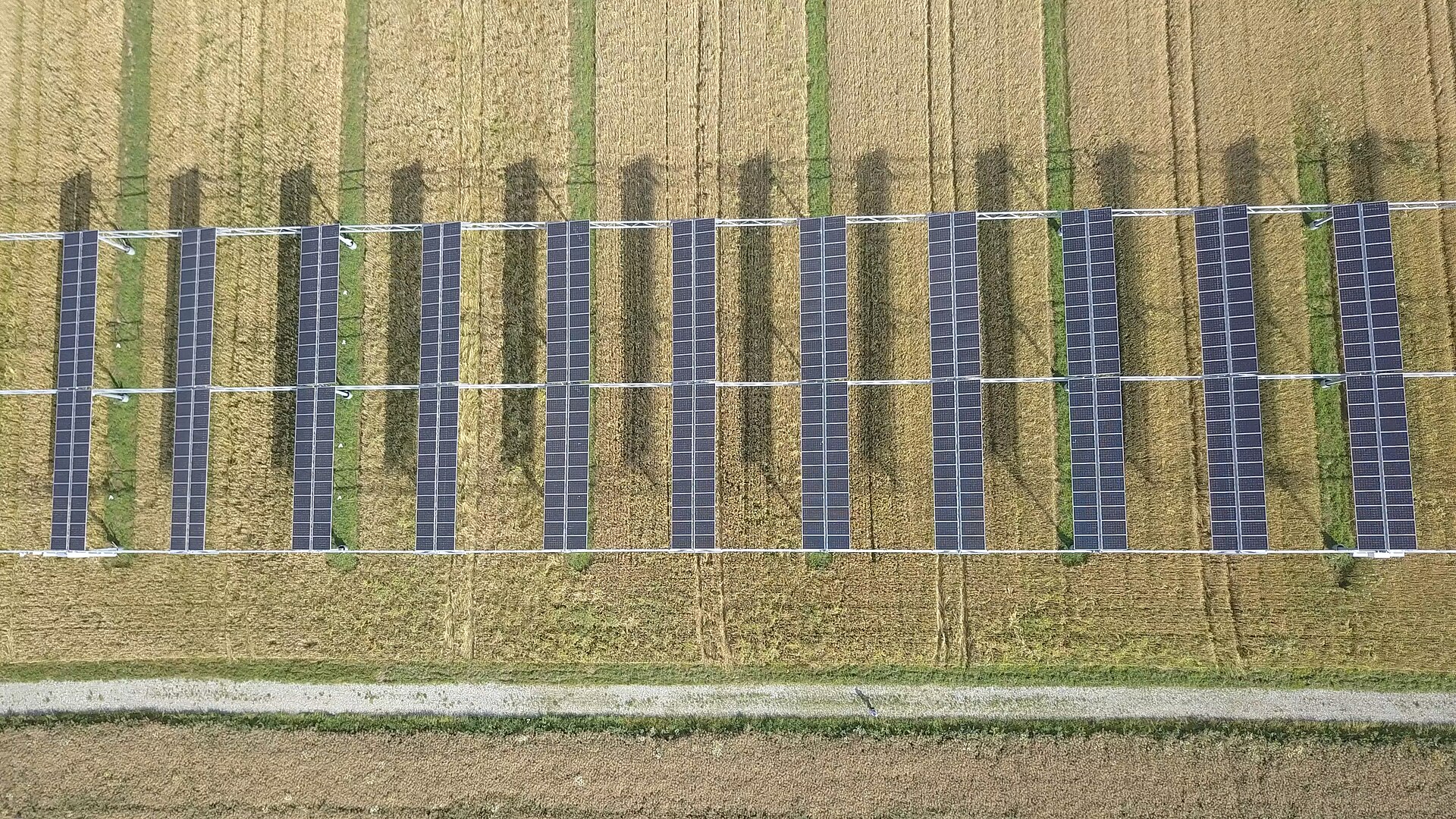 Figure: Conventional agrivoltaic test facility at Heggelbach Farm, Germany. Credit: Wikimedia Commons
This compromise imposes heavy costs on both sides. Sparse layouts drive up racking and mounting expenses, while dappled, shifting shadows disrupt crop growth cycles. Traditional approaches treat solar irradiance as an indivisible commodity, assuming energy generation and food production are mutually exclusive. So long as photovoltaic panels remain opaque black boxes, this tension cannot be resolved.
Cutting Useless Green: Magenta Films as Custom Sunshades for Broccoli
The secret behind the magenta tint lies in plant photobiology. Crops do not utilize the full solar spectrum. Chlorophyll primarily absorbs light in two distinct bands: red light around 640 to 680 nanometers and blue light around 430 to 450 nanometers. These windows drive the core reactions of photosynthesis. In contrast, most green light in the middle spectrum is either reflected or transmitted by leaves, offering negligible photosynthetic utility to plants.
A research team in Sweden took a different angle. Using semi-transparent cadmium telluride (CdTe) thin-film modules, they tuned the material’s bandgap. The film absorbs green light and high-energy photons to generate electricity while allowing red and portions of blue light to pass through unimpeded. The light transmitted to the ground below creates a distinctive magenta hue.
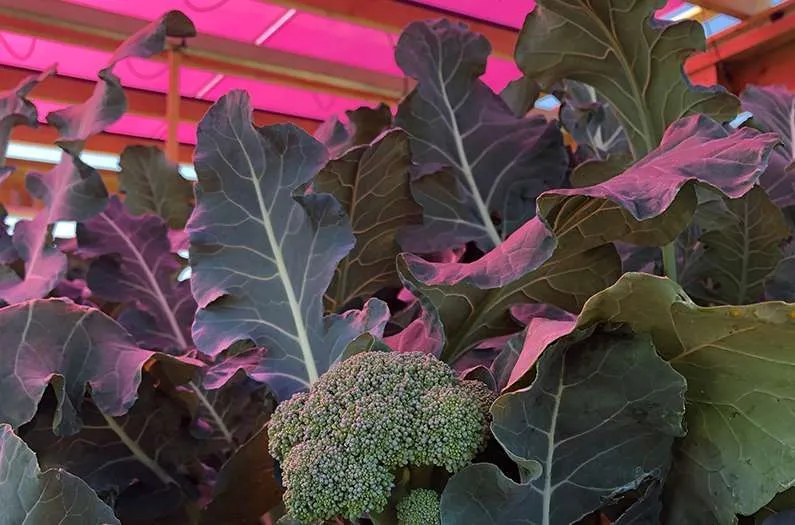 Figure: Broccoli growing under semi-transparent magenta solar panels in Sweden. Credit: Anthropocene Magazine (Photo by Silvia Ma Lu)
The process effectively partitions the solar spectrum into dedicated channels. The solar modules absorb wavelengths plants cannot exploit, reserving the red and blue bands for the soil below. While conventional black panels absorb all light indiscriminately, magenta thin films enable precise spectral division. Far from languishing in pitch-black shade, the crops receive a tailored lighting recipe.
Delayed Maturity by 25 Days, Light-Use Efficiency Up 4.5x
Filtering the spectrum lowers overall irradiance, causing the broccoli in the trial to slow its pace and delay maturity by a full 25 days. For commercial growers bound to tight market windows, an extra 25 days means increased labor and prolonged exposure to weather hazards.
Yet scale weights at harvest told an unexpected story. The late-maturing broccoli developed dense, healthy heads, matching the harvest yields of the unshaded control plots. Crucially, the research team found that biomass conversion efficiency in the magenta-shaded zone surged by 2.8 to 4.5 times. Leaves received fewer photons overall, yet converted a far higher fraction into actual plant matter.
Blazing sunlight does not necessarily accelerate growth. Intense midday rays frequently exceed chloroplast saturation limits, forcing plants to trigger photoinhibitory defenses to dissipate excess energy as heat. By shedding excessive photon flux and channeling gentle red and blue light, the magenta panels prevented photochemical stress, allowing the photosynthetic machinery to operate at peak efficiency.
Microclimates Relieve Leaf Stress, Modulating Mineral Nutrition
Beyond spectral filtration, the microclimate beneath the panels also shifted. Sensor readings showed the magenta film significantly lowered surface vapor pressure deficit (VPD). VPD measures the atmospheric drying demand pulling moisture from foliage; higher values correspond to drier air and faster leaf transpiration.
Under harsh direct sun, unshaded crops routinely close their stomata during peak afternoon hours to conserve water. This defensive shutdown restricts carbon dioxide uptake, halting photosynthetic carbon fixation. The magenta film shields plants from excessive infrared radiation, retaining ground-level moisture. With lower VPD levels, broccoli maintained open stomata, extending the hours of active carbon assimilation.
This sheltered environment also altered the nutritional profile. Laboratory testing showed that broccoli grown under the magenta panels had slightly higher or comparable concentrations of calcium, magnesium, and phosphorus, while micronutrients like iron, copper, and zinc saw minor declines. Shifting transpiration dynamics naturally altered root-zone mineral uptake pathways.
From Land Competition to Spectral Tuning: Recalculating the Agrivoltaic Balance
Published in Cell Reports Physical Science, this work opens a fresh paradigm. Agrivoltaics previously treated solar panels as rigid, unyielding construction materials around which crops had to adapt. The Swedish experiment proves that panel transmittance spectra can serve as tunable agricultural parameters. The core breakthrough of agrivoltaics is spectral allocation on demand.
Practical barriers remain before widespread deployment. The trial focused solely on broccoli; sun-loving staples such as corn or soybeans may respond very differently under similar light regimes. Furthermore, semi-transparent cadmium telluride modules allow visible light to pass, resulting in lower power conversion efficiencies than opaque silicon panels of equivalent size. Manufacturing specialized chromatic films is complex, carrying high initial capital costs.
Environmental and regulatory scrutiny is another hurdle. Cadmium telluride incorporates the heavy metal cadmium, subjecting agricultural deployment to rigorous safety evaluations. Even with hermetic double-glass encapsulation, farmers remain cautious about potential soil contamination risks. If tailored spectra escalate panel costs, gains in agricultural output may struggle to offset the capital overhead.
The ongoing evolution of agrivoltaics lies in teaching solar hardware to respect crop physiology. By extending broccoli’s growth cycle by 25 days, magenta panels secured multiple-fold gains in light-use efficiency without sacrificing harvest yield. When photovoltaic materials can be customized to match plant requirements, the friction between clean energy generation and food security softens. Tuning panel color is proving to be a compelling lever in balancing power generation with sustainable agriculture.
Reference Links:
- Cell Reports Physical Science Study (DOI: 10.1016/j.xcrp.2026.103555)
- Anthropocene Magazine Coverage
- Hacker News Discussion (item?id=50426175)