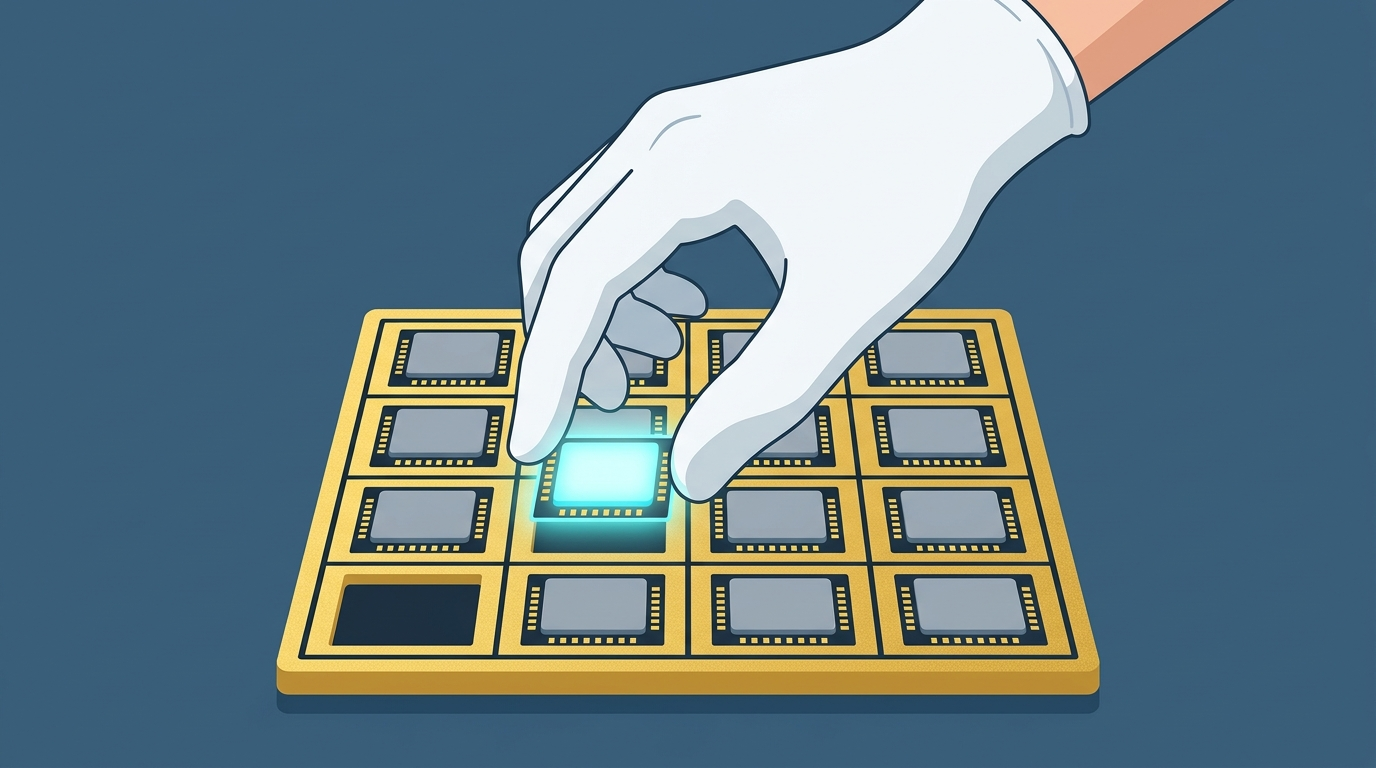
On November 11, 2026, IBM announced its next-generation quantum processor, Nighthawk r3, at Yorktown Heights, New York. Rather than chasing a new high-water mark for gross qubit totals, the release established a new engineering benchmark: stably executing 10,000 quantum operations across 520 programmable qubits. Customer workload metrics released alongside the hardware told an even more compelling story—external partners including E.ON, Algorithmiq, and Q-CTRL have already executed over 34 billion circuits on the preceding generation, observing workload speedups of up to 19x.
After Thirty Years of Skepticism, the Industry Admits Raw Qubit Counts Are Not Enough
For three decades, quantum computing was routinely dismissed by critics as a discipline that was “perpetually five years away.” Hardware vendors engaged in press-release rivalries centered on raw physical qubit counts, scaling figures from dozens up into the thousands. The engineering reality, however, remained sobering: many physical qubits proved too fragile to survive even tens of gate operations before environmental thermal noise degraded the quantum state.
This fixation on raw qubit counts derailed the industry’s architectural priorities for years. A high qubit tally is practically meaningless in production if circuits cannot run accurately or quickly enough to escape laboratory demonstrations. By redirecting roadmaps toward execution speed and fidelity, quantum hardware is finally shifting from stage demos into viable production pipelines.
Crossing the Industrial Threshold with 10,000-Operation Circuit Depth
The Nighthawk r3 processor fabric integrates 2,034 superconducting physical units, yet exposes precisely 520 programmable qubits for external workloads. That disparity reflects rigorous engineering screening. Much like planting over two thousand trees in an orchard where only the healthiest five hundred bear fruit, the remaining physical units serve as auxiliary resources to absorb and mitigate fleeting hardware errors.
The pivotal breakthrough lies in sustaining a depth of 10,000 operations. Simulating chemical materials or optimizing complex power grid schedules demands executing thousands of consecutive quantum gates; accumulating gate errors quickly corrupts the output. If a processor caps out at a depth of a few hundred steps, even a 10,000-qubit device will yield invalid calculations when modeling moderately complex molecular structures.
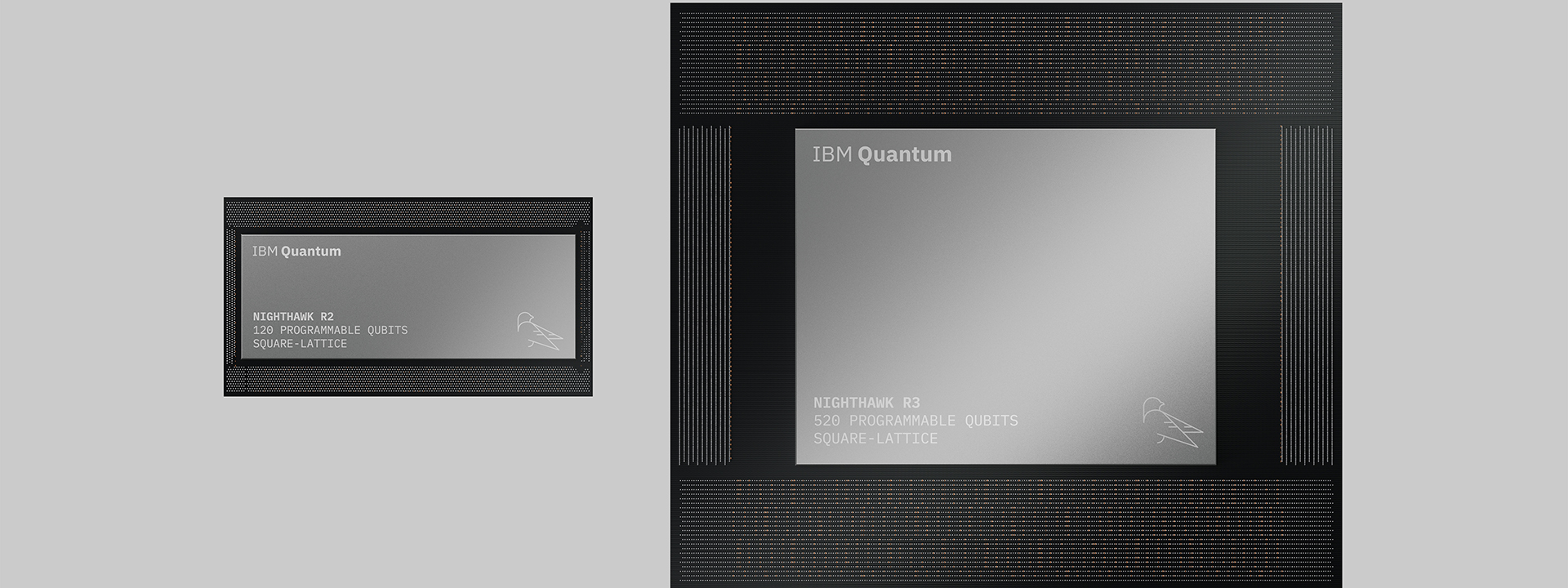 Figure: Chip rendering of the Nighthawk processor. The square-lattice layout enhances qubit-to-qubit connectivity and shortens operational routing paths. Source: IBM Newsroom
Nighthawk r3 retains the square-lattice topology established in earlier designs. This compact interconnection shortens signal routing paths and suppresses cross-talk between qubits. Pairing over 500 programmable qubits with 10,000-gate circuit depths enables researchers to simulate physical lattice dynamics directly on a single quantum processor.
100,000 Samples per Second: Compressing Months of Computation into Hours
Unlike classical computers that produce a deterministic result upon execution, quantum computation relies inherently on statistical sampling. Qubits evolve across superpositions, collapsing into probabilistically determined measurement shots. Determining the ground-state energy of a complex molecule regularly requires running the exact same circuit millions—or even billions—of times.
The currently deployed Nighthawk r2 hardware pushes sampling rates to 100,000 shots per second. By deploying high-speed reset capabilities, engineering teams sharply curtailed the latency windows between consecutive circuit runs. Increasing raw shot throughput is the prerequisite for completing multi-million and multi-billion-shot statistical workloads within acceptable operational timeframes.
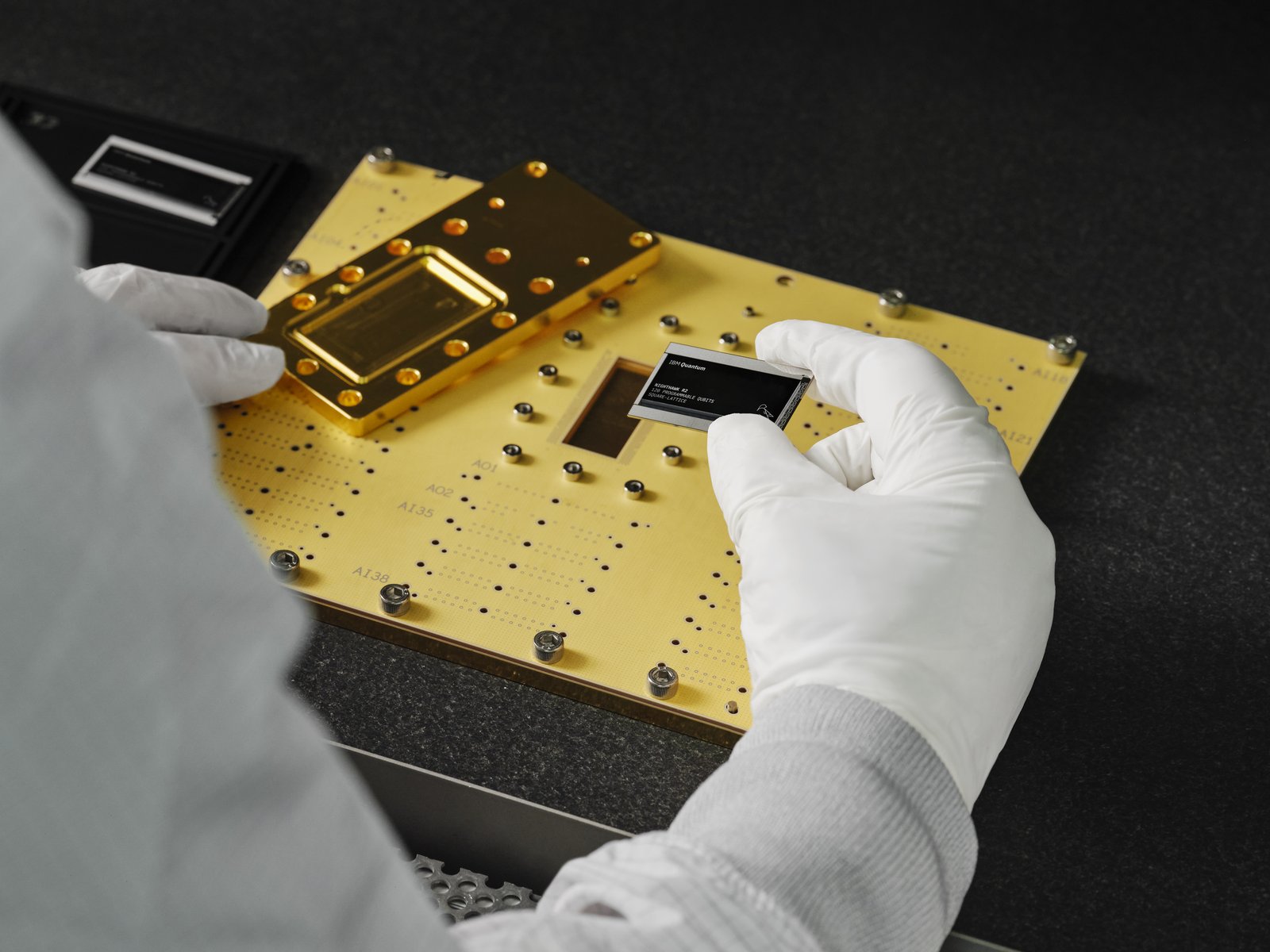 Figure: The physical Nighthawk r2 processor held in hand. The chip operates inside a dilution refrigerator at 15 millikelvin. Source: IBM Newsroom
Industry partners such as European energy utility E.ON and quantum software firm Algorithmiq have collectively logged over 34 billion circuit executions on r2. E.ON documented a 15x speedup applying quantum machine learning algorithms to grid optimization workflows. Meanwhile, Oak Ridge National Laboratory (ORNL) modeled real magnetic materials using the platform, cutting runtime to one-twelfth of the previous generation while achieving near-perfect agreement between simulated data and neutron scattering experimental readings.
Algorithmiq reported an 8x execution acceleration after migrating material simulations to the new hardware. Matching that level of precision on classical supercomputers using state-of-the-art tensor network algorithms would require an estimated 240x increase in memory overhead. This exponential memory blowup during classical simulation of many-body quantum entanglement forms the empirical bedrock of quantum utility in specialized domains.
Modular Packaging via Ten Interconnect Bridges: Scaling Beyond 1,000 Qubits in 2027
Monolithic superconducting chips face insurmountable physical scaling limits. As physical qubit counts climb past several thousand, dense coaxial wiring imposes unsustainable thermal loads, and microscopic fabrication defects degrade entire wafer yields. Relying solely on larger single-die layouts has hit an engineering ceiling; modular chiplet architectures represent the necessary path forward.
IBM engineered 10 quantum interconnect bridges, designated “l-couplers,” along the boundary of the r3 die. In earlier proof-of-concept experiments, teams coupled two first-generation dies using 4 interconnect lines, achieving a 99.3% quantum state transfer fidelity. By August 2026, two independent cryostats were unified into a shared cooling infrastructure, transitioning from room temperature to the target 15 millikelvin operating regime in under five days.
Under IBM’s official roadmap, two r3 processors will be coupled in 2027 to deliver a unified system comprising 1,040 programmable qubits. Operating separate, modularly cooled dies in tight coordination sidesteps wafer-yield collapse. If successfully validated at scale, expanding quantum capacity will mirror the modular architecture of modern blade servers.
Moving Beyond Lab Demonstrations: The Real Engineering Battle Begins
Advancing hardware capabilities requires overhaul across the entire software stack. IBM revamped its quantum cloud runtime to co-locate quantum processors and classical high-performance computing clusters inside shared execution pipelines. Using this hybrid infrastructure, RIKEN accelerated exact diagonalization workflows by roughly 5x while expanding computational scale a hundredfold. Cleveland Clinic automated pipelines across 608 million measurement samples, reducing end-to-end runtime by 30x.
On November 5, 2026, IBM joined forces with Oak Ridge National Laboratory and AMD to launch a collaborative quantum error correction platform. Placing Nighthawk processors in direct physical proximity to HPC clusters accelerated by AMD Instinct MI355X GPUs aims to eliminate latency bottlenecks between real-time classical decoding algorithms and quantum hardware. Exposing pulse-level controls further allows algorithm designers to tune microwave pulse waveforms directly, targeting hardware noise suppression at the physical layer.
Academic researchers maintain a balanced perspective. Proving empirical speedups on magnetic material simulations does not equate to the realization of a fault-tolerant, universal quantum computer. IBM openly characterizes these milestones as intermediate architectural objectives, providing circuits and raw verification datasets to the open-source community for independent benchmarking. Physical noise and the computational tax of quantum error correction remain formidable challenges.
The quantum computing race is turning away from hollow vanity metrics. Where vendors once competed over headline qubit totals on keynote slides, teams now evaluate hardware against the stopwatch—measuring circuit throughput, error rates, and operational fidelity. By grounding engineering milestones in real-world utility, quantum technology is finally forging a tangible route out of the laboratory and into practical computing.
References:
- IBM Newsroom: IBM Unveils Quantum Nighthawk Processor
- ORNL News: Accelerating Materials Simulations on Quantum Hardware
- Algorithmiq Research: Benchmarking Quantum Simulation against Tensor Networks
- Quantum Advantage Tracker Community Database