The Moment You Unplug: 8 Name-Brand Appliances Instantly Bricked
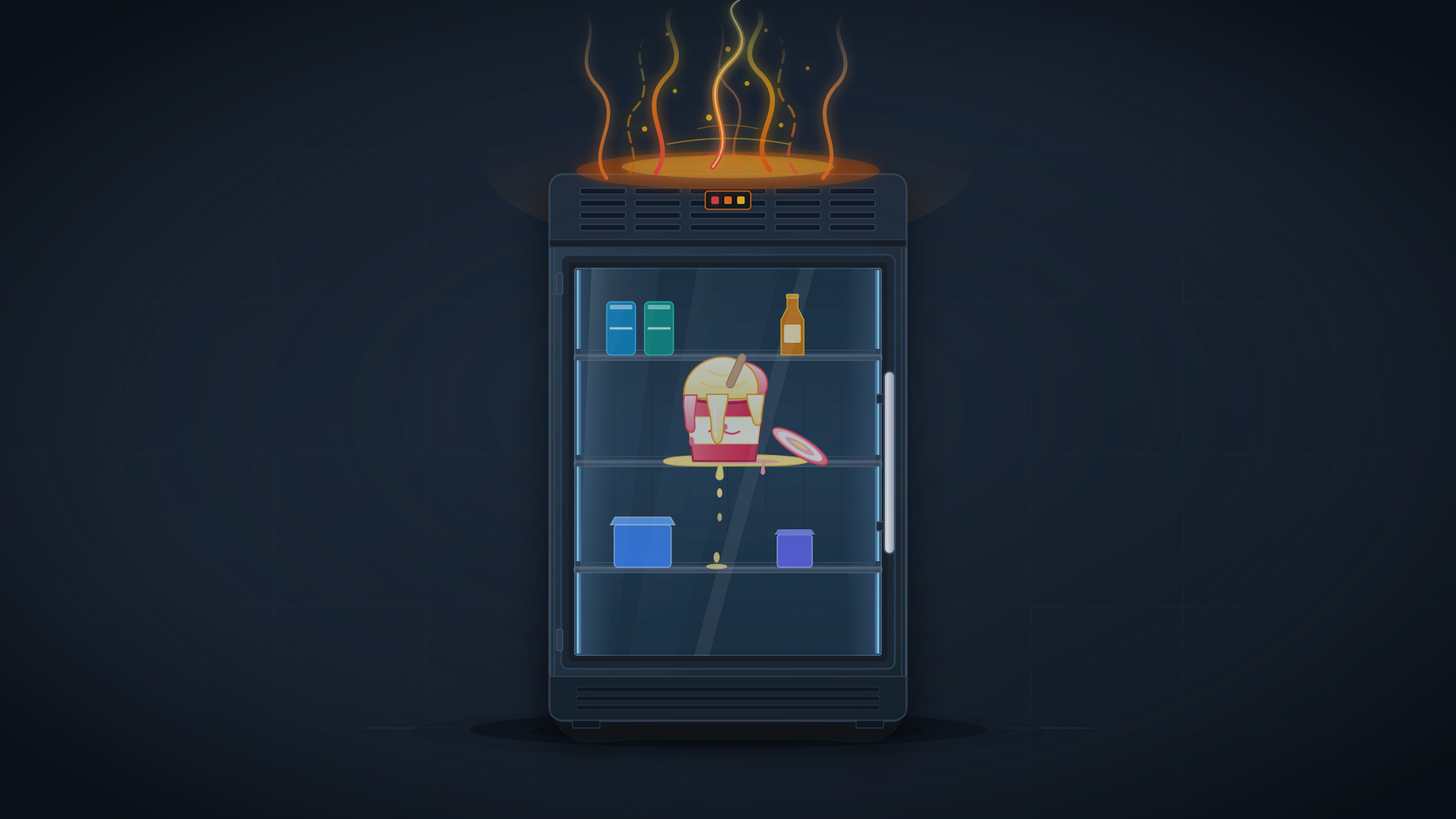
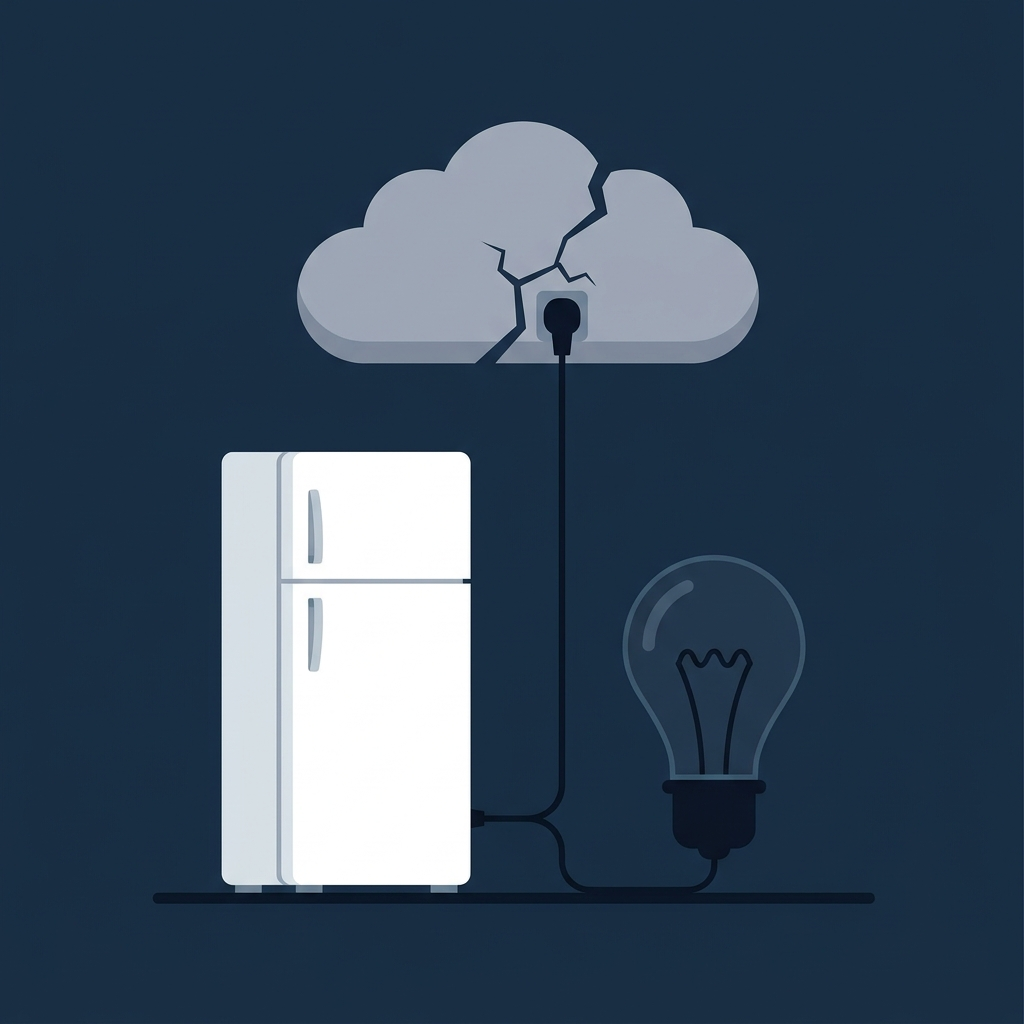
A Samsung smart refrigerator suddenly flashes an error screen: TLS certificate failure. There is zero hardware malfunction, yet the fridge temperature cannot be adjusted and the ice maker refuses to cycle—simply because it cannot reach a remote cloud server to validate that certificate.
Another user’s high-end smart outdoor pellet grill refuses to show the temperature on its display panel, stubbornly insisting that it must first connect to a Wi-Fi router. In an off-grid wilderness campsite, this expensive grill has less practical utility than a five-dollar bimetallic dial thermometer.
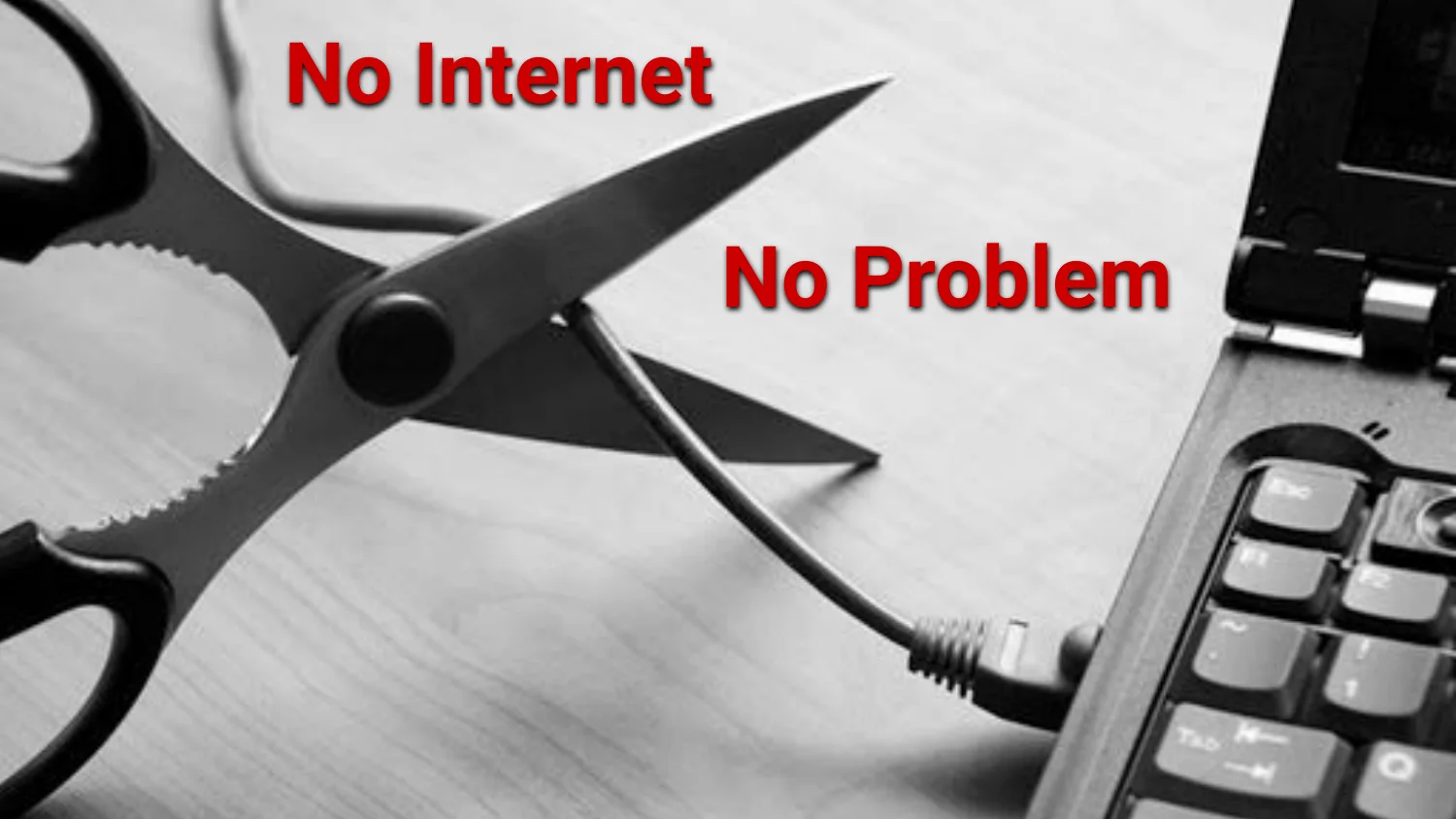 Image: Presentation slide titled “No Internet, No Problem,” showing scissors cutting an ethernet cable. Source: Do Code That Matters
These failures are far from isolated quirks. One smart television refuses to switch HDMI inputs without an active internet connection; another demands an account login before agreeing to serve as a dumb monitor. An HVAC system’s companion mobile app cannot communicate directly over the local LAN—even when phone and furnace share the same room, every temperature adjustment command has to make a round trip through the vendor’s cloud.
Even more absurd examples plague kitchens and everyday carry gear. A range hood and dishwasher, integrated with an open-source home automation system, still enforce an active WAN uplink; noise-canceling headphones obsessively hunt for Bluetooth pairing targets, refusing to perform the simple standalone action of turning on active noise cancellation; a professional music keyboard requires online activation upon first boot—when the verification server goes dark, the entire instrument is reduced to an expensive slab of plastic.
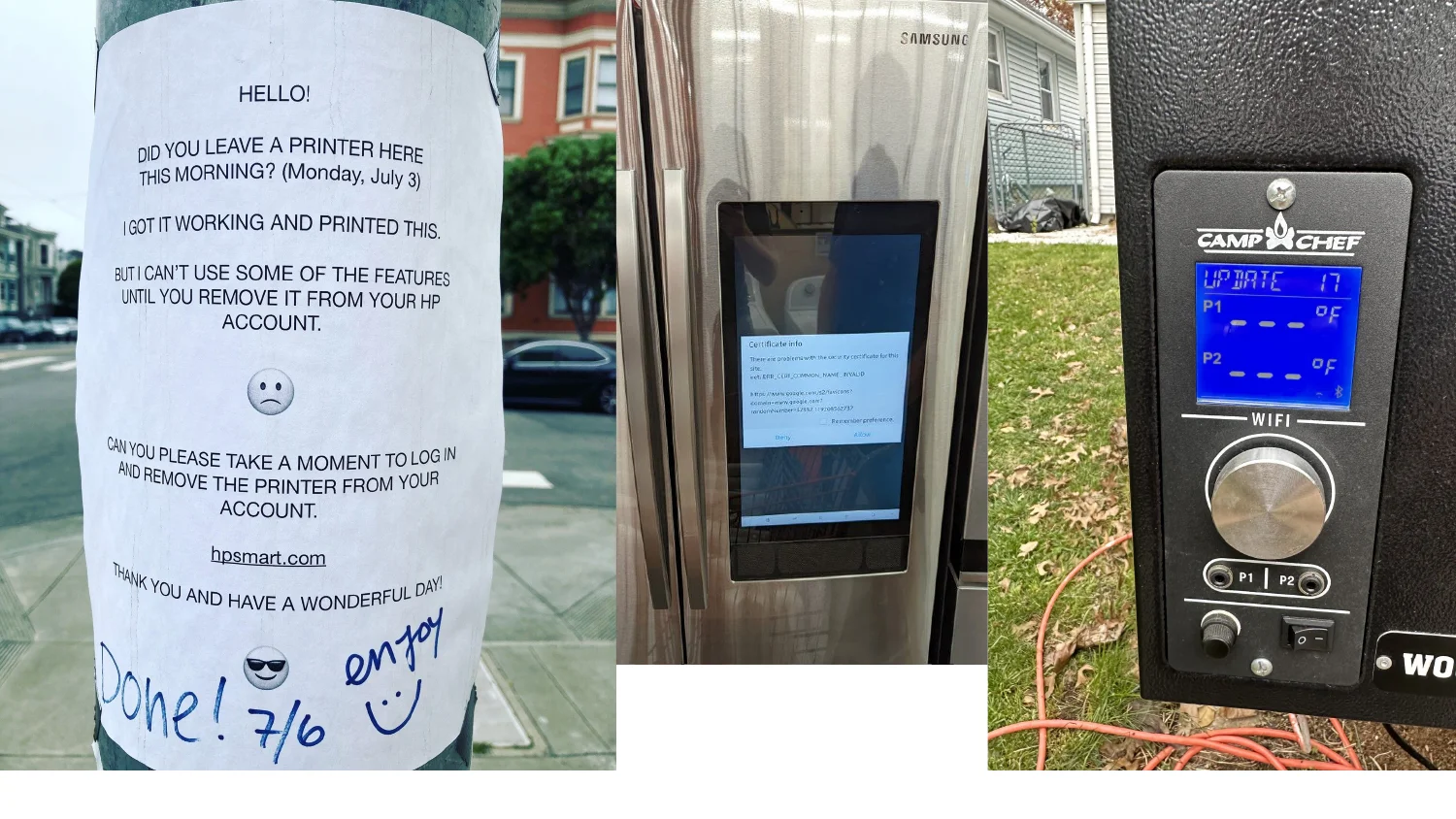 Image: Collage of three real-world photos. From left: printer claim code slip, Samsung fridge certificate warning, and grill Wi-Fi controller. Source: Do Code That Matters
The most telling cautionary tale on the list is a smart wireless meat probe. The hardware startup behind it went out of business, shutting down its cloud servers. The physical probe and its temperature sensors remained in mint condition, but without the vendor’s servers to complete the software handshake, the gadget was instantly bricked. The hardware outlived the company, yet died along with it.
Taping Wall Switches in Place Means Mortgaging Your House to Remote Servers
Many homeowners begin their smart home journey with a twenty-dollar smart bulb. Friction sets in immediately: a family member instinctively flips the wall switch, cutting power to the bulb and crippling all downstream automations. To keep power flowing, residents resort to taping the physical switch into the “on” position with Scotch tape, accompanied by a handwritten sticky note: “Do not touch.”
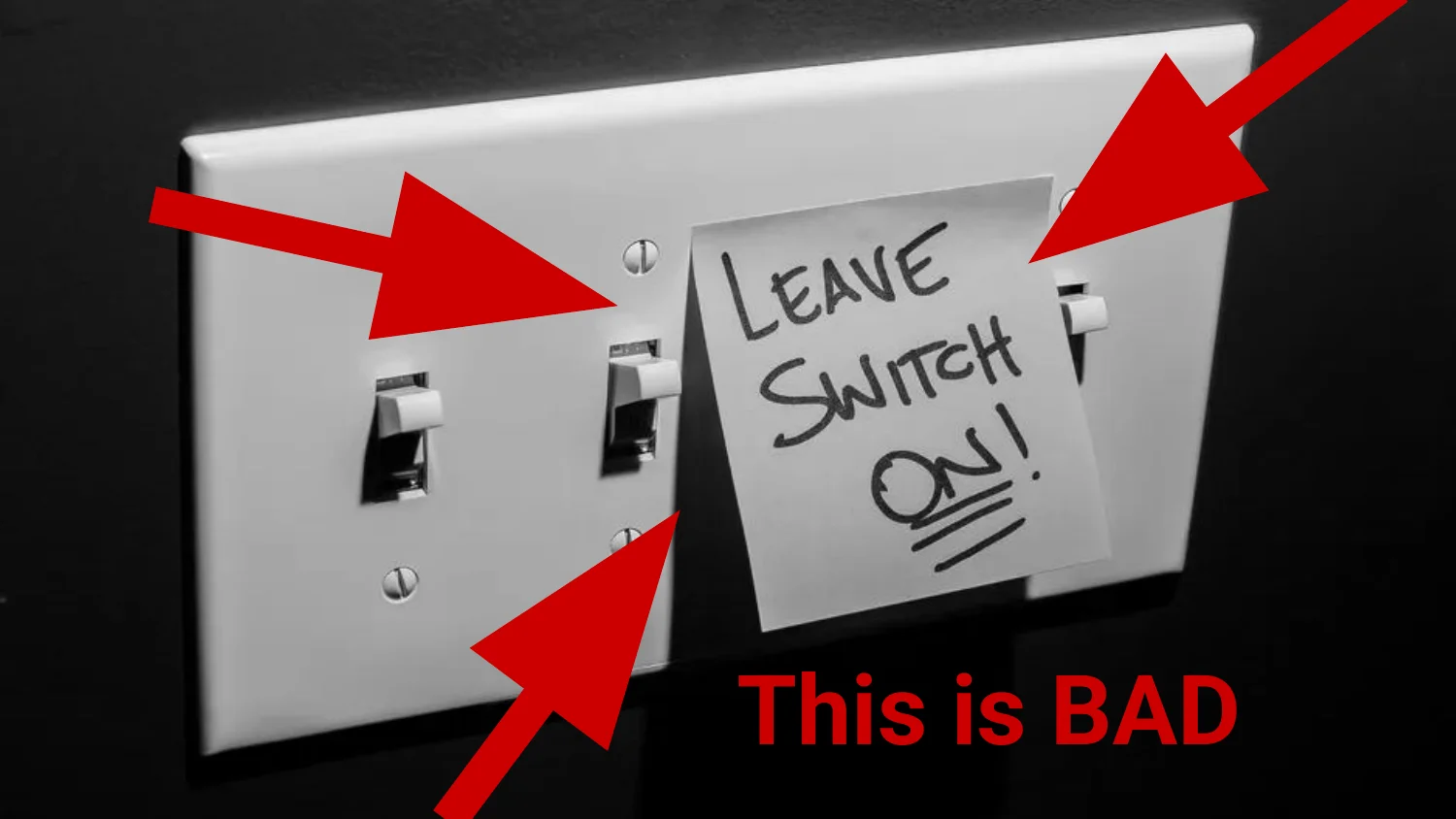 Image: A light switch taped in the “on” position with clear adhesive tape and a warning note to prevent cutting power to smart bulbs. Source: Do Code That Matters
Taping over mechanical wall switches strips a house of its foundational architectural resilience. Smart features should enhance physical capabilities, never replace them. A well-engineered smart switch must toggle the light directly while allowing automations to flip its state; if an outage or server crash leaves you unable to illuminate your living room, that switch is an engineering defect.
The author learned this lesson the hard way. Years ago, he built integrations around Nest thermostats, only for Google to deprecate the APIs and break the entire setup overnight. Vendors rewrite policies at will, leaving homeowners with degraded hardware. When home controls are scattered across five or six separate proprietary apps, you no longer own your home. A house is an asset intended to last decades, while vendor terms of service can be rewritten in an afternoon. Handing locking mechanisms and climate control to distant server racks downgrades homeownership into a precarious digital lease.
A Decade of Offline Automation: Core Functions Must Pass the Unplug Test
To escape this trap, the author established a core founding rule: “No internet, no problem.” Essential home functions must operate seamlessly when the network cable is severed. A smart speaker can be one valid input channel, but it must never be the only path. Over ten years, that foundation grew into eleven concrete operating rules: never decommission a legacy system while deploying a replacement; communicate across devices via MQTT pub/sub rather than fragile point-to-point bindings; keep configuration centralized in one place rather than scattered across vendor apps; reject any cloud appliance lacking open APIs and logs; and demand battery lifespans exceeding a year, because nobody wants to swap door sensor batteries at 2:00 AM.
The resulting technology stack is deliberately restrained. Microcontrollers run open-source Tasmota firmware, inter-device communication relies on lightweight local MQTT, scheduling logic runs inside Node-RED on a low-power Raspberry Pi, and telemetry flows into Grafana dashboards. Remote access is handled at the network edge via Tailscale on the router, while the smart devices themselves are strictly isolated from the wider internet.
When the fiber ONT occasionally hangs, a dedicated smart plug acts as a physical power watchdog, allowing remote power-cycling. Even during prolonged internet outages, indoor climate regulation, security alerts, and ambient lighting automations continue humming along undisturbed.
Access routes into the home feature robust redundancy: mobile dashboards, offline voice controls, QR codes, and physical NFC tags can all unlock doors. This redundancy is not aesthetic purism—a dinner guest should never have to install an app or register an account just to turn on a lamp. The author turned this into a formal design acceptance test: if a visitor cannot flip a light or tweak the thermostat without downloading an app, the architecture has failed.
Connectivity Has Value, but Paid Hardware Shouldn’t Owe Monthly Rent
Connected appliances unquestionably offer genuine conveniences. A connected meat probe that lets you track steak doneness from the sofa while watching a game provides tangible value. But community discussions highlight the darker side: smart ovens that initiate mandatory firmware updates midway through roasting dinner. The modern connected appliance business model revolves around recurring subscriptions rather than single-sale hardware. Hardware margins are razor-thin, giving manufacturers every incentive to lock buyers into sticky ecosystems—a business playbook that collides head-on with the decade-long lifecycle expected of durable household goods.
As homes sprout dozens of cloud-tethered endpoints, cybersecurity concerns also mount. When connected households achieve critical mass, they become tempting targets for coordinated exploits. Many observers believe that the eventual pushback returning appliances to offline operation will be driven by operational resilience and security fears rather than consumer complaints alone.
Trade-offs must be acknowledged honestly. Building an entirely custom, offline automation stack demands significant time and technical expertise. Pragmatic compromises are often more realistic: a twenty-five-dollar pulse sensor on an existing utility meter is far less trouble than replacing a whole-house smart valve, while some homeowners opt to keep only laptops and phones online, leaving everything else to physical knobs and mechanical dials. For the average household, building an off-grid automation stack simply to avoid electronic waste is rarely cost-effective.
Turning on Lights and Unlocking Doors Doesn’t Require Cloud Approval
Ten years of living off-grid with smart automation delivers an unambiguous verdict: local-first architectures demand higher upfront configuration effort, but reward you with hardware that remains permanently under your control. Total cloud dependency may offer effortless setup, but leaves you vulnerable to sudden obsolescence whenever a remote company shuts down its servers.
The definitive design standard fits into a single sentence: press the switch, and the light turns on; unplug the fiber, and the HVAC still cycles on temperature thresholds. Foundational physical actions like turning on a lamp or unlocking your front door should never require permission from a remote server.
Reference Links:
- Do Code That Matters: Smart home devices should work without the internet
- Hacker News Discussion (item?id=50441707)
- The FULU Foundation (Right to Repair Organization)