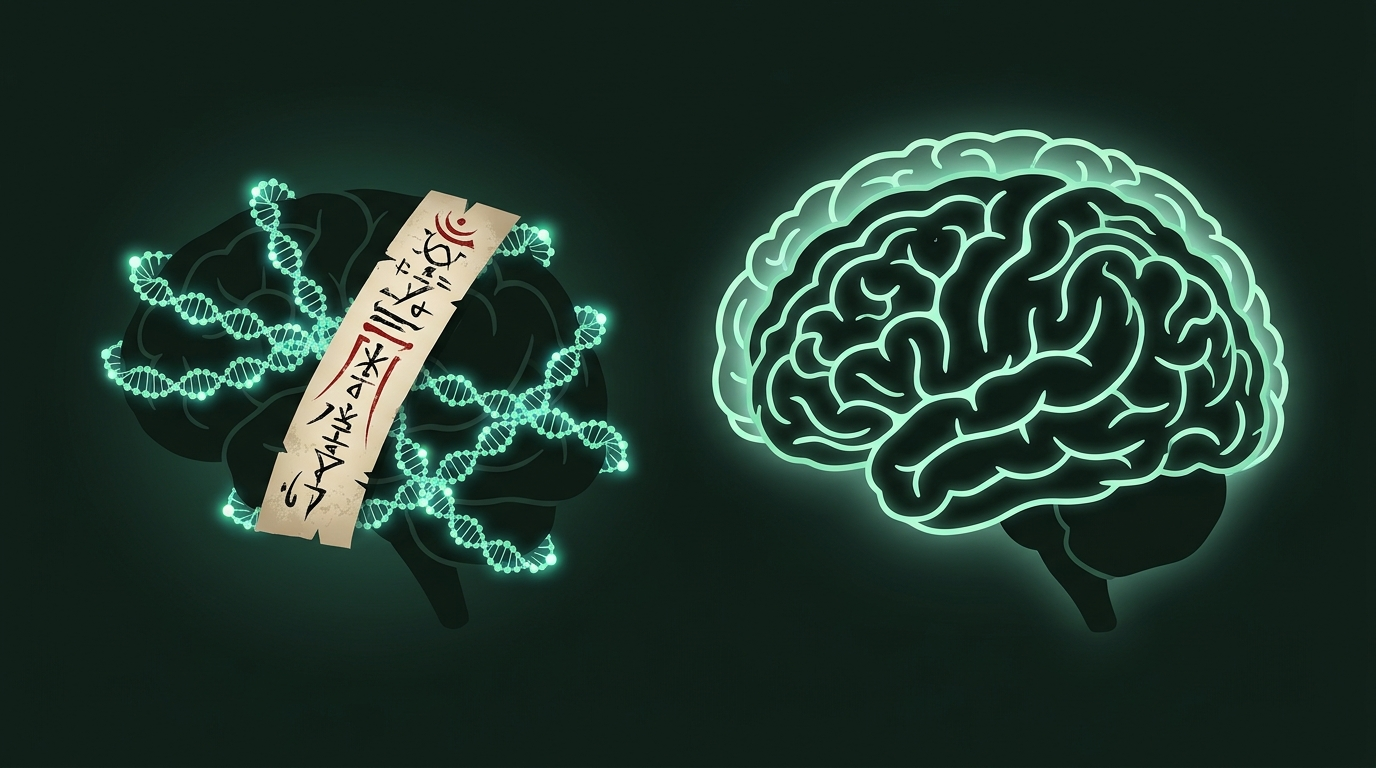
A single drop of dish soap falling into a sink instantly blooms into clusters of bubbles with a gentle stir. The same holds true for a pot of freshly brewed chicken soup: no matter how vigorously stirred, golden droplets of oil on the surface quickly gather back into tight, rounded spheres. Behind these everyday domestic phenomena lies one of the most compelling clues to the emergence of life on Earth.
Inside the modern human body, every single cell carries out roughly one billion chemical reactions each second. Maintaining such intricate and rapid machinery requires a physical barrier: a tightly sealed lipid membrane enveloping the cell. As University of California astrobiologist David Deamer pointed out, you must first have a container before meaningful chemical reactions can truly take off.
In the Primordial Soup Without Containers, Molecules Dilute Away
Four billion years ago on early Earth, prebiotic oceans were strewn with spontaneously formed organic fragments. Scientists traditionally described this ancient marine expanse as a “primordial soup,” imagining molecules freely evolving across open waters. In reality, an open body of water is hopelessly vast and dissipative; trace molecules synthesized in the wild quickly dilute and drift away.
Without physical barriers, fragile, nascent chemical cascades could never sustain themselves. Emerging life required protocells—microscopic spheres enclosed by lipid membranes sheltering essential molecules—to establish private reaction chambers. Only by partitioning an isolated environment could concentrated chemical building blocks withstand being washed out by the tides. Prebiotic chemistry, the discipline exploring how inert matter transitioned into living systems, thus shifted its attention to the containers themselves.
Soap-Like Molecules in Water Spontaneously Form Closed Spheres
Nature’s method for manufacturing these containers proves far more elegant and effortless than most imagine. Prebiotic Earth was rich in amphiphilic molecules, featuring heads that naturally attract water and tails that actively repel it. Common soap, along with everyday plant and animal fats, shares this exact physical character.
When dropped into water, these molecules instinctively shield their hydrophobic tails from aqueous surroundings, clustering tightly inward. Their hydrophilic heads orient neatly toward the surrounding water and toward the interior droplet captured inside the shell. This entire self-assembly requires no complex molecular machinery; driven solely by fundamental laws of physics, amphiphiles spontaneously organize into bilayer microscopic vesicles.
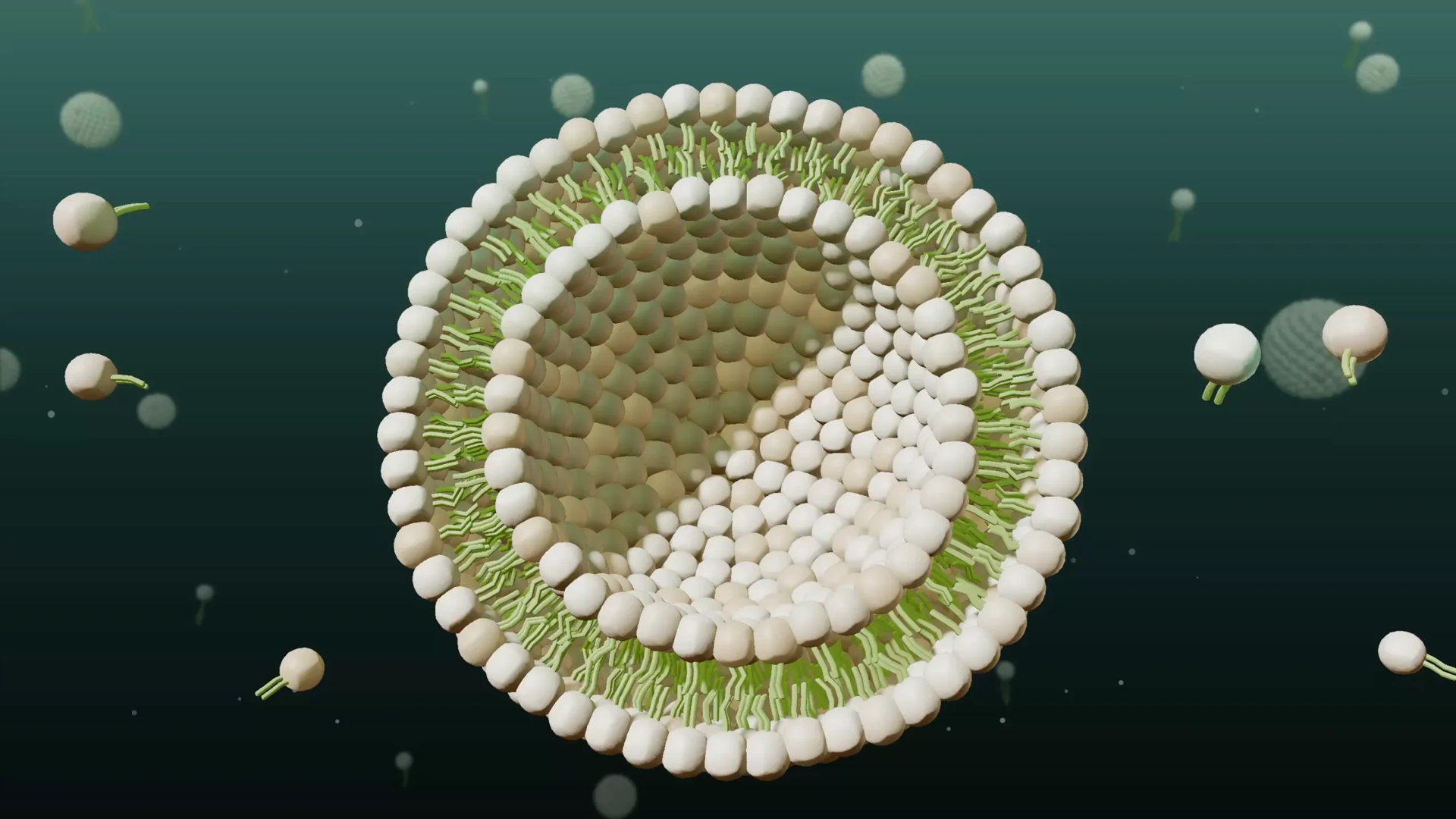 Figure: Bilayer lipid molecules spontaneously assemble in water to form closed vesicular containers. Source: Mark Belan / Quanta Magazine
This fundamental physical property gave rise to the lipid-first hypothesis, which posits that life originated with oily micro-bubbles encapsulating reactive molecules. Under this view, oily compartments emerged first, offering a sheltered haven for subsequent biochemical complexity. Once microscopic bubbles stabilized, scattered nutrients in the ancient ocean were confined within a nanoscale incubator.
Beyond Genetic Codes: Reproducing Through Molecular Proportions
For decades, conventional wisdom held that reproduction strictly required complex genetic instructions. Ribonucleic acid (RNA)—capable of storing genetic data while catalyzing chemical reactions—has long been viewed as the inevitable starting point of Darwinian evolution. Yet inside lipid bubbles, hereditary information could have propagated through a much simpler, purely physical mechanism.
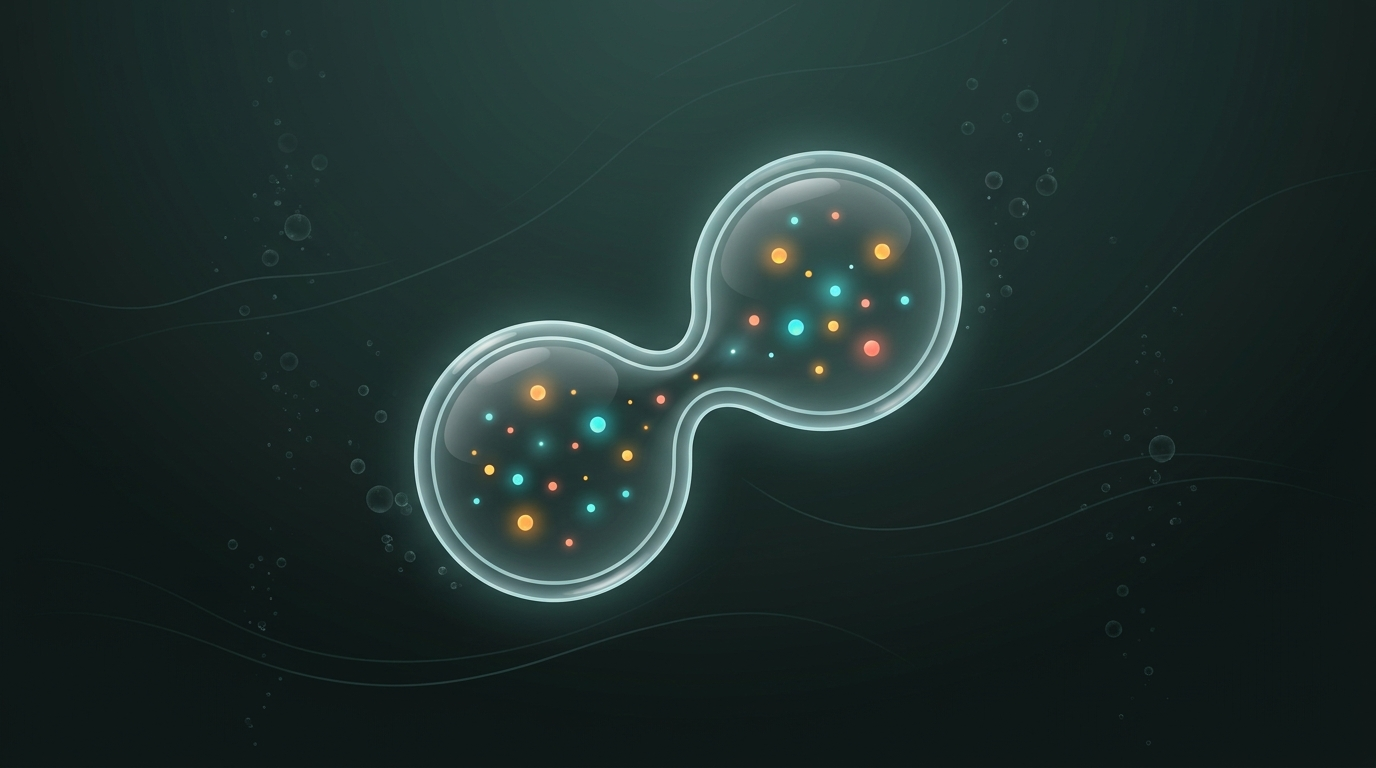
If a bubble encapsulates molecule A and molecule B, the two can form a mutually catalytic network. Molecule A accelerates the synthesis of molecule B, while molecule B stimulates the accumulation of molecule A. As internal contents swell, the vesicle expands until physical tension pinches it into two smaller daughter bubbles.
The daughter bubbles inherit the prevailing chemical ratio, sustaining the autocatalytic cycle across generations. This mechanism is known as compositional inheritance—a primitive heredity reliant on molecular proportions rather than nucleotide sequences. The occasional introduction of a rogue molecule C acts much like a genetic mutation, enabling certain vesicles to establish faster-growing chemical recipes. Bubbles that multiply more rapidly outcompete their peers, effectively launching the earliest form of natural selection.
In 2000, geneticist Doron Lancet and researcher Daniel Segrè unveiled a computational model in the Proceedings of the National Academy of Sciences (PNAS) demonstrating that this framework satisfies the conditions for natural selection. Their mathematical simulations confirmed that gene-free micro-bubbles possess the intrinsic capacity to initiate early evolutionary lineages.
A Quarter-Century of Scrutiny: Inheritance Errors Threaten Collapse
Yet ideal computational models inevitably face rigorous empirical scrutiny. Nobel laureate Jack Szostak of the University of Chicago has long maintained a skeptical stance toward pure lipid evolution. Szostak argues that an origin-of-life paradigm relying entirely on lipid dynamics has continually failed to prove its mechanical viability in the lab.
Szostak’s skepticism centers on two significant empirical hurdles. First, experimental laboratories have yet to demonstrate a pure lipid system capable of sustained Darwinian evolution in vitro. Second, prebiotic chemistry has struggled to establish how early Earth could have synthesized simple amphiphilic lipids in substantial quantities.
A 2010 quantitative study dealt an even heavier mathematical blow to the pure bubble reproduction hypothesis. Researchers demonstrated that when parent bubbles divide, the partition of internal molecules experiences severe stochastic fluctuations. Transmission errors accumulate so quickly that catalytic chemical ratios disintegrate within just a few generations. Swamped by thermodynamic noise, natural selection lacking rigid sequence constraints cannot endure over evolutionary timescales.
Terrestrial Hot Springs: Drying and Wetting Cycles Pack Precursors into Lipid Sheets
While the pure lipid world faces unresolved questions, the quest to understand prebiotic compartmentalization has pushed forward. Some researchers propose that porous networks in iron sulfide minerals served as rigid inorganic cell walls. Others point to coacervates—dense, membrane-free droplets concentrated purely through electrostatic charges.
David Deamer and his collaborators turned their focus toward terrestrial hydrothermal fields. Hot spring pools at the foot of ancient volcanoes underwent continuous cycles of evaporation and replenishment driven by sunlight and rainfall. Dehydration compressed organic precursors between tightly stacked lipid multilayers. Upon rehydration, these lipid sheets sloughed off, packaging concentrated molecular suites into swarms of newly formed, functional vesicles.
 Figure: Protocells assemble through environmental cycling, concentrating molecules to drive early evolution. Source: Quanta Magazine
Though competing camps continue to debate exact molecular pathways, a clear consensus has emerged regarding spatial architecture. Even Szostak, a steadfast champion of the RNA world hypothesis, acknowledges that physical compartments are non-negotiable. His assessment is unequivocal: “Without them, Darwinian evolution cannot get off the ground.”
At its core, evolution relies on selection—and selection requires discrete, individual entities to select among. Free-floating catalytic molecules, no matter how efficient, inevitably diffuse into oblivion across an open ocean. Only when a lipid membrane demarcates a microscale boundary does chaotic chemistry gain an evolutionary arena. Life’s very first step was boxing itself inside a tiny bubble.
Reference Links:
- Quanta Magazine Feature: In-depth analysis of the bubble hypothesis for the origin of life
- PNAS Paper: Computational modeling of compositional inheritance in protocells