A Microscopic Thread That Halts a Bird: The Unreplicated Industrial Wonder
Anyone who takes an early morning stroll through the woods has likely walked into a spiderweb. The individual thread is nearly invisible, yet remarkably elastic when stretched. Natural spider silk measures only a few micrometers across—roughly one-twentieth the diameter of a human hair. Yet this single gossamer strand can instantly catch a falling spider mid-air.
In mechanical benchmarks, natural spider silk eclipses the finest achievements of human manufacturing. Its tensile strength exceeds that of high-grade alloy steel of equivalent thickness. In impact toughness and energy absorption, it easily surpasses Kevlar, the high-performance synthetic fiber widely used in ballistic vests and high-end puncture-resistant tires.
Even more impressive is an individual spider’s biological repertoire: it can produce up to seven distinct types of silk, each engineered for specialized tasks. Wrapping silk is compliant and soft. The outer spiraling threads of a web excel at absorbing aerodynamic shock. And the lifeline preventing catastrophic falls is dragline silk—the high-toughness core strand designed to arrest sudden kinetic drops. Dragline silk stands as one of the most resilient, impact-resistant fibers known to science.
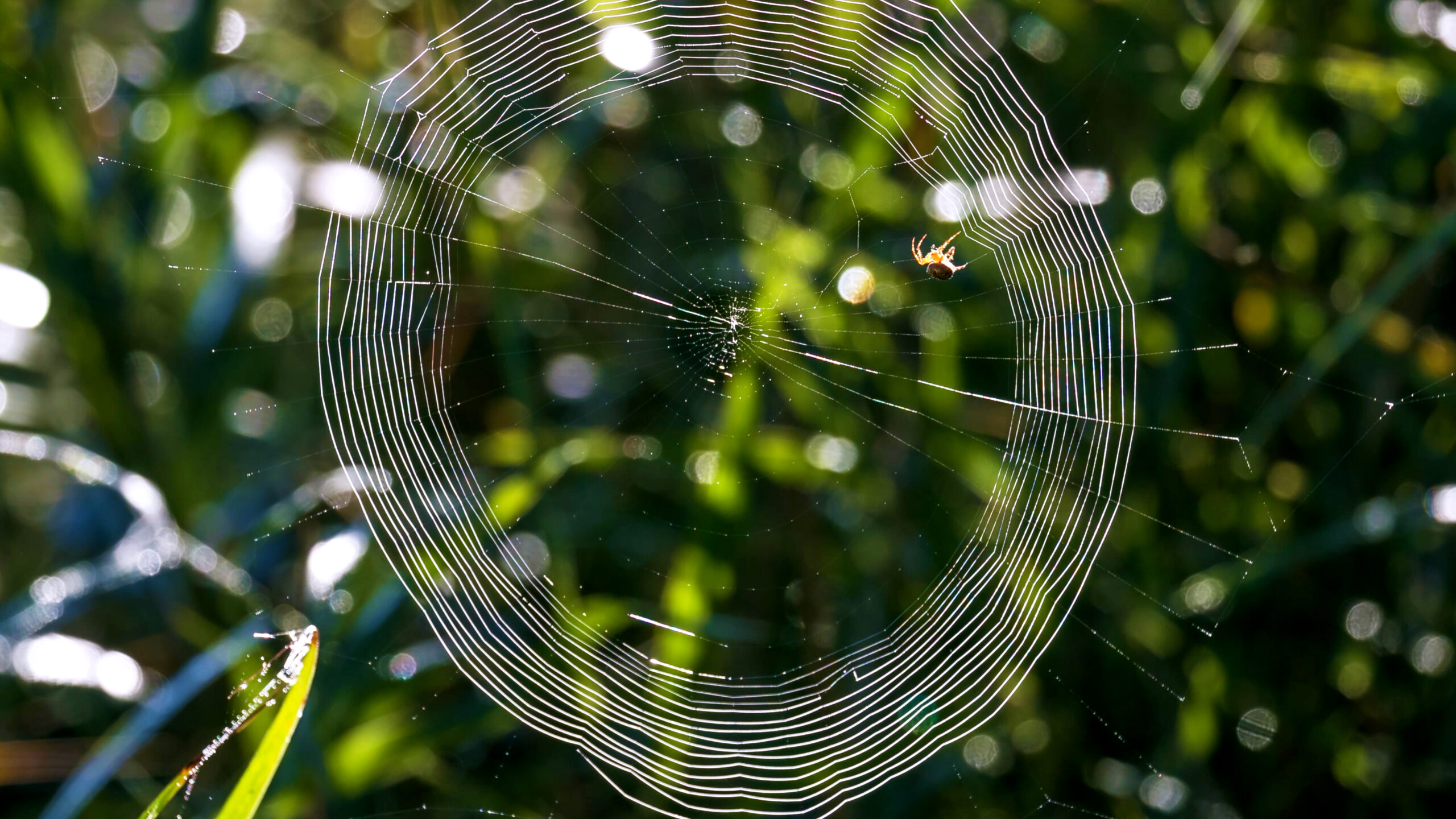 Figure: An orb-weaver spinning its web in the woods, yielding silk with exceptional strength and elasticity. Source: Quanta Magazine (Photo: Konrad Wothe/NaturePL).
For decades, materials scientists have sought to mass-produce synthetic spider silk in factories. High-performance bio-inspired fibers could revolutionize lightweight body armor and ultra-strong automotive seatbelts. Yet lab-synthesized versions routinely underperform natural dragline silk by substantial margins. The fundamental bottleneck has always been observational: no one could directly observe the atomic phase transition occurring deep inside the spider’s spinning duct.
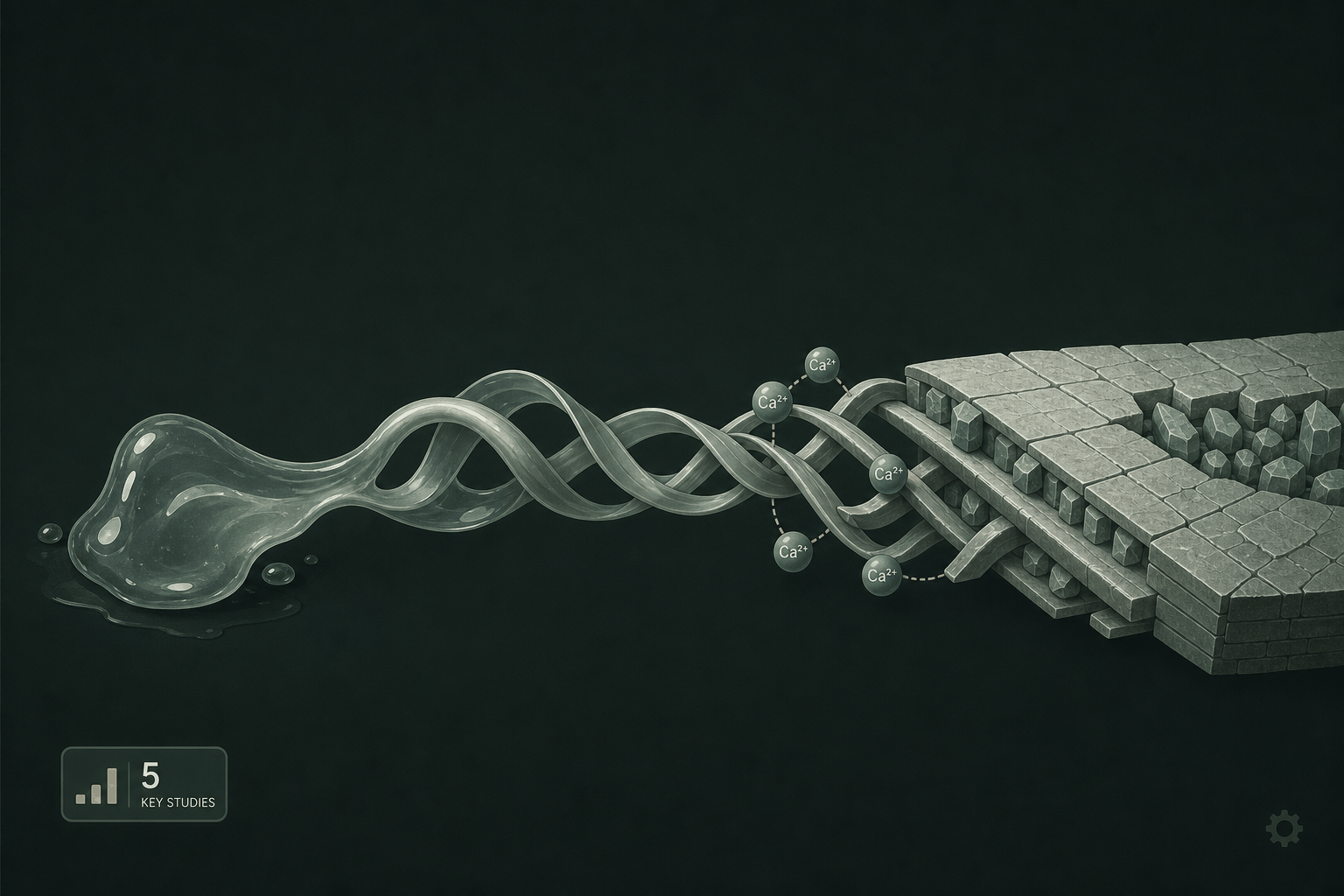
Spiders store raw silk feedstock—known as spidroin—inside their abdominal ampullate glands. Deep within the gland, these large proteins remain completely dissolved in an aqueous, low-salt solution with the consistency of raw egg white. Yet upon extrusion, this viscous liquid dope solidifies almost instantaneously into an unyielding, resilient fiber. What hidden molecular cue locks loose, spaghetti-like protein chains into an ultra-tough structural cable? This phase-change enigma has baffled biophysicists for decades.
Double Gloves and Anesthesia: Milking Black Widows Six Times in Two Weeks
To observe the microscopic dynamics of liquid-to-solid condensation, chemist Gregory Holland and his team at San Diego State University turned to the western black widow (Latrodectus hesperus). Between 2023 and 2024, their laboratory received steady shipments of living adult female black widows. Female black widows are significantly larger and spin exceptionally robust dragline silk, making them ideal experimental subjects.
Harvesting pristine silk in the laboratory is a precarious undertaking. Researchers first pump carbon dioxide into the holding chamber to anesthetize the spider into deep torpor. Wearing two layers of heavy protective gloves, an experimenter carefully uses fine tweezers to grasp the microscopic silk strand protruding from the spider’s abdominal spinneret. Once snagged, the transparent filament is taped to a motorized spindle, slowly spooling out silk at a steady, controlled pace.
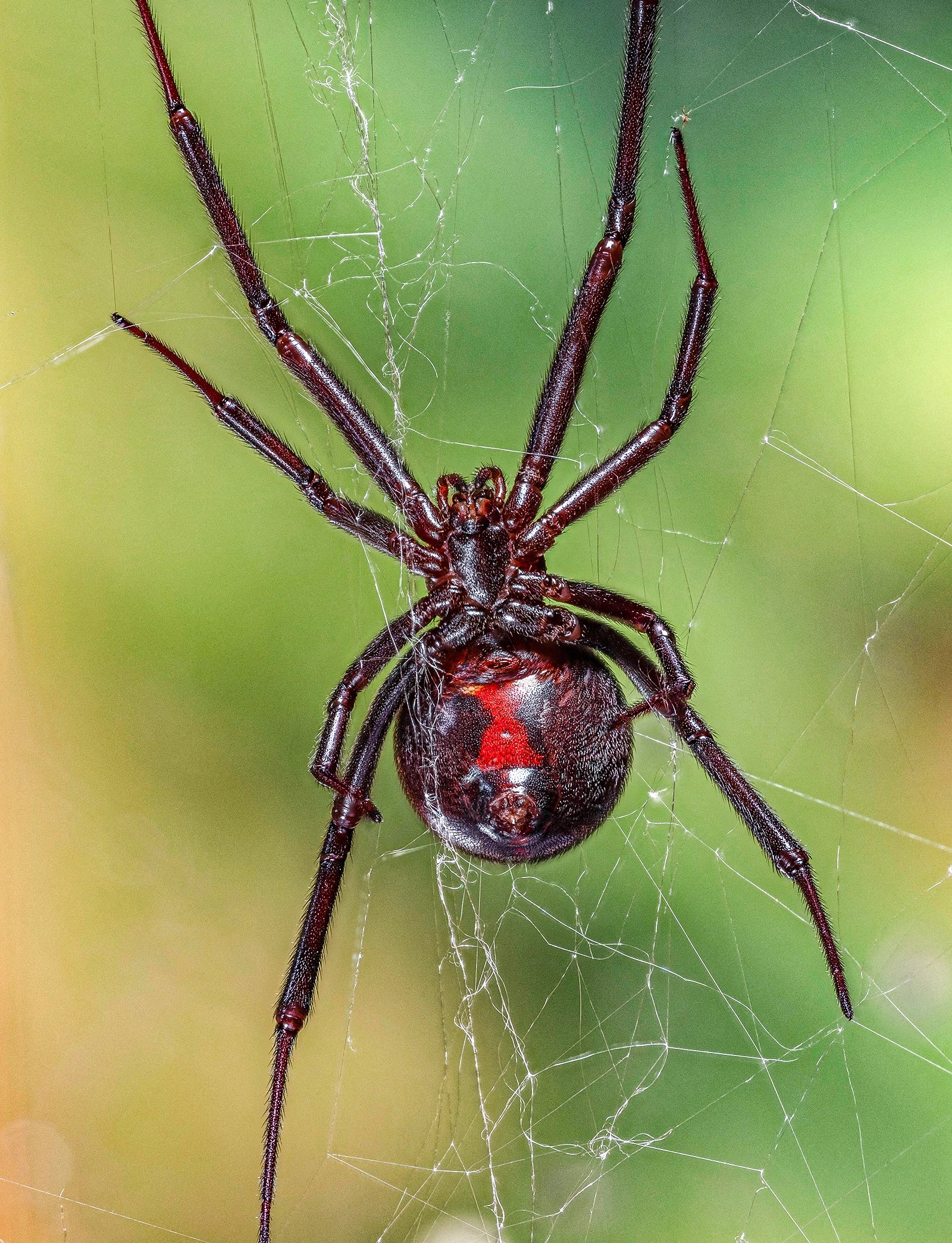 Figure: A female black widow spider in the lab during silk-milking trials. Source: Quanta Magazine (Photo: Phil Degginger/Alamy).
Over a two-week span, each cohort of black widows underwent anesthesia up to six times, with each spinning session lasting nearly an hour. To make the harvested proteins legible to spectroscopic instruments, the team formulated an isotopically enriched diet. They fed the spiders specialized protein shakes spiked with carbon-13 and nitrogen-15 isotopes. As the arachnids digested this cocktail, they incorporated the isotopic tags directly into newly synthesized spidroin backbones.
Holland noted that calm, high-yielding spiders were naturally popular with the bench researchers. Nonetheless, he harbored a quiet admiration for the feisty individuals that woke up ready to fight. Through patient, meticulous harvesting cycles, the team accumulated enough pure, isotope-labeled silk protein to run high-field Nuclear Magnetic Resonance (NMR) spectroscopy, tracking molecular configurations at atomic resolution.
NMR Unveils the First Step: Phosphate Activates Molecular Stickers
The spectroscopic data revealed how silk remains stable in liquid storage. Inside the gland, more than half of the spidroin chain belongs to intrinsically disordered regions (IDRs)—unstructured protein segments that flex freely like cooked spaghetti. Abundant water molecules weave between these loose peptide chains, serving as a biological lubricant. This hydration shell keeps the concentrated protein dope flowing smoothly, preventing premature clumping from clogging delicate internal ducts.
The critical transformation begins the moment the dope enters the spider’s microscopic spinning duct. The chemical microenvironment shifts rapidly, triggered by an influx of phosphate ions. As local phosphate concentration rises, an atomic switch flips. Two specific amino acid residues distributed along the spidroin backbone—positively charged arginine and flat, aromatic tyrosine—are drawn toward one another.
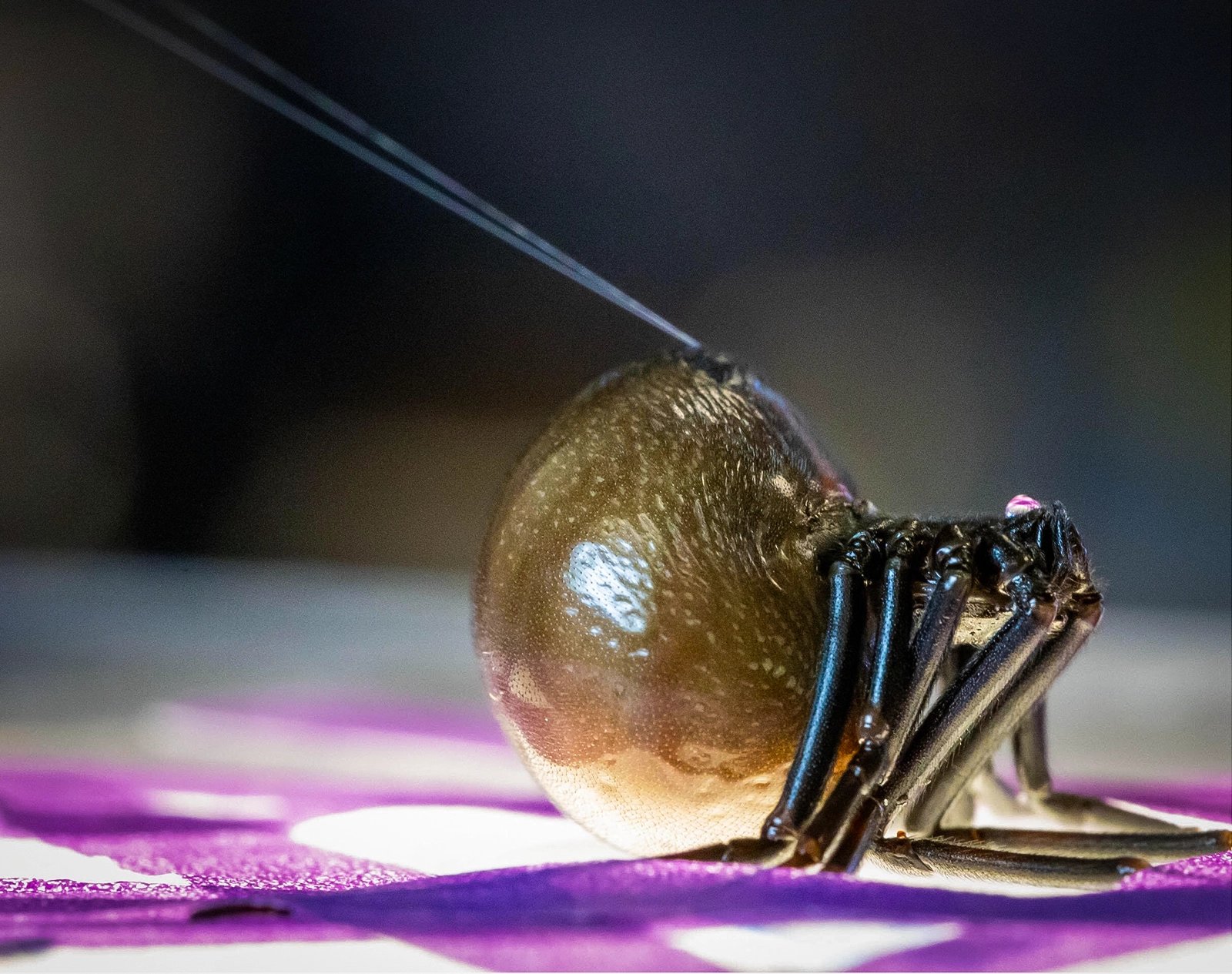 Figure: Researchers wearing double protective gloves use a micro-motor to draw silk fiber from an anesthetized black widow. Source: Quanta Magazine (Courtesy of Greg Holland).
At the atomic scale, these paired amino acids function as “molecular stickers.” Primed by phosphate, arginine and tyrosine lock into tight physical contacts. As these sticky interactions pull neighboring chains closer together, the lubricating water trapped between them is expelled. The dispersed proteins undergo liquid-liquid phase separation, condensing into dense, microscopic gel droplets. Biophysicists refer to these dehydrated clusters as biomolecular condensates.
Crucially, these molecular stickers remain engaged throughout the fiber’s elongation. As the micro-droplets are squeezed through narrowing ducts and subjected to shear flow, the aligned arginine and tyrosine pairs position themselves at key structural turns. They provide physical scaffolds that stabilize densely packed beta-sheets—the ultra-stiff, interlocking crystalline domains that grant spider silk its legendary tensile strength.
Computational Simulations Fill the Void: Micro-Droplets Drive Dehydration
To corroborate the spectroscopy findings, the team conducted molecular dynamics simulations, numerically predicting atomic behavior under physical laws. Researchers predicted the spidroin structures using AlphaFold-derived models and simulated their behavior in supercomputers under varying phosphate concentrations. The computational trajectories matched NMR observations: unstructured peptide chains rapidly condensed into dense, phase-separated droplets under precise ionic conditions.
This breakthrough slots a missing cornerstone into biomaterials science. Back in 2020, Keiji Numata’s team at Kyoto University hypothesized that spider silk assembly must transition through biomolecular condensation. However, empirical atomic proof remained elusive for years, leaving scientists in the dark regarding the specific physical forces driving the initial aggregation.
Independent experts praised the work. Biomaterials researcher Matt Harrington at McGill University noted that condensation represents a universal organizing principle in nature. Daiwen Yang, a biophysicist at the National University of Singapore, highlighted that the new dataset provides the first unambiguous evidence of high-molecular-weight spidroin undergoing direct phase separation into solid-like condensates.
Holland emphasized that materials engineers had previously skipped this critical intermediate step. Conventional synthetic spinning methods rushed directly from dissolved protein to drawn fiber, completely bypassing the dehydration and condensation phase. Without this pre-organization step, artificial fibers formed porous, disordered networks that could never match the mechanical resilience of natural dragline silk.
Cracking the Phase-Change Mystery: A Factory Blueprint for Super-Materials
Deciphering the black widow’s spinning mechanism provides a concrete engineering roadmap for bio-synthetic materials. Previous attempts fell short precisely because they lacked the proper phase-change chemistry. Without controlled ionic triggers, synthetic protein chains fail to assemble into dense, load-bearing microstructures. By introducing tunable phosphate baths upstream of industrial extrusion spinnerets, engineers now have a reliable blueprint for guiding arginine-tyrosine condensation.
This self-assembly logic extends far beyond artificial spider silk. In the natural world, the razor-sharp beak of a squid tears through crustaceans without a single mineral component. Marine mussels anchor themselves against crashing surf using purely proteinaceous underwater glues. Living organisms bypass the extreme temperatures and pressures demanded by metallurgy. With subtle adjustments to ionic charge and pH in aqueous solutions, nature constructs materials that surpass aerospace alloys.
Nature’s evolutionary genius lies in transforming cheap water and ubiquitous amino acids through precise phase transitions. By revealing how black widows use a simple phosphate switch to lock protein backbones into place, science moves past trial-and-error manufacturing. This atomic-level discovery completes a vital biological puzzle—and hands material scientists nature’s master blueprint for ultra-tough materials.
Reference Links:
- How Spiders Spin ‘Silk Dope’ Into Nature’s Toughest Material — Quanta Magazine
- Original Research Article — PNAS (doi: 10.1073/pnas.2523198122)
- Scientists uncover molecular trigger that turns liquid spider silk — SDSU