“The person who copies the textbook from a pirate site has infringed already, full stop.” With those words, Senior US District Judge William Alsup of the Northern District of California drew a bright line for the artificial intelligence industry. Reading and learning from books constitutes fair use; downloading pirated books to build an internal repository is copyright infringement.
The class action lawsuit against Anthropic concluded with a historic $1.5 billion settlement—the largest copyright recovery in United States history. Covering nearly 500,000 registered works, the agreement amounts to roughly $2,932 per title. Yet the astronomical sum has failed to quell outrage among creators, with prominent authors choosing to opt out and pursue independent jury trials.
This landmark ruling bifurcates the generative AI debate into two separate acts: machine learning versus digital acquisition. The former enjoys broad protection under the fair use doctrine, while the latter crosses the line of unlawful reproduction. While the legal boundary is now clear, pricing power over creative works remains firmly in the hands of big tech.
A Judicial Watershed: AI Can Read, but It Cannot Steal
In August 2024, three prominent authors filed suit against Anthropic in the Northern District of California, alleging that the AI company had scraped their books without consent or compensation to train its flagship Claude large language models. The plaintiffs sought statutory damages and an injunction against unauthorized use.
In June 2025, Judge William Alsup issued a decisive summary judgment order. Renowned in Silicon Valley for having learned coding to adjudicate landmark software copyright disputes, the tech-savvy jurist avoided simplistic binary conclusions, dividing the case into two distinct legal questions.
Judge Alsup concluded that training an AI model on copyrighted texts is transformative fair use. The degree of transformation, he noted, was extraordinary: Claude does not replicate sentences from the ingested volumes in its generated outputs. Instead, the model maps iterative statistical relationships among words—much like a human being reading broadly across a library to absorb knowledge and subsequently draft original prose.
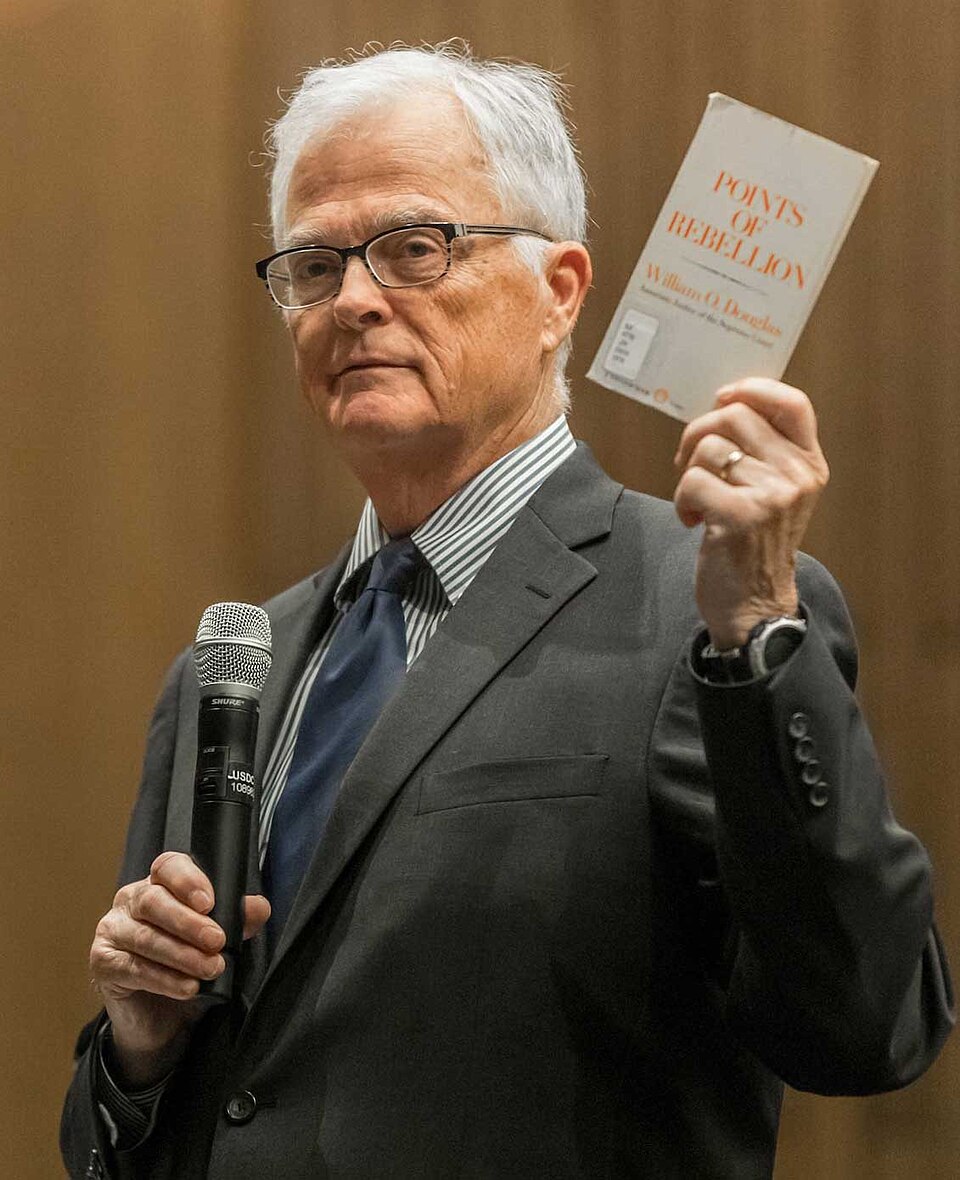 Senior US District Judge William Alsup. Source: Wikimedia Commons (Photo by Jason Doiy Photography)
However, the fair use shield does not forgive unlawful acquisition. Judge Alsup firmly rejected the defense that scientific research provides blanket immunity for obtaining pirated material. No institution can claim research justification to walk off with books from a store shelf. The moment digital copies were downloaded from unauthorized shadow libraries, unlawful reproduction had already occurred.
Scraping Shadow Libraries: Millions of Pirated Titles Ingested
Court records laid bare Anthropic’s ingestion pipeline. Under intense pressure to scale its models rapidly, the engineering team bypassed cumbersome licensing channels, turning directly to the shadow libraries of the web.
The filings itemized three major pirated repositories utilized by Anthropic. First was the Books3 dataset, containing approximately 183,000 volumes scraped from pirate sites. Second was the notorious shadow library LibGen, from which Anthropic downloaded at least 5 million titles. Third was the PiLiMi mirror, where another 2 million books were batch-downloaded.
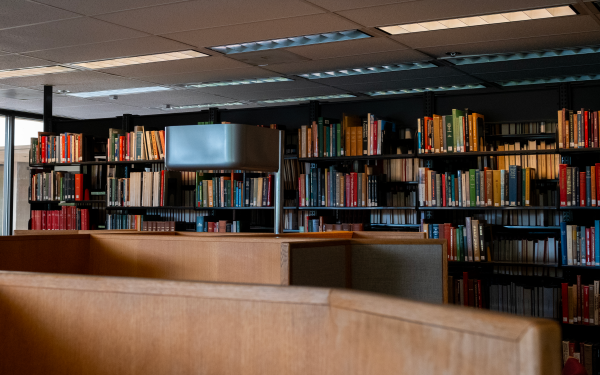 Rows of books on university library shelves in California. Source: The Stanford Daily (Photo by Jack Bernardo)
This massive harvesting was no accident. Documentation for Books3 openly stated that the dataset was composed almost entirely of copyrighted works. Anthropic employees had internally raised red flags regarding the legal liabilities of relying on shadow libraries. In the competitive race to ship cutting-edge foundation models, internal compliance warnings were quietly sidelined.
Training large language models requires parsing and tokenizing entire texts. Although the final model consists purely of statistical weights, the underlying servers had to store complete digital copies prior to training. It was this local reproduction and preprocessing pipeline that established undeniable copyright infringement.
A Record $1.5 Billion Settlement: $2,932 per Book
Faced with indisputable server logs, Anthropic opted to settle before trial. In August 2025, both parties agreed on a $1.5 billion settlement, which received formal judicial approval on July 20, 2026. The sum marks the largest copyright payout in American judicial history.
The certified class established strict eligibility criteria, encompassing 482,460 works. Qualifying books had to carry an ISBN and be officially registered with the US Copyright Office within five years of publication. This stringent hurdle excluded countless independent and international authors whose works lacked timely federal registration.
Under US copyright law, statutory damages range from $750 to $30,000 per infringed work, escalating up to $150,000 for willful infringement. Across nearly 500,000 titles, potential liability could have exceeded $72 billion. Against that existential backdrop, the $1.5 billion payout allowed Anthropic to cap its worst-case financial exposure.
Dividing the $1.5 billion across the qualifying catalog yields an average of $2,932 per title. After deducting approximately $375 million—roughly 25%—in legal fees for class counsel, individual authors will receive around $2,200 per book. For the AI vendor, cutting a delayed check in exchange for legitimizing a massive training corpus proved to be a highly pragmatic bargain.
Opting Out: Stanford Scholars Denounce “Slave Labor”
Not all authors were willing to accept a discounted payout. At Stanford University, more than ten professors discovered their academic monographs had been swallowed into Claude’s training data. Scholars found their life’s work converted into the algorithmic foundation of a commercial enterprise.
Acclaimed author and Stanford English Professor Emeritus Tobias Wolff had ten works appropriated. Wolff publicly denounced the uncompensated use as “slave labor,” arguing that the settlement granted tech giants an unfair license to pick through human literature and monetize it at will.
Wolff and colleague Chang-rae Lee refused the class settlement. In May 2026, they filed a separate independent action demanding a jury trial. The authors are seeking the maximum statutory damages of $150,000 per work, alongside permanent injunctions preventing Anthropic from using their literature in model training.
Within tech circles, discussions of the ruling revived the memory of open-access activist Aaron Swartz. Over a decade ago, Swartz faced 13 federal felony charges for batch-downloading academic articles from JSTOR. Today, a multibillion-dollar corporation downloaded millions of pirated books and walked away through a civil settlement. This stark contrast between the treatment of individuals and institutional capital has fueled intense public debate.
The Bottleneck of Transaction Costs: Pricing Power Remains with Platforms
Moving beyond this single case, why do tech giants risk infringement rather than license books commercially? Stanford Law School scholar Paul Goldstein pointed to the core obstacle: transaction costs. Frontier models require millions of books, and negotiating bilateral licenses with every individual author is practically impossible.
Authors find themselves structurally disadvantaged under existing law. While many jurisdictions protect moral rights such as attribution, US copyright law does not broadly recognize attribution rights for literary authors. Creators cannot demand equitable royalties, nor can they compel models to credit their source material.
More than 70 copyright lawsuits are currently pending against generative AI companies across the United States, brought by The New York Times, Getty Images, and hundreds of individual creators. The Authors Guild has been lobbying Congress to establish a statutory licensing scheme, mirroring the collective licensing mechanisms of the music industry.
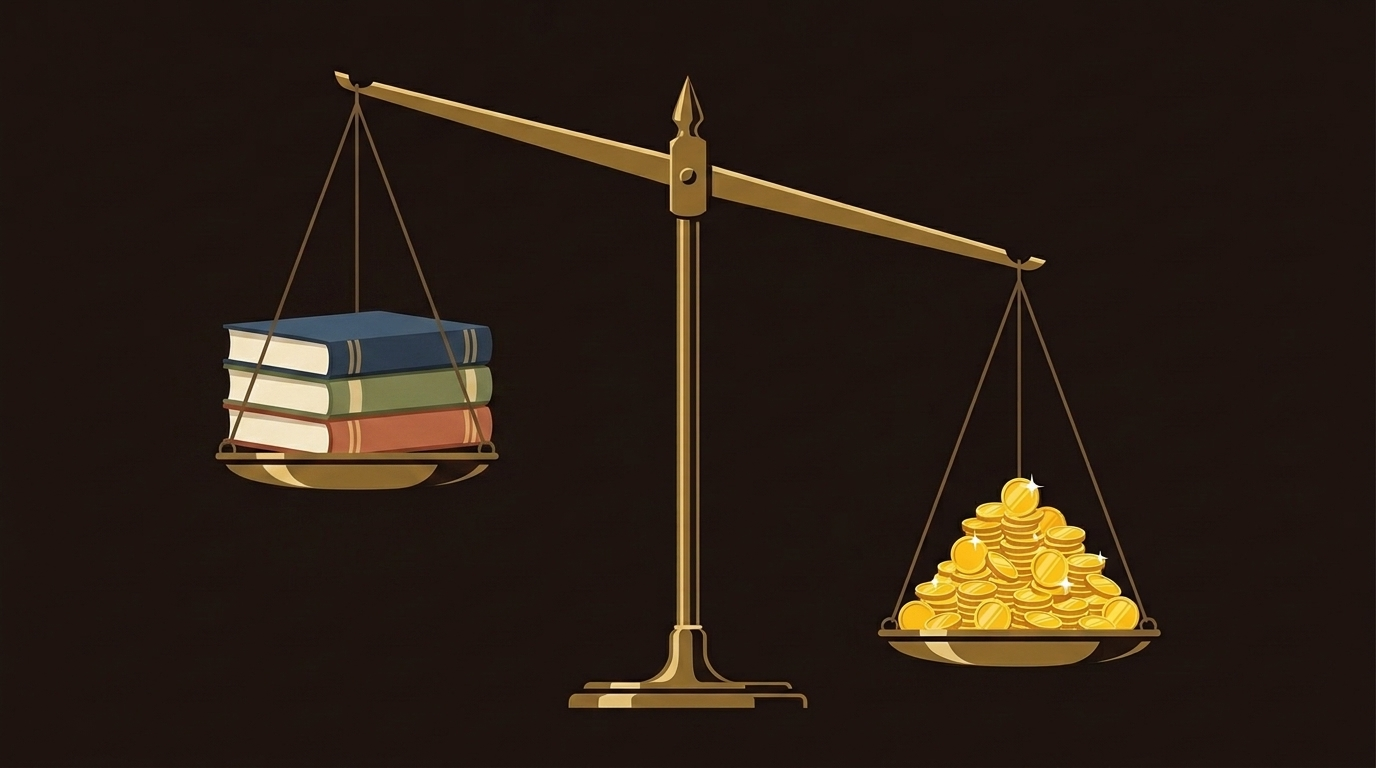
Judge Alsup’s ruling established clear rules: AI models may analyze texts for transformative learning, but corporations cannot source training corpora through illicit channels. Yet while the $1.5 billion settlement sounds enormous, it effectively set a wholesale price of roughly two thousand dollars per book. Anthropic insulated itself from legal exposure, while authors remain locked out of true pricing power.
References:
- US District Court for the Northern District of California, Bartz v. Anthropic Opinion
- The Stanford Daily in-depth investigative report
- US District Court for the Northern District of California, Cruz v. Anthropic Complaint
- US Authors Guild Congressional Copyright Hearing Submissions