A Four-Year-Old Runs In, and a Cheetah Appears on Screen
Around a family dinner table, chiming into conversation takes barely half a second. For someone with severe speech impairment relying on an eye-tracking device, typing out a single sentence often takes minutes. By the time the letters painstakingly assemble on a screen, the conversation around them has moved on three topics ahead.
For years, 47-year-old California resident Casey Harrell had to endure that painful delay. In 2020, he was diagnosed with amyotrophic lateral sclerosis (ALS), a progressive motor neuron disease that systematically paralyzes muscles throughout the body. As his condition advanced, his lips and tongue lost their strength. Harrell could barely manage six labored words per minute, bringing everyday conversation to a virtual standstill. Only his wife and primary caregiver could make sense of his attempts through guesswork.
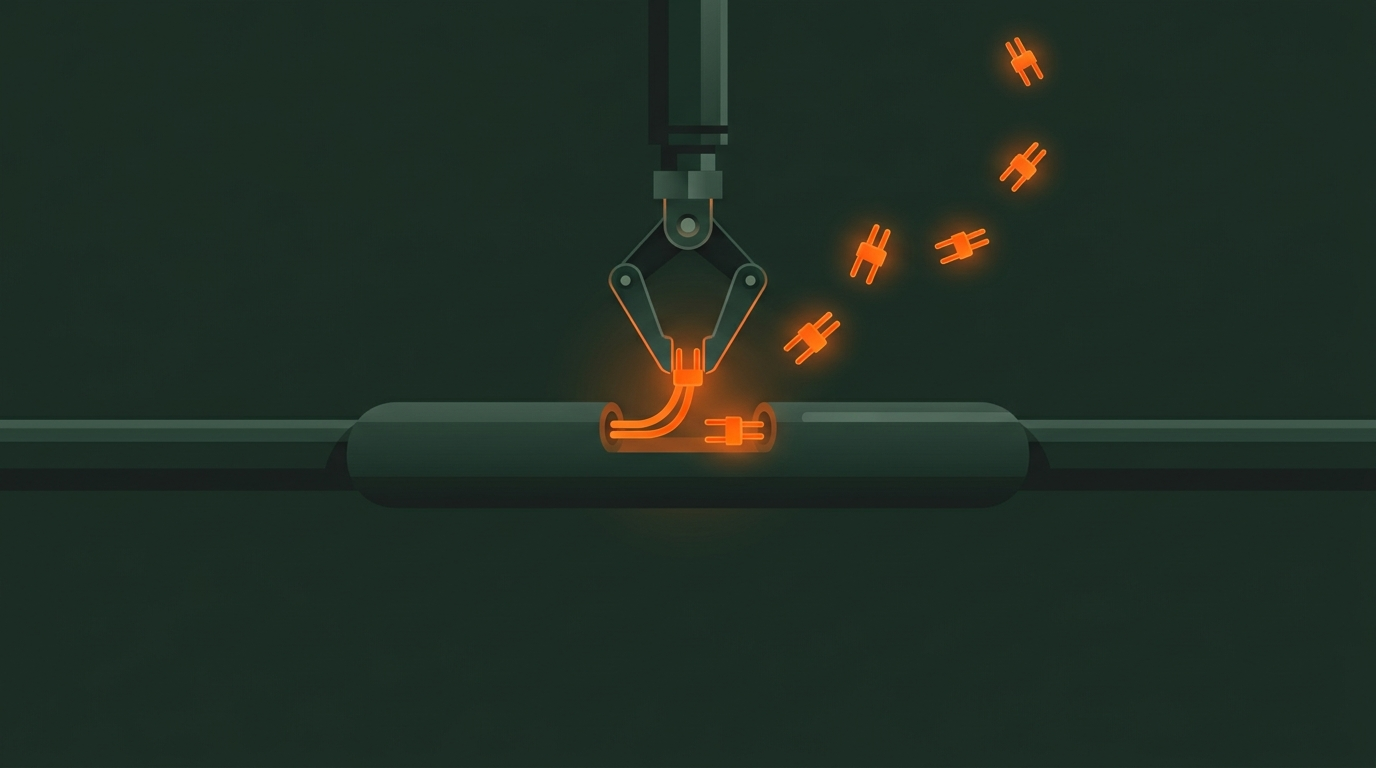
In the summer of 2023, Harrell underwent brain surgery at UC Davis Health. Neurosurgeons placed four tiny electrode arrays onto the surface of his brain to capture speech motor signals. On the afternoon of the second day after hooking up the equipment, his four-year-old daughter ran into the room wearing a cheetah onesie. As the thought of speaking crossed Harrell’s mind, a speaker nearby immediately broadcasted a clear voice: “I’m looking for a little cheetah.”
On the other side of the monitor, researchers froze. They assumed the decoding algorithm had produced a hallucinated glitch. But when the video feed showed the energetic little girl bounding across the room, cheers erupted in the laboratory. The algorithm had not failed—a father was speaking directly to his daughter.
 Figure: Science News podcast documents how brain-computer interfaces help speech-impaired patients regain their voice. Source: Science News / PRX.
Intercepting Vocal Commands with 256 Microelectrodes
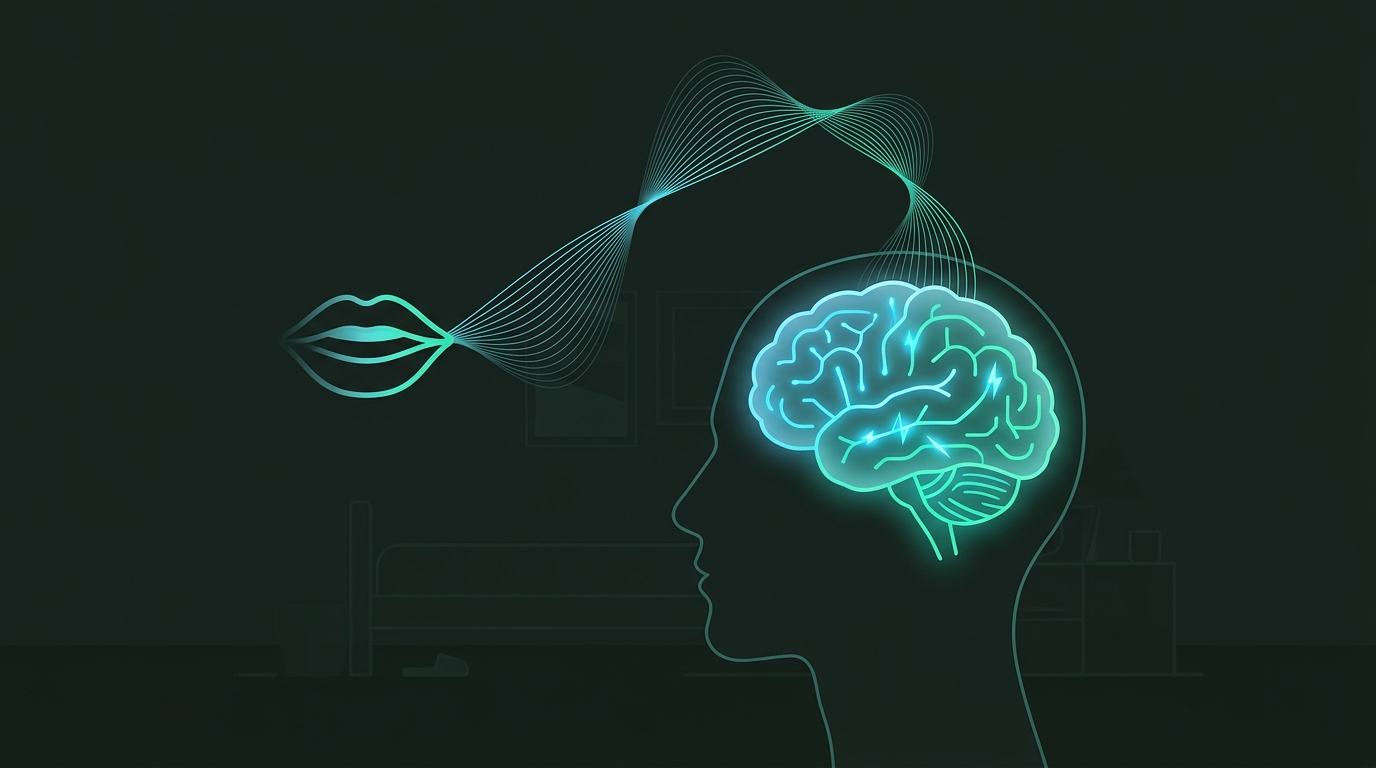
It is easy to assume that a brain-computer interface (BCI) reads minds. In reality, modern BCIs do not parse abstract thoughts. The research team focused strictly on mechanical motor commands dispatched from the brain to the muscles that control vocal articulation.
Speaking aloud is one of the most sophisticated biomechanical tasks the human body performs. Every uttered syllable requires the brain to coordinate over a hundred tiny muscles within tens of milliseconds. Lips, tongue, jaw, and vocal cords must fire in immaculate synchrony. While ALS severs the neural pathways running to these peripheral muscles—leaving the throat paralyzed—the brain’s speech motor cortex remains intact. Every time Harrell attempts to speak, his brain continues to fire full motor coordination pulses.
The surgical team placed four microelectrode arrays—silicon chips measuring just millimeters across—onto his left precentral gyrus (the speech motor cortex responsible for directing vocal muscles). A total of 256 hair-thin microelectrodes penetrated less than two millimeters beneath the cortical surface. Whenever Harrell simply tries to move his lips or tongue in thought, the electrodes register neural firing. Motor coordination commands destined for paralyzed muscles are captured directly at their neural source.
Breaking Brainwaves into 39 Phonetic Building Blocks
Once intercepted, how are these raw neural signals translated into spoken language? The team leveraged the fundamental building blocks of linguistics.
Every spoken word in the English language can be disassembled into 39 phonemes—the smallest units of speech sound. When someone intends to say “hello,” the brain executes a coordinated sequence of phonetic movements. This structural reality clarifies the decoding pipeline: rather than trying to decode complex abstract thoughts, the algorithm first classifies neural spikes into these 39 phonetic building blocks. A language model then stitches the phonemes into coherent words and sentences. The strategy turns open-ended mind reading into a structured, highly constrained puzzle.
On the very first day of testing, after just 30 minutes of system calibration, the setup decoded a 50-word vocabulary with 99.6% accuracy. On day two, researchers expanded the vocabulary to 125,000 words—the size of a comprehensive unabridged dictionary, vastly exceeding the typical adult working vocabulary of 20,000 to 30,000 words. Even against this massive lexicon, decoding accuracy reached 90.2%, eventually climbing to 97.5% over subsequent months. By decomposing complex neural activity into finite phonetic units, the algorithm scaled effortlessly to support full dictionary-level communication.
Restoring a Lost Voice from Old Recordings
Turning neural intention into words is only half the battle. Voice timbre determines the emotional warmth of human communication. Most assistive speech devices rely on standard robotic synthesizers—flat, monotonous voices that sound like a machine reciting instruction manuals.
Harrell wanted his own voice back. To accomplish this, researchers gathered historical audio from interviews and high-definition podcast episodes he had recorded before his illness. Machine learning models analyzed his unique acoustic timbre, cadence, and inflection patterns to train a personalized synthetic voice profile. When decoded neural signals assemble into sentences, the speaker outputs Harrell’s authentic vocal tone. It is no longer an impersonal voice substitute; he is speaking in his own voice once again.
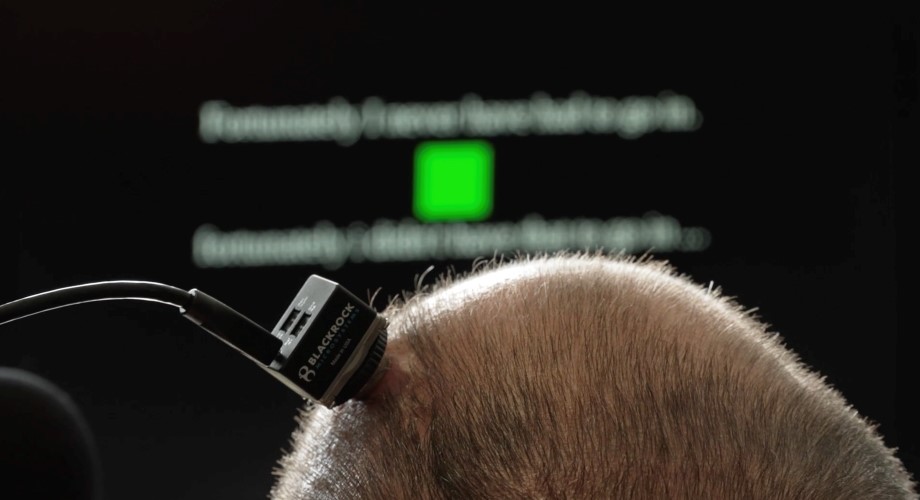 Figure: Casey Harrell monitors real-time decoded speech on screen using his brain-computer interface. Source: UC Davis Health.
System latency was driven down to approximately 80 milliseconds. A normal human blink lasts between 100 and 400 milliseconds. At 80 ms—faster than the blink of an eye—the system matches the natural auditory feedback loop of hearing one’s own voice when speaking. This near-instantaneous response restores the natural rhythm of conversational give-and-take. With familiar vocal tones echoing in milliseconds, a patient reclaims their personal identity.
1.96 Million Words in Two Years: Returning to Family Life
Moving a technology from a controlled lab demonstration into everyday home life is an immense hurdle. In June 2026, Nature Neuroscience published long-term follow-up data. Over nearly two years, Harrell operated the system independently at home for more than 3,800 hours. Running the device 10 to 14 hours a day, he generated 183,060 sentences totaling 1,960,163 words. Across all usage, system output maintained an overall sentence accuracy of 92%, while Harrell maintained an average speaking rate of 56 words per minute.
That conversational velocity carries profound real-world impact. While casual adult speech averages 120 to 150 words per minute, Harrell’s natural vocal capability had dropped to just six words per minute. Speaking at 56 words per minute restores more than a third of natural conversational speed. Instead of sitting quietly for several minutes just to type out a short response, he can actively participate in spontaneous dinner table conversations.
Physical trade-offs remain. Harrell retains two small percutaneous connectors on his skull, requiring dedicated cabling connected to an external computer and power supply, which limits mobile travel. He currently represents the only patient worldwide utilizing a speech neuroprosthesis with this degree of daily intensity.
Yet the profound meaning of recovery lies precisely in mundane moments. In interviews, Harrell reflected on how the device allowed him to tell bedtime stories to his four-year-old daughter, share quiet thoughts with his wife whenever he wished, and trade deadpan jokes with longtime friends.
By directly decoding articulation motor commands, the neuroprosthesis bypasses the cumbersome step of translating thought to text. It bridges the divide between painstaking keystrokes and real-time verbal expression. As a familiar voice rings out in the living room once more, Harrell has reclaimed the everyday dignity of being a father and a husband.
References:
- Science News Podcast: What It’s Like to Speak with Your Brain.
- Nature Paper: An accurate and rapid speech neuroprosthesis in an individual with ALS.
- UC Davis Health: First-of-its-kind technology helps man with ALS speak in real time.