When repotting houseplants on a balcony over the weekend, you will often spot delicate white threads running through the soil. Part damp leaves on a park floor, and you will uncover the same phenomenon. Most people brush it aside as ordinary mold and pat down the dirt. Yet beneath the surface, those microscopic filaments weave together into a vast, planet-spanning underground infrastructure.
On October 15, 2026, Quanta Magazine sat down with evolutionary biologist Toby Kiers from Vrije Universiteit Amsterdam. Her research team has illuminated a startling reality: plants and soil fungi are locked in a sophisticated, market-driven economic game deep underground.
The existence of mycorrhizal fungal networks means an underground exchange operates beneath our feet. Though lacking a brain, it drives hard bargains. Every year, this system sequesters roughly 13 billion metric tons of carbon dioxide deep in the earth—an amount equal to about a third of all global fossil fuel emissions. Terrestrial ecosystems quietly depend on this subterranean marketplace to stay alive.
Beneath the Leaf Litter: Fungi Served as Plant Roots 450 Million Years Ago
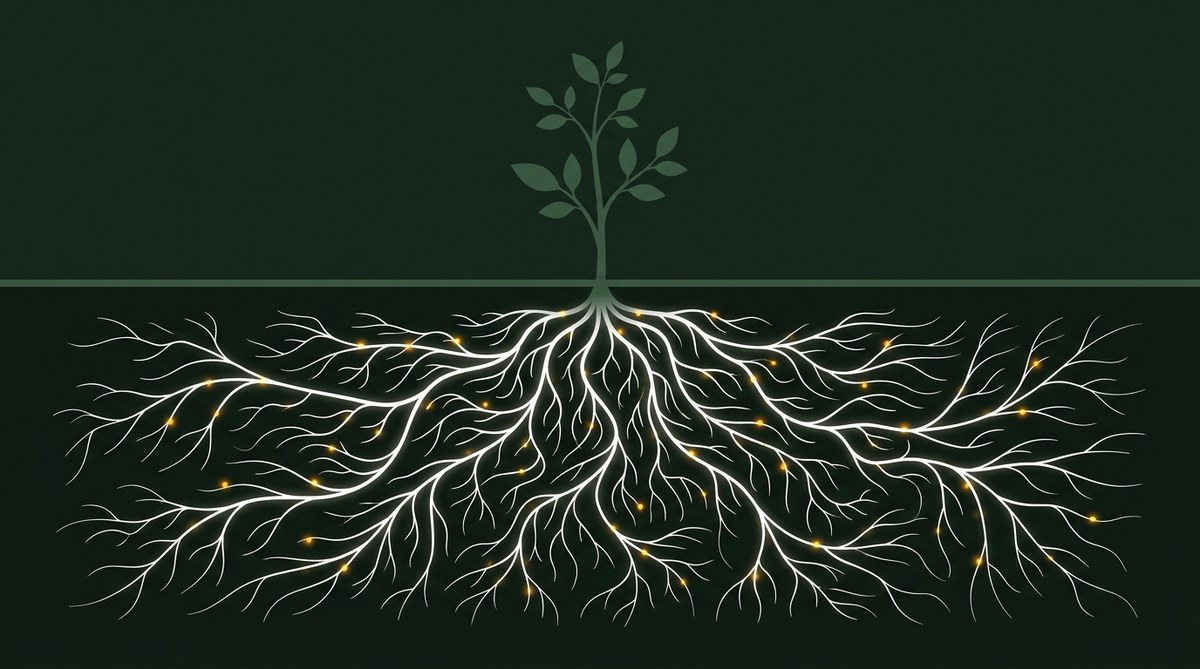
The soft white fuzz running through the dirt is mycelium—the vegetative body composed of countless microscopic, branching hyphae. The architects of this network are mycorrhizal fungi, soil microbes that form mutualistic symbioses with plant root systems. They encircle plant root tips, packing hundreds of meters of hyphal filaments into a single gram of topsoil.
This partnership stretches back roughly 450 million years. During the Ordovician and Silurian, the earliest pioneer plants ventured out of aquatic environments to colonize dry land—more than 200 million years before dinosaurs walked the Earth. At that point, land plants had not even evolved true roots.
Fungi had already settled the rock surfaces and primordial dirt, serving as an external root system for these botanical pioneers. They broke down minerals and channeled water to the plants in exchange for carbon produced through photosynthesis. Fungi established the primary underground supply lines that allowed plants to conquer dry land. Today, over 80% of all terrestrial plant species maintain this ancient mutualistic alliance.
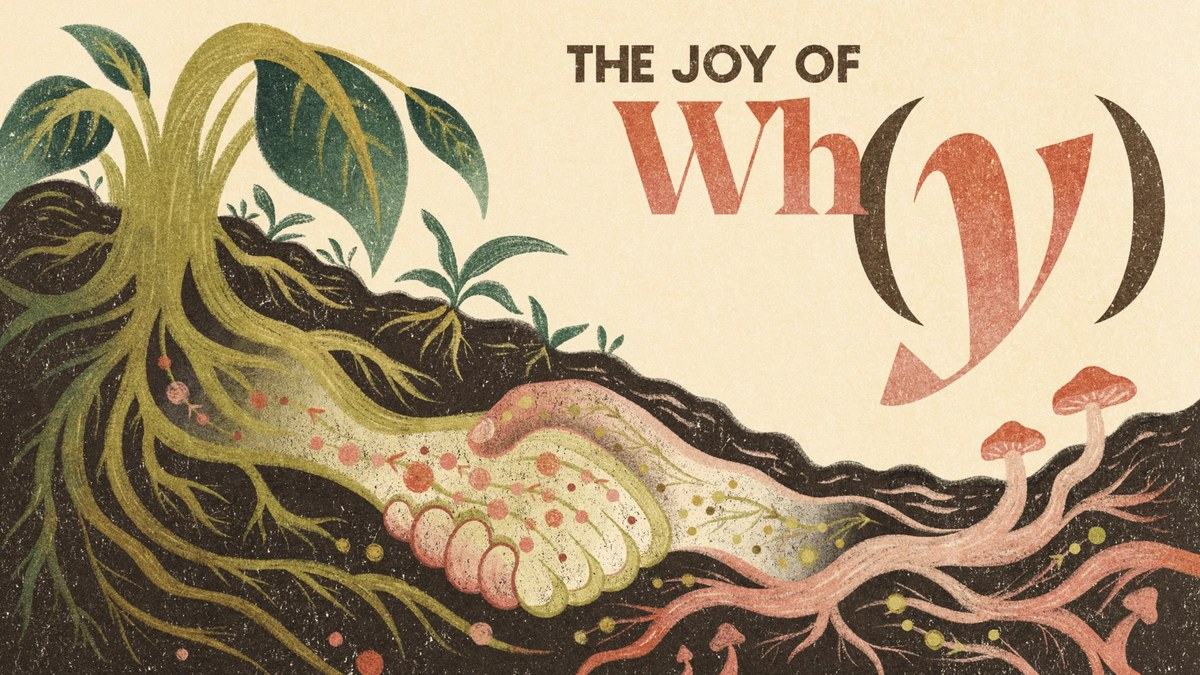 Figure: Symbiotic structure linking underground fungal networks and plant root systems. Source: Quanta Magazine / Chanelle Nibbelink
Sequestration on a Planetary Scale: Underground Networks Absorb One-Third of Global Emissions
The subterranean marketplace between plants and fungi operates on strict reciprocal exchange. Above ground, leaves capture atmospheric carbon dioxide, converting it via photosynthesis into sugars and lipids. Underground, fungi dissolve bedrock, mining essential phosphorus and nitrogen that plants cannot otherwise access.
A landmark 2023 study published in Current Biology quantified this global underground trade. Synthesizing nearly 200 datasets, Kiers and her collaborators estimated that plants allocate roughly 13 billion metric tons of CO2-equivalent carbon into mycorrhizal fungal networks each year.
To put that in perspective, human fossil fuel combustion emits around 37 billion metric tons of CO2 annually. That means the underground mycorrhizal grid absorbs carbon equivalent to a third of our fossil footprint. Locking up 13 billion tons of carbon each year, fungal networks represent one of the planet’s largest natural carbon sinks. Without these microscopic custodians, atmospheric greenhouse gases would accumulate at a vastly accelerated rate.
Furthermore, fungi secure this carbon with a physical deadbolt. They secrete glomalin—a sticky glycoprotein that glues carbon compounds together with soil minerals into stable aggregates. Long after hyphae die back, these resilient filaments and secretions lock carbon deep underground for centuries, building an organic barrier against erosion.
This underground carbon trade is woven directly into our own biology. Land plants acquire up to 80% of their phosphorus through mycorrhizal channels. At the molecular level, the phosphorus forming the backbone of human DNA once cycled through these very fungal networks across geological time.
Tracking Cargo with Quantum Dots: Shipping Phosphorus to the Highest Bidder
Popular nature documentaries often portray plant-fungus mutualism as harmonious, altruistic cooperation. But experiments conducted by the Kiers laboratory reveal a much colder reality. Fungi are not charities; they act like calculating traders aiming to maximize returns on every single transfer.
To observe this underground market in real time, Kiers and her colleagues developed high-resolution fluorescence tracking techniques using quantum dots—semiconductor nanocrystals that glow in distinctive fluorescent colors under specific wavelengths of light. The researchers tagged phosphorus molecules with quantum dots and introduced them into hyphal networks connected to multiple plant root systems.
Under the fluorescence microscope, an intricate logistics network emerged. When a plant supplied abundant sugars, the fungus poured large volumes of phosphorus into its roots. But if a neighboring plant was shaded and offered fewer carbon rewards, the hyphae promptly slashed deliveries.
Even more striking was the network’s capacity for cross-regional logistics. When one sector of the network faced a high-bidding host while another offered meager returns, the fungus actively redirected phosphorus away from the low-value zone, transporting it across distances to the higher-paying customer. Fungi deliberately reroute nutrients toward premium buyers, showcasing sophisticated, decentralized logistical routing. Plants act just as selectively, funneling carbon preferentially to whichever fungal partners deliver the highest mineral yield.
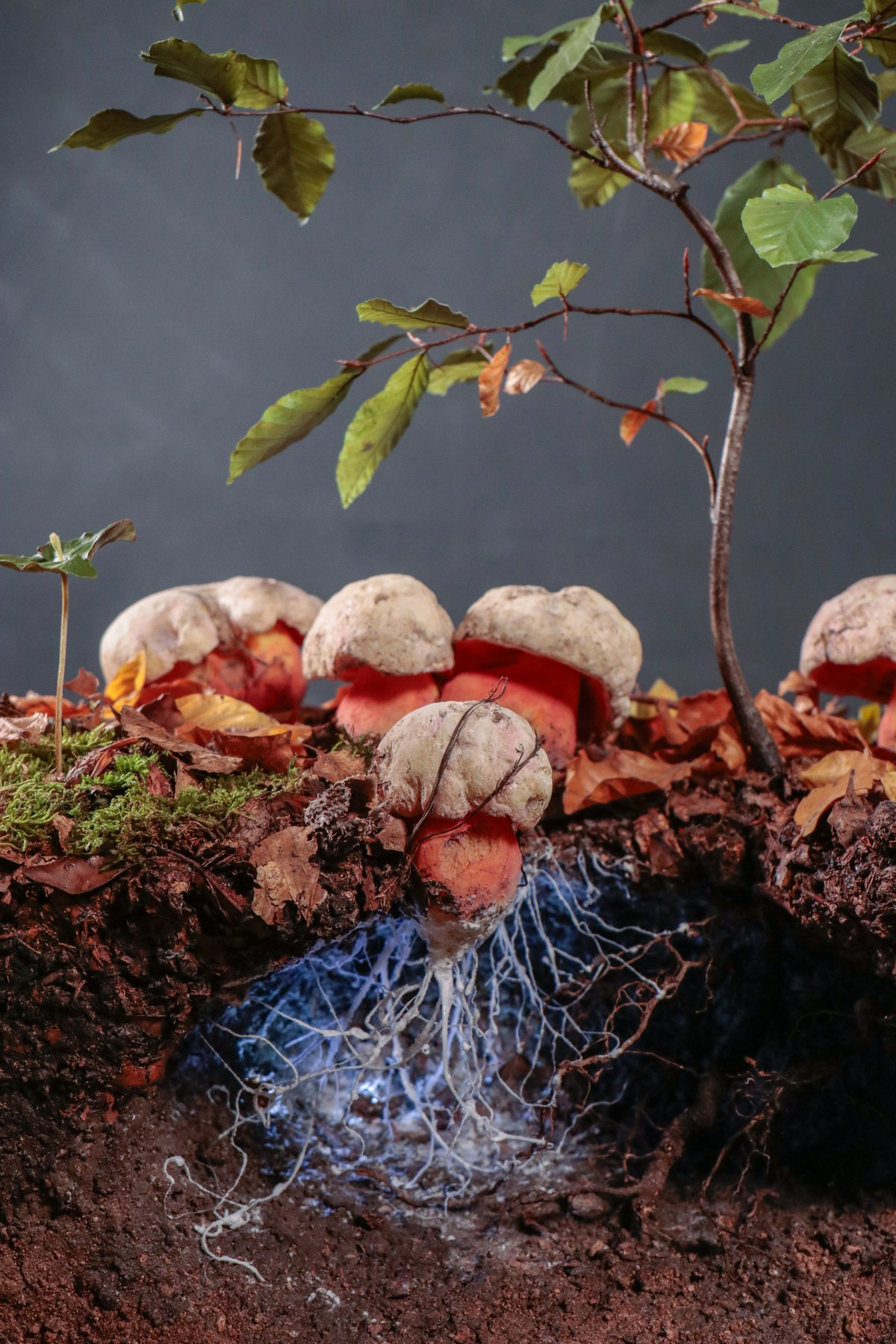 Figure: Dense mycorrhizal hyphae threading through leaf litter. Source: Wikimedia Commons
Brainless Speculators: Decentralized Networks Trade via Fluid Pressure
Fungi have no brain, no eyes, and no central nervous system. Yet their economic behavior mirrors commodity brokers. In response to fluctuating market conditions, they frequently withhold inventory and hoard resources.
When a plant root offers a carbon payout below expectations, the fungus refuses to drop its price. Instead, it converts mobile orthophosphate into immobile polyphosphate droplets, sequestering the nutrients inside its hyphae. By deliberately engineering local scarcity, the fungus drives the plant back to the negotiating table, forcing it to up its bid.
This market decision-making arises from decentralized physical mechanics. Hyphal strands communicate using hydrostatic pressure pulses, electrical potential spikes, and waves of calcium ions. Local concentration gradients trigger microtubule contractions and expansions throughout the mycelium. Relying on hydrostatic pressure and ionic signaling, the network functions like a fluid computer settling accounts autonomously.
This thriving underground market has also spawned clever parasites. Certain non-photosynthetic orchids have shed their chlorophyll entirely. Instead of trading fairly, they send deceptive biochemical signals to hijack fungal hyphae, extracting carbon and nutrients unilaterally without offering any minerals in return.
Sustaining the Forest Canopy: Safeguarding Soil to Protect the Carbon Ledger
Roughly 59% of all species on Earth reside in soil. The forests, savannas, and grasslands above are merely the visible tip of an immense subterranean iceberg. Yet modern industrial agriculture is quietly unraveling an equilibrium that took hundreds of millions of years to stabilize.
To drive short-term crop yields, industrial fields are drenched in high concentrations of synthetic fertilizers. When crop roots are submerged in artificial nutrients, plants stop pumping surplus carbohydrates underground. Deprived of food, mycorrhizal networks wither and collapse. Without glomalin to bind particles together, topsoil structure disintegrates into dust and undergoes rapid desertification.
The ground beneath our feet is a vibrant, ancient marketplace. Over 450 million years, soil fungi developed intricate resource management protocols without a single neuron, moving carbon on par with a third of human fossil emissions into long-term geological storage. Safeguarding this fragile underground network remains one of our most essential defenses against runaway climate change.
References:
- Quanta Magazine podcast The Joy of Why: Interview with Toby Kiers
- Current Biology: Mycorrhizal mycelium as a global carbon pool