Buy a mechanical watch for a hundred dollars, and inside you will find no battery and no silicon chip. Yet it keeps time with 99.99% accuracy. Across the 86,400 seconds of a day, the cumulative drift from its spinning gears amounts to barely eight seconds. As the author points out, this level of precision pushes right up against the fundamental limits of pure mechanical design.
Its core components trace back hundreds of years. The balance wheel appeared around 1364, and the balance spring in 1675. Originally engineered for towering cathedral clocks, these parts were gradually miniaturized into the mechanical heart beating on your wrist.
Modern society takes synchronized timekeeping via smartphones and GPS satellites for granted. How can an intricate steel micro-machine, powered purely by a wound spring, hold an immaculate cadence as its energy drains away? Few pause to consider the exquisite physics hidden inside.
Software engineer Martin C. Martin recently published an interactive 3D model dismantling the entire mechanics of watch timekeeping. The visualization brings the central secret of horology into sharp focus: accuracy is governed by vibrational symmetry. The laws of physics naturally smooth out the fluctuating drive of the mainspring.
As the Mainspring Unwinds, Why Doesn’t the Watch Slow Down?
A mechanical watch draws all its energy from the mainspring barrel. A watchmaker coils a resilient steel ribbon, tens of centimeters long, inside a compact brass drum. Winding the watch compresses mechanical potential energy tightly into this coiled strip.
Stored mechanical power is inherently unstable. Fully wound, the mainspring unleashes peak torque. As its power unwinds toward empty, that driving force plummets substantially.
If the hands were propelled directly by this driving torque, the watch would sprint in the morning and crawl to a crawl by midnight. Ancient water clocks and hourglasses suffered endlessly from this fundamental flaw: once driving force fluctuates, cumulative timing errors spiral out of control.
Horological pioneers had to erect an impenetrable barrier between the mainspring and the hands. This mechanism had to decouple rotational speed from decaying torque entirely. Only then could time tick at a rock-steady, uniform cadence.
Coiling a Steel Diving Board: How the Balance Spring and Wheel Lock in Rhythm
The secret to defeating fading torque lies in two featherweight components: the balance spring (hairspring) and the balance wheel.
The hairspring is an ultra-fine ribbon of steel, thinner than a human hair, coiled into a flat, tight spiral. Its outer terminal is pinned firmly to the balance bridge, while its inner end attaches to the balance staff.
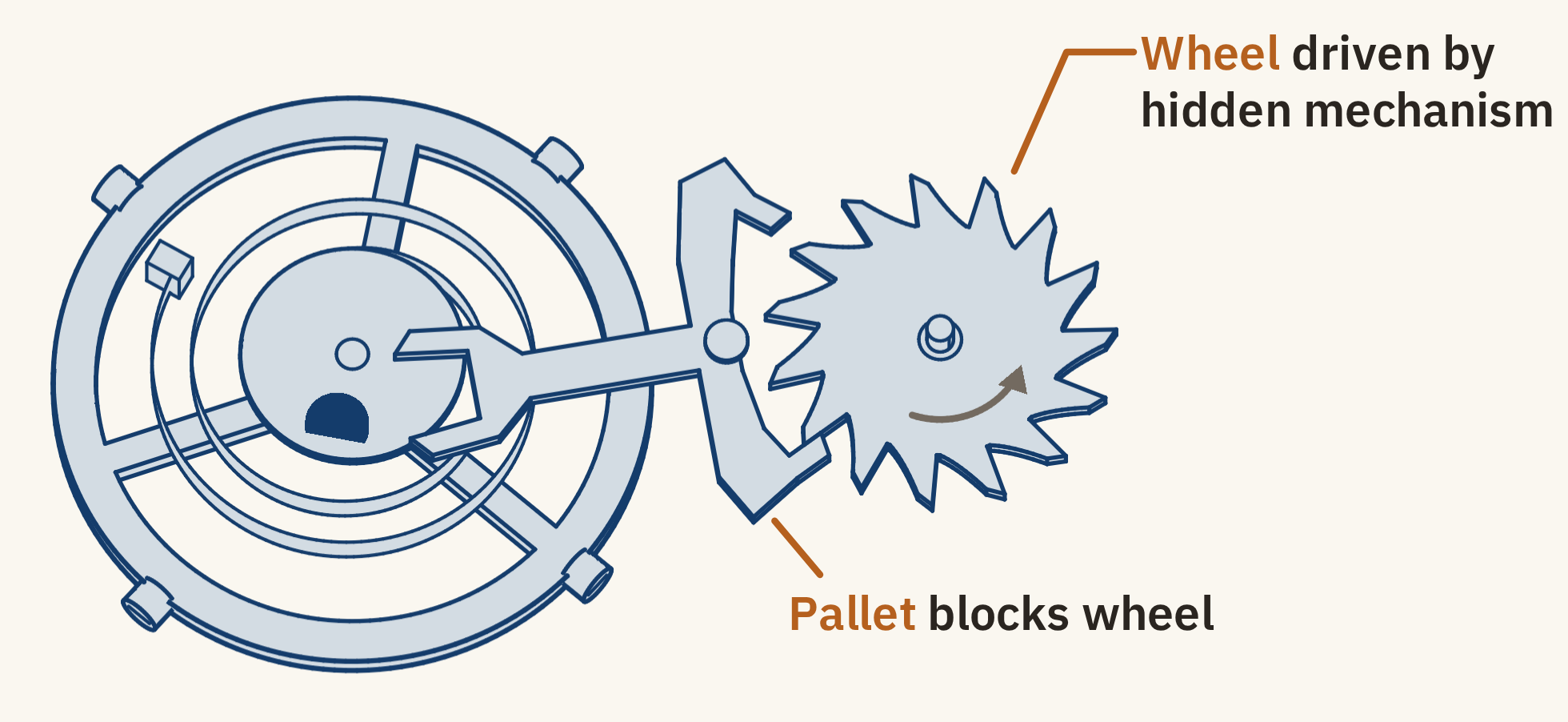 Figure: Balance spring: A flat spiral of steel strip fixed at the outer end and free to rotate inside, draggable to view in 3D (Source: Martin C. Martin’s interactive article)
The hairspring acts just like a diving board over a pool. Step down and release, and the board snaps back under elastic tension, carrying past center on inertia. Without resistance, it oscillates back and forth at a fixed frequency. The balance spring is essentially a coiled diving board.
Yet an isolated spring cannot keep steady time. A hair-thin steel strip has negligible mass; any minor tremor would shatter its rhythm. It must be paired with a heavy partner: the balance wheel.
The balance wheel is a weighted metal wheel. In 1675, Dutch physicist Christiaan Huygens coupled the balance wheel with a hairspring, sparking a revolutionary leap in timekeeping precision.
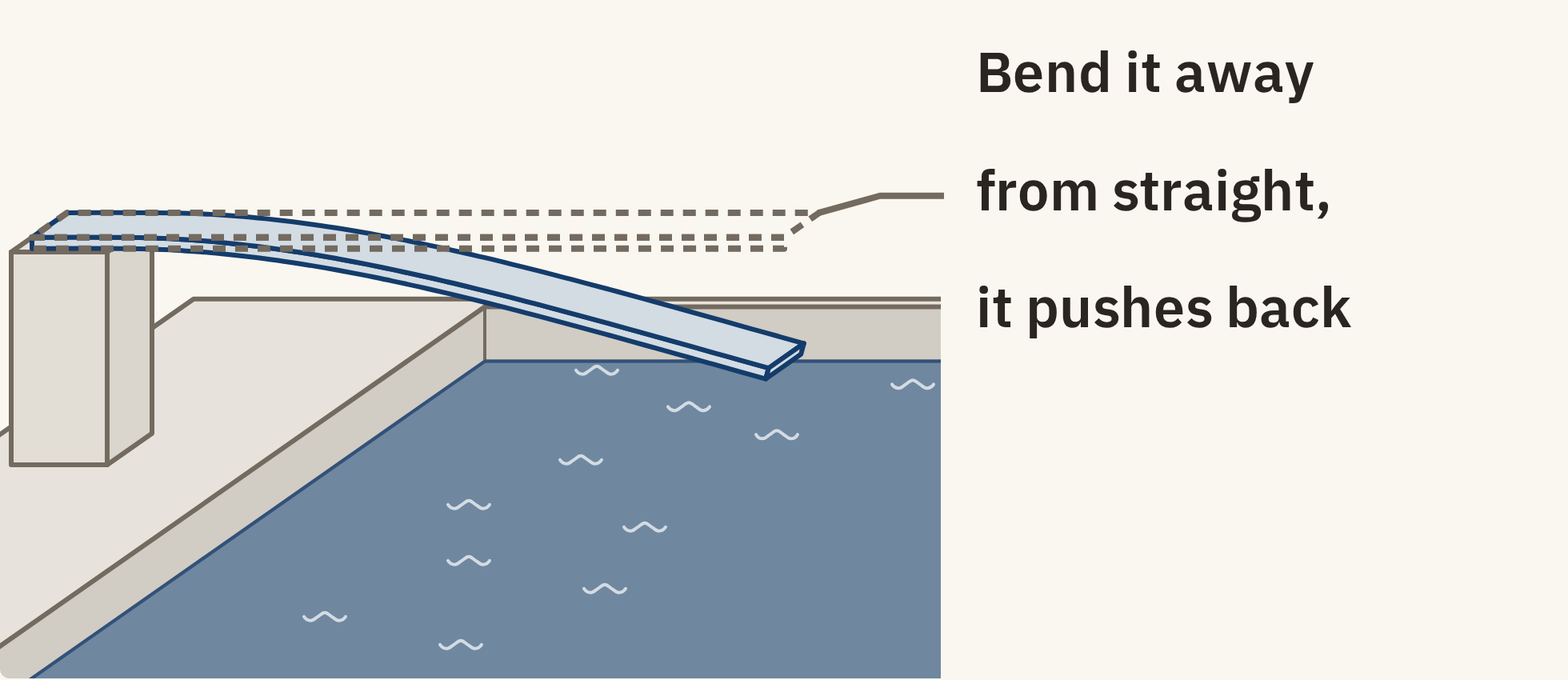 Figure: Assembly of balance wheel and balance spring, mass concentrated on the rim to maximize inertia (Source: Martin C. Martin’s interactive article)
The mass of the balance wheel is concentrated almost entirely along its outer rim. Just as a figure skater spins faster when tucking arms in and slows down when spreading them wide, the balance wheel harnesses rotational inertia to shrug off external vibrations and disturbances.
The hairspring provides restoring torque; the balance wheel provides rotational inertia. Their physical coupling produces isochronism. Whether swinging wide or narrow, each oscillation takes almost the exact same duration. When spring torque is high, the amplitude is large and instantaneous velocity is faster; when torque wanes, amplitude shrinks and velocity slows. Amplitude and speed counterbalance each other perfectly, locking the duration of each back-and-forth swing to a constant value.
Slicing Continuous Rotation: The Escapement Converts Force into Ticks
While the oscillation period is stabilized, the balance assembly cannot move the watch hands on its own. Without an outside push, air resistance would dampen its swings to a dead stop within seconds.
The system requires the mainspring to continuously inject bursts of energy. The escapement shoulders this dual burden: metering out stored energy while feeding impulse back to the oscillator.
The escapement comprises the escape wheel and the pallet fork. The escape wheel features angular, hook-like teeth, while the pallet fork holds two synthetic ruby pallets. The tail of the fork interfaces directly with the balance staff.
With each oscillation of the balance wheel, a ruby pallet releases one tooth of the escape wheel. The opposite pallet swings into place to catch the next tooth. Continuous rotational drive is sliced into discrete, measured increments. The crisp ticking sound of a watch is the physical collision of ruby pallets striking steel teeth.
The moment a tooth slips past the pallet edge, its angled impulse face delivers a subtle push to the pallet fork. Through this minute kick, the mainspring injects kinetic energy into the balance wheel, replenishing the exact energy lost to friction and air drag.
Stepping Up Speed Through the Gear Train: Sustaining Run Time for a Full Day
With the cadence locked, the next challenge is sustaining continuous operation across 24 to 48 hours. A mainspring barrel holds a finite amount of wound coil; driving the escape wheel directly would exhaust all reserve power in mere minutes.
The gear train (wheel train) bridges the speed difference between the slow mainspring barrel and the rapid escape wheel. Unlike automobile transmissions that downshift to amplify torque, a watch gear train dramatically multiplies speed while reducing torque.
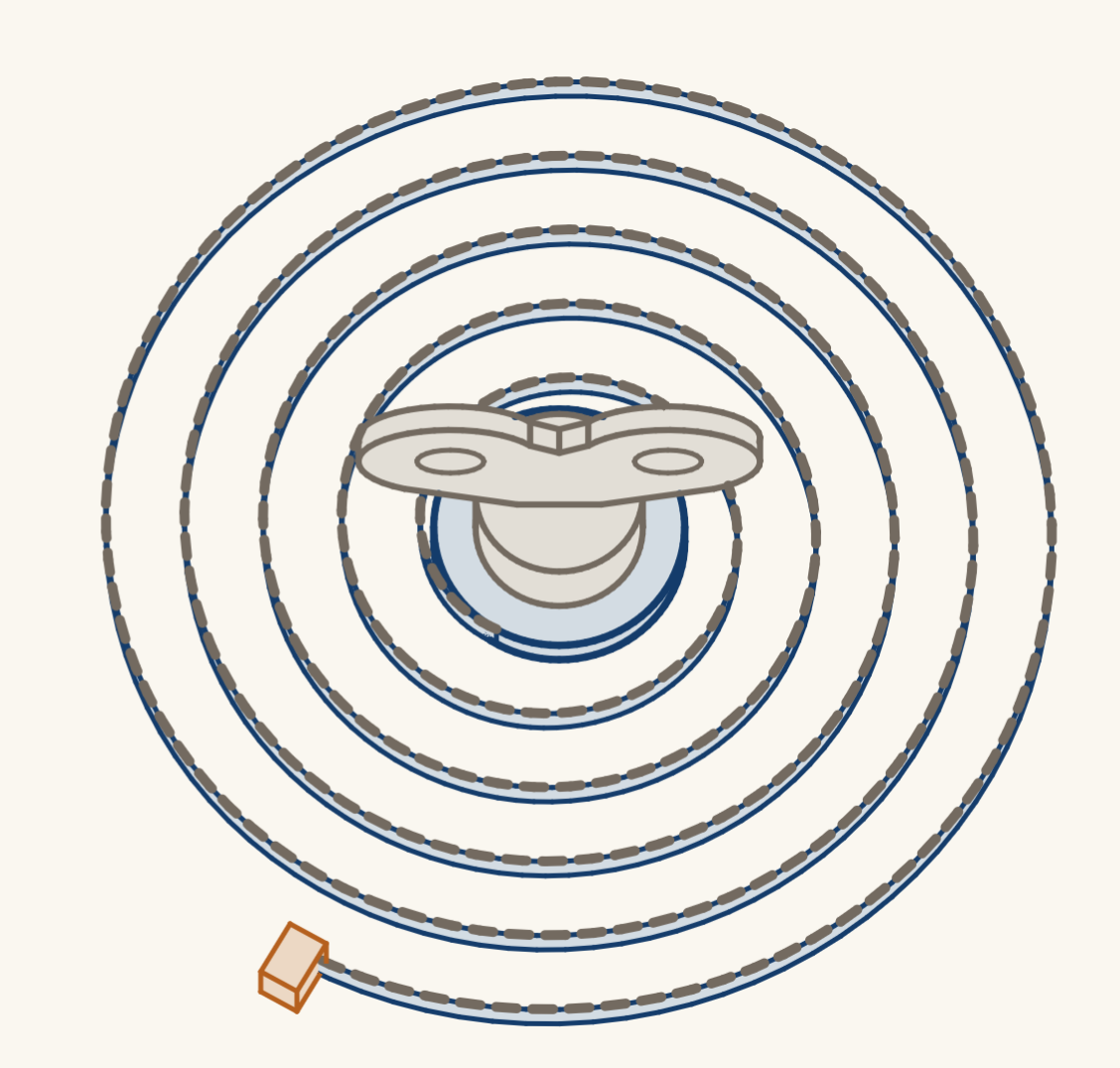 Figure: Mainspring and gear transmission: Energy originates here to drive the hands (Source: Martin C. Martin’s interactive article)
For every single turn of the mainspring barrel, the final wheel in the train spins thousands of times. The gear train trades high torque for low torque, buying tens of hours of steady runtime.
Four primary wheel stages handle distinct responsibilities: The mainspring supplies raw power. The gear train stretches operating time. The escapement parcels the cadence. The balance wheel and hairspring fix the speed.
Engineered gear ratios ensure the minute hand completes a rotation once every hour, while the hour hand steadily tracks the twelve hours of the dial.
Eight Seconds a Day: The Mechanical Ceiling Imposed by Friction
In textbook physics, simple harmonic motion is mathematical perfection. In the physical realm, however, mechanical watches confront an insurmountable adversary: friction between moving parts.
Gear teeth slide against each other. Balance pivots encounter resistance within their jewel bearings. With every tick and impact, ruby pallets and steel teeth dissipate microscopic amounts of kinetic energy.
Even with synthetic sapphire jewel bearings and state-of-the-art synthetic lubricants, friction can never be reduced to zero. Over months and years, oil oxidizes and dries. Friction climbs, and rate errors begin to widen.
Microscopic friction inevitably pins pure mechanical accuracy under a 99.99% ceiling. For an unassisted assembly of brass and steel, drifting merely eight seconds a day remains a towering achievement of human engineering.
Quartz watches vibrate at 32,768 Hz, and atomic clocks lose less than one second in billions of years. Pure mechanics long ago surrendered the throne of absolute precision.
Yet mechanical horology retains an enduring vitality. It does not depend on chemical batteries or fragile integrated circuits.
Centuries down the line, a skilled watchmaker can disassemble the movement, clean the jewels, apply fresh oil, and replace worn pivots to set the wheels dancing once more. That pure elegance—harnessing physical symmetry to defy time and wear—remains as vibrant today as it was centuries ago.
Reference Links:
- Martin C. Martin’s Interactive 3D Article
- Bartosz Ciechanowski’s Mechanical Watch
- Hacker News Discussion