Pushing DDR5 Timings to the CL30 Frontier at 3,999 RMB
On October 4, 2026, Colorful officially launched the latest addition to its iGame Shadow II memory lineup, listing the 32GB dual-channel kit (2x16GB) at 3,999 RMB. Compared to the preceding generation’s CL36 kit priced at 3,499 RMB, Colorful is asking a 500 RMB premium in exchange for tightening primary CAS latency by six clock cycles. The flagship product’s core operating parameters settle at DDR5-6000MT/s with primary timings of CL30-38-38 at 1.4V.
In the memory architecture sphere, 6000MT/s is widely recognized as the sweet spot for both AMD’s AM5 platform and modern Intel Core desktop processors. At this operating frequency, the processor’s memory controller runs in a synchronized 1:1 divider mode (UCLK:MEMCLK), achieving optimal memory latency and sustained system responsiveness. Historically, DRAM dies capable of stably maintaining ultra-tight CL30 timings at this speed grade were virtually an exclusive domain of SK Hynix (notably A-die and M-die).
Colorful’s decision to deploy domestic CXMT (ChangXin Memory Technologies) silicon to hit the CL30 tier represents a calculated assault on the high-end enthusiast segment. In previous generations, CXMT dies were predominantly confined to CL36 or looser, value-oriented volume products. Breaking through the CL30 barrier provides concrete specification-level evidence against long-held industry doubts regarding the high-frequency binning headroom of domestic Chinese DRAM.
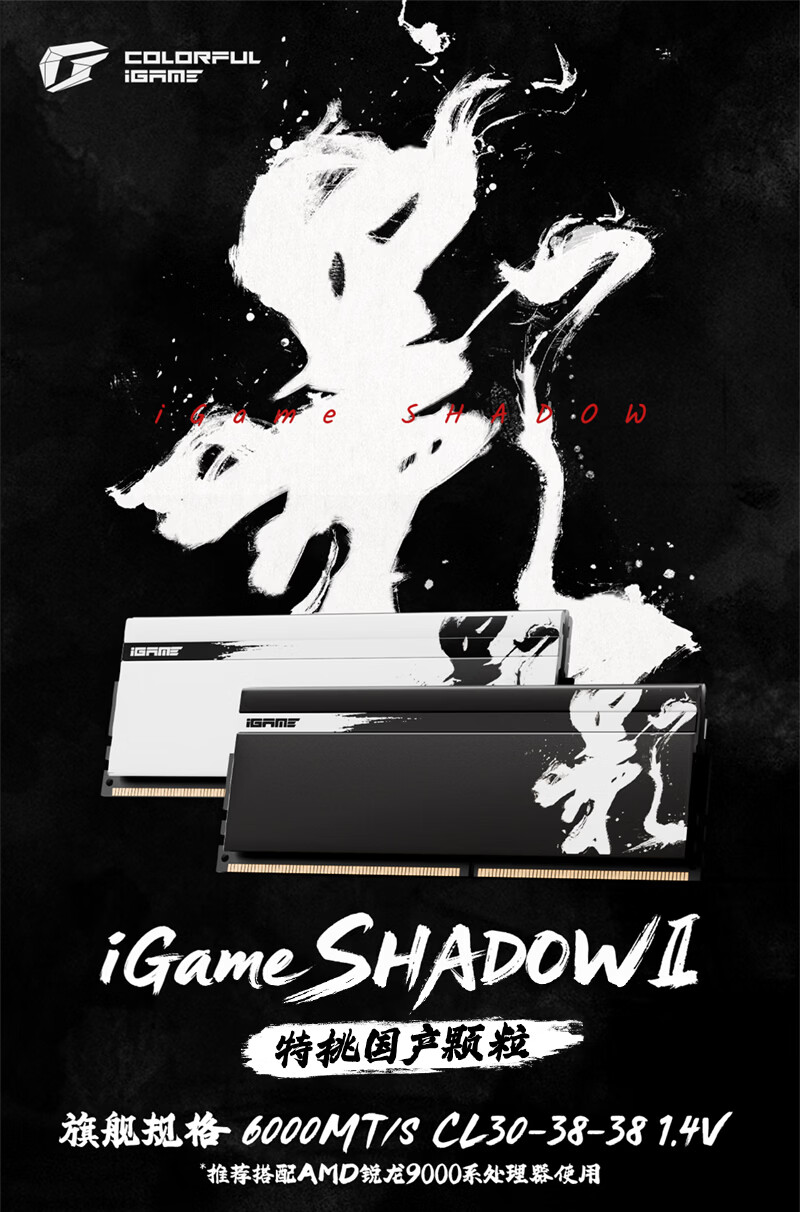 Figure: The ink-wash aesthetic heatsink design of the Colorful iGame Shadow II series memory. Source: Colorful official product photography.
Moving Beyond Budget Segments: Domestic DRAM Takes Center Stage
For years, domestic Chinese memory modules were positioned almost exclusively as budget-first, high-value alternatives. Brands like KingBank and Gloway procured bulk volumes of local memory chips to drive entry-level DDR5 retail pricing down to historic lows. While this aggressive price-to-performance strategy accelerated mass-market DDR5 adoption, it also saddled domestic silicon with a persistent reputation as low-cost commodity hardware.
Recent Qualified Vendor List (QVL) updates from premier motherboard manufacturers demonstrate that CXMT DDR5 dies have virtually eliminated the compatibility deficit that previously separated them from established global DRAM foundries across mainstream Intel and AMD platforms. Bolstered by stable supply pipelines and adaptable commercial agreements, even tier-one international module brands such as Corsair have begun integrating domestic dies into select product lines.
With the mass-adoption milestone secured, domestic semiconductor suppliers urgently required a halo product to validate their upper performance threshold. Colorful’s 3,999 RMB kit was built specifically to spearhead this technical offensive. Beyond native support for Intel XMP 3.0 and AMD EXPO profiles—allowing enthusiasts to unlock rated speeds with a single toggle in the UEFI BIOS—the memory integrates an on-die ECC module. Operating without CPU intervention, the internal engine detects and repairs single-bit flips in real time, reducing the processor’s internal error-handling overhead.
Ten-Layer PCBs and 1.4V: Engineering for Signal Stability
Matching international leaders on paper demands substantial engineering investments under the hood. To ensure absolute signal stability at 6000MT/s under punishing CL30 timings, Colorful constructed the modules around a reinforced 10-layer PCB stack. In high-speed digital circuit design, PCB layer count directly dictates signal integrity; additional internal planes provide cleaner power delivery rails while isolating high-frequency data traces from electromagnetic crosstalk.
On the power delivery and thermal fronts, Colorful operates the modules at an elevated 1.4V and equips the dedicated Power Management IC (PMIC) with a dedicated high-conductivity thermal pad. The exterior is shielded by a full-coverage 1.8mm metal alloy heatspreader, accented with an acrylic light guide designed to integrate seamlessly with major motherboard ARGB synchronization ecosystems.
At the absolute limit of overclocking headroom, current domestic dies still exhibit a slight tolerance margin when compared against bin-sorted top-tier SK Hynix silicon. To compensate for native wafer-level disparities, module manufacturers must overbuild power delivery traces and thermal dissipation assemblies, ensuring unflinching stability during sustained heavy computing workloads.
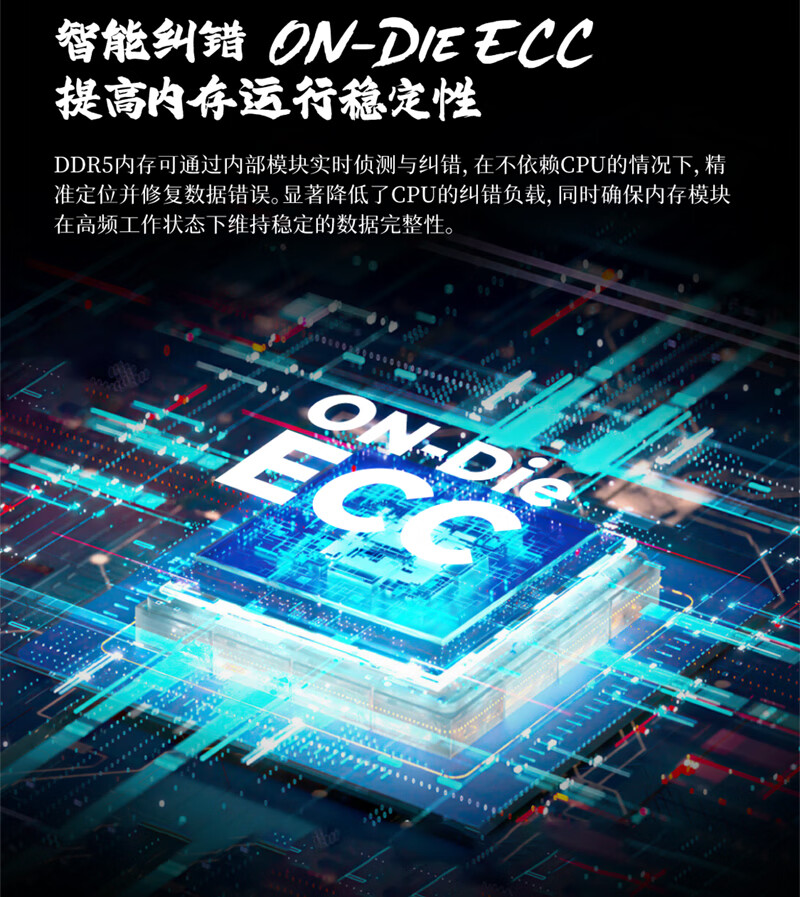 Figure: The kit supports RGB sync across major motherboard vendors and features dedicated large-area thermal pads. Source: Colorful official technical specifications.
Supply Sovereignty Reshapes Industry Pricing Dynamics
The global memory market has long been governed by cyclical pricing swings: major suppliers curtail output, spot prices skyrocket, and consumers absorb the added cost of PC components. Output adjustments coordinated by giants like Samsung and SK Hynix have historically set the baseline bill of materials across global hardware markets. The ongoing ramp-up and mass volume delivery of domestic DRAM dies have shifted supply-chain pricing leverage back toward the domestic manufacturing base.
This 3,999 RMB offering does not seek to trigger another destructive price war within its performance tier. Instead, its paramount strategic value lies in providing an enthusiast-grade supply anchor that remains insulated from foreign production quotas and output-curtailment strategies. As long as domestic foundries maintain stable yields, multinational incumbents can no longer unilaterally drive up baseline market pricing through coordinated supply reductions.
Efficient commercial execution has also proven to be a decisive catalyst in the rapid adoption of domestic dies across module makers. In contrast to the rigorous procurement barriers and prolonged lead times demanded by foreign suppliers, domestic DRAM manufacturers offer rapid turnaround and agile engineering support tailored to bespoke brand requirements.
Changing the Rules of High-End Competition
Colorful’s launch of this low-latency memory kit is not merely about claiming incremental market share. Its definitive value is proving through commercially available, mass-production hardware that China’s semiconductor memory supply chain has moved beyond primitive low-margin price wars.
When domestic dies can go toe-to-toe with global titans on foundational timing metrics—backed by superior board-level engineering to shore up physical margins—a tangible breach has been opened in the technological fortifications of incumbent chipmakers. What was once treated as an unbreachable technical barrier has now been dismantled by tangible CL30 specifications. The next battleground for domestic memory will inevitably unfold on the extreme frontiers exceeding 8000MT/s.
References:
- Colorful Official Website and JD.com Launch Announcement
- CXMT Official Technical Documentation