Between October 1 and October 3, electric vehicle charging volume across China’s national expressway network reached 71.62 million kilowatt-hours (kWh). Behind this record-setting throughput lies a profound behavioral shift: EV owners no longer hesitate to embark on long-distance holiday road trips. The range anxiety that once plagued the industry is being quietly dismantled by an expansive, nationwide highway charging grid.
60,000 Charging Guns Absorb Golden Week Traffic Surge
Data released by the National Energy Administration (NEA) monitoring platform shows that 62,700 highway charging facilities were active across the national network during this period. Over the first three days of the holiday, these 60,000-plus charging connectors handled a staggering 2.9686 million charging sessions.
Sustaining a daily average of 989,500 charging sessions under extreme peak demand, the national expressway charging network maintained smooth, uninterrupted operations. An average daily electricity throughput of 23.8731 million kWh sends an unmistakable signal: high-density infrastructure construction has crossed a decisive qualitative tipping point. The frantic scramble to locate available chargers is giving way to the reassurance of abundant, dependable physical nodes.
The network’s operational resilience was thoroughly proven under extreme operating stress. The frequent outages and system crashes that plagued holiday travel in earlier years were virtually absent from this year’s official reports. Rigorous baseline grid dispatching combined with round-the-clock, on-site vendor maintenance jointly safeguarded this vast national energy corridor.
Figure: Operational status of highway service area charging facilities. Source: National Energy Administration
A 49% Volume Jump Shatters the Long-Distance Travel Myth
Compared to the corresponding period last year, total charging sessions over the holiday’s first three days grew by 48.41%, while total electricity consumed surged by 49.39% year-over-year. The penetration of green, electric mobility during peak holiday periods continues to climb rapidly.
This near-50% leap underscores a structural transformation in mainstream consumer habits. Taking a pure electric vehicle on long-distance highway trips is no longer an adventure reserved for tech enthusiasts; it has matured into a standard, routine option for everyday families. Comprehensive infrastructure buildouts have given drivers the confidence to venture far beyond metropolitan perimeters, decisively dismantling the lingering stereotype that long-haul road trips remain the exclusive domain of internal combustion engine vehicles.
This growth trajectory unfolds against the backdrop of China’s domestic new energy vehicle fleet crossing the 25 million mark. Tens of millions of EV owners hitting the highways simultaneously represents an extreme stress test for public utilities. Smoothly absorbing nearly a 50% year-over-year surge proves that charging network deployment has outpaced the rapid growth of EV sales themselves.
Tidal Spikes Spark an Industry Debate Over Buildout Strategy
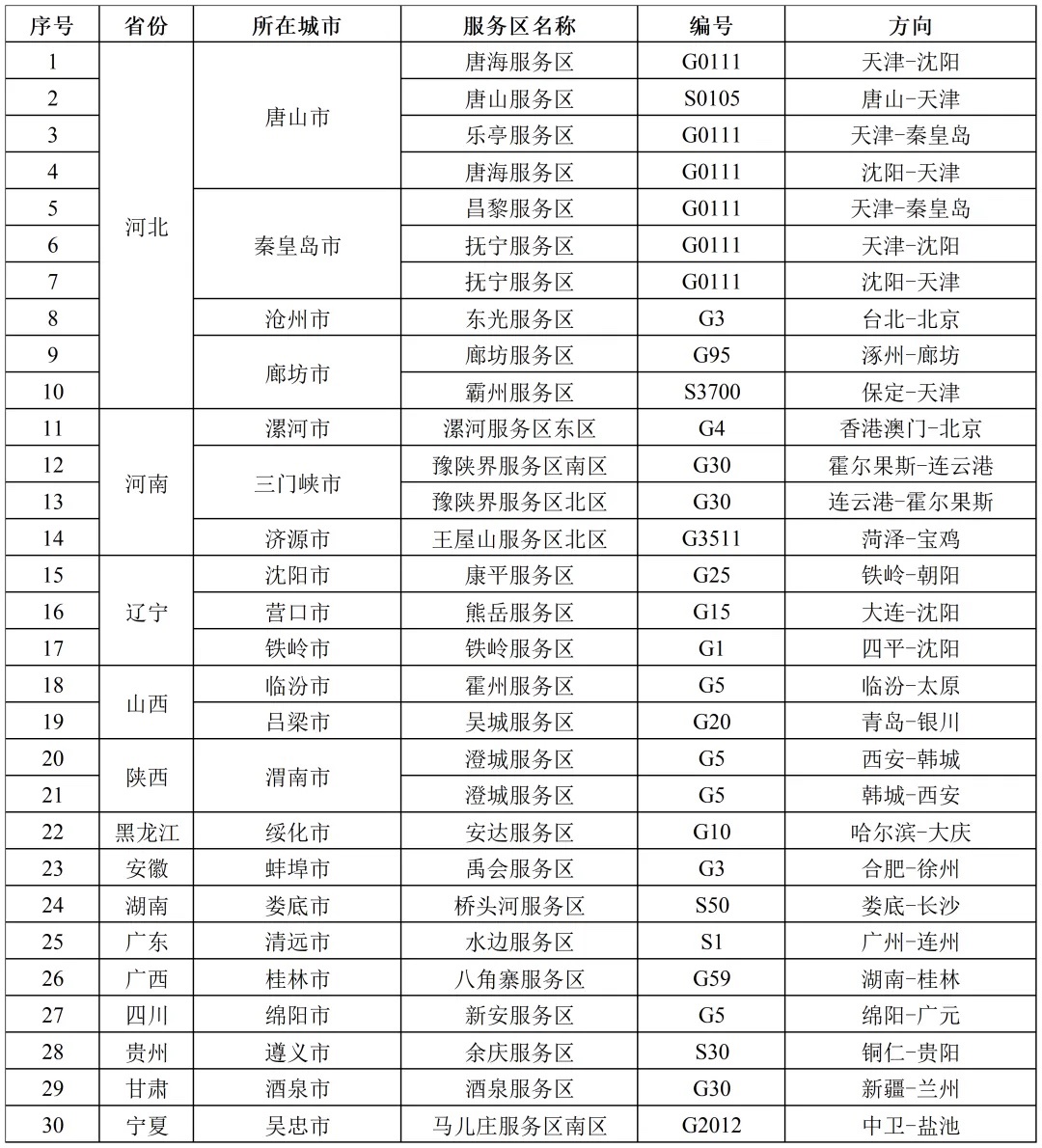
Yet an overall increase in grid capacity does not mean individual bottleneck pressure has dropped to zero. Dynamic assessments from the Ministry of Transport revealed that on October 4, 30 highway service areas nationwide still experienced severe charging congestion, predominantly concentrated in transit corridors across Hebei, Henan, and Liaoning provinces. How best to address this “tidal phenomenon”—an extreme demand surge occurring for barely ten days each year—has ignited a strategic debate between two contrasting philosophies.
Proponents of commercial efficiency argue that dramatically overbuilding charging piles to satisfy once-a-year holiday peaks is economically unsustainable. Charging station operators sink substantial capital expenditures into ground installations, yet these facilities sit largely underutilized during standard workdays, making both construction and ongoing maintenance costs difficult to amortize. Demanding that highway service plazas maintain full peak-capacity hardware year-round represents an irrational, counterproductive misallocation of capital.
Conversely, advocates of public interest emphasize that public charging infrastructure is inherently a societal utility. Accessible chargers are the single most effective tool for eradicating consumer range anxiety. As a pragmatic middle ground between these conflicting imperatives, several service plazas introduced holiday rules requiring drivers to vacate stalls once their state-of-charge reaches 80%. This targeted administrative intervention effectively doubles stall turnover, redistributing scarce fast-charging capacity to drivers with the most urgent range deficits.
800V Architecture and Liquid-Cooled Supercharging Reshape Energy Replenishment
When confronting severe tidal mismatches between supply and demand, the brute-force approach of simply adding more physical stalls encounters a hard physical ceiling. Transformer capacity in aging highway service plazas imposes an unyielding technical redline on physical expansion. These local grid constraints are compelling the industry to pivot from competing on sheer stall quantity to prioritizing peak power per connector.
The rapid rollout of 800V high-voltage vehicle architectures and ultra-fast liquid-cooled charging points offers an elegant technical escape route. With single-stall peak power leaping from legacy 120 kW baselines to 480 kW tiers, single-vehicle replenishment times have been compressed to under 15 minutes. Without adding a single physical footprint to the service area, boosting turnaround speeds alone can effectively double or triple throughput.
Augmented by mobile app-based queue tracking for staggered charging planning, and coordinated with smart vehicle-to-grid scheduling, replenishment efficiency is moving beyond brute-force hardware accumulation. Furthermore, the strategic deployment of mobile emergency charging vans along heavily congested highway corridors provides an agile, resilient buffer against instantaneous peak spikes.
Figure: Highway EV charging traffic trends. Source: National Energy Administration
Smoothly digesting an influx of nearly 3 million charging sessions has fundamentally redrawn the geographic boundaries of electric mobility. China’s expressway charging network has successfully withstood the ultimate stress test. Long-distance electric travel has moved definitively beyond the technical proof-of-concept phase; the industry’s next chapter will center on the sophisticated engineering task of optimizing the holistic service experience.
Reference Links:
- National Energy Administration: Highway NEV Charging Approaches 3 Million Sessions in First Three Days of National Day Holiday
- CLS (Cailian Press): Holiday EV Chargers Face Stress Test: How to Solve the Tidal Traffic Bottleneck?