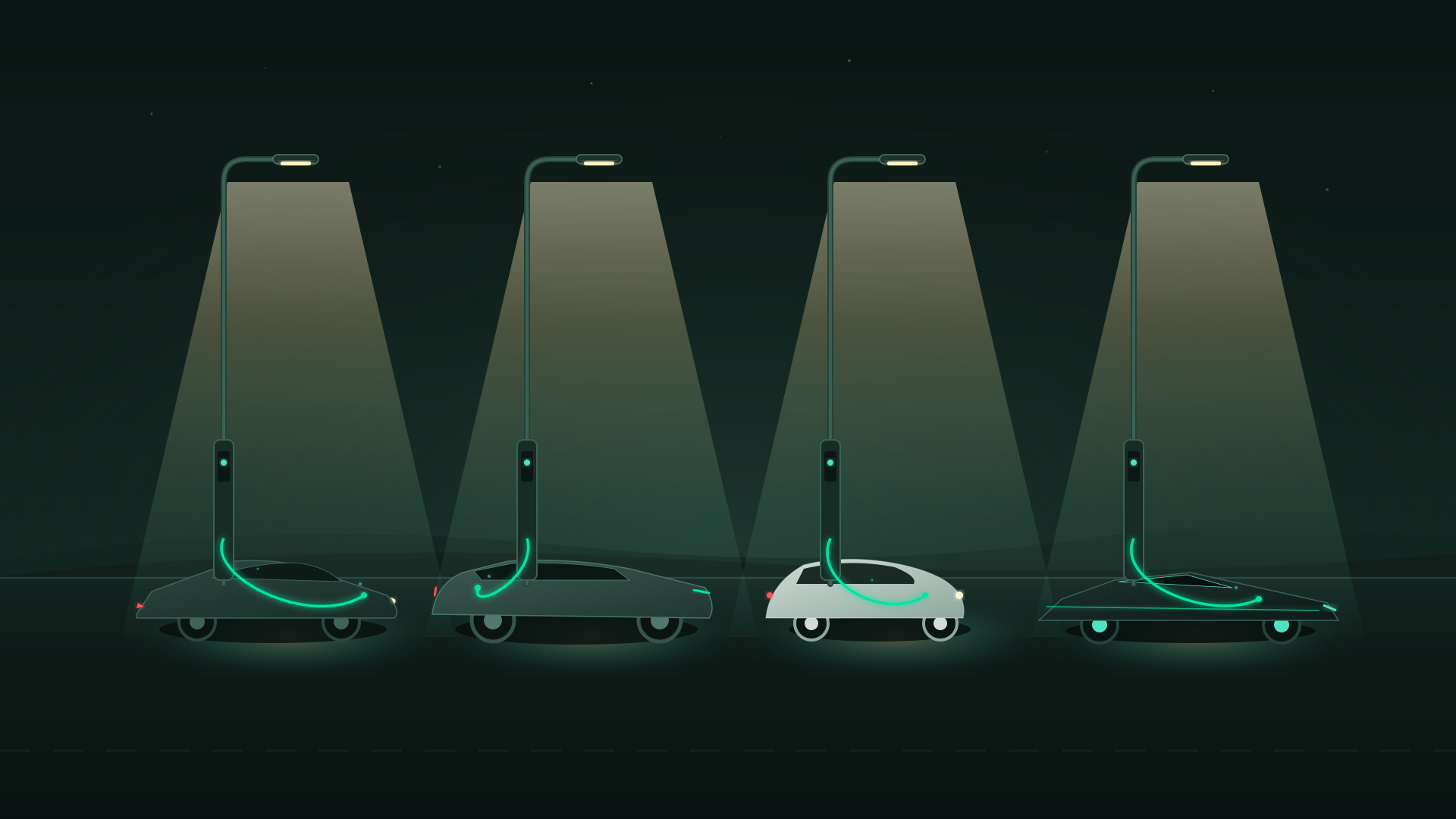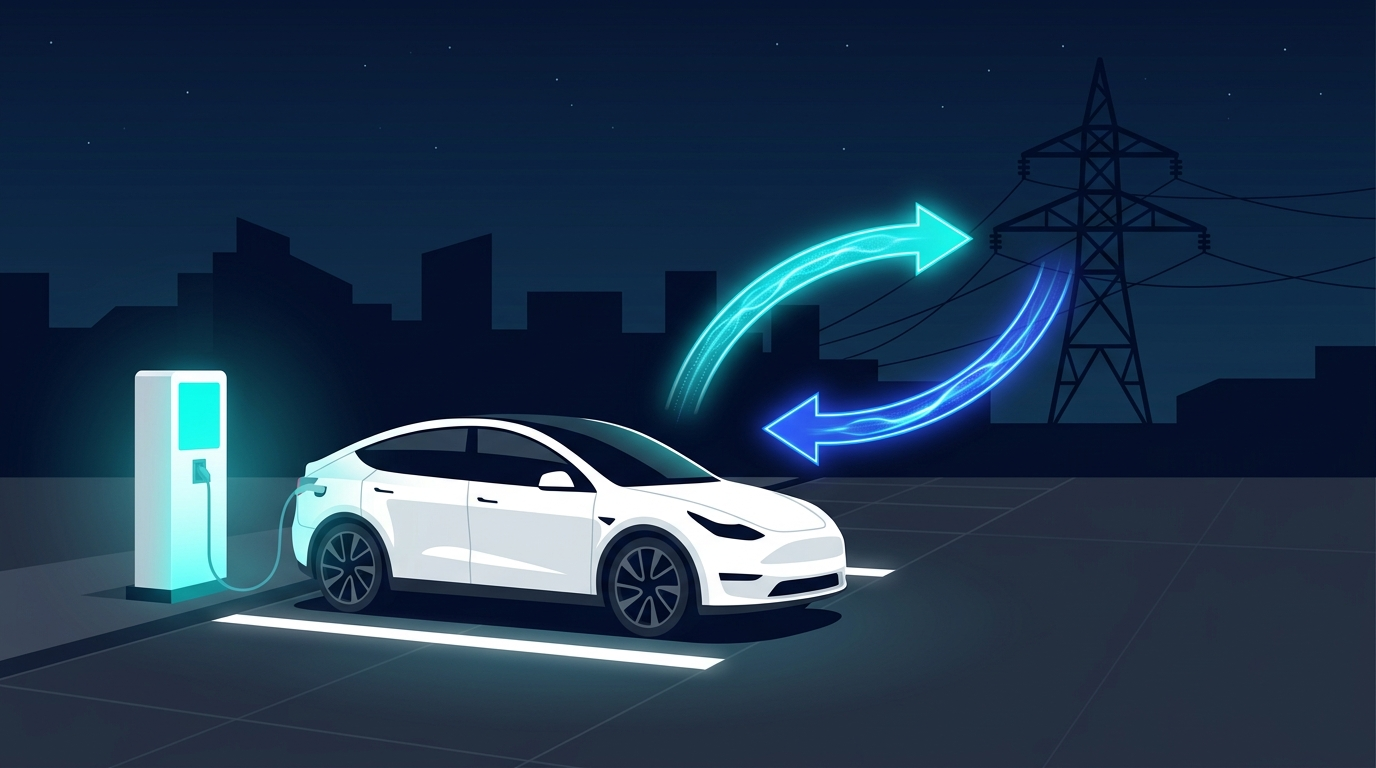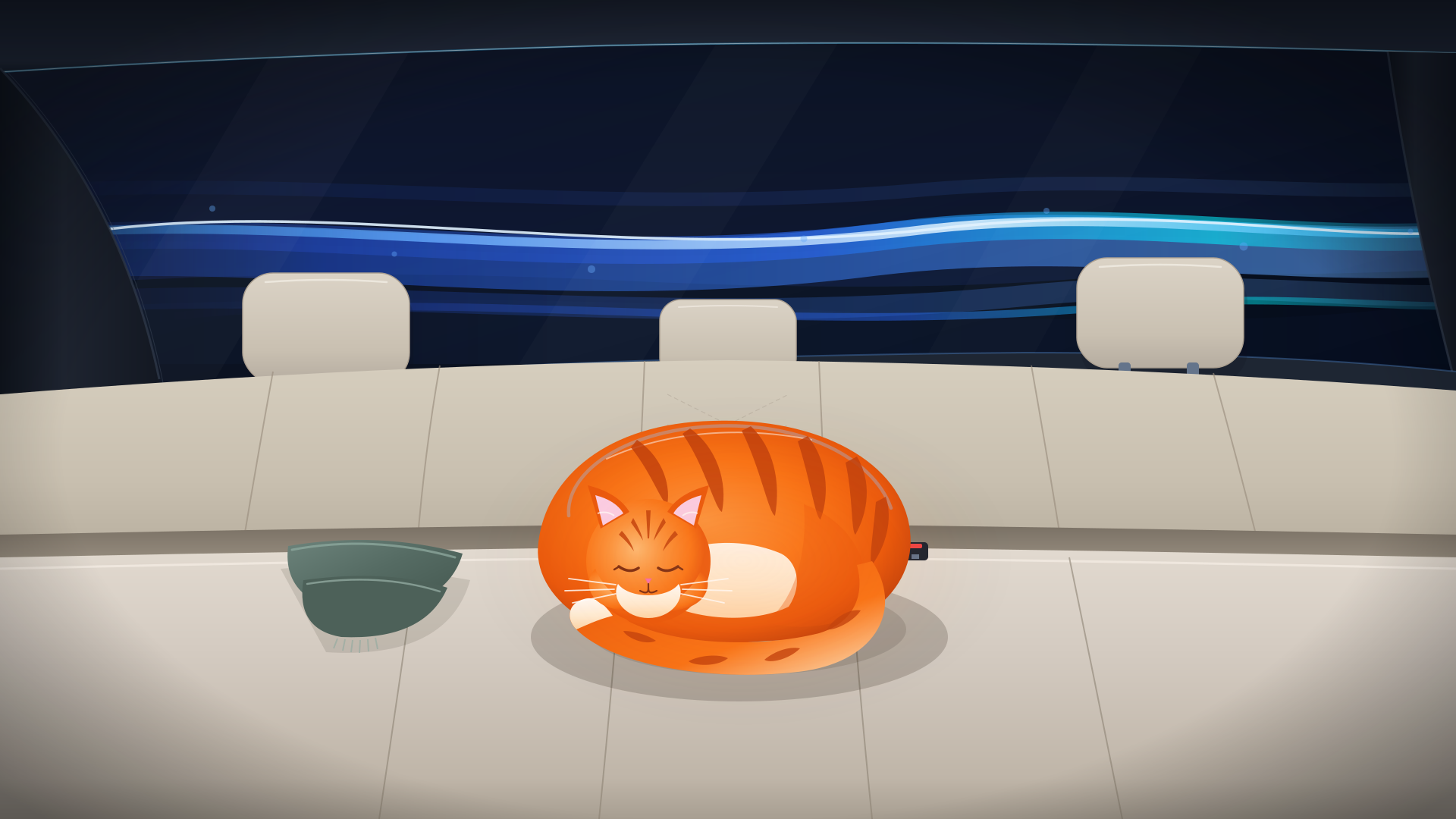
On October 11, 2026, GAC AION initiated a full rollout of its fourth major OTA firmware update for AION N60 owners. Spanning 14 functional enhancements, the upgrade is highlighted by two prominent additions: a four-domain coordinated smart anti-motion-sickness mode, and support for both wireless and wired Apple CarPlay. It represents a pragmatic, scenario-driven pivot.
Priced between 109,800 and 129,800 RMB, the AION N60 competes in China’s mainstream compact electric SUV segment, where cockpit competition has long fixated on expanding display dimensions and stacking proprietary native apps. Instead, AION redirects focus toward foundational passenger ergonomics. The engineering team deployed specialized motor control algorithms to tame the physiological discomfort typical of electric drivetrains, while extending an open invitation to mature smartphone ecosystems.
 Figure: AION announces the fourth full OTA rollout for the N60, focusing on safety and cockpit experience. Source: GAC AION official announcement
Four-Domain Coordinated Algorithms Tame EV Longitudinal Jerk
Motion sickness in electric vehicles stems from fundamental physics. In internal combustion engine (ICE) vehicles, torque transfer passes through hydraulic torque converters and transmission gearboxes, introducing inherent mechanical latency. Pure EVs rely on direct-drive permanent magnet synchronous motors, delivering torque response measured in milliseconds. Any micro-movement of the driver’s ankle translates almost instantaneously into longitudinal vehicle jerk.
Aggressive regenerative braking compounds the problem. When releasing the accelerator, reverse drag deceleration frequently hits 0.15g. Passengers are repeatedly subjected to alternating bouts of acceleration G-forces and abrupt deceleration pull. This creates a persistent disconnect between the vestibular signals registered by the inner ear and visual cues from the retina. That sensory mismatch directly triggers central vestibular motion sickness.
The AION N60’s smart anti-motion-sickness mode can be enabled with a single tap. The system orchestrates four key vehicle domains: powertrain, braking, suspension, and climate control. It restructures the motor torque delivery profile. Across six distinct driving scenarios—including stop-and-go congestion, repeated lane changes, cornering, and emergency braking—the algorithms actively filter out abrupt jerk.
Sudden torque spikes from the electric motor are smoothed proactively. Regenerative braking engages through progressive damping ramps, mitigating the nose-dive sensation during full stops. When the car coasts down to 5 km/h, the hydraulic braking pressure bleeds off gently. Simultaneously, the HVAC system increases fresh air intake and optimizes airflow angles to eliminate cabin stuffiness.
While early EV development prioritized aggressive launch acceleration figures, mainstream passenger transportation now demands that power delivery smoothness become the primary calibration benchmark.
 Figure: Anti-motion-sickness mode smooths electric drive response during frequent acceleration, deceleration, and cornering. Source: GAC AION official technical brief
A Budget EV Embraces the iOS Ecosystem
Most new-generation EV automakers in China have progressively phased out smartphone projection protocols. Automotive brands attempt to build proprietary cockpit moats, seeking to trap owners inside their dedicated software ecosystems. The AION N60 breaks ranks by embracing Apple CarPlay, supporting both wireless and wired connectivity.
After initial Bluetooth and Wi-Fi pairing, the car connects seamlessly every time the driver enters the vehicle. Up to 22 frequently used mobile apps project directly onto the central infotainment screen. Navigation routes and music playlists stream without disruption, turning the large automotive display into a dedicated high-fidelity external monitor.
For daily commuters who have accumulated years of navigation bookmarks and music collections on their phones, native projection removes the friction of scanning QR codes and maintaining separate vehicle accounts. The in-dash display returns to its role as a functional visual hub, keeping interactions straightforward and uninterrupted.
Moreover, while native vehicle infotainment apps often languish on multi-month release cycles, mobile navigation apps receive near-daily over-the-air optimization. Open smartphone mirroring gives owners immediate access to their phone’s navigation computing power and real-time traffic algorithms.
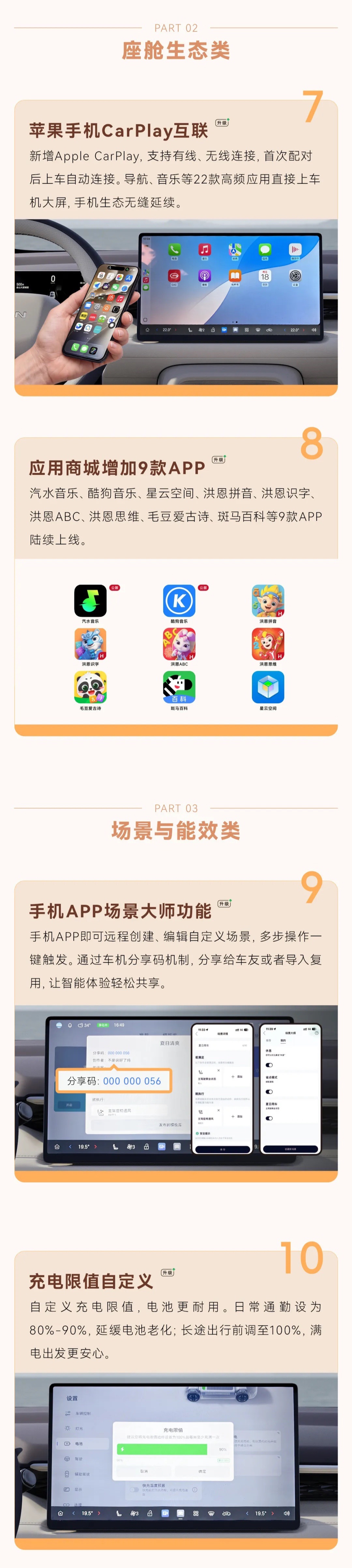 Figure: The system supports wireless and wired CarPlay, seamlessly projecting essential mobile apps. Source: GAC AION official brochure
Walled Gardens vs. Open Smartphone Mirroring
Two divergent philosophies continue to divide the automotive industry over cockpit ecosystems.
Advocates of proprietary native operating systems seek deep hardware-software integration. An in-house system directly interfaces with ambient lighting, power seats, power windows, and autonomous driving telemetry. The central screen manages door locks, parking cameras, and integrated ADAS visualizations. By dominating the platform entrance, automakers also unlock downstream subscription revenue. In contrast, phone projection operates within a sandboxed UI layer, unable to tap deeply into the vehicle’s electronic and electrical bus architecture.
Proponents of smartphone projection prioritize consumer electronics lifecycle dynamics. Mobile silicon iterates annually, and smartphone software updates outpace automotive-grade certification cycles. In-car computing chips frequently struggle with lag and sluggishness after three to five years of service. Phone mirroring leans on modern mobile silicon to keep aging infotainment screens fluid and responsive.
During daily commutes, the vast majority of drivers rely almost exclusively on two core functions: route guidance and audio streaming. Forcing consumers into walled gardens frequently adds unnecessary friction and steep learning curves.
The AION N60 adopts a balanced middle path. The automaker introduced nine curated native apps spanning children’s education and multimedia entertainment, while opening the door to CarPlay mirroring. Ultimately, the system hands full control back to the driver.
Refined ADAS Tiers and Parking Handover Boundaries
Underpinning the AION N60 is a capable hardware foundation. The lineup comes standard with LiDAR and 4D millimeter-wave radar sensors, driven by a Qualcomm Snapdragon 8650 automotive chipset with driving assistance algorithms co-developed alongside WeRide.
This OTA update breaks assisted driving behavior into three distinct profiles: Gentle, Standard, and Agile. Automated parking also gains Gentle, Standard, and Efficient speed presets. In heavy urban gridlock, Gentle mode minimizes stop-and-go stutter. On high-speed motorways, switching to Agile mode improves lane-change responsiveness and overall passing efficiency.
The boundaries of human-machine shared control have also been clarified. Adaptive Cruise Control (ACC) receives an independent operational toggle. When enabled, driver steering wheel inputs assume lateral control only, keeping longitudinal cruise control fully active. When toggled off, any manual steering intervention disengages assisted driving entirely.
Overtaking logic under assisted driving now accounts for messy real-world driving habits. When the vehicle detects a heavy commercial truck drifting over solid lane markings ahead, the system automatically flashes high and low beams as a proactive warning, nudging the truck to maintain its lane.
Additionally, the battery management system introduces customizable charging cut-offs. Drivers can cap daily AC/DC charging between 80% and 90%. Maintaining shallow charge-discharge cycles avoids keeping lithium cells at peak saturation, measurably mitigating long-term capacity degradation.
Rather than chasing superficial buzzwords, the AION N60’s latest OTA update delivers meaningful utility. Multi-domain algorithms eliminate electric drivetrain jerk, while open projection respects existing smartphone habits. Cockpit evolution ultimately returns to transportation essentials: a stable drive and a comfortable ride.
Reference Links:
- GAC AION Official Announcement
- GAC AION N60 Vehicle Technical Manual
- IT Home Coverage