On October 9, 2026, indie development studio Inside Internet officially launched Asobi: Remote Play 1.0 on Steam. Built to support both Windows and Linux-based SteamOS architectures, the client debuted as a free download targeting handheld and PC gamers alike.
Previously, players who wanted a portable next-gen console experience faced only two viable paths. The first required purchasing a $499 PS5 console for the living room and streaming games locally to smaller screens. The second meant spending $199.99 on Sony’s official dedicated remote play handheld, the PlayStation Portal.
Asobi 1.0 fundamentally breaks that hardware dependency. PlayStation Plus Premium subscribers no longer need a physical console humming in their living room. Instead, players can boot and stream PS5 cloud titles directly on their Steam Deck without owning a home console.
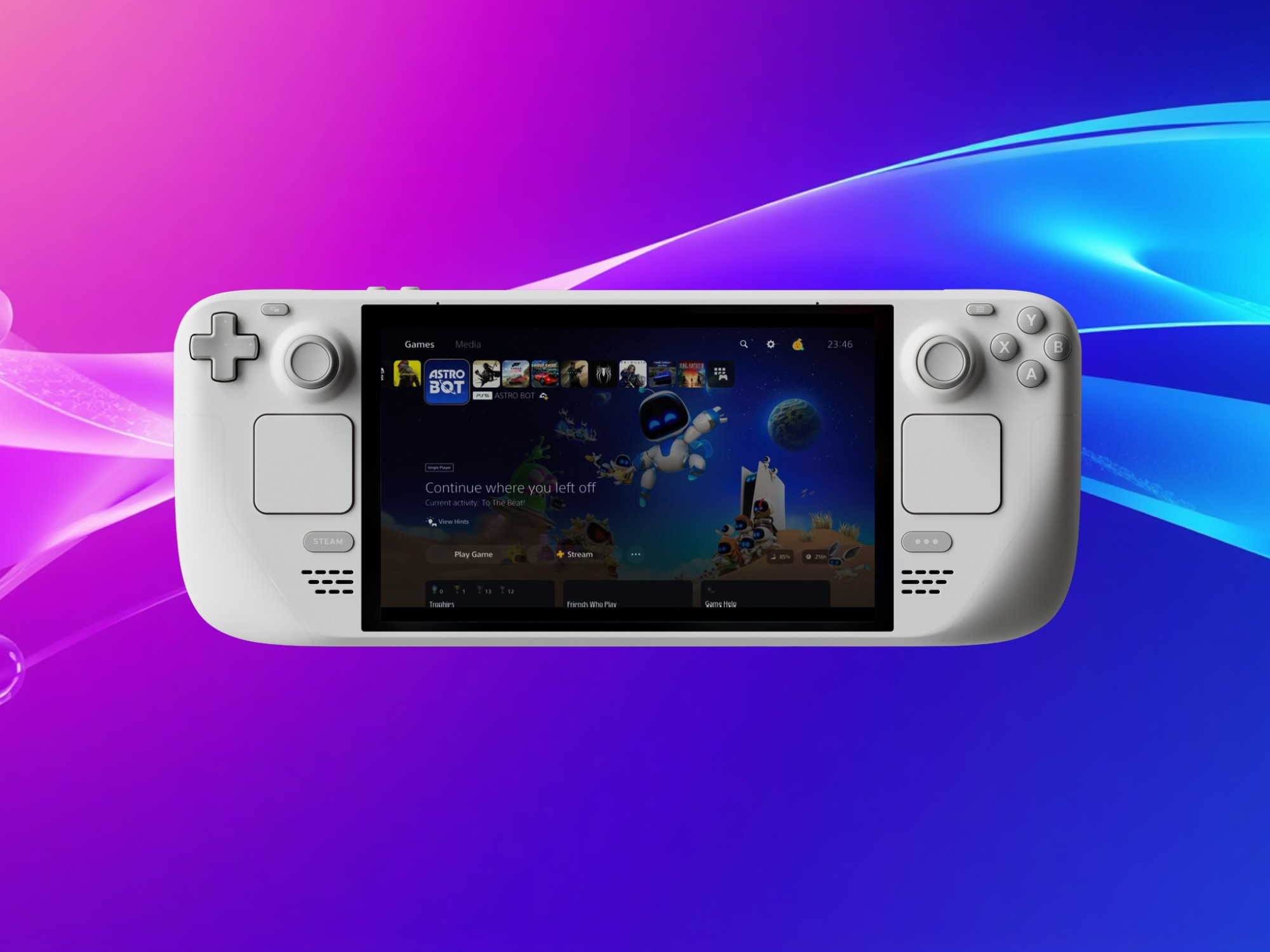 Photo: Asobi 1.0 interface running on the Steam Deck handheld. Source: Inside Internet
Launching Hundreds of PS5 Titles Without a Home Console
Prior to this release, the open-source community’s go-to streaming tool on Steam Deck was chiaki-ng. While wildly popular among handheld enthusiasts, chiaki-ng functions essentially as a local network bridge. The physical PS5 must remain powered on or in rest mode, and remote connections frequently require manual router port forwarding.
Whenever the living room console lost power or encountered network turbulence, handheld sessions immediately dropped. Traditional remote play tied gamers firmly to their physical hardware at home.
Asobi 1.0 hooks directly into Sony’s PlayStation Plus cloud streaming infrastructure rolled out over recent years. The interface cleanly separates Remote Play from Cloud Streaming tabs. Once players log into their PSN accounts, the application loads their cloud-enabled subscription library, bypassing local console hardware and physical rendering entirely.
Over broadband connections above 15 Mbps, Sony’s cloud servers stream crisp 1080p video straight to the handheld display. Blockbuster titles no longer demand tens of gigabytes in local storage downloads. Demanding games like Marvel’s Spider-Man 2 and Ghost of Tsushima launch with a single click, dropping players straight into gameplay.
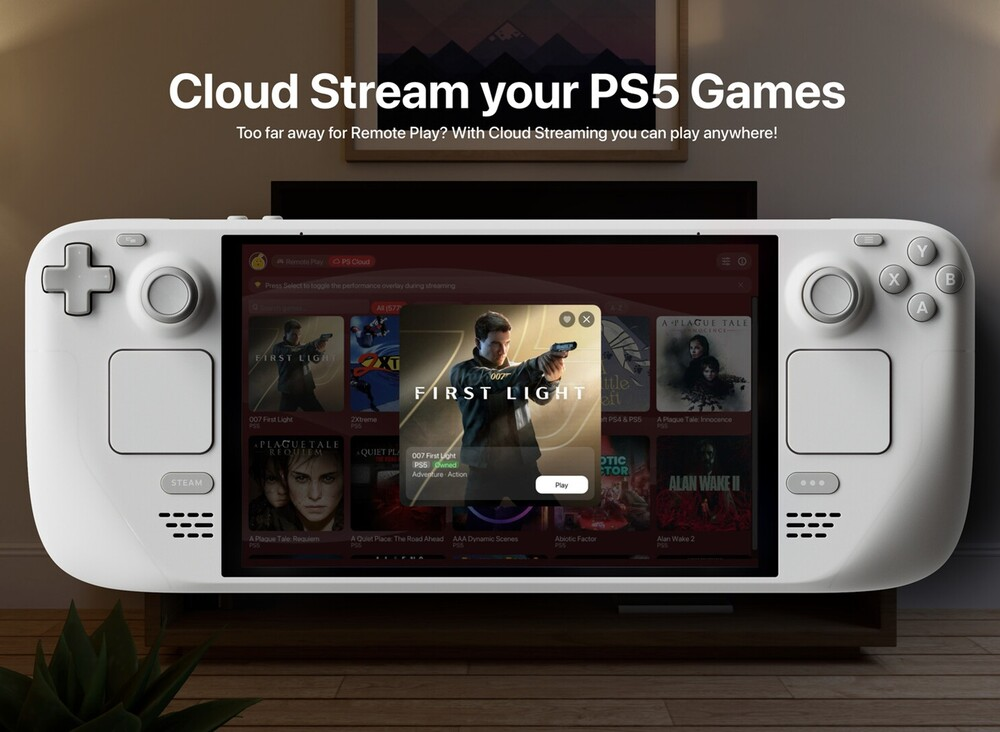 Photo: Accessing the PS Plus cloud streaming game library directly on handheld via Asobi. Source: Inside Internet
Unlocking Haptic Feedback and Frame Generation for $8.99
To balance community adoption with commercial sustainability, the developers adopted a freemium model. The base Steam release offers free 1080p streaming alongside standard gamepad mapping, serving the needs of most casual players.
For users seeking a refined handheld experience, the studio launched the Asobi Premium DLC for $8.99. This upgrade ports Sony’s proprietary DualSense rumble protocols, enabling the Steam Deck’s linear haptic motors and trackpads to replicate adaptive trigger resistance and nuanced tactile feedback.
Visual performance receives a notable upgrade as well. The paid tier unlocks up to 4K 60fps cloud streaming pipelines and integrates the Flow dynamic frame generation algorithm. By estimating bidirectional motion vectors and interpolating intermediate frames, the app pushes perceived smoothness up to 120fps.
Sony’s official Windows Remote Play client has suffered from years of neglect, while Linux and SteamOS platforms have been entirely ignored. By optimizing specifically for handheld hardware, these indie developers delivered features long missing from official software.
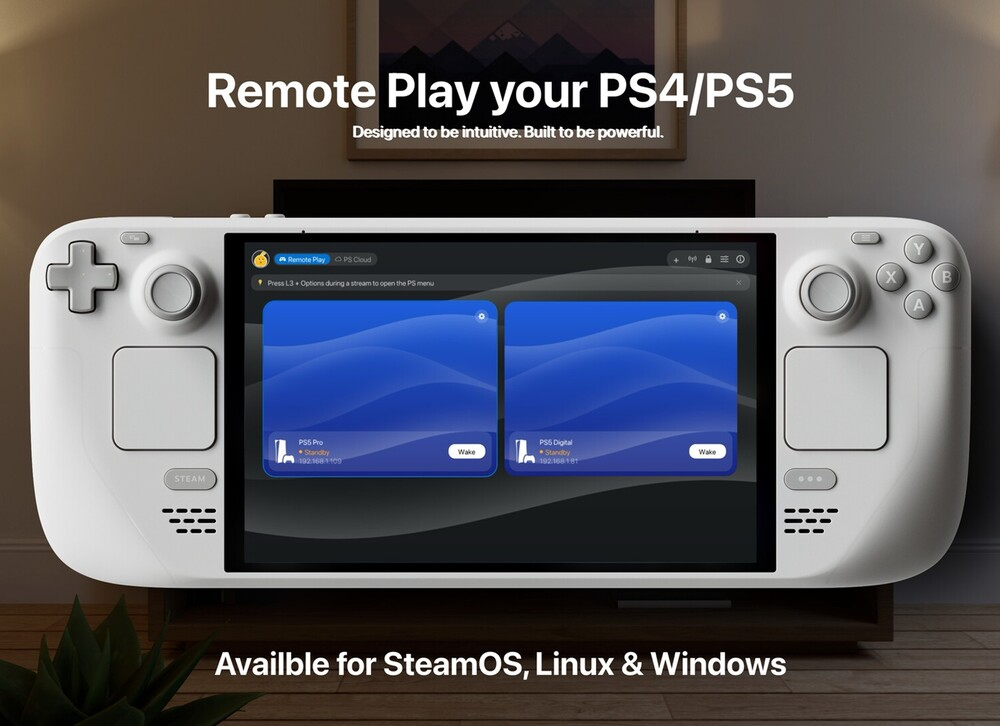 Photo: LAN Remote Play and control parameter settings panel in the Asobi client. Source: Inside Internet
Reverse Engineering Cracks Sony’s Walled Garden
Sony’s approach to cloud gaming has consistently focused on safeguarding its proprietary hardware ecosystem. Since cloud streaming entered testing on PlayStation Portal in late 2024, the console-free service was treated as a vital lever to drive sales of dedicated devices.
Sony shielded its cloud streaming protocols behind rigorous authentication handshakes, attempting to package cloud play as an exclusive premium perk behind a walled garden of co-engineered hardware and software. Unofficial third-party clients were shut out from accessing these streams for years.
Inside Internet dissected the communication handshakes between the PS Portal and remote cloud servers, reverse-engineering the authentication and packet decryption flows. The client locally emulates the Portal’s unique security identifiers, bypassing server-side hardware whitelist filters.
This reverse-engineering feat showcases the agile engineering power of cross-platform developer communities. As open-source tools and third-party apps dismantle proprietary technological barriers, any screen equipped with general-purpose computing power can transform into a functional PlayStation terminal—provided the cloud servers accept incoming requests.
A $200 Dedicated Device Faces Ecosystem Displacement
The release of Asobi 1.0 exerts immediate pressure on Sony’s own PlayStation Portal. Priced at $199.99, the dedicated streaming accessory initially enjoyed strong commercial demand, with Sony CEO Hiroki Totoki publicly praising sales figures that repeatedly beat internal expectations.
Yet the Portal’s hardware architecture remains severely constrained. Powered by a modest low-power Snapdragon chip and an 8-inch 1080p LCD, it cannot run a single game locally. The moment a user steps outside Wi-Fi coverage, the $200 gadget degrades into a dark, unresponsive slab of plastic.
The Steam Deck and competing Windows handhelds operate on an entirely different level of utility. Starting at $399, these versatile machines already run extensive libraries of native PC AAA titles. With an $8.99 app, they can now replicate the Portal’s primary value proposition.
Facing competitive pressure from general-purpose handhelds, Sony recently registered new hardware model identifiers with regulatory bodies. Industry whispers indicate an upgraded OLED Portal may be in development. Still, so long as Sony confines its device to single-purpose streaming, it will struggle against versatile handhelds offering comprehensive utility.
Jitter and Ban Risks Define the Usability Boundary
While breaking hardware walled gardens is undeniably exciting, real-world performance remains bounded by strict physical and legal realities. Early player impressions surrounding Asobi 1.0 reflect practical caveats alongside initial enthusiasm.
Network infrastructure ultimately determines whether cloud streaming thrives or stumbles. Cloud play remains intensely sensitive to network jitter. When home Wi-Fi signals degrade or peak evening hours introduce routing congestion, compression artifacts spike and input latency quickly climbs past 60 milliseconds. In fast-paced fighting games and precision action titles, that delay is more than enough to disrupt inputs.
A larger question mark looms over Sony’s legal and technical retaliation. Asobi is an unauthorized third-party client operating in a legally gray reverse-engineering territory. Sony’s engineers could invalidate third-party logins overnight simply by updating server certificates or altering cryptographic handshakes.
For security-minded gamers, entering PSN credentials into an unauthorized third-party application also triggers account risk and fraud-detection concerns. This unofficial status casts persistent uncertainty over the software’s long-term viability.
General-Purpose Handhelds Reshape Console Boundaries
Throughout consumer electronics history, dedicated peripherals served as classic tools for console makers to lock in audiences. Bespoke silicon, custom displays, and proprietary controllers securely anchored subscription services within proprietary hardware ecosystems.
Asobi 1.0 provides a compelling counter-narrative. When network bandwidth breaks physical bottlenecks and cloud compute replaces local silicon as the core distribution vehicle, exclusive walled gardens built around single-purpose accessories begin to unravel.
Gamers want seamless access to their saves on whatever handheld they prefer holding. A lightweight cross-platform binary measuring just dozens of megabytes is chipping away at proprietary streaming defenses. Driven by indie engineers, this breakthrough demonstrates that open, general-purpose computing platforms are steadily reshaping the competitive landscape of handheld gaming.
Reference Links:
- Notebookcheck Review
- Steam Store Asobi: Remote Play Official Page
- Inside Internet Official Support Documentation
- PlayStation Plus Cloud Streaming Overview