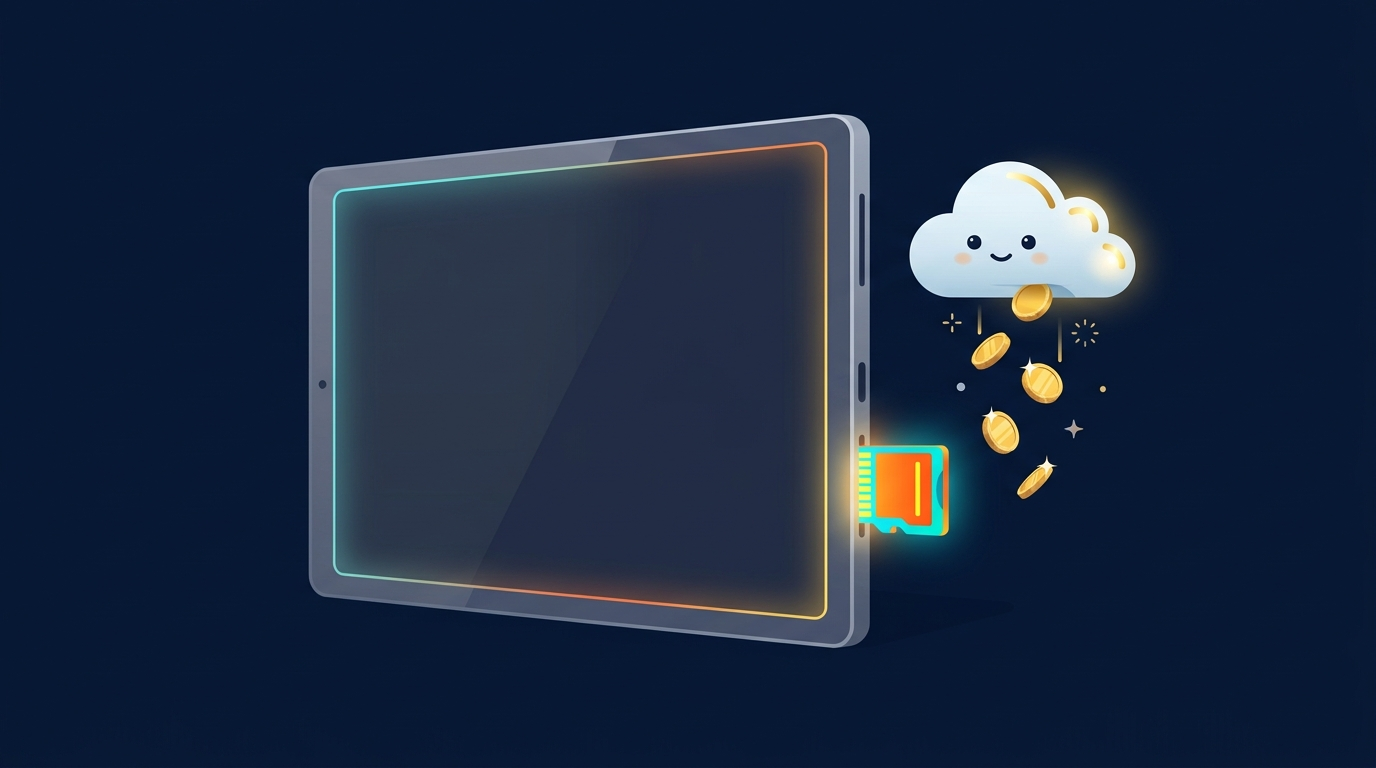
On October 10, 2026, Acer quietly launched its latest budget tablet in India: the Iconia Tab 11 5G. Starting at 23,999 INR (approximately $248 USD), this device features a spec sheet entry that defies current industry trends: support for up to 2TB of expandable MicroSD storage. As cloud providers steadily turn digital space into rented ground with monthly fees, major manufacturers have systematically eliminated memory card slots from flagship lineups to compel cloud subscriptions. In an industry defined by this tacit consensus, a budget tablet retaining a physical slot capable of holding 2TB of data strikes directly at the monetization model of subscription rents with a humble card tray.
A 500g Chassis Pushing the 2TB Physical Expansion Limit
Beyond its baseline specifications, the core product philosophy of the Iconia Tab 11 5G is clear. With an 8.2mm profile and a 500-gram weight, it sports a conventional aluminum unibody build. It features a 10.95-inch IPS display reaching 450 nits of peak brightness. A resolution of 1920×1200 and a 90Hz refresh rate hit the minimum baseline for modern tablets in 2026.
However, the hybrid card slot supporting up to 2TB changes the entire character of this device. Mainstream competitors typically cap MicroSD support at 512GB on low-end models, but Acer maxed out the theoretical boundary of the current MicroSDXC standard. A single 2TB MicroSD card can store around 400 4K movies or 100,000 lossless audio tracks. Without spending hundreds of extra dollars on internal NAND flash upgrades, consumers gain enterprise-grade local capacity on demand.
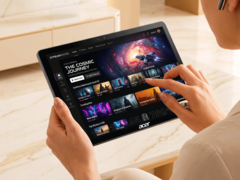 Acer Iconia Tab 11 5G front design. Source: Acer
Big tech giants have built recurring revenue around 128GB baseline storage tiers paired with $10 monthly cloud subscriptions. Manufacturers like Apple and Samsung have steadily curbed physical expansion even across mid-range hardware, funneling all user data toward cloud ecosystems. In this landscape, physical storage expansion serves as the last sanctuary for budget-conscious consumers.
Purchasing physical storage outright remains far cheaper over time than paying perpetual rental fees to cloud vendors. This $248 tablet brings massive storage down to the incremental cost of cheap hardware cards. When local storage reaches 2TB, users no longer need to micromanage cache files or delete downloaded content.
Modest Compute, Prioritizing Connectivity and Storage
Hardware design is an exercise in rigorous budget allocation. Acer equipped this tablet with the MediaTek 8755 octa-core chipset, capped at 2.4GHz. Paired with 8GB of LPDDR4X memory and 128GB of internal storage, it delivers just enough performance for smooth everyday operation and multitasking.
This configuration won’t break benchmark records. The ceiling of the MediaTek 8755 means it cannot handle demanding 3D gaming or heavy video rendering pipelines. Acer deliberately capped compute costs to allocate budget directly to connectivity and storage. This design choice sidesteps direct competition in the crowded, performance-focused tablet tier.
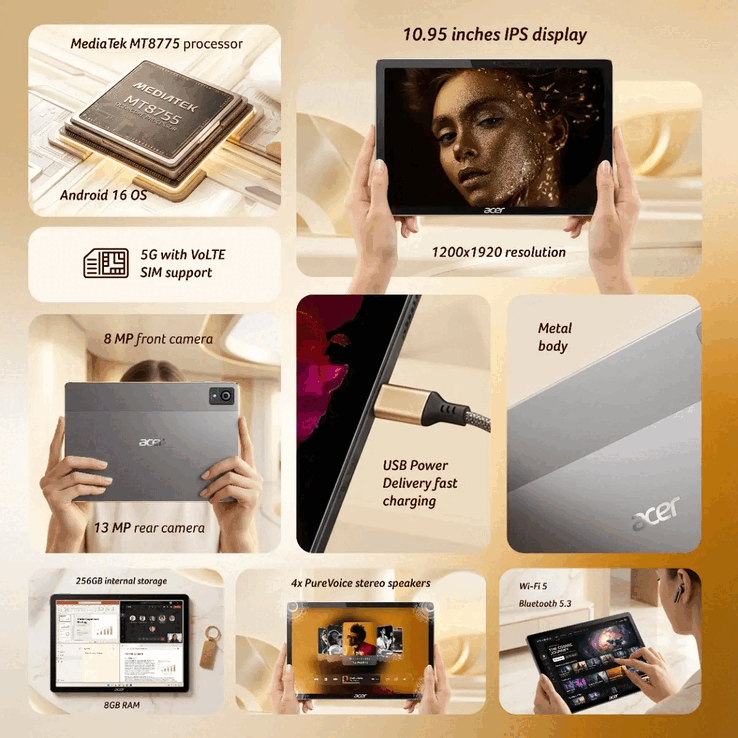 Acer Iconia Tab 11 5G core specifications. Source: Acer
Similar pragmatic trade-offs apply to the power system. A generous 7,400mAh battery provides prolonged offline battery life, though 18W charging takes time to replenish a cell of this size. Users will need to charge the device overnight rather than relying on quick top-ups during the day.
Trading peak performance for a well-rounded baseline experience is often more effective in the budget market than bloated spec sheets. It handles 1080p playback seamlessly, runs stock Android 16 applications without stutter, and functions as a capable portable multimedia station when paired with its quad speakers. Buyers of this tablet need a dependable digital vault, not a synthetic benchmark champion.
Cellular Connectivity Completes the Offline Data Terminal
Another decisive feature of the Iconia Tab 11 5G is its uncompromised network capability. It supports 5G cellular data alongside native voice calling. The SIM tray includes one dedicated SIM slot and a hybrid slot—a design increasingly scarce in today’s mainstream tablet market.
Equipped with a cellular plan, the tablet does not rely constantly on Wi-Fi access points or public hotspots. Users can connect to high-speed 5G anywhere, or pull up locally stored maps and technical documents from the 2TB drive when operating completely off-grid. This uncouples tablet utility from fixed broadband infrastructure.
When a device combines independent network access with massive local storage potential, it evolves from an auxiliary screen into an autonomous data node. The 13MP rear camera with autofocus and flash, along with an 8MP front-facing sensor for video conferencing, rounds out the toolkit for mobile field work.
While features like the fingerprint sensor and dual-band Wi-Fi are welcome additions, the core value proposition rests entirely on that 5G SIM and MicroSD tray. From logistics drivers to field surveyors, a $248 investment secures a portable repository that never loses connection or access to critical data.
Economic Logic That Disrupts the Cloud Subscription Rent
Over the past five years, the price trajectory of cloud storage has trended steadily upward. From Apple iCloud to Google One, incremental subscription hikes have gradually eroded user budgets. A 2TB cloud storage plan can cost over $100 annually, and stopping payments immediately terminates access.
The real driver behind OEMs removing card slots has always been high-margin storage tier pricing. Upgrading from 128GB to 256GB on standard devices often carries a $50 to $100 surcharge. In contrast, the high-tier Iconia Tab 11 5G retails for 26,999 INR (around $279), a mere $31 step up from the base model. This transparent pricing punctures the storage markup bubble.
By leaning into physical expansion, Acer caters directly to consumers fatigued by subscription models. Mainstream 1TB and 2TB MicroSD cards have dropped to accessible price points. A high-quality 1TB card now costs under $100—a one-time purchase with zero recurring invoices.
The return of expandable storage represents a reclamation of data sovereignty. While tech monopolies seek to lock data inside centralized server farms to collect toll fees per byte, retaining an ejectable card slot returns control to the user. When being disconnected no longer means losing your data, the necessity of cloud lock-in dissolves.
Debuting in India to Bridge the Connectivity Gap
Launching this device in India highlights a calculated market strategy. India boasts a massive mobile internet population, yet broadband penetration and infrastructure consistency remain uneven across tiers of cities. Reliable high-speed Wi-Fi remains a scarce commodity outside metropolitan centers.
The combination of 5G cellular connectivity and vast physical capacity matches this infrastructure disparity perfectly. Users can quickly download hundreds of gigabytes of media or files in urban 5G coverage areas, then use them uninterrupted in remote or low-connectivity zones. The tablet serves as a practical bridge across the digital divide.
Furthermore, the 23,999 INR price tag lands squarely in the sweet spot for budget shoppers. In this price tier, competing tablets often compromise with entry-level Unisoc chips or drop cellular support entirely. Acer traded raw silicon horsepower to protect robust cellular connectivity and storage expansion.
Beyond connectivity and storage, Acer has introduced ecosystem accessories including a dedicated stylus and keyboard. In an era where cloud providers routinely rewrite user terms of service, locking data inside an aluminum chassis in your pocket provides far greater certainty than any remote server cluster.
Reference links:
- Notebookcheck coverage