On October 10, 2026, Huawei began pushing HarmonyOS 7.0.0.109 SP10 to Pura X View users. It is an unusually heavy update package weighing in at 4.83GB. In typical software release cycles, an update of this scale is reserved for major visual overhauls, UI fluid dynamics, or heavy gaming engine integrations. Yet the accompanying changelog contains virtually no cosmetic adjustments. Instead, Huawei’s engineering efforts were poured entirely into foundational communications architecture and offline on-device survival capabilities.
Turning a Standalone Device into a Relay Node with 4.83GB
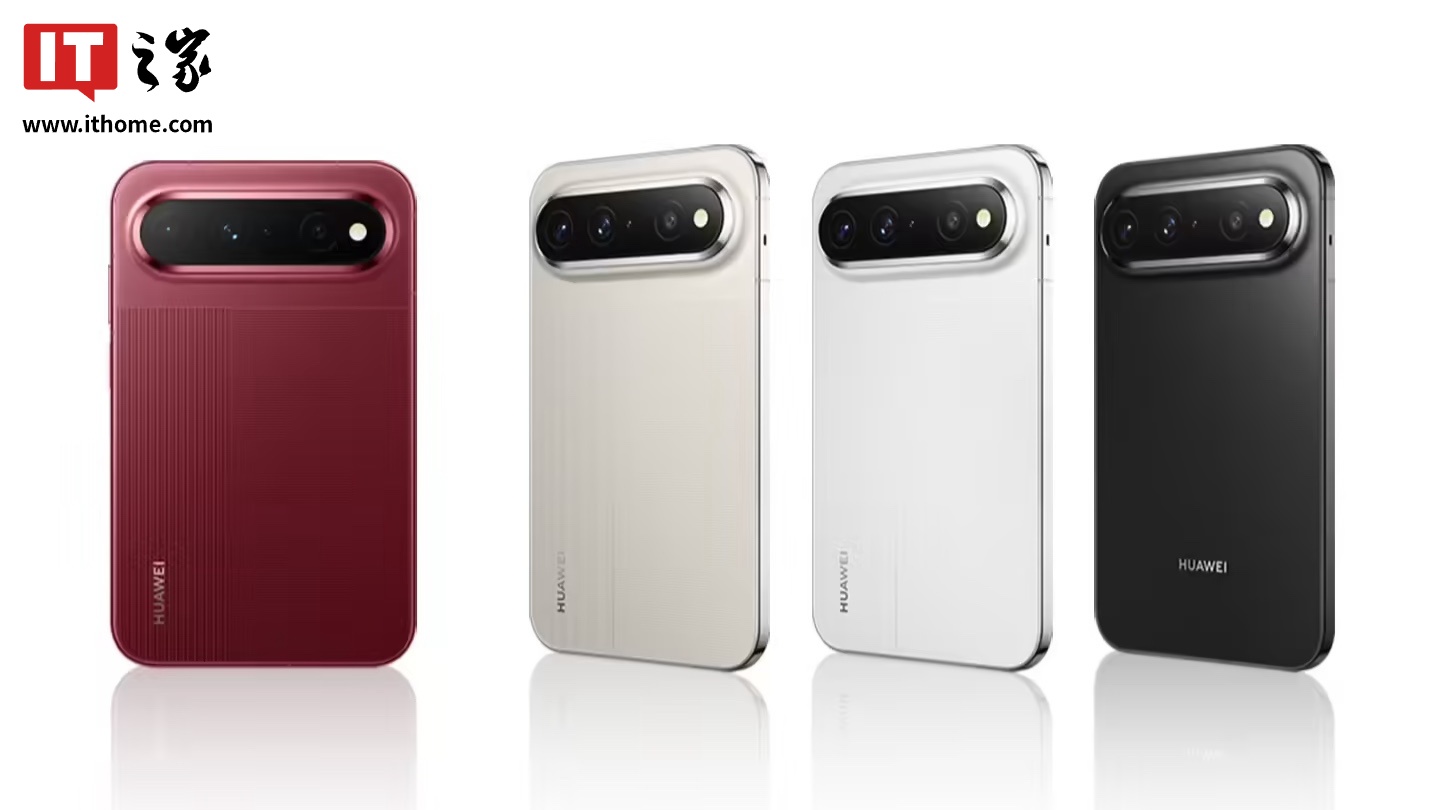 Figure: The HarmonyOS 7 update prompt on the Huawei Pura X View, weighing in at roughly 4.83GB. Source: Huawei HarmonyOS Changelog
The defining upgrade in this release is the “Multi-Party Collaborative Communication Sharing” framework. In traditional cellular network topologies, smart devices rely unconditionally on carrier base stations. When dense crowds overload local cell towers or when users travel beyond network boundaries, a standalone device instantly turns into a disconnected island. This vulnerability stems from the fundamental physical limits of classic star network topologies.
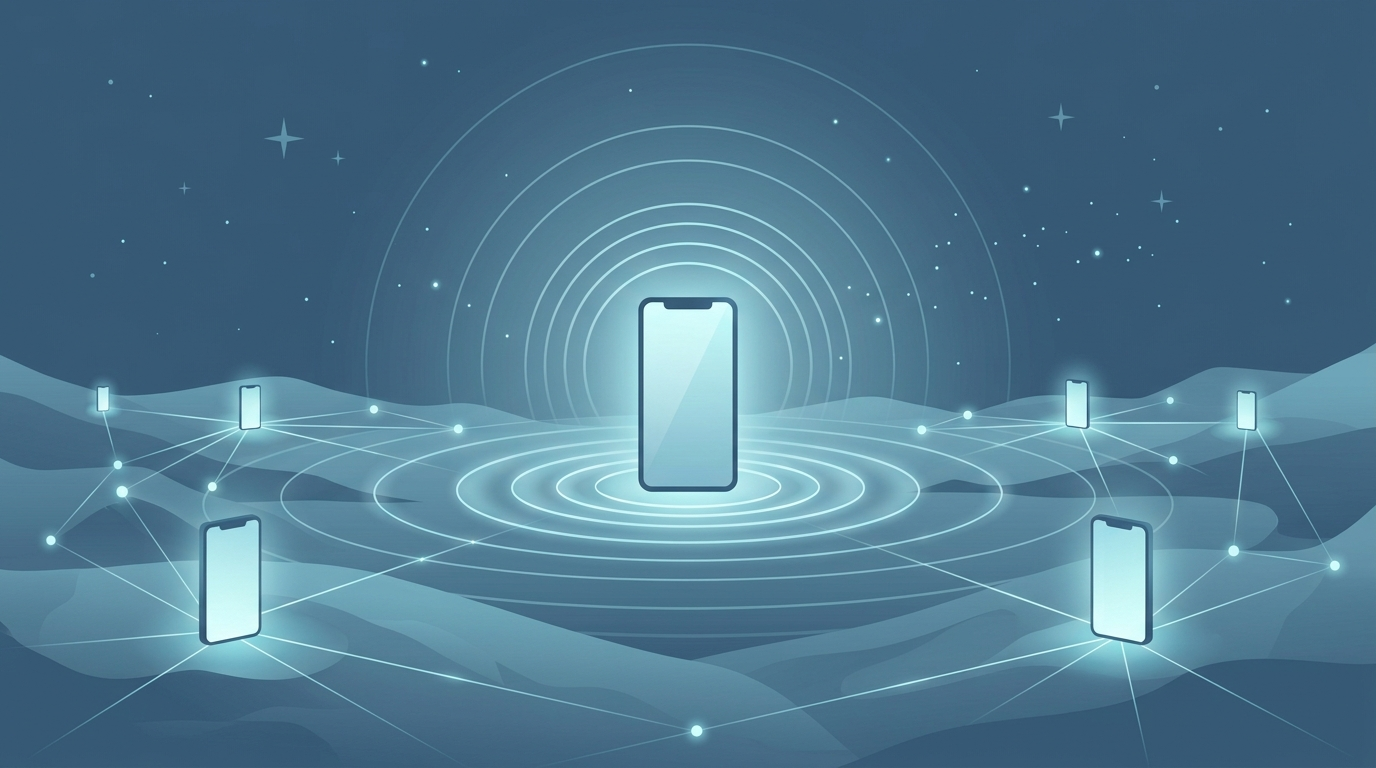
Hardware powered by HarmonyOS 7 can now establish ad-hoc mutual-aid meshes. When a device detects weak signal reception or extreme carrier congestion, nearby devices can pool and share network uplinks through simple touch-to-connect interactions. This ecosystem encompasses phones, tablets, and HarmonyOS PCs logged into the same account. By bypassing the latency-heavy handshakes of legacy mobile hotspots, the protocol transforms individual device radios into shared local infrastructure.
While Apple introduced Satellite SOS in iOS 18 to transmit emergency text snippets, Huawei’s design leans toward local autonomous mesh operation. It stops assuming that overhead orbital satellites or terrestrial cell towers will always be within reach. By chaining nearby devices into self-healing ad-hoc bridges across communication dead zones, the smartphone ceases to be a passive terminal tied to a base station—it becomes an active routing node within a localized infrastructure mesh.
Intercepting Map Rendering to Slash Screen Power Consumption
For outdoor trail navigation, the update introduces an “Off-Screen Trail Tracking Navigation” subsystem. Once engaged, turn-by-turn guidance and route-tracking telemetry from supported mapping apps render directly onto the Always-On Display (AOD). Hikers no longer need to wake the power-hungry 6.39-inch panel; a quick glance at the monochrome screen confirms physical bearing and trail markers.
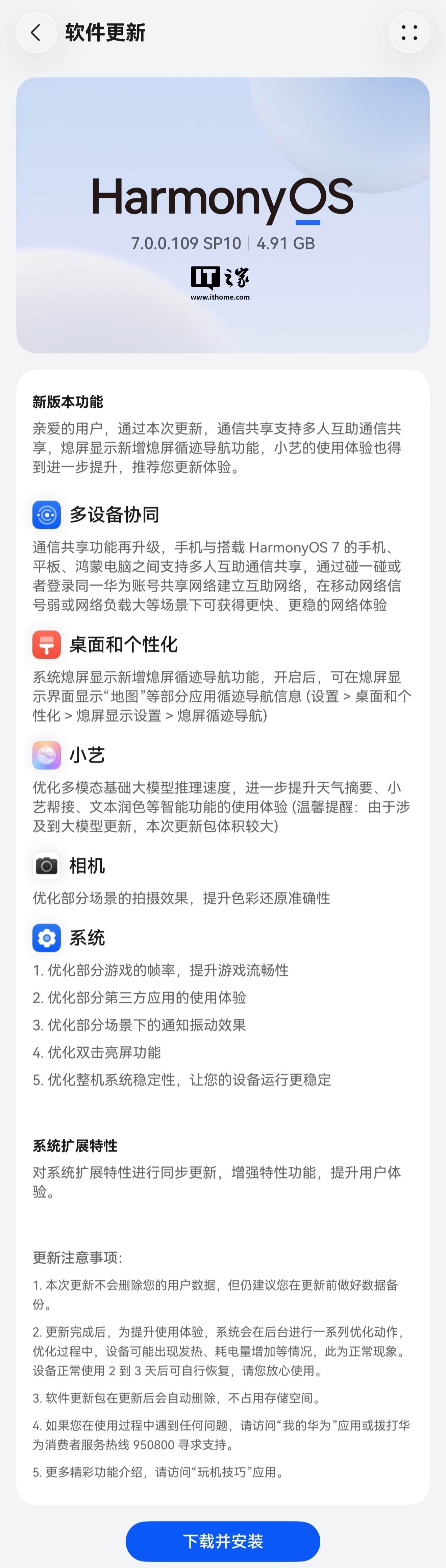 Figure: Changelog details outlining off-screen trail navigation and accelerated on-device LLM inference. Source: Huawei HarmonyOS Changelog
Screen backlights remain the primary battery drain during extended wilderness treks. While the Pura X View packs an expansive 7,000mAh high-density battery into a remarkably slim 6.68mm chassis, continuous display illumination under GPS load still inflicts severe thermal and power pressure. Intercepting map rendering pipelines deep within the OS kernel and redirecting minimal telemetry to an ultra-low-power monochrome AOD dramatically cuts display draw. Given the physical constraints of battery chemistry, stripping visuals down to essential high-contrast vectors is a pragmatic engineering trade-off that secures vital field longevity.
Cutting Cloud APIs: Cramming Billions of Parameters into Local Memory
The second major contributor to the 4.83GB patch size is the on-device deployment of multimodal large language models. Following the update, voice recognition for Celia call screening and context-aware text refinement in the native gallery operate entirely decoupled from cloud APIs. All computational workloads execute natively across the dedicated NPU embedded in the Kirin 9030S chipset.
In dense metropolitan areas with robust 5G coverage, a 50-millisecond latency gap between edge and cloud processing goes unnoticed. But in remote landscapes where cellular signals drop out entirely, cloud-tethered “AI phones” instantly regress into dumb terminals. Huawei quantizes and slices multi-billion parameter inference models to reside permanently in system RAM. Offline status no longer implies loss of intelligence; faster local inference ensures the device retains full capacity to execute complex reasoning tasks even in zero-connectivity environments.
On-Device Color Reconstruction for Flawless Offline Photography
Beyond communication and navigation, this firmware overhaul refines computational photography algorithms. The Pura X View features a second-generation Red Maple spectral imaging sensor paired with a 200MP primary camera. In high-contrast or challenging lighting, past image processing relied heavily on cloud compute clusters to execute secondary HDR suppression and multi-frame synthesis. Once disconnected from stable networks, photo processing speed and color reproduction consistency frequently fluctuated.
The HarmonyOS 7 changelog explicitly notes improvements in “color reproduction accuracy.” When a photographer snaps a shutter in remote desert landscapes, the camera performs multi-spectral color calibration directly on-device. By restructuring core image-signal processing pipelines, the system eliminates cloud dependence. This localized image pipeline guarantees true-to-life dynamic range and color fidelity regardless of network availability.
400,000 Units Later: HarmonyOS Takes Over Wide-Screen Layouts
The Pura X View pioneered the 16:9.5 “wide candybar” form factor. This unique aspect ratio delivers a reading canvas close to that of a compact foldable without the mechanical fragility and bulk of a hinge mechanism. However, unconventional screen aspect ratios historically suffer from third-party app letterboxing, misaligned buttons, or stretched viewports.
HarmonyOS 7 resolves this through an OS-level adaptive scaling framework. Huawei revamped the underlying window composition engine, allowing the operating system to dynamically take over widget scaling and auto-reflow logic. Developers no longer need to patch margin constants manually; the OS framework orchestrates responsive UI presentation out of the box, drastically smoothing out the visual experience across third-party applications.
By early October 2026, cumulative sales of the Pura X View surpassed 400,000 units. Critical commercial volume gave Huawei the leverage to enforce new design guidelines across its developer ecosystem. True hardware innovation is not merely about stretching display glass—it requires an operating system with sufficient platform gravity to mandate software adaptation.
When the Cell Tower Fails, the Device Becomes the Network
From peer-to-peer ad-hoc relaying and monochrome AOD trail tracking to fully offline edge intelligence, HarmonyOS 7 is engineered from the ground up for environments devoid of cell tower support. The OS architecture actively rejects the fragile assumption of ubiquitous, unbroken connectivity. As physical hardware density reaches engineering barriers within a 6.68mm profile and a 7,000mAh cell, chaining interconnected devices into a cooperative network offers a clear path to transcend the hardware ceiling of isolated devices.
The union of the Pura X View and HarmonyOS 7 marks the end of smartphones acting as passive dependents of carrier infrastructure. A 7,000mAh power reservoir, localized AI intelligence, and peer-to-peer connectivity weave devices into an autonomous fabric. A fallen base station is no longer an insurmountable blackout—it is simply a physical trigger that switches devices into autonomous local mesh mode.
References:
- Huawei HarmonyOS 7.0.0.109 SP10 Changelog
- IT Home: Huawei Pura X View Wide Slate Receives HarmonyOS 7.0.0.109 SP10 Update with Multi-User Collaborative Networking
- Reports: Huawei Pura X View Wide-Aspect Flagship Surpasses 400,000 Units in Sales