On October 12, 2026, Haier officially launched its new M1 Plus electric smart clothes dryer with an introductory price tag of 689 RMB (~$95). Built around a 35 kg load capacity and 80 dedicated drying positions, the balcony appliance’s standout hardware innovation is an on-device offline voice processing chip that functions completely without an internet connection.
Users no longer need to configure 2.4GHz home Wi-Fi or purchase standalone smart speakers to act as network relays. Standing directly beneath the drying rack, a spoken command triggers smooth lifting, lowering, or toggling the integrated 24W overhead illumination panel. Bringing a capability once reserved for premium models down to sub-$100 appliances directly punctures the smart home industry’s longstanding obsession with mandatory cloud connectivity.
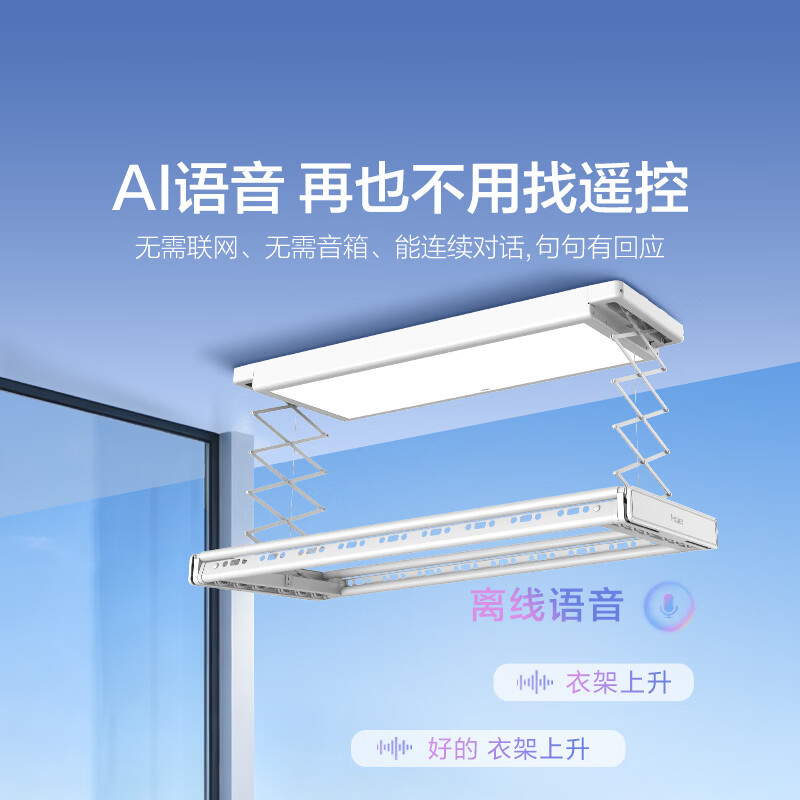 Image: Haier M1 Plus supports local on-device offline voice interaction, freeing the appliance from network dependencies and smart speaker relays. Source: Haier Official Product Launch Materials
Two Load-Bearing Walls Away: Cloud Commands Trapped in 3-Second Latency
In modern residential layouts, balconies represent notorious dead zones for home Wi-Fi coverage. Fiber terminals typically sit hidden inside entry foyer utility boxes, while wireless routers rest on living room TV consoles. For radio signals to reach the exterior laundry balcony, they must penetrate two reinforced concrete load-bearing walls alongside a layer of sliding soundproof double-glazed glass.
Empirical testing reveals that 2.4GHz Wi-Fi signals suffer over 25dB of path loss after passing through heavy concrete walls. Across dense insulated glass, 5GHz signal strength degrades sharply below -80dBm. Consequently, smart balcony appliances tethered to cloud connectivity face persistent disconnections, dropping user commands and throwing pairing timeout errors.
Conventional voice control setups depend entirely on lengthy public cloud round-trips. When a user speaks toward a living room smart speaker, raw audio streams across local Wi-Fi to remote cloud servers for Automated Speech Recognition (ASR). Cloud Natural Language Processing (NLP) parses the intent and dispatches control packets back to the home router, which finally routes them to the balcony motor. Traveling thousands of kilometers across public networks stretches overall latency to 2 to 3 seconds.
When holding a heavy laundry basket packed with damp garments, waiting several seconds destroys the hands-free user experience. Worse, if broadband encounters temporary ISP outages or router freezes, an expensive smart appliance instantly degrades into an unresponsive aluminum rack. Cloud-bound smarts unravel rapidly under real-world weak-signal conditions.
Sub-Dollar Offline Silicon Brings Local Inference Under 200 Milliseconds
The maturation of specialized edge silicon has permanently dismantled this connectivity bottleneck. With mass production ramping across dedicated offline voice recognition SoCs, procuring single-die chips packing 32-bit RISC cores and dedicated acoustic processing units costs well under 10 RMB (~$1.40). Budget home appliances finally have the profit margin headroom to integrate dedicated local compute modules.
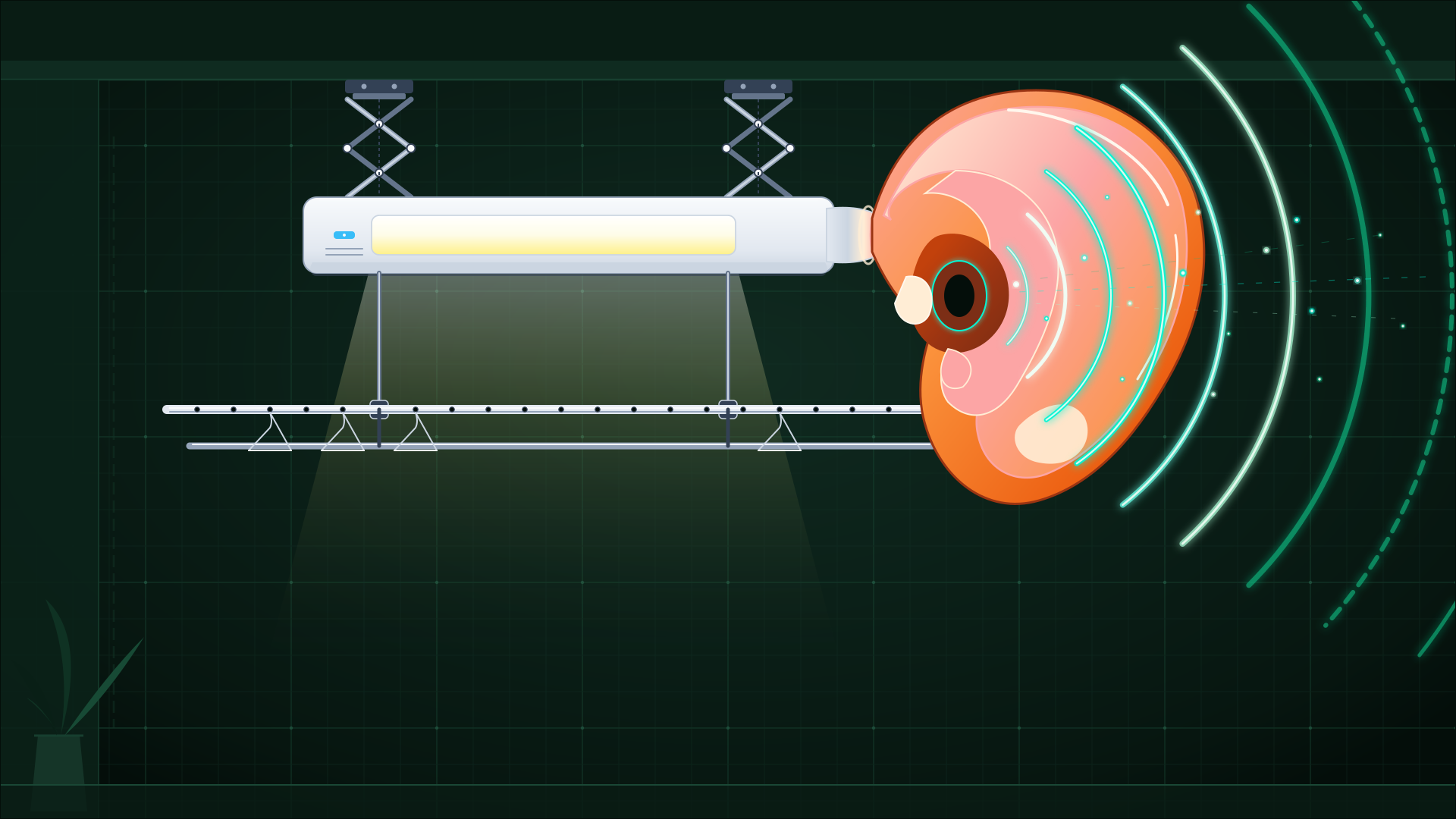
The offline module inside the M1 Plus embeds a permanent local command vocabulary. Supporting continuous dialog, it directly recognizes dozens of operational voice commands covering lifting, lowering, pausing, and toggling overhead lights. The system completely bypasses network handshakes and remote server parsing queues.
At the acoustic front-end, a dual-microphone array pairs with hardware-level noise cancellation algorithms. The chip filters out localized low-frequency background noise—such as high-speed washing machine spin cycles and exterior street traffic—directly on the die. Latency between command recognition and motor relay triggering drops below 200 milliseconds.
传统云端链路:麦克风拾音 -> 上传云端 ASR -> NLP 意图解析 -> 下发设备指令 -> 动作响应(耗时 2000-3000ms)
端侧离线链路:麦克风拾音 -> 本地声学降噪 -> 片上模式匹配 -> 继电器直接触发(耗时 <200ms)
At 200 milliseconds, local response speeds rival the tactile feedback of physical wall switches. This near-instantaneous execution delivers dependable operational predictability. Without fishing out a smartphone app or shouting repeatedly at a living room speaker in a noisy environment, voice control returns to what a home tool should be: direct, immediate, and frictionless.
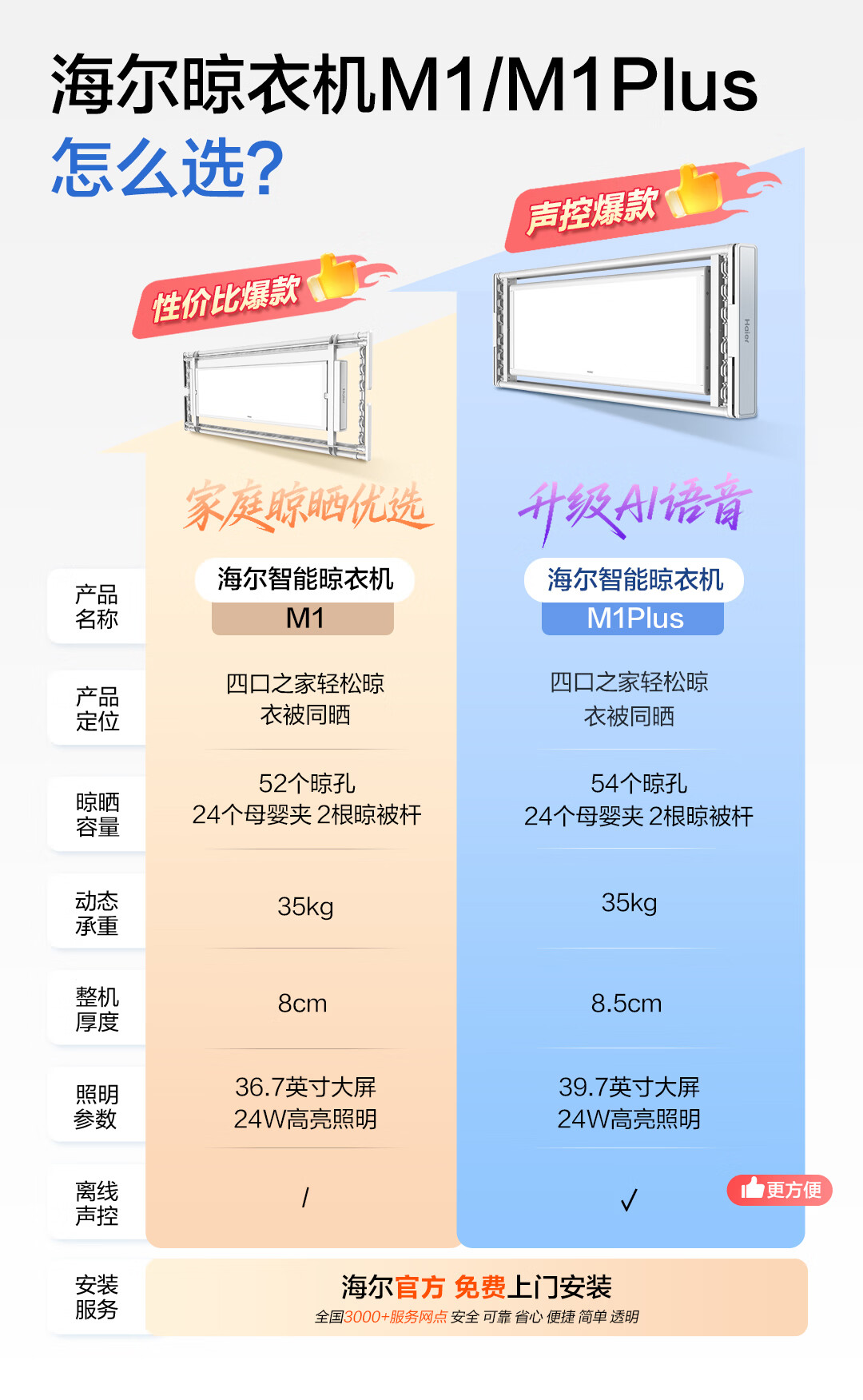 Image: Core hardware differences across voice control, drying positions, and chassis depth between the two models. Source: Haier Official Specification Sheet
35 kg Dynamic Capacity in an 8.5 cm Chassis: Heavy-Duty White Goods Fundamentals
Discussing home automation without solid mechanical engineering produces hollow gimmicks. The M1 Plus adheres to the strict manufacturing standards of traditional major appliances. Its chassis measures just 8.5 cm in total thickness, ensuring that surface-mounted installations will not block inward-swinging balcony windows or adjacent utility cabinet doors.
The rack provides 54 dedicated hanger openings, 24 maternal-and-infant hanging clips, and dual 2.13-meter telescoping duvet rods. Across 80 discrete drying zones, the unit easily accommodates daily wardrobe loads for a family of four alongside heavy blankets and bedsheets. The spaced layout optimizes airflow clearance between different fabric types.
Its structural chassis uses stamped carbon steel, outlasting traditional engineering plastics against balcony UV weathering. The hanging rods utilize 6-series aviation-grade aluminum alloy finished with multi-layer anti-corrosion powder coating. The lifting mechanism relies on 7×7 braided 49-strand 304 stainless steel aircraft wire cables, rated for a dynamic load capacity of 35 kg.
海尔 M1 Plus 关键机械与电气参数:
- 动态额定承重:35 kg(等同于 70 斤衣被负荷)
- 主机机身厚度:8.5 cm(支持水泥顶、集成吊顶与蜂窝大板嵌装)
- 晾晒扩展能力:54 个挂衣孔 + 24 个母婴夹 + 2 根 2.13m 伸缩晒被杆(共 80 晒位)
- 平板照明系统:39.7 英寸发光面,24W 功率,2400 lm 光通量,6500K 色温
Embedded across the central chassis sits a 39.7-inch uniform LED lighting panel. Operating at 24W, it pumps out 2,400 lumens of brightness at a daylight 6500K color temperature. This high-output luminaire completely replaces the original balcony ceiling light fixture. Grounded mechanical build quality and robust electrical specifications provide the true physical backbone for smart features.
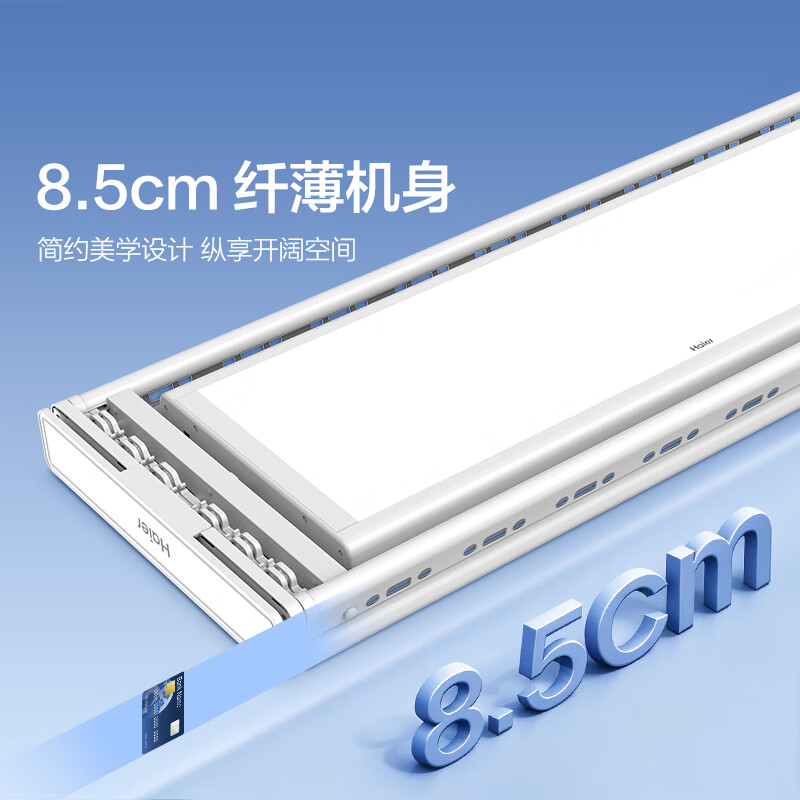 Image: The 8.5 cm ultra-thin profile combines with folding scissors brackets to tuck flush against various balcony ceiling configurations. Source: Haier Official Product Design Guide
Zero Cloud Dependencies Protect Privacy, but Lock Out Whole-Home Automation
Deploying offline edge computing architectures on major appliances has sparked industry debates over future smart home roadmaps. Dropping internet modules altogether presents distinct engineering and usability trade-offs.
Proponents of offline appliances champion physical privacy and rock-solid usability. In modern apartments, balconies frequently open directly into master bedrooms. Having always-listening microphones continuously streaming telemetry to public cloud infrastructure raises reasonable domestic privacy anxieties. Total physical air-gapping cuts off potential data leakage channels while eliminating smartphone app pairing hurdles and third-party account setups for elderly users.
Conversely, skeptics point out the architectural isolation of offline devices. Without networking radios, the clothes dryer cannot communicate with broader smart home ecosystems. If sudden rain begins pouring outside, an offline dryer cannot receive automated alerts from external rain sensors or weather forecast APIs to retract itself. Nor can homeowners trigger whole-house away-from-home power cuts.
Firmware maintenance faces similar physical constraints. The on-chip acoustic dictionary cannot receive over-the-air (OTA) updates via the internet. If family members speak with regional dialects or unclear articulation, local models cannot iteratively improve through cloud-backed retraining. The local architecture delivers uncompromising certainty and privacy at the expense of cross-device interoperability.
Smart Homes Shed the Internet Fetish: Pragmatism Takes Over Domestic Hardware
Over the past decade, consumer electronics fell into a cycle of vanity connectivity. Inexpensive household items were needlessly fitted with Wi-Fi chips, forcing users to install bloated mobile apps. Consumers paid premium markups for elusive cloud ecosystems, only to deal with tedious network pairing and frequent disconnection alerts.
Haier’s rollout of offline voice control on a sub-$100 appliance signals hardware makers reassessing the definition of real intelligence. While cloud models prove clumsy for simple physical tasks, dedicated edge chips hyper-focused on specific commands deliver far superior practical utility.
Major white goods carry operational lifespans of eight to ten years. Public cloud APIs can sunset or shut down, but hardwired local algorithms soldered onto silicon will continue responding for the life of the machine. The consumer’s requirement is simple: when both hands are full, the rack should raise smoothly and illuminate the room on command.
Reference Links:
- Haier Official Store Product Specification Guide
- JD.com Haier Official Flagship Store Technical Sheet
- Technical Report on Embedded Offline Voice Solutions for Smart Home Appliances
- IT Home Coverage