On October 19, 2026, Microsoft officially opened pre-orders in mainland China for the new Surface Pro 12-inch (2nd Gen) and Surface Laptop 13-inch (2nd Gen). Both machines are powered by Qualcomm’s 6-core Snapdragon X2 Plus processor, with street prices on major third-party e-commerce channels starting at 8,488 RMB for the 16GB + 512GB tier.
Earlier Copilot+ PC models routinely commanded premium prices above 10,000 RMB, keeping adoption costs stubbornly high. By slashing the hardware entry threshold, Microsoft is making a deliberate push to bring ARM-based Windows architecture firmly into mainstream commercial channels.
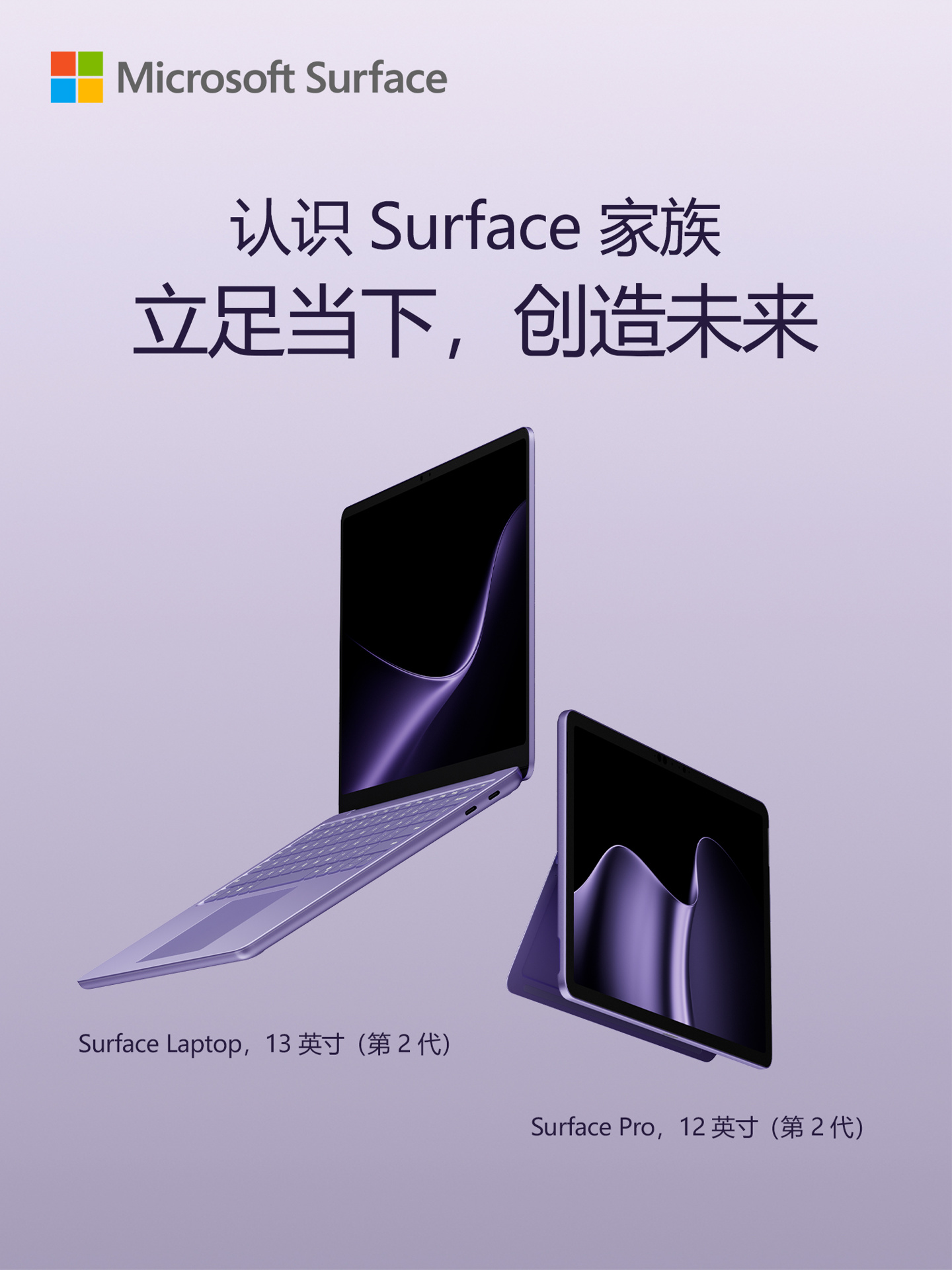 Figure: The 12-inch Surface Pro features a fanless chassis weighing just 686 grams. Source: Microsoft Store
Sub-8,500 RMB Pricing: Lowering the Enterprise Procurement Ceiling
When the first wave of Copilot+ PCs launched in 2024, flagship configurations such as the Surface Pro 11 and Laptop 7 shipped exclusively with 8-core to 12-core silicon. While performance was impressive, standalone tablet prices landed between 8,688 RMB and 9,988 RMB in China. Adding a magnetic keyboard cover and stylus easily pushed total procurement budgets beyond 12,000 RMB. Such steep overhead forced corporate IT procurement departments into an extended holding pattern.
The new 6-core SKUs establish an entirely new pricing baseline. On Microsoft’s official store, the 12-inch Surface Pro with 16GB RAM and 256GB storage lists for 9,188 RMB. Third-party retailers have discounted the more practical 16GB + 512GB configuration down to 8,488 RMB, while keyboard bundles can be had for 9,488 RMB.
The clamshell Surface Laptop 13-inch follows suit: third-party platforms start at 9,788 RMB for the 16GB + 256GB model, while the 512GB version lists uniformly across official and retail channels at 10,588 RMB. By pulling core business configurations into the 8,000 RMB bracket, Microsoft directly dismantled a critical budgetary hurdle for fleet deployments.
In enterprise IT procurement, 8,000 RMB typically serves as the approval threshold for standard ultraportable office notebooks. Crossing into five-figure pricing (10,000 RMB+) exponentially lengthens internal sign-off cycles. By trimming high-frequency performance cores to reduce bill of materials (BOM) costs, Microsoft has given Windows on ARM a viable entry ticket into mainstream corporate fleets.
6-Core Oryon with 80 TOPS: Qualcomm’s Calculated Efficiency Ledger
This downward price shift stems from Qualcomm’s strategic trade-offs in the Snapdragon X2 Plus. Built on Qualcomm’s 3rd-generation Oryon CPU architecture, the chip scales back to 6 performance cores. While peak boost clocks and peak multi-threaded burst capacity take a modest hit, sustained thermal efficiency and power consumption are noticeably improved.
Traditionally, PC silicon designed for lower product tiers suffers heavy cutbacks to integrated graphics and AI hardware blocks. In contrast, Qualcomm preserved the full-fat Hexagon NPU architecture in the Snapdragon X2 Plus. The module delivers an uncompromised 80 TOPS of on-device AI throughput—a 78% surge over the 45 TOPS found in first-generation Snapdragon X chips. Compared to previous-generation platforms, the new hardware yields a 17% gain in routine Microsoft Office productivity tasks and a 60%+ boost in graphical performance.
The computing center of gravity for AI is actively shifting. Qualcomm chose to trim raw CPU core counts while defending uncompromised NPU throughput, preserving the essential user experience floor of Copilot+ PCs. Local semantic search, on-device small language models, and real-time inference run smoothly within a modest thermal budget.
This architectural balance reshapes ultraportable laptops. Routine document processing and web browsing never saturate multi-core arrays. Eliminating redundant high-draw cores substantially cuts peak thermal output, allowing the hardware to trade cooling headroom for rock-solid battery endurance.
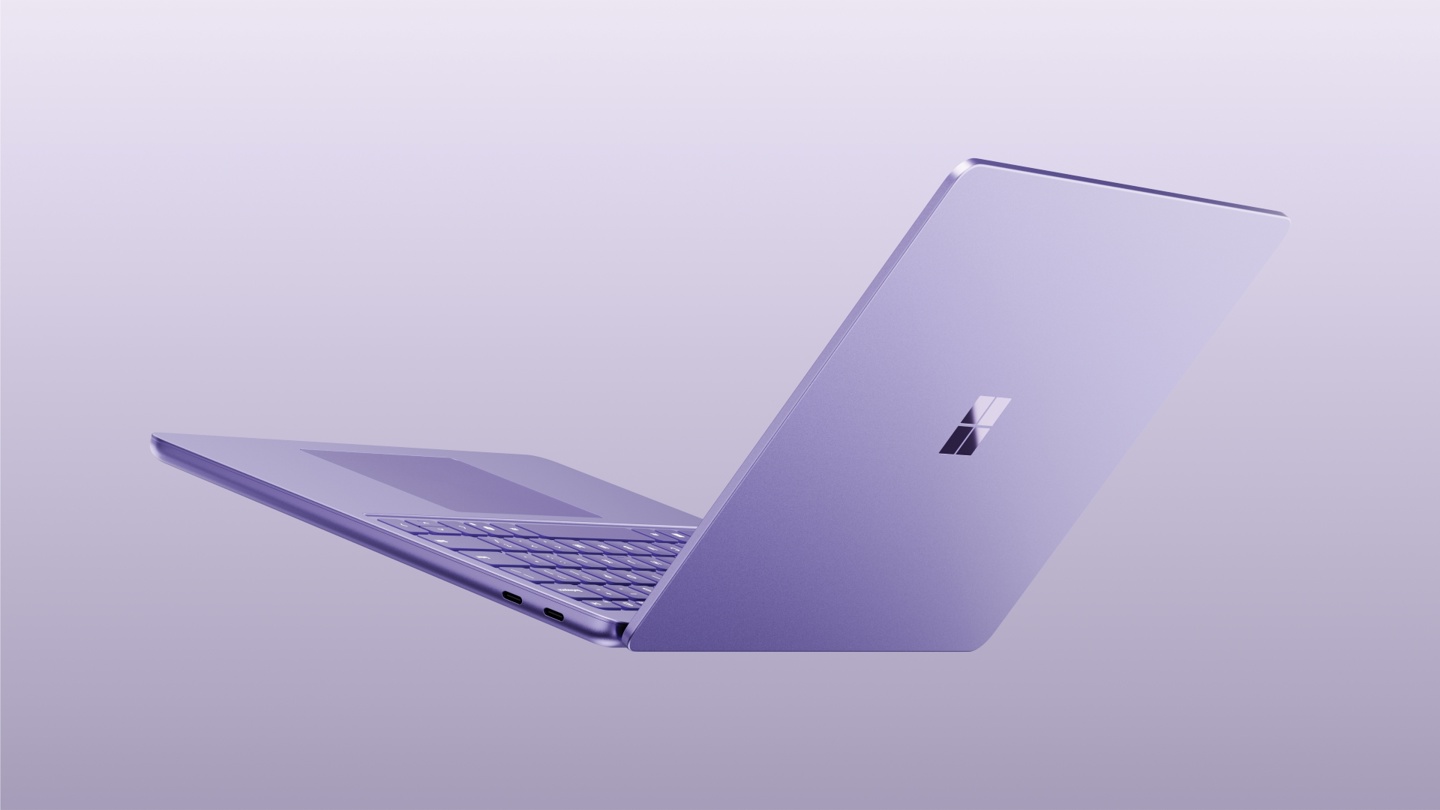 Figure: The 13-inch Surface Laptop packs a 50Whr battery, rated for over 20 hours of blended real-world battery life. Source: Microsoft Store
Fanless 686g Frame with 38Whr Pack: All-Day Endurance in a 2-in-1
The lower thermal design power (TDP) directly informs the chassis engineering. The Surface Pro 12-inch weighs in at just 686 grams. The tablet is entirely fanless, relying purely on passive thermal dissipation without mechanical blowers. Dispensing with intake and exhaust vents also eliminates long-term dust accumulation inside the chassis.
Display specifications have not been compromised. The device houses a 12-inch PixelSense LCD touchscreen in Microsoft’s signature 3:2 productivity aspect ratio. It features a resolution of 2196 × 1464 with a smooth 90Hz refresh rate. Peak brightness climbs to 500 nits, marking a 25% visibility boost in bright daylight over its predecessor.
Within this tight chassis footprint, Microsoft fitted a 38Whr battery rated for up to 15.5 hours of local video playback. Aided by ARM’s negligible idle state power draw, the device sips virtually zero standby power when the lid is closed.
The traditional clamshell Surface Laptop 13-inch equally prioritizes mobility. Weighing 1.22 kg and sporting a 13-inch 1920 × 1280 touchscreen, its 50Whr internal cell delivers up to 20 hours of typical usage. Road warriors can comfortably leave chargers behind on business day trips.
16GB Baseline Memory: Retiring Crippled Specs to Challenge x86
Microsoft took a decisive stance by completely abandoning the 8GB RAM tier across both lineup additions. Whether choosing the Surface Pro or Surface Laptop, entry specifications now start at 16GB LPDDR5x RAM, scaling up to 24GB.
In past generations, budget low-power notebooks faced relentless user backlash due to cheap 8GB configurations. Under modern Windows 11, the operating system and background runtime processes consume nearly 4GB of physical RAM on boot. Once on-device model weights and x86 binary emulation translation caches are loaded, an 8GB memory footprint is exhausted almost instantly.
Memory exhaustion and subsequent page-file swapping cause noticeable system stutters. Standardizing on 16GB RAM guarantees adequate headroom for resident on-device AI models and concurrent multitasking. Even with dozens of active browser tabs and large office documents open, system responsiveness remains crisp.
Storage is configured across 256GB and 512GB high-speed solid-state drives. By eliminating low-spec traps, Microsoft bolsters the device’s competitive standing against x86 rivals. With Intel Core Ultra and AMD Ryzen laptops fighting intensely in the 5,000–7,000 RMB bracket, baseline 16GB memory ensures the new Surface protects essential corporate productivity standards.
Battery Life vs. Software Friction: The Hurdles Facing Mainstream Adoption
The arrival of the 6-core Snapdragon X2 Plus machines has sparked enthusiastic discussions across digital consumer and enterprise IT circles. Mobile professionals have welcomed the hardware enthusiastically: all-day battery life without power outlets and zero fan noise provide tangible workplace improvements. An 8,488 RMB street price also makes procurement budgets significantly more palatable.
However, skeptics remain attentive to total package costs and platform friction. While the standalone tablet dips into the 8,000 RMB bracket, bundling the essential type cover still pushes the price tag close to 9,500 RMB. Adding a Surface Slim Pen breaches the 10,000 RMB milestone. Compared to mainstream OEM x86 thin-and-lights, a visible Microsoft brand premium remains.
Software compatibility remains the second hurdle. Microsoft’s Prism emulation layer handles everyday Office suites and popular creative software smoothly. Nonetheless, specialized industrial software, legacy peripheral drivers, and proprietary in-house enterprise tools can still encounter roadblocks on ARM architecture.
By introducing the 6-core Snapdragon X2 Plus to the Surface portfolio at the 8,000 RMB mark, Microsoft is stress-testing mainstream demand for Copilot+ PCs. Trimming CPU cores to lower acquisition costs while preserving an 80 TOPS NPU and all-day battery life is a calculated gambit. Whether this hardware offensive breaks through the five-figure budget barrier will ultimately hinge on how eagerly enterprise IT fleets embrace the transition to ARM.
Reference Links:
- Microsoft Store Official Technical Specifications
- JD.com Official Flagship Store Pre-Order Page
- Qualcomm Snapdragon X2 Series Technical Documentation
- IT Home Coverage