The rules of the 20th-century arcade were refreshingly straightforward: you dropped a 25-cent quarter into a slot and played a round, without ever having to buy the heavy wooden arcade cabinet and haul it home. On October 21, 2026, Microsoft upended that long-standing logic by rolling out “Cloud Playtime” packs to Xbox Insiders. If a player opts out of an Xbox Game Pass subscription, even after shelling out $70 to buy Assassin’s Creed Shadows or Forza Horizon 6, streaming that purchased title from the cloud will now incur an additional “cover charge” of 24 to 40 cents per hour payable directly to Microsoft.
Microsoft has effectively separated the digital software license from remote server execution time into two distinct bills. For the first time, players who bought their games outright are encountering a parking meter at the entrance to their digital libraries. With cloud GPU rendering and memory costs remaining persistently steep, platform operators are turning to a compute-leasing model that forces buyers of retail games to pay twice.
Paying $70 Upfront, Then Another 40 Cents an Hour for Cloud Access
This pay-as-you-go scheme for non-Game Pass subscribers entered preview testing on October 21 and is scheduled for a wider rollout in November 2026. In its official announcement, Microsoft unveiled three tiers of “introductory launch pricing.” A 10-hour pack sells for $3.99, or roughly 40 cents per hour. A 25-hour pack goes for $7.99, working out to about 32 cents per hour, while a 50-hour pack costs $11.99, driving the rate down to 24 cents per hour. The “introductory” moniker itself leaves plenty of room for future price hikes.
| Playtime Tier | Introductory Total Price | Effective Hourly Rate | Access Requirements & Expiration |
|---|---|---|---|
| 10-Hour Pack | $3.99 | ~$0.40 / hour | Requires owning a cloud-supported purchased game or access to select free-to-play titles; hours do not expire |
| 25-Hour Pack | $7.99 | ~$0.32 / hour | Requires owning a cloud-supported purchased game or access to select free-to-play titles; includes ad-free access, shorter queues, and HD streaming |
| 50-Hour Pack | $11.99 | ~$0.24 / hour | Requires owning a cloud-supported purchased game or access to select free-to-play titles; 40% cheaper per hour than the 10-hour pack |
The most jarring condition in this billing framework is tucked into the asterisked fine print. Players are paying purely for server compute time: before launching a stream, one “must own a cloud-playable version of the game, or access select Free-to-Play titles.” Microsoft’s “Stream your own game” catalog now covers more than 1,000 titles across 29 countries and regions. Ars Technica Senior Gaming Editor Kyle Orland drew an immediate arcade parallel: old-school arcades operated on a pay-per-play basis, but the arcade owner never demanded that you purchase the entire arcade cabinet before feeding quarters into the coin slot.
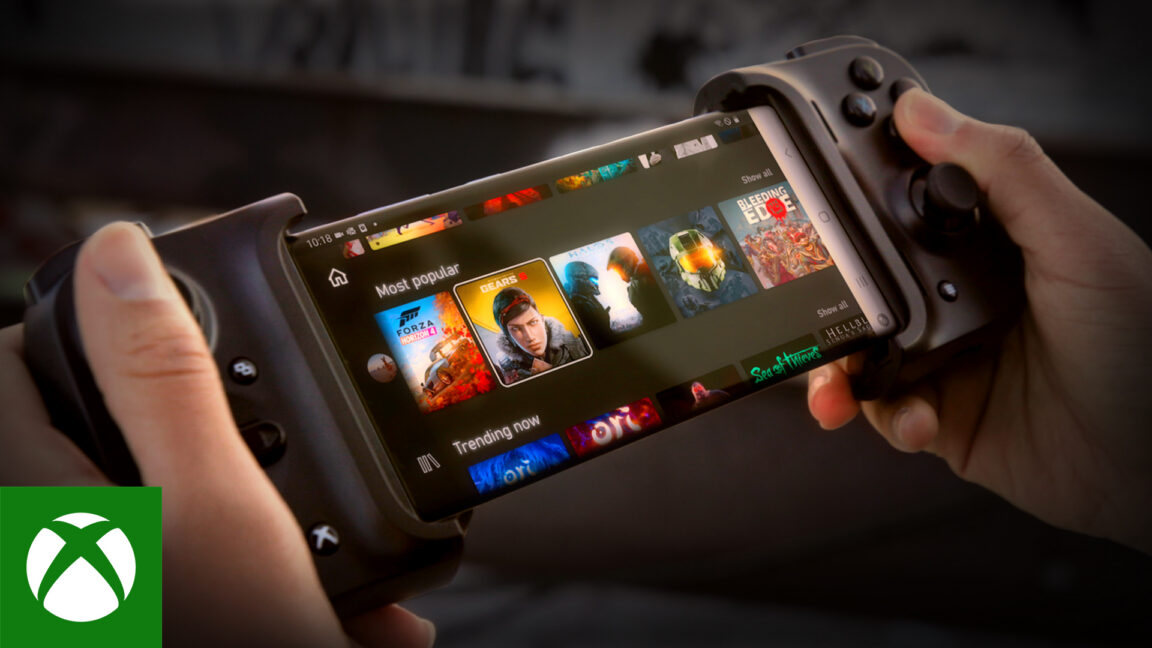 Figure: Xbox Cloud Gaming interface running on a smartphone paired with a mobile controller, featuring flagship titles such as Forza and Halo. Non-subscribers launching their purchased copies in the cloud must now purchase hourly time packs. Source: Ars Technica
The solitary silver lining for consumers is that purchased hours “remain available until used,” meaning unused balances will not vanish at the end of the month. Yet modern role-playing games routinely demand 80 to 100 hours to complete. Even at the cheapest 50-hour rate of $11.99, a player without dedicated console hardware will have to pay an extra $24 in cloud compute fees on top of the initial $70 software purchase. Once the license to own software is decoupled from the right to execute it on hardware, a single digital purchase morphs into an ongoing compute toll.
1.2 Million Heavy Users Burn Through the Subscription Pool: 500 Million Streamed Hours Break the All-You-Can-Eat Model
The hourly pricing model did not emerge in a vacuum. It follows Microsoft’s decision a month earlier to dismantle the six-year-old “all-you-can-eat” era of Xbox cloud gaming. Back in 2020, Microsoft bundled cloud streaming (formerly Project xCloud) into Game Pass Ultimate, granting members unlimited cloud playtime. By fiscal year 2025, Xbox Cloud Gaming had logged more than 500 million streamed hours globally, marking a 45% year-over-year surge. Console-based cloud streaming rose 45%, streaming across connected TVs and mobile devices jumped 24%, and the service expanded into India’s market of over 500 million gamers.
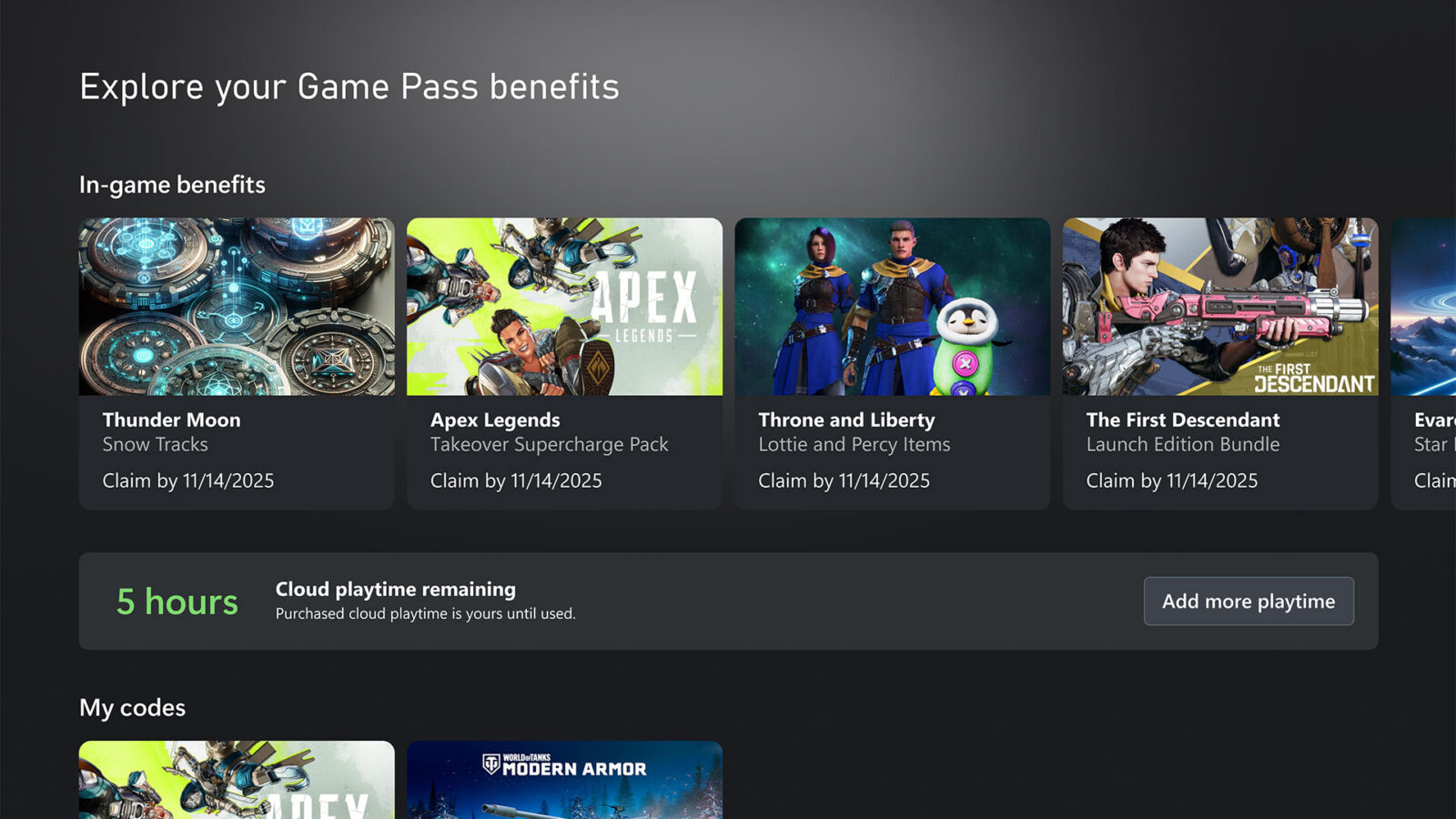 Figure: The “Explore Game Pass Benefits” page within the Xbox dashboard features a cloud gaming playtime meter, prominently displaying “5 hours Cloud playtime remaining” on the left, with an embedded “Add more playtime” button on the right. Source: Xbox Wire
Soaring stream hours, however, failed to generate sustainable margins. Instead, they became a compute overhead that crushed the economics of a flat monthly fee. On September 3, 2026, Microsoft announced strict monthly cloud gaming quotas for all Game Pass tiers starting in November. The $23/month Ultimate tier includes just 15 hours of cloud streaming per month; the $15/month Premium tier provides 10 hours; and the $10/month Essential tier offers only 5 hours. Once that allowance is exhausted, even annual subscribers must head to the Microsoft Store to purchase add-on playtime. At $23 per month, the top tier provides less than 30 minutes of cloud compute per day—proving that flat-rate unlimited cloud gaming has become mathematically untenable.
In its September announcement, Microsoft disclosed that the new quotas would affect only “around 4% of Game Pass members.” Based on industry estimates of roughly 30 million subscribers, that 4% represents approximately 1.2 million dedicated cloud players. It is this concentrated cohort that chewed through the overwhelming majority of those 500 million streaming hours. Unlike linear video streaming platforms that only bear bandwidth delivery expenses, every hour of cloud gaming requires dedicated server allocation: a customized Xbox Series X blade core alongside dedicated RAM. Compounded by steep global price increases for server RAM and solid-state storage throughout 2026, Microsoft conceded the underlying reality: “the costs of providing cloud gaming scale with both the number of players and the time spent playing.”
Free Ad-Supported Tier Caps Sessions at 1 Hour: Time Packs Are Really Queue Priority
To counter backlash over charging rent on games users already purchased, Microsoft noted on October 21 that players unwilling to buy playtime can still opt to “Stream games for free with ads.” First tested with Xbox Insiders on July 23, 2026, the ad-supported tier allows non-subscribers to stream purchased games at zero out-of-pocket cost. On the surface, Microsoft left an open door for retail purchasers. A closer look at the dividing lines between free and paid tiers, however, reveals a carefully orchestrated funnel designed to nudge players toward payment.
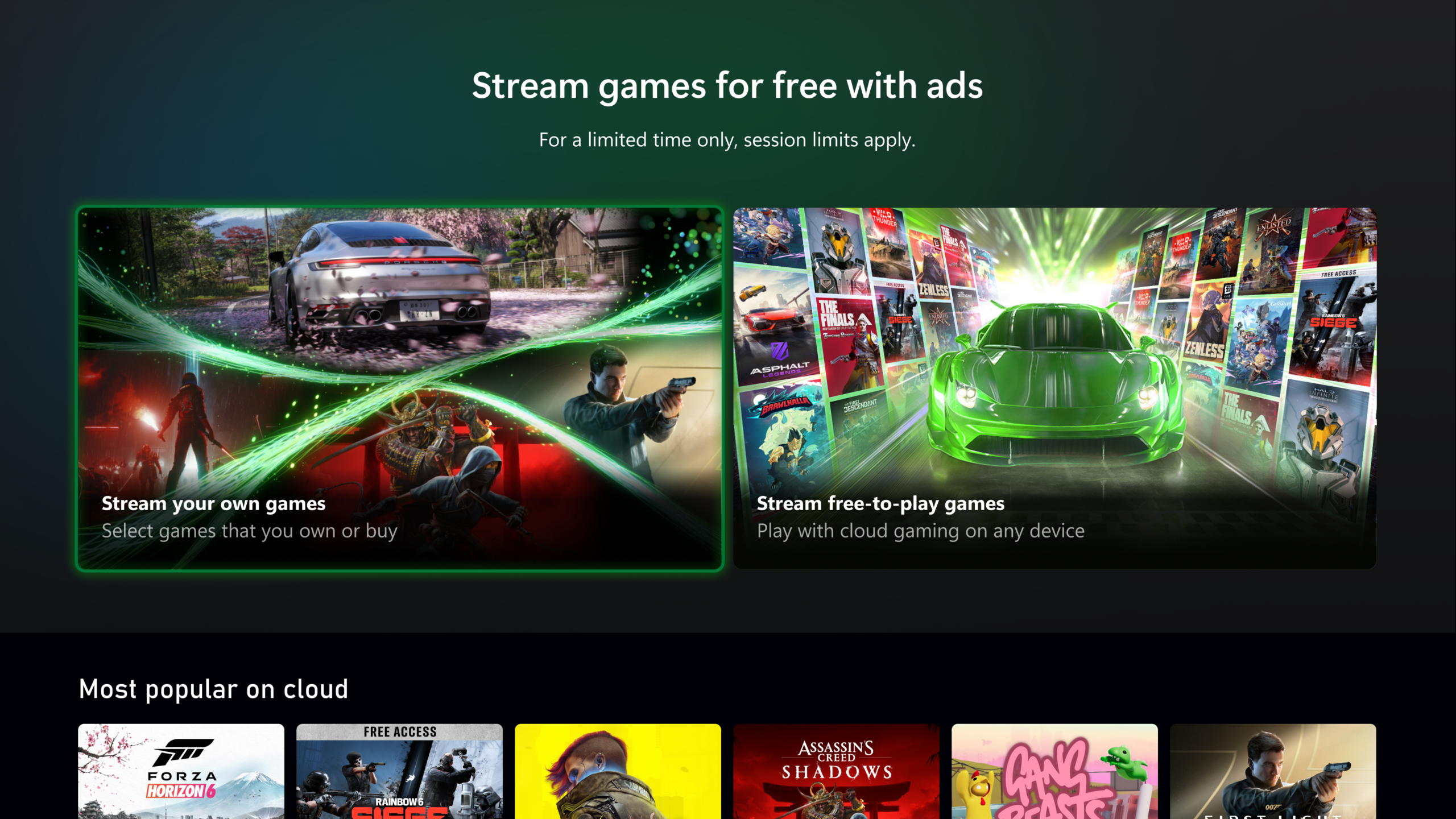 Figure: Xbox Cloud Gaming interface for “Stream games for free with ads,” noting in fine print that “session limits apply.” Featured below under “Stream your own games” are titles like Forza Horizon 6, Cyberpunk 2077, and Assassin’s Creed Shadows. Source: Xbox Wire
Under testing rules, ad-supported players must watch pre-roll advertisements before launching, and each session is capped at a strict 1-hour maximum. In contrast, Microsoft attaches three key perks to paid playtime packs: zero advertisements, shorter queue wait times, and higher-bitrate visual streaming. During peak evening and weekend traffic hours, free-tier users are relegated to low-priority queues with prolonged wait times, accompanied by throttled stream resolution and bitrate.
A casual player looking to jump into a quick Halo multiplayer match on a smartphone might tolerate an ad for a low-bitrate 60-minute session. But for someone immersed in The Outer Worlds 2 on an LG Smart TV, Amazon Fire TV, or Meta Quest VR headset, getting abruptly kicked off the server every 60 minutes only to re-queue and watch ads ruins the evening. The free ad tier uses 1-hour session caps and queue degradation as friction points, nudging quality-conscious players who bought their games into paying for server compute priority.
Following Stadia’s Demise and Sony’s Retreat, Cloud Gaming Regresses to Metered Billing
The debate over Xbox selling hourly compute packs highlights a sharp division in perspective. Proponents view it as a hardware alternative. Microsoft has repeatedly emphasized that cloud gaming spares legacy Xbox One owners from spending $500 on an Xbox Series X|S upgrade just to play current-generation exclusives. In emerging markets plagued by console hardware shortages or punitive import tariffs, buying a $70 game bundled with an $11.99 50-hour compute card remains substantially cheaper than buying physical hardware. For low-frequency players who complete only one or two blockbusters a year, buying compute by the hour can also be more economical than maintaining a year-round $23/month Game Pass subscription.
Critics counter from the standpoints of digital ownership and industry precedent. Over the past decade, major platform holders experimenting with “retail purchase + cloud streaming” have almost universally stumbled:
- Google Stadia (2019–2022): Promised players unlimited free streaming across devices for full-price purchases. Unable to balance server hardware depreciation and GPU costs, Google shut down the service in 2022 and issued full refunds for hardware and software.
- Sony PlayStation Now / Plus Premium: Sony’s 2014 experiment with ala-carte rentals charged up to $30 for 90 days of streaming—often higher than the physical disc price. Today, Sony confines unlimited cloud streaming strictly within the top-tier PlayStation Plus Premium subscription at $20/month or $160/year.
- Amazon Luna and Nvidia GeForce Now: Amazon Luna ceased selling standalone games and eliminated purchased-game streaming. Nvidia’s GeForce Now, the only service to build a viable business around pure compute rentals across 2,000+ PC titles, enforces strict playtime limits: a 1-hour cap on its free ad-supported tier, and an 8-hour session cap with monthly quotas on its $20/month Ultimate tier, requiring daily passes for extra access.
Stripped of the Game Pass subscription buffer, it remains uncertain how many retail game owners will genuinely embrace hourly server fees. In the 2023 Finding of Fact from Microsoft’s legal battle with the FTC, the company admitted that cloud gaming accounted for “only a fraction of a percent of total gaming hours and had failed to demonstrate mainstream consumer demand beyond a niche audience.” By June 2026, when newly appointed Xbox CEO Asha Sharma announced a “hard reset” of the gaming business, cloud streaming barely registered on the primary roadmap.
Even when bundled at zero extra charge within a subscription, only 4% of 30 million Game Pass subscribers ever leaned heavily on cloud streaming. Asking non-subscribers who paid $70 for a game to feed a meter at 24 to 40 cents an hour will likely relegate cloud play to occasional cross-device utility. Five years ago, Microsoft envisioned a cloud future where millions would game through browsers and TV streaming dongles without local consoles. This autumn 2026 hourly rate card proves that until remote GPU rendering costs can be amortized directly by consumers like local hardware, cloud gaming cannot serve as an all-encompassing replacement—it remains a metered timeshare for remote compute.
Reference Links:
- Ars Technica coverage on Xbox charging hourly rates for owned cloud game streams
- Xbox Wire announcement: Cloud Playtime opens for testing with Xbox Insiders
- Ars Technica report on Xbox Game Pass monthly cloud gaming limits
- Xbox Wire announcement: Xbox Cloud Gaming monthly quotas and policy updates
- Xbox Wire announcement: Ad-supported free game streaming testing details