From Three Ports to One, Yet $10 Cheaper
October 23, Notebookcheck confirms Anker’s Laptop Charger Pro is now available in the US, priced at $59.99 and purchasable on Amazon and Anker’s official website. This is a 100W Gallium Nitride (GaN) charger with a smart display but only one USB-C port. The previous Anker Charger (100W, 3 Ports, Smart Display) had three charging ports and cost $10 more—this new model has fewer ports yet is cheaper.
Measuring 62 × 34 × 55 mm and weighing 193 grams with foldable plug, Anker claims it’s smaller and lighter than the previous 3-port model. The screen displays real-time power output, charging progress, and temperature, and can also play interactive animations. On their own, these features aren’t new: display-equipped, GaN-based chargers with foldable plugs have been iterated on by Anker itself and other brands like Ugreen, which launched a 45W charger with a smart display in October.
When it comes to power, size, and price, manufacturers have exhausted the parameters they can compete on. The display is part of this logic: first let you see the charging process, then let the charger make decisions for you. The real innovation in this launch lies in the firmware—chargers are now managing how your battery should be charged.
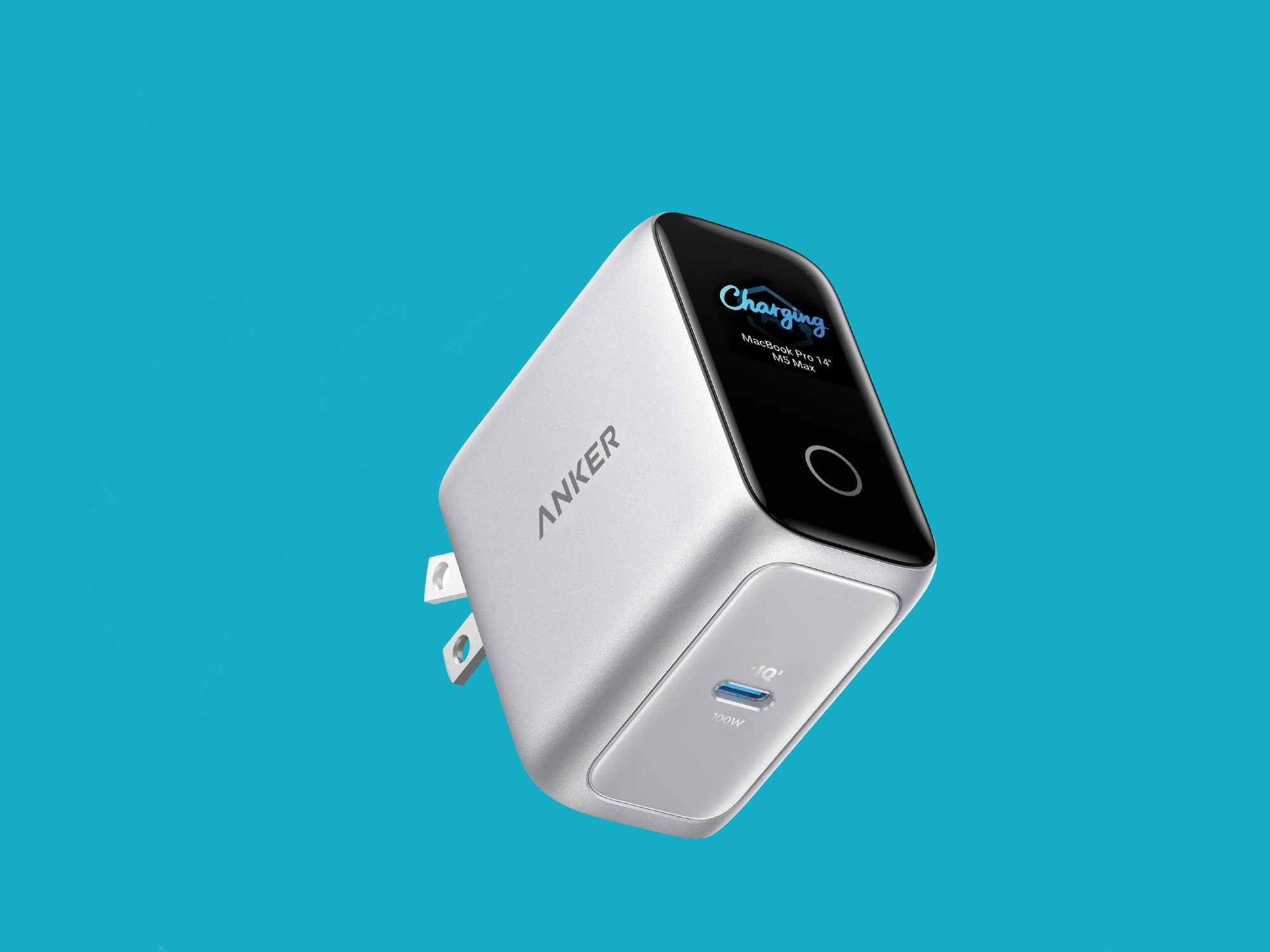 Image: Anker Laptop Charger Pro. Source: Anker
Care Mode Moves Battery Management to the Charger
The new feature is called Care Mode. The charger first identifies the connected device model—covering laptops and iPhones—then adjusts the charging strategy accordingly. MacBook users can set a charging limit between 80% and 100%, and Anker claims this battery maintenance can extend battery life by up to 40%. Switch back to Auto Mode if you need a full charge.
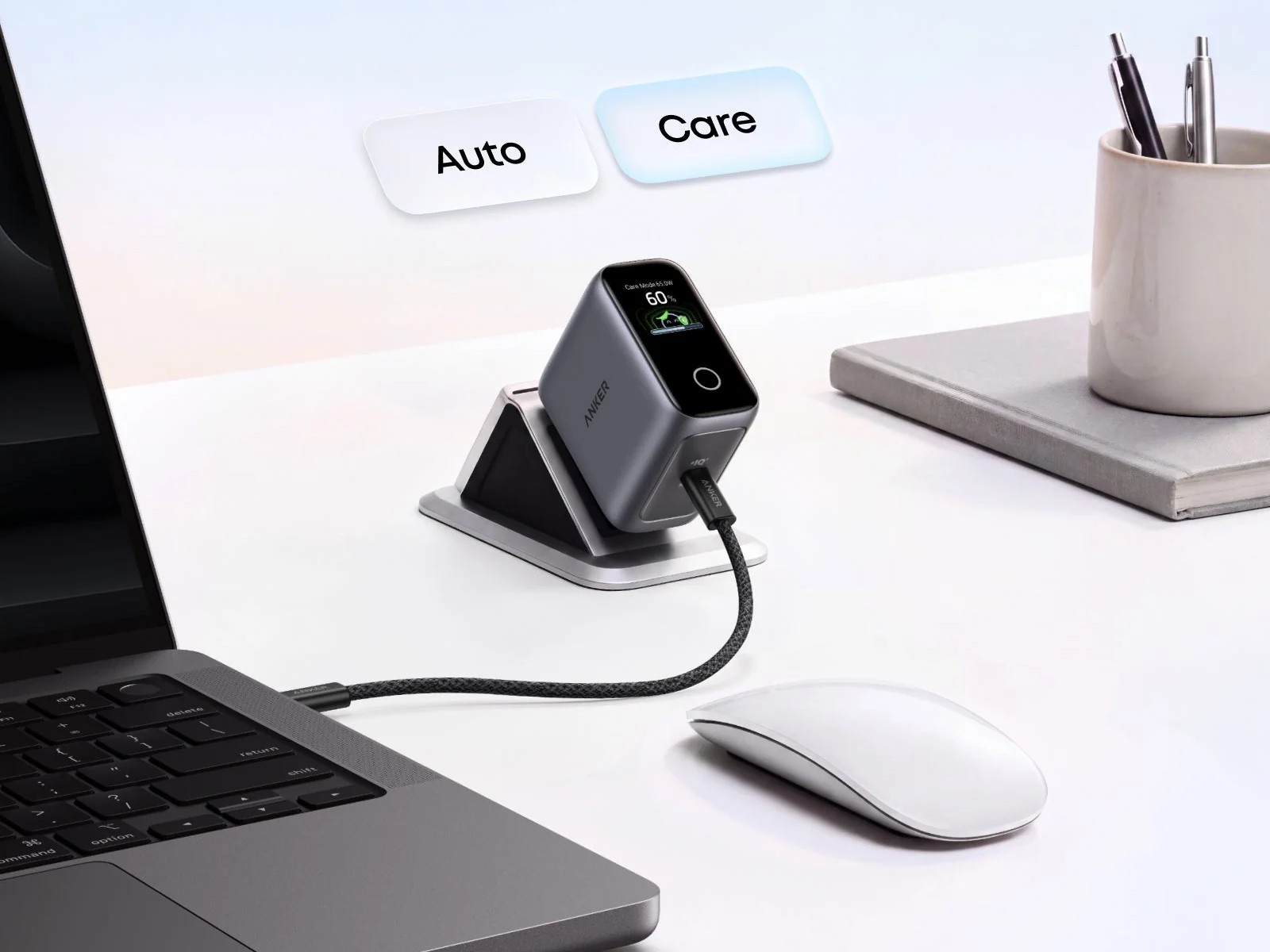 Image: Care Mode battery health demonstration; limit settings are currently only available for MacBook. Source: Anker
Setting charge limits for batteries isn’t new—macOS has Optimized Charging, and Lenovo, ASUS and others have offered limit options in their laptop power management software. The Laptop Charger Pro moves this logic to a different location—decision-making shifts from the device’s system to the charger. What device is connected, how much to charge, and at what rhythm are determined by the charger itself, eliminating the need for users to access system settings or rely on whether laptop manufacturers include this feature. The maintenance strategy follows the charger across multiple devices, making this positioning particularly valuable for users who switch between several laptops.
Boundaries should be noted: the 80%-100% limit setting is currently only available for MacBook, while iPhone’s maintenance strategy is automatically applied based on the identified model. Anker hasn’t elaborated on the specific mechanisms for iPhone, nor what happens if the charger misidentifies a device.
Power Specs Max Out, Firmware Becomes the New Battlefield
The Laptop Charger Pro’s output specifications are 5V⎓3A, 9V⎓3A, 15V⎓3A, and 20V⎓5A, with a maximum of 100W, covering common power levels in the USB PD (Power Delivery) standard’s power range. This is sufficient for most laptops, but higher-demand devices—like the 140W original power supply for a 16-inch MacBook Pro—require higher-spec products. 20V⎓5A is the upper limit of the PD standard’s power range (SPR); going beyond requires PD 3.1’s Extended Power Range (EPR), which caps at 240W. With protocols clearly defining voltage and current, manufacturers have no room to innovate on the power dimension.
This explains why spec sheets look so similar: after GaN made high power density a standard feature, manufacturers have filled most available parameter slots. The remaining differences can only be found in firmware and user experience. Looking at recent October launches: Ugreen’s new 65W model highlights AVS (Adjustable Voltage Supply), while Microsoft has a pending patent for a magnetic USB-C charger for Surface Laptop. Protocols are open standards available to everyone; patents and firmware are proprietary.
With Software in the Charger, Accessory Makers Must Maintain Firmware
For Care Mode to identify specific device models, the charger must contain a device profile database—turning power delivery from a one-way output into two-way negotiation.ice database that is continuously updated. When new laptops or iPhones are released, whether and how quickly the firmware is updated becomes part of Anker’s operational costs. Accessory manufacturers traditionally soldone-time hardware that was final at the factory—a charger with maintenance logic requires manufacturers to maintain product lifecycles in the way smartphone companies do. The announcement doesn’t specify how firmware updates will be delivered—chargers don’t have network connectivity, so updates would need to happen via cable or a mobile app, determining whether these maintenance promises can be fulfilled.
Maintenance itself has trade-offs. Limiting charge sacrifices daily battery life for longevity: users who always plugged in at a desk would barely notice, while those relying on battery capacity would have 20% less usable power daily, or could switch back to Auto Mode to disable maintenance. The benefits heavily depend on usage scenarios—competing on software capabilities is more complex than competing on wattage, as the former requires judging “who you are and how you use” while the latter only requires stacking components.
There’s another detail: the port count reduced from three to one. A single port delivers the full 100W to one device, simplifying the identification and control logic for maintenance strategies. The question of how maintenance works when charging multiple devices simultaneously is eliminated by the single port—Anker hasn’t explained this trade-off, but the single-port design itself avoids the issue.
In the $60 Price Tag, Firmware Now Has Value
The price is the clearest signal in this launch: two fewer ports, $10 cheaper, with only the maintenance firmware added. In terms of cost structure, Anker has shifted the budget from physical interfaces to software, betting that users will pay for the latter.
The 40% longer battery life claim comes from Anker itself, with no third-party long-term testing to verify it at launch—the validity will depend on battery cycle data over time. What we can confirm is the compatibility boundary: office users who always plug in are likely to benefit, while those who carry their laptops daily must choose between battery life and maintenance. The cost of replacing a laptop battery could buy several chargers, so the battery wear saved by maintenance benefits long-term users, while those who upgrade frequently won’t see this return.
The Laptop Charger Pro hasn’t yet launched in Europe and comes in dark gray and silver with a USB-C cable included. The product itself ends here, with remaining questions about long-term firmware performance.
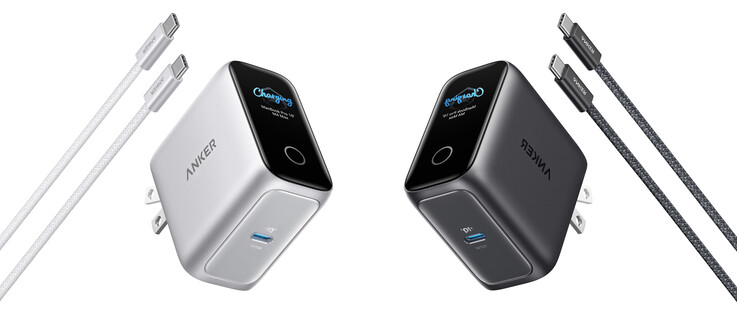 Image: Laptop Charger Pro in dark gray and silver. Source: Anker
Competition among third-party chargers has moved from spec sheets to firmware logs: who has the most comprehensive device database, whose charging limits are more accurate, and whose firmware updates won’t be abandoned. Next time you’re shopping for a charger, you can glance less at wattage and more closely at firmware update history.
Reference links:
- Notebookcheck article: New Anker Laptop Charger Pro launches with battery care features
- Anker official product page
- Amazon product page