One Cover Controlling Filament Moisture
Make: editor Craig Couden published a review on October 20 of Sunlu’s filament heater designed for the Bambu Lab AMS Lite, priced at $130. After installation, the previously semi-open AMS Lite becomes fully enclosed, allowing filament drying both before and during printing.
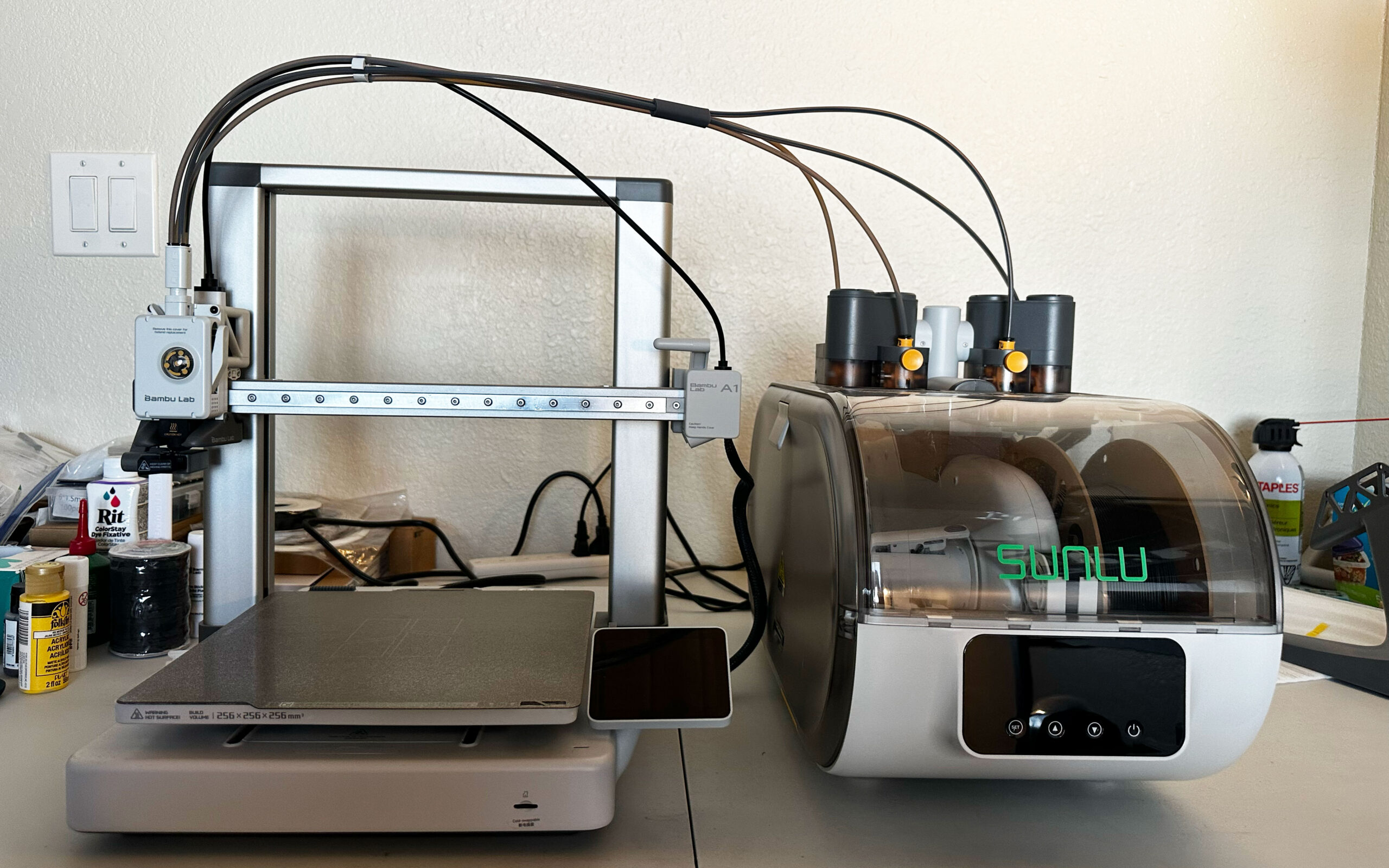
Figure: Review’s first image showing the heater’s desktop footprint after installation. Source: Make:
Anyone who has worked with nylon and PETG understands the impact of moisture on print quality: stringing, bubbles, poor interlayer adhesion, and potentially ruining an entire spool. While third-party standalone dryers have existed, they require pre-drying filament before loading it into the printer, leaving it vulnerable to moisture absorption during the transfer process. Sunlu’s device integrates drying directly into the printing workflow, installed within the AMS Lite to heat filament while being fed.
Installation Requires Just a Few Screw Changes
Couden’s biggest concern was installation—he initially thought he’d need to completely disassemble the AMS Lite and squeeze the Sunlu unit inside, which seemed daunting. In reality, it only involved replacing a few screws and connecting two wires. Aside from some misaligned screw holes and a tricky plastic cover, the integration was elegant.
The device is powered by the printer, with bidirectional functionality: it prints normally when not heating, and can operate independently for drying when the printer is powered off. This allows “printing” and “drying” to operate separately without being tied together.
Six Temperature/Humidity Presets with Automatic Reheating
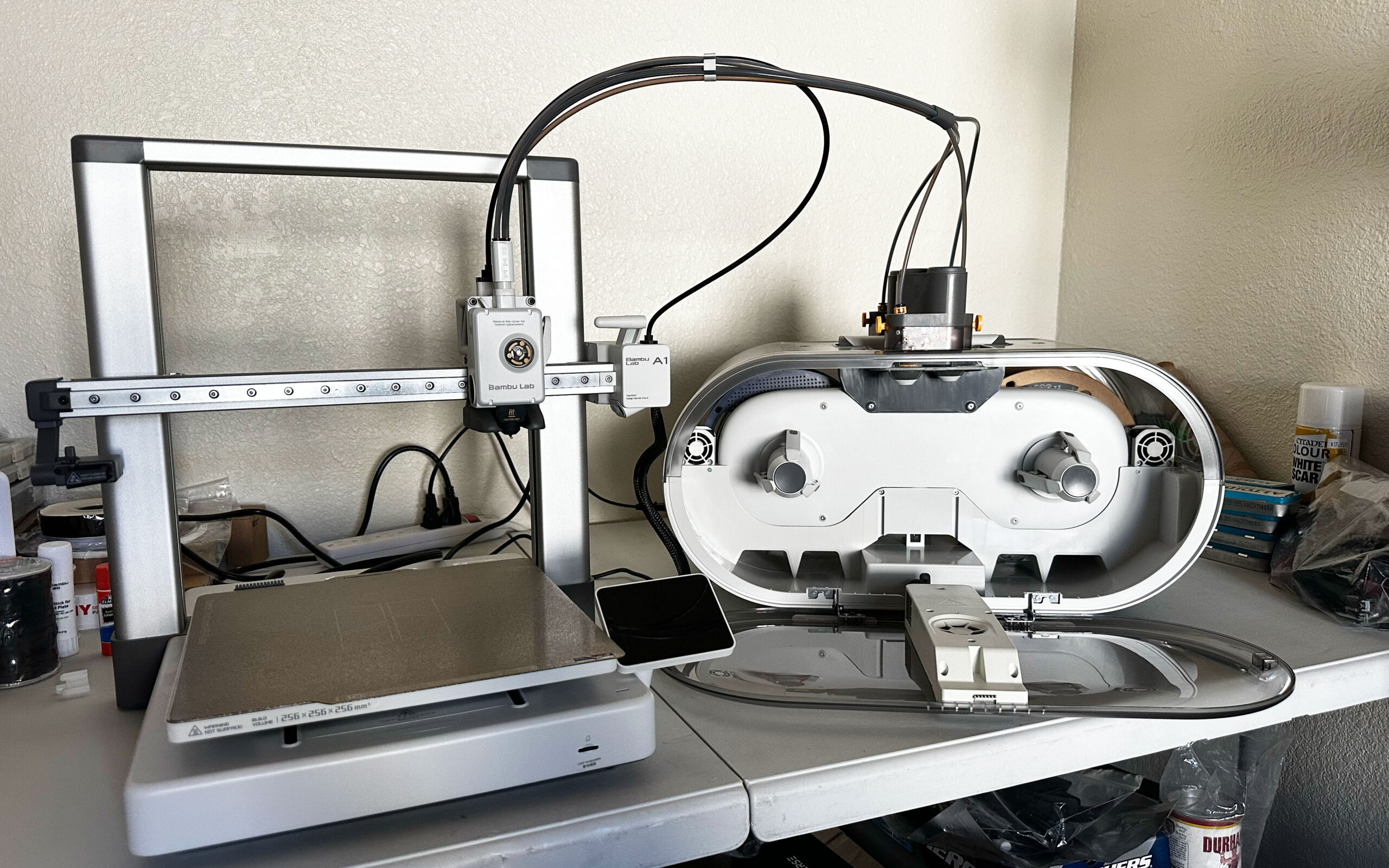
Figure: Heater door open, revealing the internal filament spool holder. Source: Make:
In terms of specifications, the machine includes presets for six materials: PLA, PETG, TPU, ABS, PA (Nylon), and PC (Polycarbonate), with manual settings also available. Temperature ranges from 35°C to 70°C, with humidity targets between 25% and 50%. The timer defaults to 6 hours, but doesn’t completely shut down afterward—it automatically restarts when humidity reaches 50%, bringing the environment back to the target level.
Couden’s operational records are worth noting: the unit body remains warm but not hot to the touch, with no heat leakage into the office and minimal noise. For drying equipment in commonly occupied rooms, quiet operation and temperature neutrality are prerequisites for long-term use, and this device passes both tests.
Print Quality Improvement? It Depends on Your Location
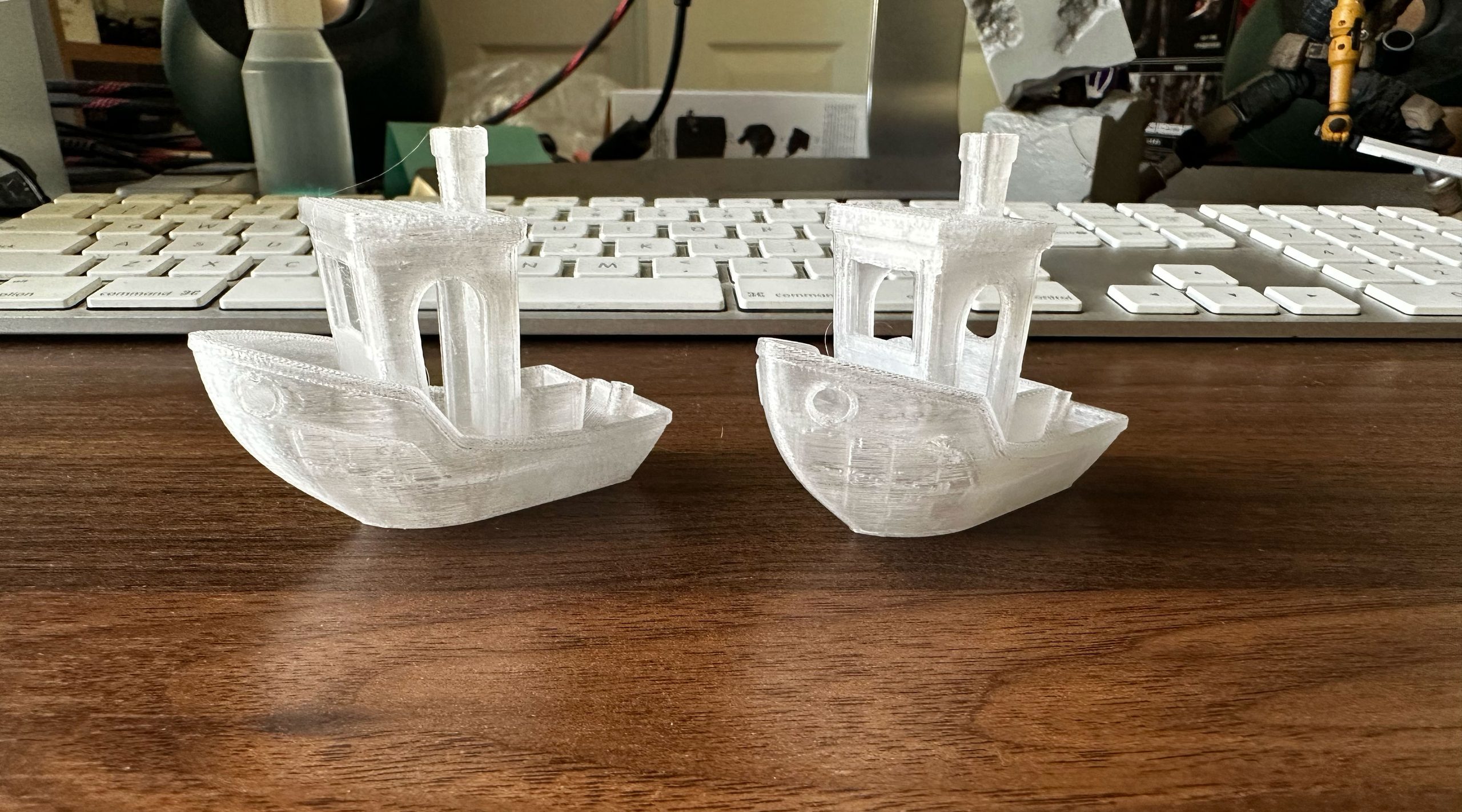
Figure: Comparison of Polymaker PETG prints—left normally stored, right after drying. Source: Make:
Couden candidly admits he didn’t see significant improvements in his prints because his location in the San Francisco Bay Area has a dry climate where moisture absorption isn’t a serious issue. This conclusion reveals more information when read in reverse: in humid regions, particularly during southern rainy seasons and in coastal cities, the value of printing while drying is amplified—continuous reheating is something standalone dryers can’t provide.
From the comparison photos, the dried PETG transparent filament shows a cleaner surface. Such improvements are typically more noticeable with highly hygroscopic materials like nylon and PC, while PLA users shouldn’t expect different results just from switching machines.
Mixing Filament Types is the Only Highlighted Limitation
The review identifies two usage limitations. First, space: the downward-folding drying door requires clearance, and combined with Bambu’s original short PTFE tube, Couden had to rotate the entire unit to load or unload spools. Extra space on one side of the workspace is needed.
The second, more significant limitation: all four spools are heated to the same temperature. If PETG and PLA are simultaneously loaded in the AMS, heating to PETG’s temperature could cause the PLA to soften and stick together. Users who mix filament types must either consistently load only similar materials or avoid using this heater—this is a structural limitation that firmware updates can’t solve.
Competition Has Shifted from Main Units to Accessories
The truly noteworthy aspect of this device is its position in the ecosystem. Bambu Lab build the core printer, and third parties provide accessory hardware.bu Lab’s AMS Lite is the feeding systemaccessory for their entry-level A1 model, and Sunlu, as a third-party filament manufacturer, has created a deeply integrated hardware solution for it—the kind that requires disassembling the middle section of the AMS to install. The $130 price point also tells a story: this price point wouldn’t support a standalone product; it targets the existing user base of AMS Lite.
The competitive landscape for main units has stabilized, leading manufacturers to compete on the completeness of their peripheral systems. Filament drying has evolved from a standalone device to an integrated part of the printing chain, just one step away from Bambu adding drying functionality to their original AMS. When third parties are willing to create deeply integrated accessories for a non-brand printer, it indicates that the accessory ecosystem has grown large enough to warrant dedicated investment—this is good news for users and a reminder for main manufacturers: if you don’t fill a gap, someone else will.
Reference links:
- Make: original review (Craig Couden, 2026-10-20)
- Sunlu official store AMS Lite Heater product page