Five-Step Assembly Eliminates Wiring Hassles, Crushing the Entry Barrier at $569
A 95% pre-assembly rate, a 5-step modular build, and a test price of $569. In late October 2026, maker magazine Make: published its hands-on review of the AlgoLaser DIY KIT MK3 laser engraver. By radically lowering the assembly barrier, this machine completely refreshes the out-of-the-box experience for desktop digital fabrication tools.
Historically, assembling a 400×400 mm format laser cutter was an agonizing chore. Enthusiasts routinely burned an entire day threading belts, tweaking eccentric nuts, and wrestling with messy wiring harnesses. Today, the Shenzhen supply chain has pre-packaged the gantry and motherboard wiring into five major pre-built assemblies.
A beginner only needs to grab an Allen wrench and tighten a few alignment bolts before the machine powers up and homes properly. Build time has plummeted from several hours to under 30 minutes. This highly integrated modular architecture substantially lowers the barrier to entry for digital fabrication tools.
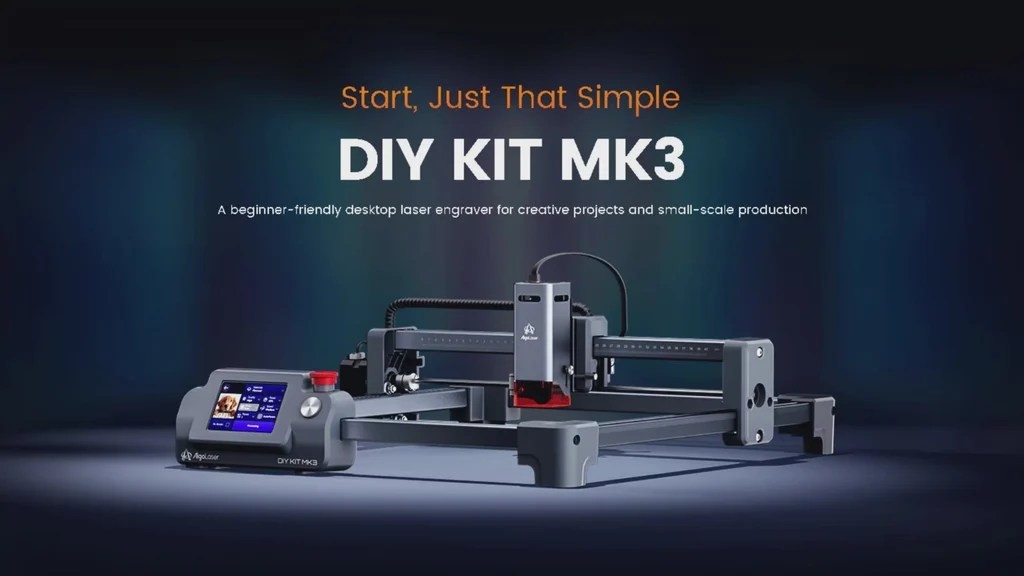
Figure: The AlgoLaser DIY KIT MK3 fully assembled on a workbench. The open gantry paired with a standalone touchscreen delivers offline fabrication within a 95% pre-assembled footprint. Source: Make: (Review Hands-on)
Yet simple unboxing does not equate to zero maintenance. The review stresses that the MK3 is not a plug-and-play desktop printer. Its chassis base is spliced together from multiple anodized aluminum plates with screw holes along the outer perimeter.
Users must bolt these aluminum plates down firmly onto a flat, rigid workbench. Only then can the frame counteract the violent vibrations triggered by high-speed reciprocal movements. If the base shifts even slightly, engraved circles warp into ellipses. Loose eccentric nuts on the roller guide wheels introduce identical distortions.
The manufacturer advertises a travel speed of up to 15,000 mm/min, placing stringent demands on frame rigidity. While a lightweight chassis eliminates heavy baseplate shipping costs, it leaves delicate mechanical tuning squarely on the maker’s shoulders.
Standalone Touchscreen Cuts the Cord, but Offline Workflows Reveal Feature Limits
The dedicated color touchscreen serves as this machine’s centerpiece feature. Traditional sub-$1,000 engravers require an unbroken USB tether to a computer. An unexpected OS sleep state, software crash, or cable disconnect can instantly ruin hours of progress on a workpiece.
The MK3 integrates a dedicated touchscreen panel powered by AlgoOS. Makers can export sliced files onto a memory card, tap through material presets on screen, and launch jobs offline. The workstation no longer needs to sit tethered right beside a desktop PC. Standalone touch hardware eliminates the risk of connection drops during prolonged runs and streamlines daily batch prototyping.
However, the flexibility of offline operations remains tightly constrained. The touchscreen only accesses basic built-in geometric shapes and preset material profiles. When handling intricate multi-layered vector artwork or fine curve nodes, the tiny screen offers zero editing headroom. In-depth parameter tweaks still require full desktop software.
Onboard wireless connectivity also faces real-world hurdles. The integrated 2.4GHz Wi-Fi and accompanying mobile app occasionally drop packets in crowded RF environments. With wireless transfers showing noticeable latency during testing, the review team eventually reverted to the bulletproof reliability of a direct USB connection. The touchscreen is great for straightforward, repetitive test cuts, but complex creative work still demands the processing power of desktop LightBurn software.
Open-Frame Design Skimps on Enclosures, Leaving Fumes and Fire Hazards to Makers
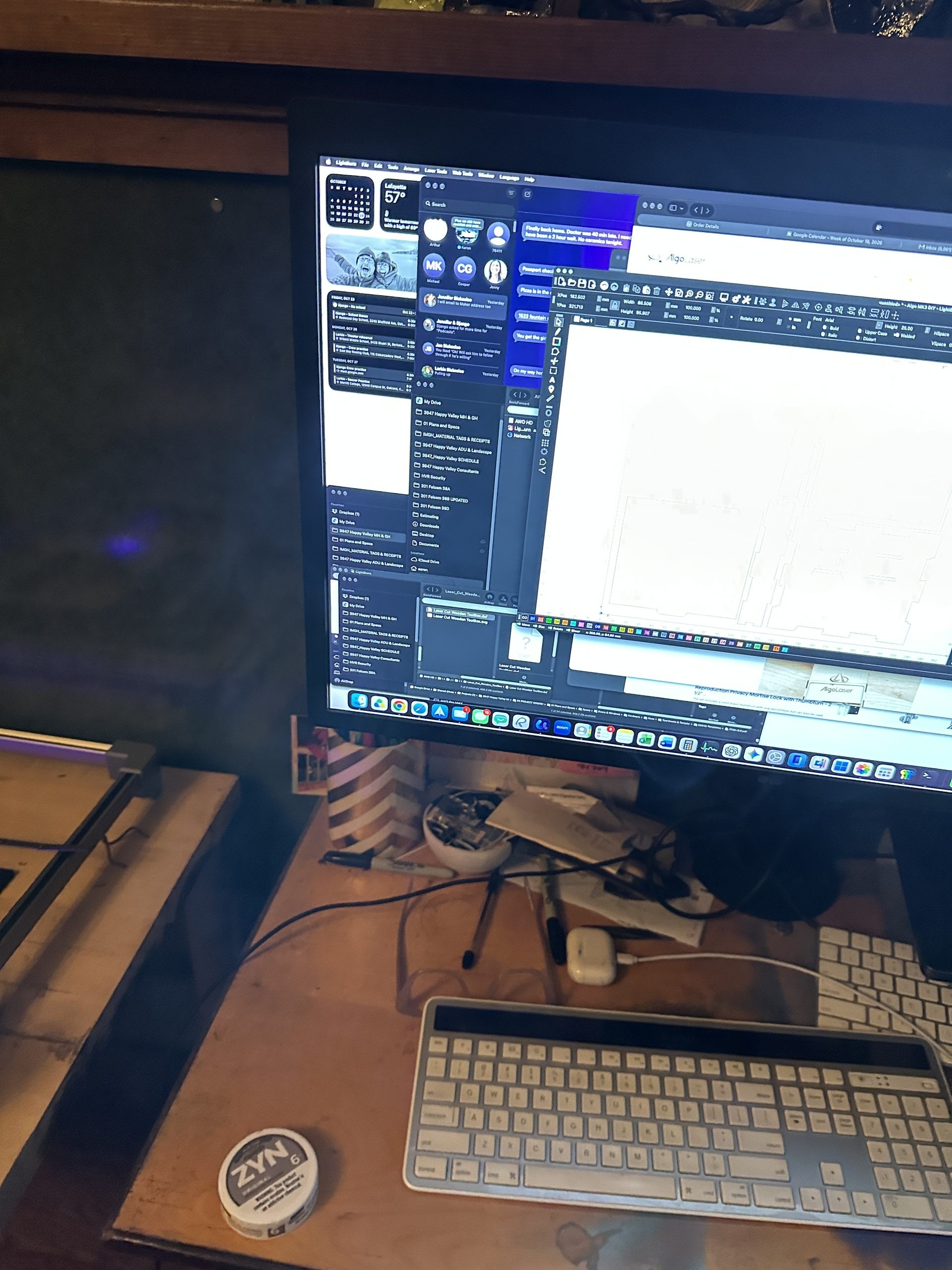
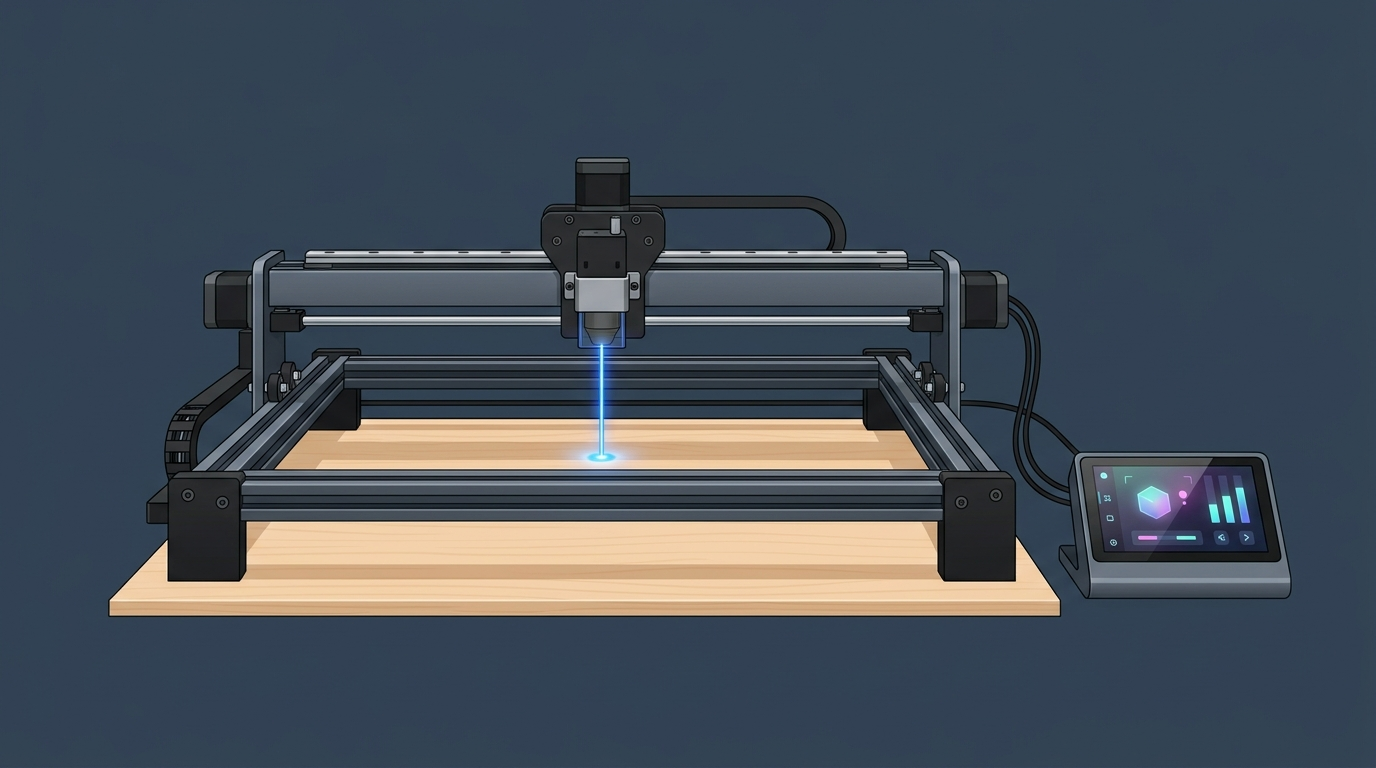
Figure: A 15W diode laser module actively engraving thin plywood. The high-power beam is directly exposed to ambient air without protective enclosure shielding. Source: Make: (Field Testing)
The open-frame structure represents the machine’s most glaring safety vulnerability. To pack a 15W optical-power diode head and a 400×400 mm working envelope into a $569 budget, the manufacturer scrapped an enclosed chassis altogether. During operation, there is no physical barrier to contain scattered beam reflections, nor an internal duct to capture pungent smoke.
A 15W blue diode laser qualifies as a Class 4 high-risk laser hazard. Even millisecond-level diffuse reflections can inflict permanent retinal damage. The manufacturer includes a pair of safety goggles in the box. Yet an open chassis cannot shield ambient scattered light, posing risks to family members and pets sharing the same room.
Fume hazards are even more immediate than optical radiation. When laser-cutting wood or acrylic, intense thermal vaporization releases caustic plumes laden with fine aerosols and volatile organic compounds. Reviewers explicitly warned that operating this machine indoors without dedicated external ducting is strictly unsafe.
The test team had to rig up an external exhaust fan, struggling through considerable trial and error before adequately evacuating smoke buildup from the work area. Furthermore, cutting through wood at low feed rates easily ignites persistent embers. Lacking a sealed combustion chamber and automatic flame-kill circuitry, high-power open laser operations require the operator to stay glued to the machine every second.
Supply Chains Slash Production Costs, but User Safety Shouldn’t Foot the Bill
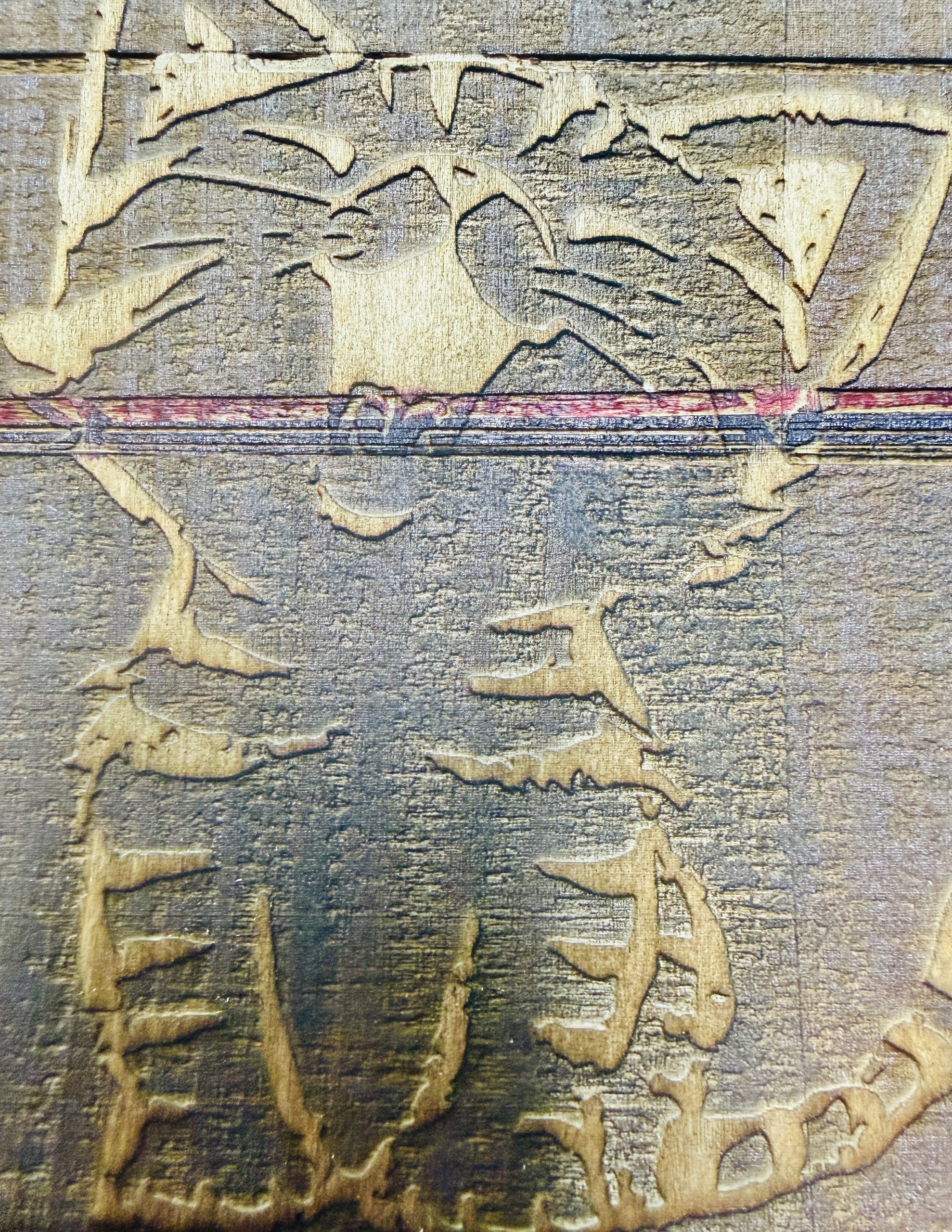
Figure: Line distortion and warped circles caused by an unsecured frame. A lightweight open chassis is prone to severe mechanical resonance during high-speed moves. Source: Make: (Defect Testing)
Behind the $569 retail price lies the collective manufacturing dividend of the Pearl River Delta supply chain. Aluminum extrusions, stepper motors, diode beam-combiner modules, and touchscreen assemblies have all become highly commoditized white-label components. An assembly integrator can source standardized off-the-shelf parts and assemble a high-power gantry engraver within weeks.
Adopting an open architecture avoids costly enclosures and high-output fans, while conveniently dodging stringent safety compliance certifications mandated for enclosed Class 1 laser systems. This aggressive cost-cutting creates an apparent low-cost miracle. Shaving factory prices lowers the barrier of entry, yet the hidden total cost of ownership is quietly shifted onto end users.
Purchasing a fire-retardant enclosure and exhaust ducting out-of-pocket costs extra. Throw in an inline booster fan and an air assist pump, and supplementary expenses quickly climb by $100 to $200. A sub-$600 bargain quickly balloons once baseline safety thresholds are met. In reality, bare-bones hardware acts as a gateway funneling customers into downstream accessories.
The AlgoLaser DIY KIT MK3 undeniably accelerates the democratization of desktop fabrication. Yet true technological accessibility should not come at the expense of user safety. As high-power lasers enter mainstream households, bundling certified enclosures and proper fume extraction must become the defining watershed for consumer-grade laser machines maturing into adulthood.
References:
- Make: Magazine Review Column
- AlgoLaser Official Technical Specifications