On October 31, 2026, Apple officially announced that the initial rollout of Apple Intelligence features is arriving in mainland China. The first developer beta is slated for release on November 4 alongside iOS 27.3 Beta, with the public release scheduled for December. This comes more than two years after Apple Intelligence made its global debut.
The Chinese market is the bedrock of Apple’s global hardware shipments, but it is also governed by some of the world’s most stringent regulatory frameworks for generative AI. Without an approved domestic foundation model, Chinese-market iPhones faced the looming threat of an experience gap. The scheduling of iOS 27.3 effectively marks the end of this protracted compliance campaign.
Beta Arrives November 4: Core Interactions Restored for China-Market iPhones
The initial lineup reflects a deliberate strategy of restraint. The iOS 27.3 beta debuting on November 4 incorporates Live Translation, system-wide Writing Tools, and Visual Intelligence. Photo Clean Up, Genmoji, Notification Summaries, and Priority Mail previews will also debut concurrently. Supported hardware starts with the iPhone 15 Pro family and spans through the entire iPhone 18 lineup.
The system imposes bilingual constraints: users must set both their device language and Siri language to either Simplified Chinese or English. Leveraging AirPods 4 with Active Noise Cancellation and AirPods Pro 2, Live Translation extends across phone calls and face-to-face interactions. Instant translation of on-device audio streams relies on onboard silicon to perform low-power acoustic feature extraction.
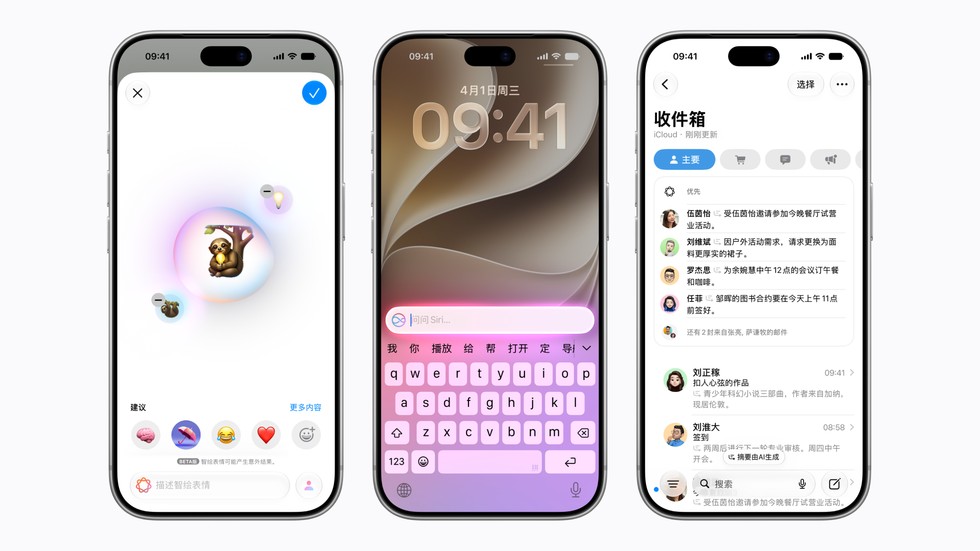 Figure: Official marketing graphic for Apple Intelligence’s mainland China launch. System UI and foundational interactions are fully localized into Chinese. Source: Apple Newsroom (Official Announcement)
The initial release focuses on high-frequency, highly mature single-point workflows. Email summaries and Priority Notifications exclusively process short-form text, where specialized small-parameter models suffice. The Clean Up tool is powered by an on-device lightweight diffusion model that triggers inference instantaneously only when a user brushes over an unwanted object. By shipping features modularly, Apple has moved swiftly to patch daily user experience gaps on Chinese devices.
Alibaba’s Qwen Powers Three Major Gateways: Domestic Cloud Compliance
For multinational tech giants deploying AI in China, the primary hurdle lies in algorithm registry filings and cross-border data transfer controls. Under China’s Interim Measures for the Management of Generative Artificial Intelligence Services, public-facing foundation models must secure deep-synthesis regulatory approval. The OpenAI-backed cloud services Apple relies on overseas cannot operate across borders. Partnering with a vetted domestic model provider emerged as the only viable engineering solution.
Alibaba’s Tongyi Qwen was ultimately selected to supply Apple’s cloud compute in China. Within iOS 27.3, Qwen integrates as a system extension across three primary entry points: Siri queries, system-wide Writing Tools, and Visual Intelligence. Whenever a Siri query requires common-sense reasoning or complex document parsing, the system presents an explicit user-consent prompt. Only after confirmation is the payload forwarded to Qwen for processing.
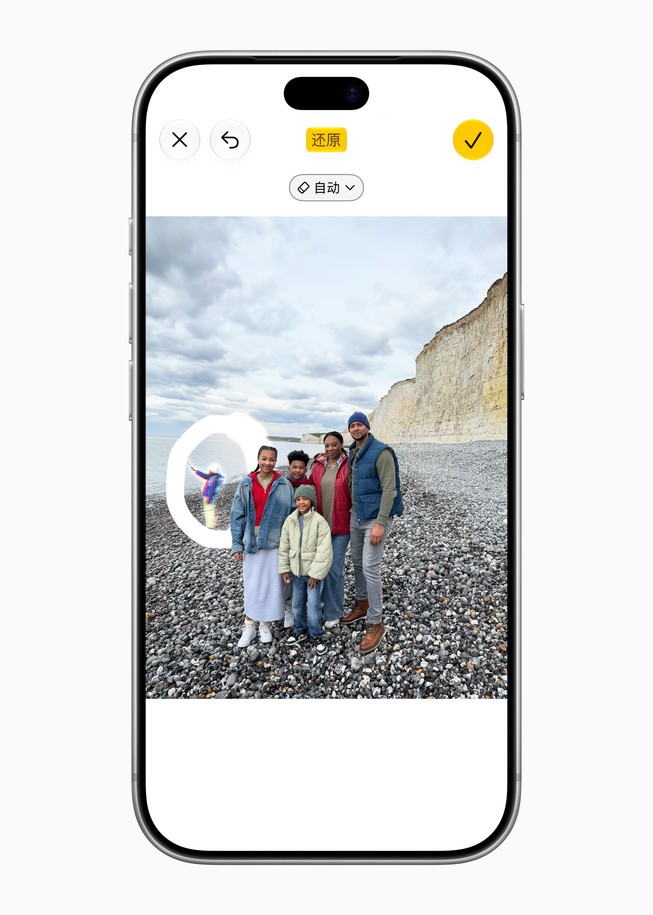 Figure: The Clean Up interface running on mainland Chinese iOS 27.3. An on-device diffusion model eliminates distractions and reconstructs backgrounds. Source: Apple Newsroom (Official Demo)
The architecture strictly upholds Apple’s privacy isolation standards. Users can authenticate with Qwen via Sign in with Apple or link an existing Qwen account. Apple has instituted strict contractual safeguards: prompt data sent to Qwen is explicitly prohibited from being retained by Alibaba for secondary model training. This sidesteps data export restrictions entirely. Backed by Alibaba’s regulatory compliance credentials, Apple’s modular architecture cleanly untangles potential compliance gridlocks.
Siri’s Deep Personal Context Deferred: Decoupling Permissions to Protect Upgrade Cycles
Behind the rollout of these initial features lies a notable list of omissions. Apple stated in its announcement that this release excludes the next-generation Siri and Image Playground tools unveiled at WWDC 2026. Furthermore, Apple Intelligence rollouts on iPadOS and macOS remain on hold, pending independent regulatory clearances.
This tradeoff reflects both engineering constraints and regulatory reality. The next-generation Siri depends on cross-app screen awareness and persistent personal data indexing. It requires background daemons to continuously process on-screen pixels, messaging threads, and call logs. Acting across third-party applications on the user’s behalf entails deep system privileges. High-sensitivity personal context coupled with autonomous system actions triggers far stricter regulatory reviews.
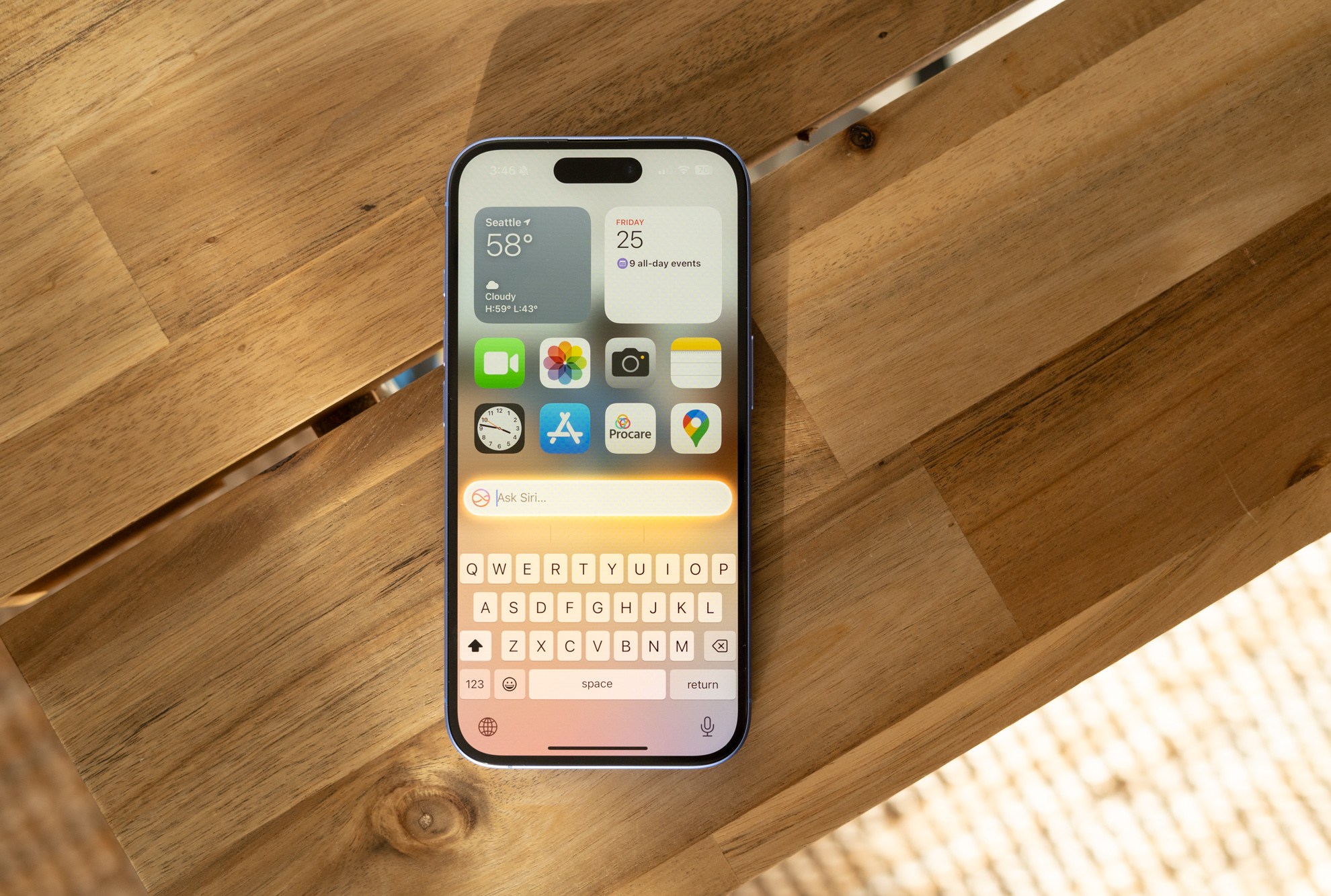 Figure: Live testing of an iPhone running Apple Intelligence. System-level text summarization and multimodal interactions depend on dedicated on-device memory headroom. Source: The Verge (Hands-on)
Delaying the tablet and desktop releases also underscores platform priorities. The Chinese market generates tens of millions of iPhone shipments annually. Upgrade stickiness on smartphones directly underpins Apple’s fiscal revenue base. By decoupling intrusive screen-reading permissions from routine baseline features, Apple bypassed the lengthy approval cycles required for an all-or-nothing release. Sacrificing cross-device synchronization and deep agentic control secured an on-time debut for Apple’s flagship revenue driver.
The 8GB Physical Boundary: Legacy Hardware Left Out in the Cold
Even with cloud models transitioned to local providers, the on-device architecture maintains Apple’s strict hardware baseline. Apple Intelligence is underpinned by Apple’s proprietary 3-billion-parameter on-device small language model. To sustain an inference speed of 30 tokens per second without thermal throttling, this model demands a dedicated allocation of roughly 2GB of unified memory immediately upon startup.
This engineering constraint enforces an uncompromising 8GB RAM floor. Base iPhone 15 models with 6GB of unified memory are locked out, as is the older iPhone 14 Pro. The eligibility list begins at the A17 Pro chip in the iPhone 15 Pro and extends up through the latest A19 Pro and M-series hardware portfolios.
This hardware boundary creates a stark bifurcation across the active installed base. With vast numbers of base iPhone 15 and earlier devices still in circulation, the feature gap will become increasingly pronounced. Rigid compute and memory requirements are set to push hundreds of millions of legacy users in China toward the hardware upgrade cycle.
Mending the AI Gap: Flagship Competition Returns to Silicon and OS Fundamentals
Over the past two years, competition in China’s premium smartphone segment has centered heavily on foundation model integration. Huawei’s native HarmonyOS rebuilt Celia into a system-level embodied assistant, while vivo, OPPO, and Honor deployed persistent on-device SLMs. Domestic OEMs aggressively marketed live call transcription summaries, on-screen visual search, and proactive scheduling assistants, putting pressure on Apple’s premium market share.
The lack of generative AI on Chinese-market iPhones previously put Apple on the defensive against domestic Android offerings. The arrival of iOS 27.3 closes this critical feature disparity.
While next-generation autonomous agents must still await subsequent regulatory approval, restoring notification prioritization, writing assistance, and real-time cross-language communication is sufficient to eliminate generational lag across the product line.
Alibaba’s Qwen has bridged Apple’s domestic compliance gap, demonstrating Cupertino’s capacity to build agile local partnerships in key international markets. With system-level AI parity restored, the flagship competition will refocus on silicon efficiency, industrial design, and core operating system stability.
Reference Links:
- Apple Newsroom Official Announcement: Apple Intelligence is coming to users in China
- The Verge Coverage: Apple Intelligence is finally coming to China with iOS 27.3
- MacRumors Analysis: Apple Says iOS 27.3 Beta Coming Next Week