On September 29, 2026, teardown authority iFixit awarded Apple’s newly released AirPods 5 a repairability score of 2 out of 10. Over the past decade, as Apple shipped nearly 80 million pairs of wireless earbuds every year, every single generation of AirPods had consistently received a failing grade of 0 out of 10.
For years, AirPods have stood as the tech industry’s quintessential disposable plastic commodity—once their internal lithium-ion cells degraded, the earbuds were destined for the landfill, leaving consumers with no option other than outright replacement. While a score of 2 out of 10 is still a long way from easily repairable, it signals an undeniable architectural shift in Apple’s hardware engineering philosophy.
A Hairdryer and a Vise Free the Earbud Battery
In previous teardowns, attempting to extract the battery from an AirPods bud was an exercise in destructive entry: the plastic housing had to be either sliced open or irreversibly melted. Although the AirPods 3 introduced pinned batteries, they remained entombed in hardened adhesive, requiring repair technicians to deploy precision hot air stations, aggressive chemical solvents, and specialized jigs just to crack open the housing—a workflow far beyond what an everyday user could accomplish at their kitchen table.
With AirPods 5, Apple has introduced critical structural refinements. The seam surrounding the acoustic driver now features just enough mechanical clearance, and the volume of adhesive applied has been substantially re-engineered.
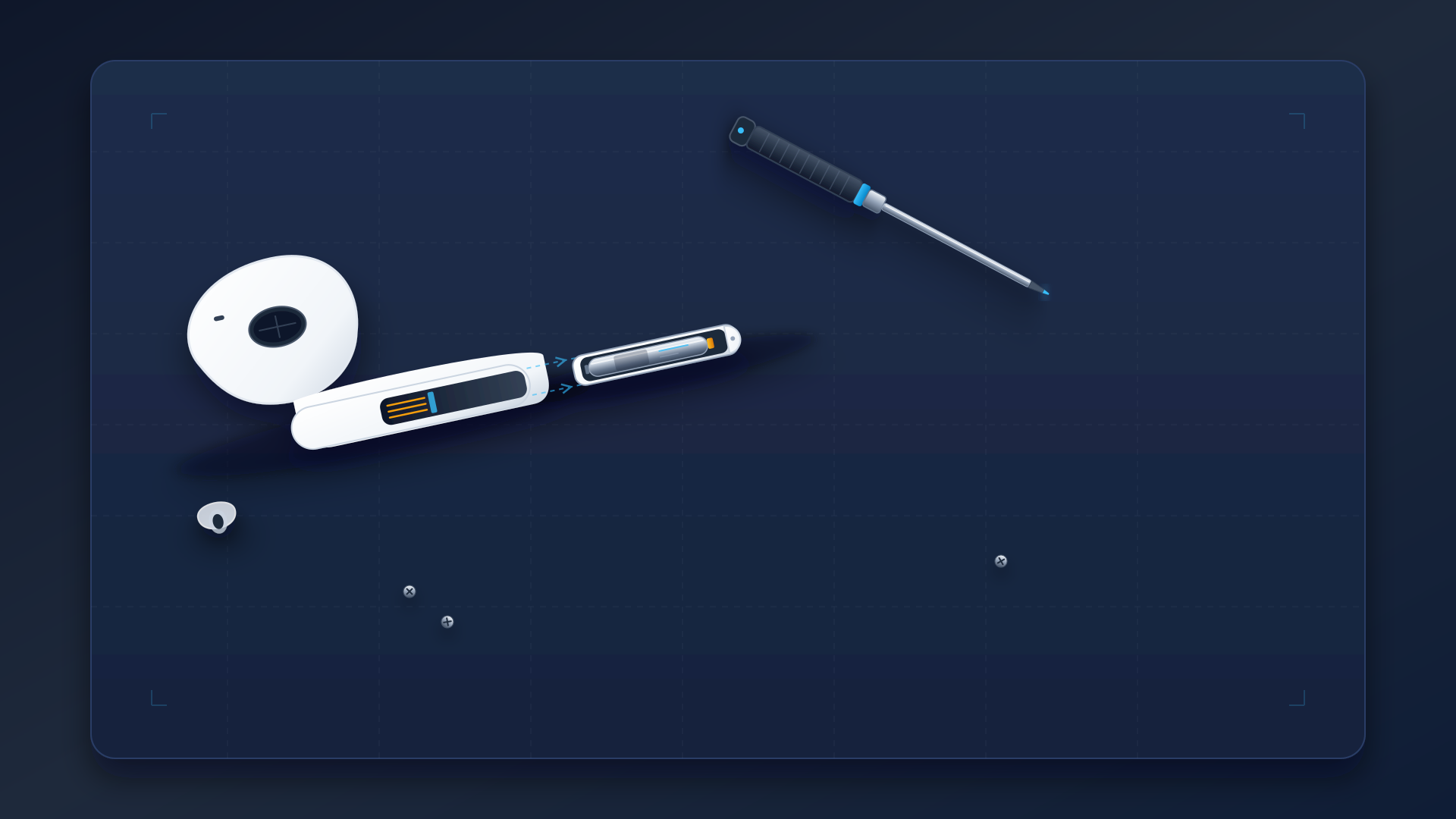
iFixit discovered that by simply applying low heat from a standard household hairdryer—maintaining a safe distance and keeping the airflow in motion to prevent thermal warping—paired with a standard vise or clamping tool to hold the bud steady, the casing can be cleanly separated without damaging external parts. Once the adhesive pull-tabs flanking the battery are removed, the battery module with its integrated metal solder pins pops right out.
The ability to disassemble core battery assemblies using common household tools lowers the barrier to entry, shifting what was once an exclusive depot-level procedure directly onto the individual repairer’s workbench.
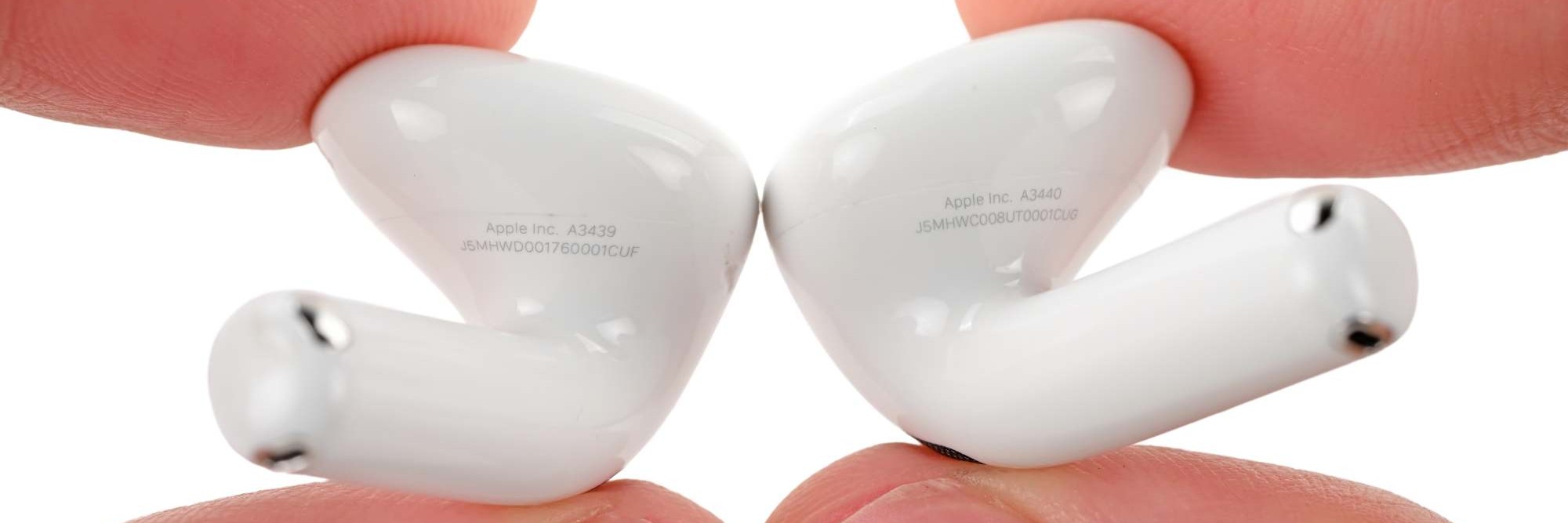 Figure: The pinned battery module of the AirPods 5 separated from the acoustic driver. Source: iFixit
Physical Incompatibility Isolates Left and Right Batteries
Extracting a depleted battery, however, is merely the opening gambit in the repair journey; sourcing and fitting replacement parts reveals another industrial design hurdle. When iFixit attempted to swap a functional left earbud battery into the right earbud, the device refused to operate normally. Although the companion iOS app indicated that the earbud was docked and charging, the battery could not hold a complete charge.
Crucially, this is not a software lockout enforced via cryptographic component serialization. A side-by-side inspection revealed that Apple physically reversed the electrical polarity between the left and right earbud cells, while introducing a slight offset in the alignment of the metal solder pins.
By engineering the two batteries as physically asymmetrical, non-interchangeable components, Apple forces aftermarket repair parts suppliers to amortize costs across two distinct manufacturing molds and maintain segregated supply chains for left and right earbuds.
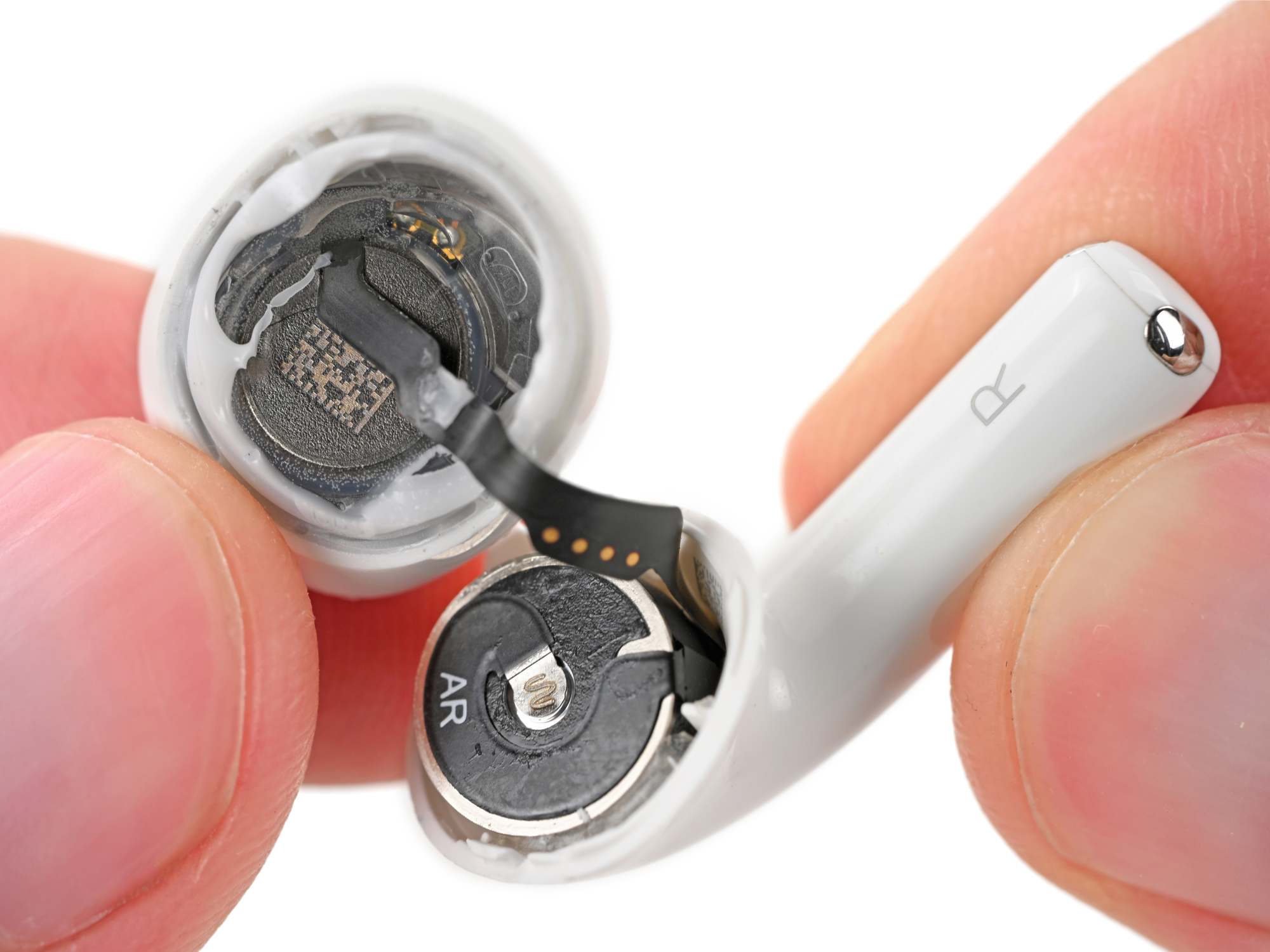 Figure: Following hairdryer heating, the outer shell and internal logic board assembly are cleanly separated. Source: iFixit
Peering Inside the Stem at Core Hardware
Beyond the battery compartment, the lower portion of the earbud maintains an exceptionally high level of hardware density. Deep within the stem lies the intricate sensor cluster and silicon powering active noise cancellation.
While the exterior silhouette of the AirPods 5 remains largely familiar, the interior houses an upgraded H2-class System-in-Package (SiP). This thumbnail-sized silicon package handles all computational heavy lifting for active noise cancellation, orchestrating an array of three MEMS microphones—located at the top of the stem, the bottom acoustic port, and inside the driver cavity—to attenuate ambient noise in real time.
On models equipped with wireless charging cases, the interior stem wall is lined with a capacitive touch-sensing layer. These delicate components are tightly packed inside the narrow plastic bore; if damaged by liquid intrusion, they remain virtually impossible to service or replace individually.
The Charging Case Remains Destructively Irreparable
The design concessions made on the earbuds notably do not extend to the charging case. Confronted by ultrasonic plastic welds, technicians found it impossible to access the interior of the case without irreparably destroying the outer shell, even when utilizing professional heat guns and metal pry tools.
Penetrating the base to reach the main rechargeable battery caused the white polycarbonate enclosure to crack and splinter into pieces, creating a sharp hazard where tools could easily slip. Apple continues to rely heavily on extensive plastic welding rather than utilizing miniature threaded fasteners that would enable non-destructive reassembly.
Competitors like the Fairphone Fairbuds have already proven that user-swappable charging case batteries can be manufactured at commercial scale. By maintaining an unyielding 0/10 repairability score on the charging case, Apple demonstrates that its embrace of repairable design still has rigid boundaries.
Hardware Design Yields to the Right to Repair
For an entire decade, the Cupertino giant manufactured hundreds of millions of effectively unrepairable wireless earbuds. Hardware trade-offs among miniaturization, ingress protection (IP ratings), and serviceability were consistently decided at the expense of repair, generating a colossal stream of electronic waste.
Now, that impenetrable wall has developed its first real fracture. Pressed by tightening Right to Repair mandates across the European Union and worldwide, coupled with rising consumer demand for product longevity, the doctrine of absolute consumer disposability is unraveling. While Apple has yet to offer replacement modules or service manuals through its Self Service Repair program for AirPods, the physical design changes speak for themselves.
AirPods 5 officially breaks the destructive-entry curse that plagued every preceding generation. On its highest-volume hardware accessory, Apple has finally made a tangible concession to the right to repair.
Reference Links:
- AirPods 5 Are the Least Unrepairable AirPods Yet