
125 Hz—that is the frequency where the speakers on the Redmi Pad 2 9.7 finally begin to register measurable output. In the $160 price bracket, this tablet packs an impressive 120Hz 2K display alongside a capable Snapdragon processor. Yet Notebookcheck’s laboratory pink noise tests reveal the audio hardware’s glaring limitations.
125 Hz Baseline Exposes Sound Profile Flaws
In laboratory measurement data, the low-frequency range of the Redmi Pad 2 9.7 is virtually a void. Output volume only shows a slight climb in the upper bass frequencies around 125 Hz, leaving the device entirely devoid of low-end depth. By contrast, rival offerings in the same market tier like the Honor MagicPad 4 already provide a solid acoustic foundation in that lower register.
Bass extension directly sets the lower bound for any audiovisual experience. When streaming action movies or playing games, thin, hollow explosions severely compromise the immersion promised by that crisp 2K display.
Midrange Peak Leaves Podcasts as the Only Sweet Spot
The acoustic tuning on this budget tablet focuses almost entirely on the midrange. The frequency response curve climbs sharply starting around 400 Hz and peaks across the upper midrange. While high frequencies remain distinct, they display an unstable, wave-like trajectory, followed by a steep drop-off at the upper treble limits. In everyday listening at medium to maximum volume, this translates into a distinctly tinny, metallic resonance.
 Figure: Xiaomi Redmi Pad 2 9.7 review unit. Source: Notebookcheck
This response curve reflects a classic vocal optimization strategy. Spoken-word media, including audiobooks and podcasts, come through with crisp clarity. But when confronted with complex orchestral tracks or dynamic film scores, the narrow, hollow soundstage quickly falls apart.
Retaining the 3.5mm Headphone Jack Offers a Last Resort
These built-in speaker shortcomings make external audio gear a practical necessity. Fortunately, Xiaomi retained the 3.5mm audio jack on this tablet, allowing users to bypass the onboard speakers entirely. On the wireless side, however, connectivity remains limited to Bluetooth 5.0, paired with an entry-level codec roster of SBC, AAC, and standard aptX.
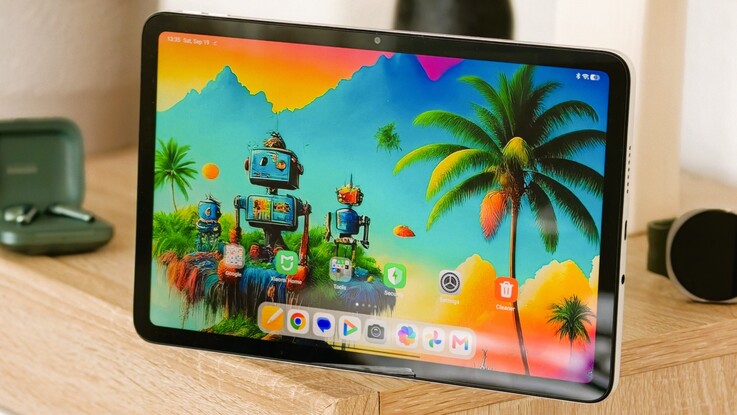 Figure: Xiaomi Redmi Pad 2 9.7 port details. Source: Notebookcheck
Retaining the physical headphone jack feels less like a deliberate retro design choice than a concession to lackluster speaker quality. An aging Bluetooth standard and restricted codec support also close the door to obtaining high-fidelity wireless audio via modern true wireless earbuds.
The Redmi Pad 2 shatters the illusion created by raw specification sheets alone. In the sub-$200 segment, supply chain dividends make high-refresh panels cheap to include. But acoustic chambers and driver tuning still demand hard engineering investments. For a device built around media consumption, sound quality often determines user satisfaction far more than raw silicon ever will.
Reference Links:
- Our review of the new Xiaomi tablet uncovers weakness that is not apparent from spec sheet