On November 4, 2026, Sony officially kicked off the Android 17 rollout for its mid-range Xperia 10 lineup, with the initial wave covering both the Xperia 10 VIII and Xperia 10 VII. Yet arriving alongside the new firmware was a restrictive changelog that significantly pared back expectations.
According to official release notes, improvements in this release are largely confined to cosmetic and visual touches. Sony revamped lock screen clock typography, introduced customizable home screen icon shapes, added support for enlarged quick settings tiles, and expanded screen recording with single-app capture and microphone mixing.
However, the signature capabilities defining Android 17’s generational leap are conspicuously missing. Cross-platform Quick Share with iOS and macOS has been stripped out. The desktop mode for external displays is entirely absent. The upgraded AI camera assistant was never ported over. Most frustrating for long-time buyers, the Xperia 10 VI—originally promised three major OS version upgrades—has been officially and permanently dropped from the update path.
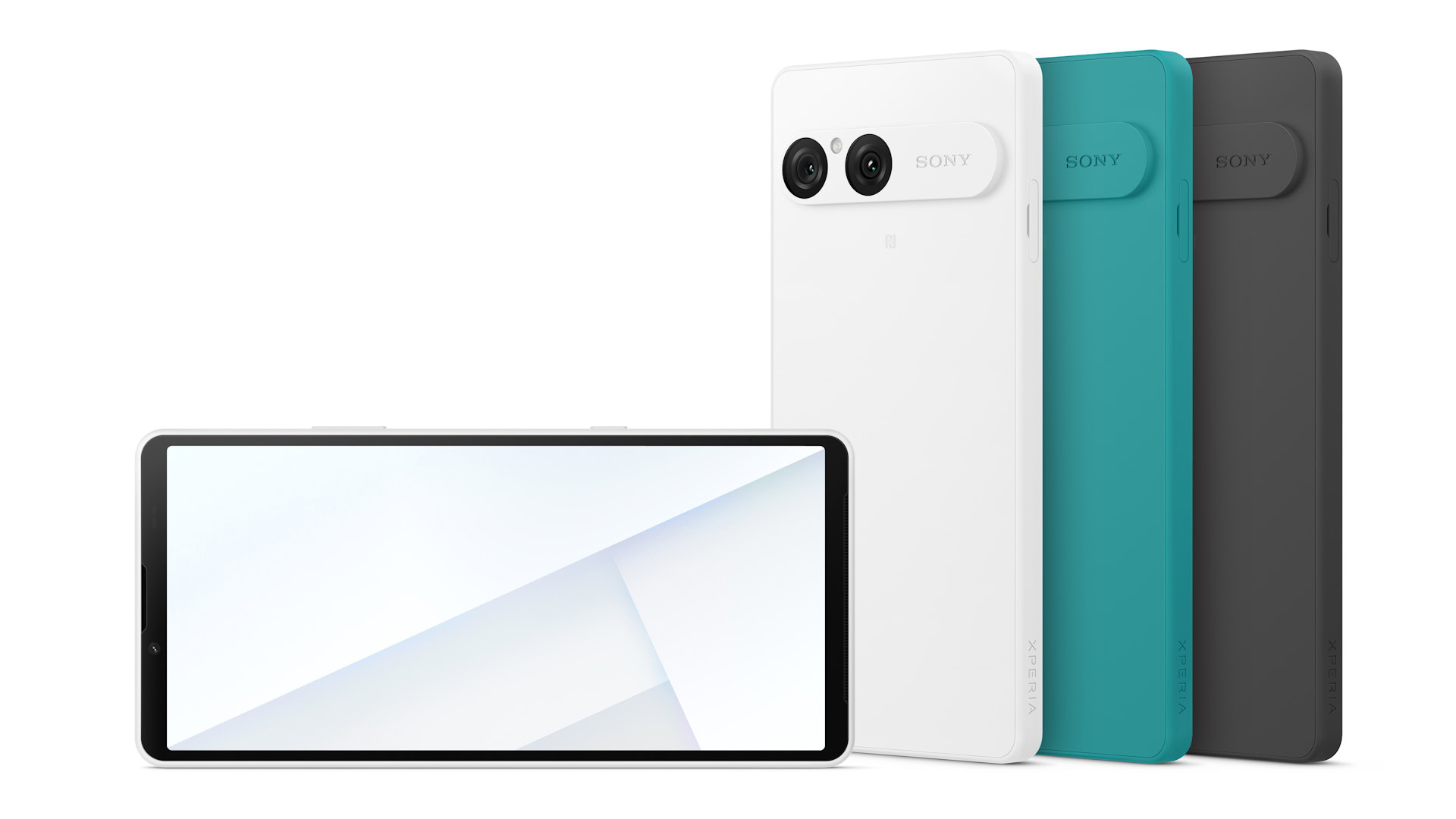 Figure: Exterior design of Sony’s mid-range Xperia 10 series smartphones. Source: Android Authority.
Three Key Features Axed: Clock Fonts Cannot Conceal the Mid-Range Ecosystem Gap
The marquee enhancements of Android 17 center around multi-device continuity and revamped multitasking. Chief among them is cross-platform Quick Share interoperability bridging the Apple ecosystem. Without relying on third-party utilities, Android 17 establishes direct, encrypted near-field ad-hoc channels with iOS and macOS devices, delivering a transfer workflow rivaling native AirDrop.
In the Xperia 10 firmware, this ecosystem-bridging feature has been cut out entirely. Sony explicitly clarified that cross-platform Quick Share remains an exclusive perk for the flagship Xperia 1 VIII. Mid-range users trying to swap files with Apple hardware are still forced to fall back on messaging apps or cloud storage. The disparity in cross-platform convenience is glaring.
The desktop mode for external displays suffered the same fate. Android 17 re-architected its freeform window rendering stack and display pipelines, allowing handsets to morph into desktop workstations the moment they connect to a monitor. Sony strictly restricted this functionality to three generations of its flagship Xperia 1 family.
What remains for the mid-range devices is little more than skin-deep decoration. Additional clock typefaces cannot bridge the functional chasm of system-level cross-device workflows. For Xperia 10 owners, the update feels less like a platform transition and more like a lightly themed maintenance release.
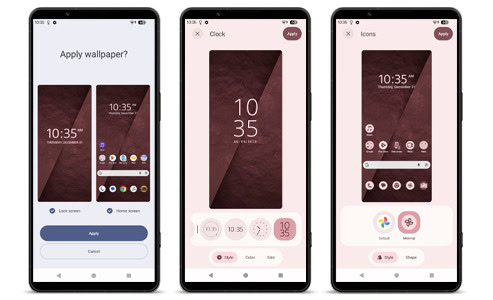 Figure: Wallpaper and clock customization settings on the Xperia 10 series following the Android 17 update. Source: Android Authority (Sony official materials).
Reversing Commitments: Sony Halts Updates for Older Hardware, Citing 128GB Flash Limits
While feature cuts on newer hardware reveal aggressive product segmentation, the abrupt discontinuation of the preceding model breaches a public commitment.
When the Xperia 10 VI launched in 2024, Sony promised three major OS upgrades alongside four years of security patches. Having shipped from the factory with Android 14, the device was widely expected to receive Android 17 right on schedule this year.
Instead, an internal review in October 2026 overturned that roadmap. Sony stated in an official advisory that “due to limitations related to device storage configuration,” the Xperia 10 VI could not guarantee a satisfactory user experience. Sony opted to terminate major OS upgrades for the handset. While the four-year security patch rollout continues, the device’s platform support permanently caps out at Android 16.
Hardware specifications illuminate the engineering bottlenecks behind the decision. The Xperia 10 VI runs on Qualcomm’s Snapdragon 6 Gen 1 platform, paired with 8GB of RAM and 128GB of UFS 2.2 storage. This mainstream configuration from two years ago collided with the physical realities of Android 17’s virtual A/B partition overhead and massive dynamic library refactoring.
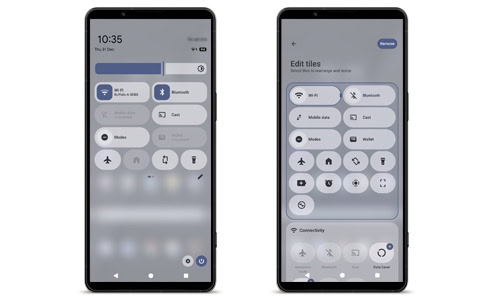 Figure: Quick Settings panel with adjustable tile dimensions on the Xperia 10 series running Android 17. Source: Android Authority (Sony official materials).
Architectural Overhead in Android 17: Dynamic Partitions Strain Entry-Level Hardware
Android 17 imposes unprecedented read and write demands on local storage systems. Google transitioned fully to an upgraded virtual A/B seamless update pipeline, overhauling background processes for application metadata compression and dynamic shared libraries.
Older devices rely on UFS 2.2 storage chips capped at 128GB physical capacity. Under low sustained throughput, system updates rapidly saturate available I/O bandwidth. Performing a full-system OTA requires decompressing massive firmware payloads and running cryptographic hash verification across dozens of gigabytes in temporary staging partitions. On hardware lacking high-speed random write capability, the entire user interface freezes under the I/O storm.
The cross-platform transfer architecture introduces similarly punishing demands on low-level storage. During near-field Wi-Fi Direct discovery and Bluetooth handshakes, Quick Share must perform high-frequency reads and writes of temporary cryptographic certificates within an encrypted security sandbox. Flagship handsets with UFS 4.0 flash effortlessly absorb these burst operations. On slower storage media, frequent certificate churn quickly drives storage bus latency to saturation.
Sony’s engineering team faced an uncompromising architectural tradeoff: forcing full-fat builds onto I/O-constrained hardware would cause day-to-day responsiveness to crater. Lacking the vast engineering resources required to completely recompile and optimize the underlying Android kernel for legacy devices, Sony chose to excise heavy background services to preserve baseline responsiveness.
Preserving Smoothness vs. Preserving Trust: Technical Compromises Spark Community Outcry
Sony’s dual decisions—stripping mid-range functionality and halting previous-generation updates—ignited intense debate across mobile tech forums.
Engineering pragmatists defend the move as an honest concession to physical hardware limits. Driving an external 4K workspace through the Adreno GPU built into the Snapdragon 6 series routinely drops frame rates below 30 FPS. Forcing desktop mode would invite thermal throttling, stuttering, and kernel panics. In this view, cutting heavyweight subsystem workloads to maintain stable cellular connectivity and battery longevity represents a pragmatic engineering choice.
Consumer advocates and enthusiast communities, by contrast, argue Sony violated basic contractual integrity. Buyers paid €399 upfront largely on the backing of explicit upgrade guarantees; three major OS revisions served as a headline selling point. Mainstream competitors have steadily extended long-term platform maintenance deeper into their mid-range lineups. Blaming flash storage performance for dropping a device after two years exposes insufficient software engineering investment.
At the heart of the controversy is a transparency deficit. Consumers cannot forecast the evolving storage footprint of future operating systems when purchasing hardware, yet OEMs reserve the prerogative to unilaterally walk back lifecycle promises after the sale. If this practice spreads, it risks eroding the hard-won credibility of long-term software support across the Android ecosystem.
Long Lifecycle Guarantees Collide with Hardware Realities: Niche Brands Retreat to Survival Mode
The turmoil surrounding the Xperia 10 rollout reflects a broader structural challenge confronting the mid-range smartphone tier as mobile operating systems evolve.
Mobile platforms are pivoting decisively toward on-device intelligence and continuous cross-ecosystem fabric. The underlying OS runtime is no longer lightweight; system footprints and computational baselines have risen dramatically. The legacy paradigm—where a single unified codebase scaled effortlessly across entire hardware tiers—is breaking down.
Tier-one brands with massive sales volumes can afford sprawling engineering divisions dedicated to custom kernel tuning and modular software trimming. Sony, operating at modest sales volumes, cannot absorb the bespoke engineering overhead required to maintain parity across divergent hardware tiers. Caught between demanding runtime architectures and aging flash storage, Sony turned to feature trimming to preserve basic usability.
While this triage keeps firmware responsive on entry-level silicon, it comes at the direct expense of consumer goodwill. As low-level platform demands outstrip the physical headroom of budget components, hastily made multi-year lifecycle pledges are colliding head-on with technical reality.
Reference Links:
- Android Authority coverage on the Sony Xperia 10 series Android 17 rollout.
- Sony Mobile official product support and firmware upgrade technical bulletin.
- Qualcomm Snapdragon 6-series mobile platform architecture and storage specifications.
- Google Android 17 cross-platform continuity and virtual partition technical documentation.