
On November 9, 2026, Apple introduced a $49.99 “Intelligence Usage Pack” alongside an update to its digital audio workstation, Logic Pro 11. This marks the first time since the rollout of Apple Intelligence that the company is directly charging users for generative AI usage.
Users who navigate to “Intelligence Features” and then “Show Usage” from the Logic Pro menu bar are greeted with a prompt to purchase additional quota. The shift arrived without any keynote fanfare—it quietly landed as a support document update, upending two years of user expectations that high-end Apple hardware guaranteed free AI access.
A $50 Usage Pack Appears in the Menu Bar
Logic Pro 11’s newly added built-in AI assistant can assemble vocal tracks from a single text prompt or entirely restructure multi-track mix sessions. Powering these features are high-parameter multimodal foundation models. When creators iterate rapidly on complex arrangements, backend compute consumption spikes sharply.
To manage mounting compute overhead, Apple introduced explicit quota caps. Once a user depletes their base monthly allowance, the AI assistant stops responding to demanding generation prompts. The only way to lift the cap is to purchase the $49.99 Intelligence Usage Pack.
Figure: Logic Pro menu usage monitoring interface. Source: 9to5Mac
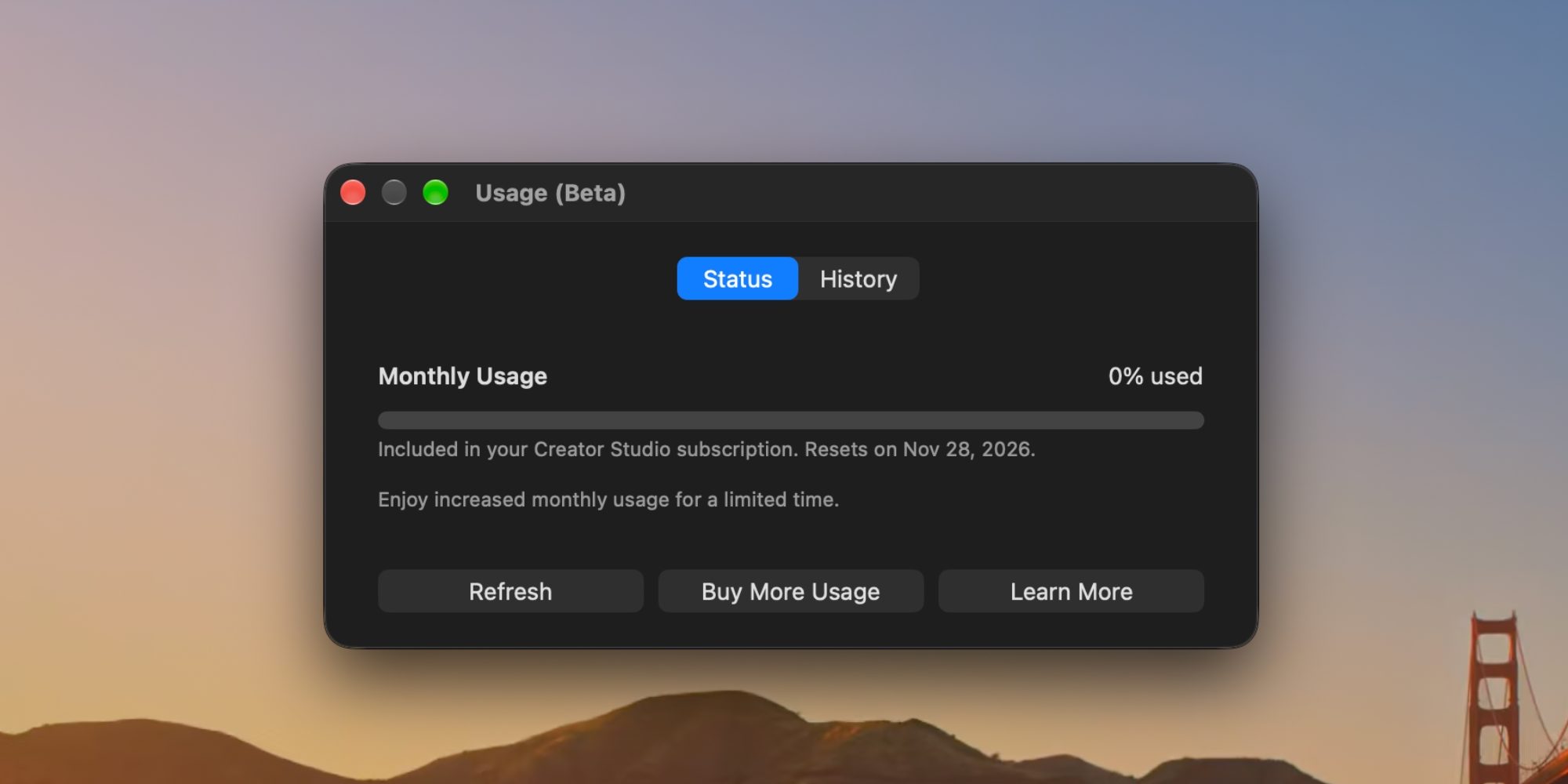
The purchase terms outline clear commercial boundaries. The usage pack is a one-time purchase and does not support Family Sharing. It is strictly tied to the specific Apple account authenticated at the time of purchase. While unconsumed quota rolls over month to month, it expires 12 months after the purchase date.
Prompt Complexity Dictates Burn Rate
Apple’s technical support documentation refrains from publishing an explicit tier chart, noting only that the limits reflect real-world cloud model invocation costs. A precedent was set in iOS 27, where server-side image generation was capped daily for free users while iCloud+ subscribers received higher allowances. The Creator Studio suite follows the same playbook, repackaging quota as a standalone consumable purchase.
Logic Pro’s metering model is considerably more intricate. Apple stresses in documentation that consumption rate scales directly with prompt complexity. Parsing full multi-track stems consumes far wider context windows than generating isolated drum grooves. Highly complex prompts deplete monthly allowances at multiplied rates.
The documentation also confirms the underlying third-party models: Logic Pro’s intelligent assistant and image tools leverage Google Gemini, while presentation generation relies on OpenAI. Because these features depend entirely on remote cloud clusters, they cannot run offline on local client silicon.
Apple launched the first wave of usage packs across markets including the United States, United Kingdom, Canada, Germany, France, Brazil, India, and Mexico. Final Cut Pro and Pixelmator Pro will integrate identical billing modules later this month, placing Apple’s professional creative suite firmly under cloud usage controls.
Silicon Margins Can No Longer Absorb Cloud Bills
For the past two years, Apple positioned Apple Intelligence around Apple Silicon. M-series Neural Engines handled local edge inference, while Private Cloud Compute clusters took on heavier lifting. The implied bargain was simple: invest in premium hardware, and intelligent capabilities come bundled.
That model worked seamlessly for system-level summaries and lightweight photo cleanups. Edge inference was amortized at the factory level when the chip shipped. Even when offloading text editing to Private Cloud Compute, hundreds of tokens fell well within Apple Services’ margin tolerances.
Professional audio and video generation broke that calculus. Analyzing 48kHz uncompressed multi-track projects demands massive memory bandwidth and sustained inference clusters. Cloud providers bill by token volume and execution seconds; every deep interaction represents concrete cash outflow.
Hardware margins cannot perpetually subsidize heavy cloud inference. One-time software purchases often carry lifecycle spans of multiple years, making ongoing compute subsidies an unsustainable drain. Setting monthly quotas and consumable packs represents an engineering reality check on the narrative of hardware-funded software.
Avoiding Subscriptions: One-Time Compute Reloads
When designing the billing mechanic, Apple sidestepped the subscription model dominant across the industry. While most generative AI tools demand recurring $20-per-month fees, Apple opted for a $49.99 consumable credit pack.
Figure: The $49.99 Intelligence Usage Pack purchase prompt. Source: 9to5Mac
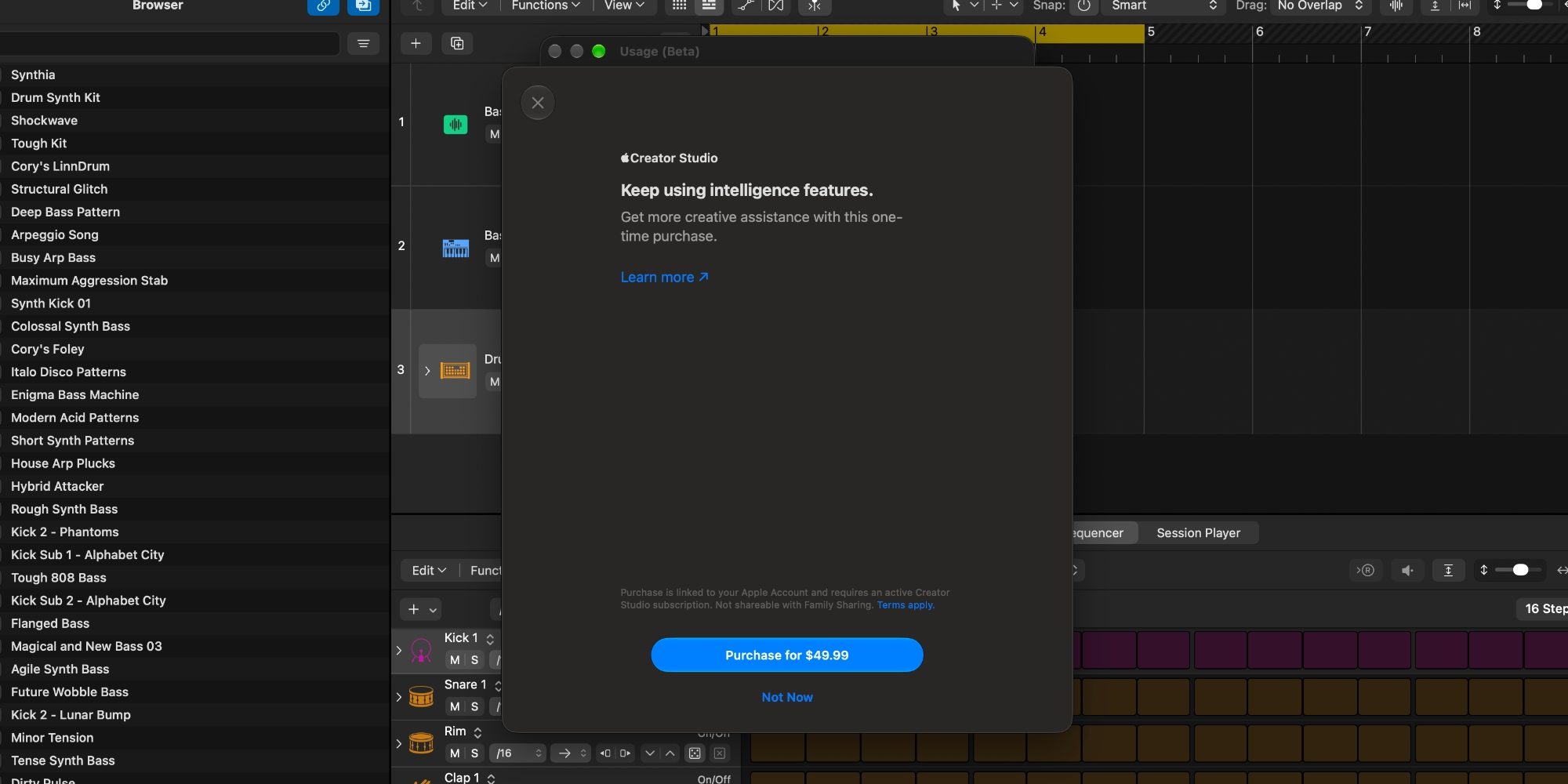
This tiered, unbundled approach gives pro creators operational flexibility. Many producers only require intensive AI-assisted composition during concentrated recording sprints. The 12-month expiration window lets them bank credits for subsequent projects without burning idle monthly subscription fees.
However, the high entry threshold and lack of pricing transparency have drawn criticism. A $49.99 starting price is steep for small creators who merely bump against occasional quota edges. Furthermore, the UI provides vague complexity meters rather than granular token breakdowns or cost-per-action metrics.
Creators cannot predict what a session restructuring prompt will actually cost. This opaque metering model has rattled developers and artists alike. Once purchased, the credits are non-refundable unless mandated by local law, shifting financial uncertainty directly onto the user.
The End of the “Pay Once, Use Forever” Era
The professional creative community is divided over the new billing paradigm. Proponents argue that metered usage preserves software ownership: musicians can still purchase Logic Pro’s traditional toolset outright for $199.99 without being trapped in compulsory monthly rents.
Critics counter that this marks Apple’s first aggressive test of service monetizing inside standalone pro apps. While historical updates delivered comprehensive tooling unconditionally, frontline generative features are now gatekept by consumable fuel. When core functionality relies on external cloud models, the standalone value of the desktop application inherently erodes.
This move fundamentally alters the relationship between client hardware and creative productivity suites. Local silicon now anchors the interface and deterministic processing, while cutting-edge generation retreats into metered cloud rentals. The monetization of compute has crossed from enterprise APIs into standalone creative apps, rewriting the software contract.
Reference Links:
- The Verge Report
- 9to5Mac Report
- Apple Official Support Document