
In its third-quarter 2026 earnings call, Taiwan-based semiconductor manufacturer Macronix International dropped a quiet bombshell on the video game supply chain: its production of game cartridge ROM chips has officially reached its end. Macronix Chairman Miin Wu confirmed that the company is gradually decoupling from the gaming sector and will no longer break out dedicated financial figures for the business unit in future financial disclosures.
The financial filings chart a steep exit trajectory. In Macronix’s latest quarterly revenue breakdown, game ROMs accounted for just 5 percent of total sales, down sharply from 26 percent just a year earlier. Output volume plummeted 39 percent year-over-year. This earnings cycle marks the final appearance of the segment on the company’s public books.
As global semiconductor capacity increasingly coalesces around artificial intelligence compute, the shockwaves are rippling down to the humble plastic game card. For three decades, Macronix stood as Nintendo’s indispensable silicon partner. With its planned departure, the long-standing economic equilibrium of physical media has been broken.
 Figure: Nintendo Switch physical game cartridges. Source: Ars Technica.
25,000 Wafers Monthly: High-Margin AI Storage Crowds Out Low-Price ROM
Macronix’s decision to sever ties was driven by strict allocation math inside its fabrication facilities. The company’s 12-inch wafer capacity currently hovers at roughly 25,000 wafers per month. While Macronix has earmarked $1.2 billion to build out more advanced process lines, turning on that additional capacity will require at least a year.
Facing physical fab constraints, every wafer run is calculated against potential profit margins. Hyperscale AI data centers are devouring high-capacity NOR Flash and high-durability NAND Flash at an unprecedented rate. Enterprise server clients possess a willingness to absorb chip premiums that far outstrips anything in consumer electronics.
Dedicated Mask ROMs used in game cartridges rely on custom photolithography masks. In this fabrication process, game code is permanently etched into the metal interconnect layers on the silicon die during lithography. Because data cannot be erased or modified, the cartridge does not require complex flash controllers or error-correction circuitry.
Historically, this architecture relied on massive shipment volumes to amortize the steep upfront photolithography tooling costs. Yet proprietary game ROMs lack a secondary commercial market, keeping per-wafer gross margins tightly compressed. When generative AI created a bottomless appetite for memory capacity, redirecting scarce fab cleanroom hours to high-value silicon became an inevitable commercial calculation.
Allocating finite capacity to high-yield buyers is standard operational logic. Micron previously shuttered its consumer memory brand Crucial to channel all available wafer capacity into High Bandwidth Memory (HBM). Under identical supply chain pressures, lower-margin legacy ROM chips are being pushed off the production line.
Ending a 30-Year Partnership: Nintendo’s Core Supplier Retires
Macronix and Nintendo forged their alliance in the 1990s. Spanning the cartridge days of the Nintendo 64 to the Game Boy Advance, Nintendo DS, 3DS, and the current Switch, the two companies maintained a three-decade custom silicon relationship.
MST Financial senior analyst David Gibson highlighted that Macronix has long served as Nintendo’s primary memory supplier. Nintendo’s enduring commitment to physical cartridges relied heavily on the stable yield and proprietary copy-protection architecture provided by Macronix’s XtraROM process.
However, bespoke designs carry terminal lifecycle risks. During the investor presentation, Wu noted that the existing Switch ROM architecture has been on the market for seven to eight years, firmly entering the twilight of its lifecycle. Crucially, Macronix confirmed it will not develop a new, bespoke ROM architecture for next-generation gaming hardware.
As an original console approaches the end of its generational run, cartridge orders naturally dwindle. Diminishing production runs rapidly inflate depreciation overhead across dedicated tooling. Without the protection of massive economies of scale, maintaining non-standard silicon lines transforms into an untenable corporate balance sheet drag.
Generational leaps in data throughput requirements across new consoles have accelerated the obsolescence of legacy ROM. High-resolution textures and complex game assets demand significantly faster random read speeds. Traditional Mask ROM faces hard physical limits in bandwidth and scaling, leaving it unable to satisfy modern graphics engine pipelines.
 Figure: Game-Key Card packaging format for Switch 2. Source: Ars Technica.
Single-Sourcing Drives Up BOM Costs: Physical Pricing Starts $10 Higher
While Macronix is winding down production, Nintendo is not entirely without alternatives. The platform holder continues to source memory from Rohm Co.’s subsidiary, Lapis Semiconductor.
Yet shrinking a duopoly into a sole-source relationship dramatically shifts pricing power to the chip foundry. Across the broader semiconductor sector, fab cleanroom hours are operating near full capacity. Unless remaining contract fabs can command significantly higher wafer prices, they have little economic incentive to sustain aging production lines. The bill-of-materials (BOM) cost of physical cartridges faces steep upward revisions.
Downstream publishers are already voicing the strain. Indie publisher Inin Games publicly revealed when preparing the physical edition of R-Type Dimensions III that shipping on a full-data physical cartridge would significantly hike manufacturing expenditures. To cover the spread, the retail edition required a price markup of €10 to €15 (approximately $13 to $20).
Early on, Nintendo offered only high-capacity 64GB cartridges, which sharply inflated packaging costs for mid-tier and smaller publishers. Nintendo subsequently introduced 16GB and 32GB configurations, lowering unit production costs by $5 to $10. Nevertheless, compared to Blu-ray discs that cost mere pennies to press, solid-state game cartridges remain an expensive luxury.
Gamers place high sentimental and economic value on physical ownership and the secondhand trade. Yet when a physical copy commands a $10+ premium over a digital download, mainstream consumer enthusiasm wanes. Publishers find themselves trapped between rising manufacturing expenditures and gamer price sensitivity.
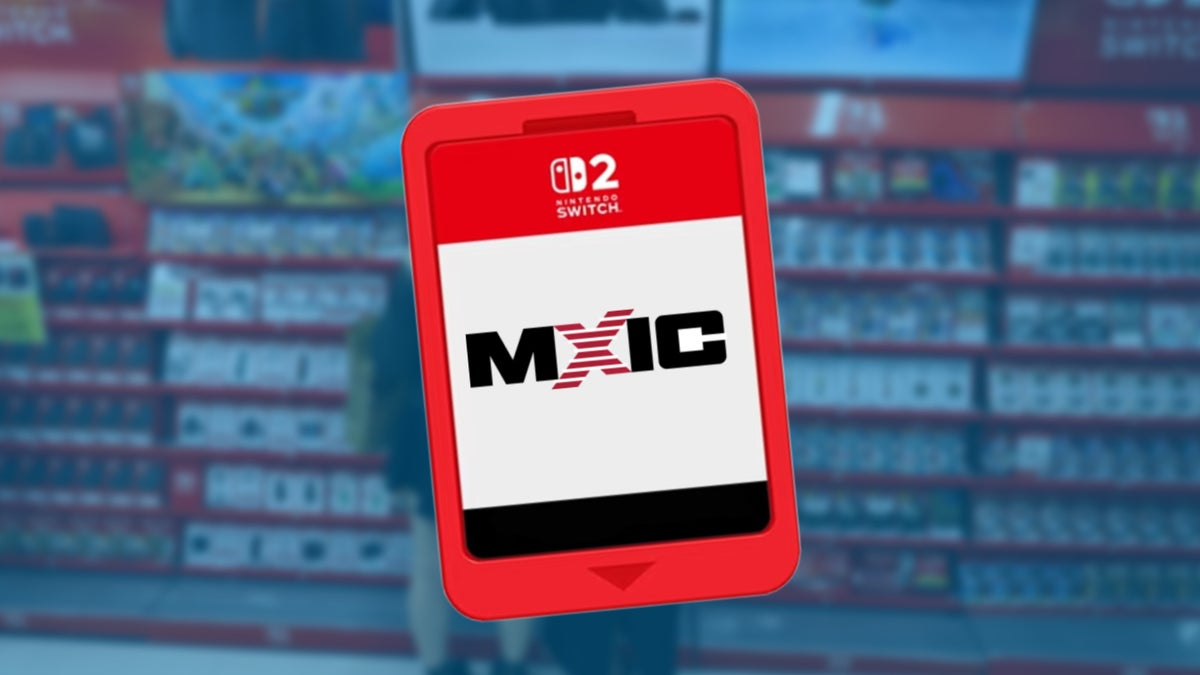 Figure: Metal contact pins and packaging structure of a physical game cartridge. Source: Eurogamer.
Digital Downloads Top 60%: Game-Key Cards Open the Exit Ramp
In response to climbing cartridge costs, publishers are rapidly overhauling distribution models. Data shared by David Gibson reveals that during the second calendar quarter of 2026, digital downloads accounted for 61.5 percent of Nintendo’s total software sales, continuing an upward year-over-year climb.
Rivals have acted even more decisively. In its upstream planning, Sony outlined roadmaps to phase out physical Blu-ray disc pressing entirely by 2028. While Nintendo recently reaffirmed that it has no immediate plans to abandon physical cartridges, structural supply chain dynamics are severely testing that pledge.
The industry compromise is the controversial “Game-Key Card.” Inside the retail case sits an inexpensive, low-capacity authentication card devoid of full game assets. Upon purchase, users must download tens of gigabytes over the internet. This halfway measure preserves retail shelf space while steering clear of pricey silicon chips.
Physical game collectors have long valued cartridge ownership as a hedge against digital impermanence. The proliferation of key-card formats undermines the utility of offline preservation, demoting game cases to plastic shells. While physical enthusiasts decry the shift, publishers find the cost savings virtually impossible to pass up.
The semiconductor industry’s single-minded rush toward AI infrastructure has fundamentally altered consumer economics. Low-margin physical cartridges are caught between factory line closures and rising consumer prices. As cartridges drift toward luxury collectibles, the decline of physical media is no longer an issue of consumer sentiment—it is dictated by foundries dedicating their cleanest silicon to enterprise data centers.
References:
- Ars Technica Feature Reporting
- Eurogamer Industry Analysis
- Macronix Q3 2026 Investor Conference
- MST Financial Analyst Research