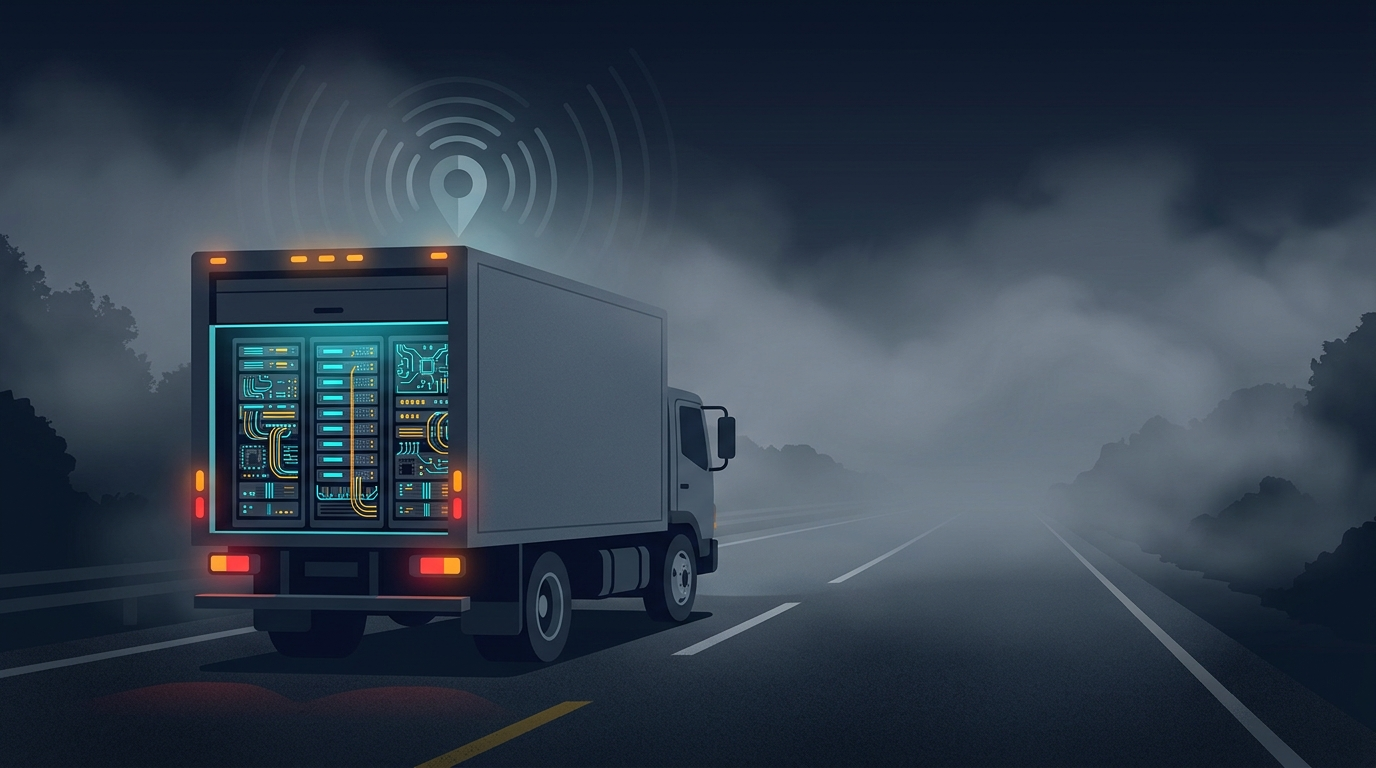
$11.4 million across just six pallets—averaging nearly $1.9 million per pallet. In late August 2026, a shipment of premier computing hardware was loaded in Oakland, California, bound for an enterprise data center in Fort Worth, Texas.
The pickup truck arrived bearing the logo of a known commercial food carrier. On-site handover followed standard procedure to the letter. Once the rig merged into the interstate network, however, it slipped off tracking radars in California’s San Bernardino County.
The Texas buyer realized the shipment had vanished only in early September, when the loading dock remained empty days past the scheduled arrival window. More than two months after Oakland police opened an investigation, no arrest warrants have been issued. The stolen chips remain entirely unaccounted for.
With a single pallet now worth more than its weight in gold, the physical AI supply chain faces staggering security gaps. Stoked by overseas black-market premiums that double domestic prices, interstate freight routes have become prime targets for sophisticated criminal syndicates.
Six Pallets Drive into a Blind Spot and Disappear for Two Months
Oakland Police Department incident logs date the theft to August 29, 2026. The freight vehicle arrived precisely on schedule at the logistics park. The driver loaded six pallets of high-end Nvidia computing systems and departed without raising suspicion.
The destination was Fort Worth, Texas, roughly 1,500 miles (2,400 km) away. Yet after leaving the San Francisco Bay Area, the truck never took the expected eastbound interstate corridor. Reconstructed route data shows the vehicle headed south instead, idling for extended periods at multiple spots across San Bernardino County.
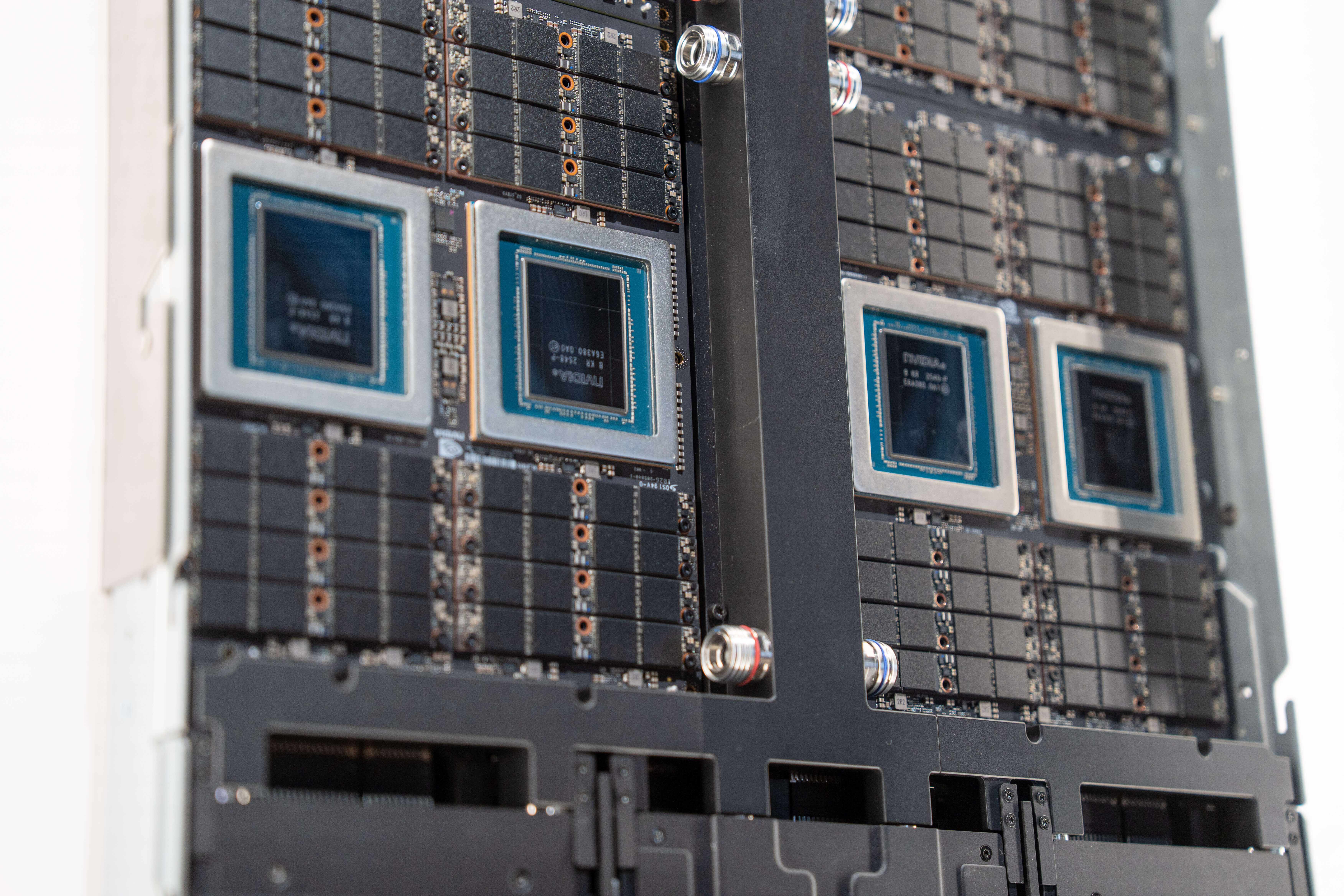 Photo: High-density server racks and accelerator modules form the backbone of modern AI data centers. Source: Ars Technica (Getty Images)
Soon after, the vehicle’s transponders and positioning beacons cut out simultaneously. For two full weeks, the logistics management system failed to trigger an automated overdue alert. The buyer in Texas only contacted the freight carrier after local warehouse managers flagged that the shipment had missed its receiving cutoff.
The victim filed an official police report with the Oakland Police Department on September 13. When California Highway Patrol investigators reviewed highway camera footage, they discovered the food distributor logos and license plates on the truck were fraudulent clones. Authorities classified the incident as organized interstate cargo theft. Over two months later, the six pallets remain completely missing.
Phishing, Shell Identities, and GPS Spoofing Dismantle Digital Defenses
Transnational theft syndicates have abandoned crude highway hijackings. A federal law enforcement adviser told NBC News that these crews now employ sophisticated cyber-infiltration tactics.
The fraud scheme begins with digital identity theft. Hackers breach broker accounts on commercial freight load boards. They post lucrative freight listings to attract bids from legitimate carriers.
When a carrier responds, attackers send phishing links to dispatchers to harvest fleet credentials or install malware. Using generative AI tools, the crew fabricates driver’s licenses, motor carrier permits, and insurance certificates, stepping in as a verified logistical operator to secure the load.
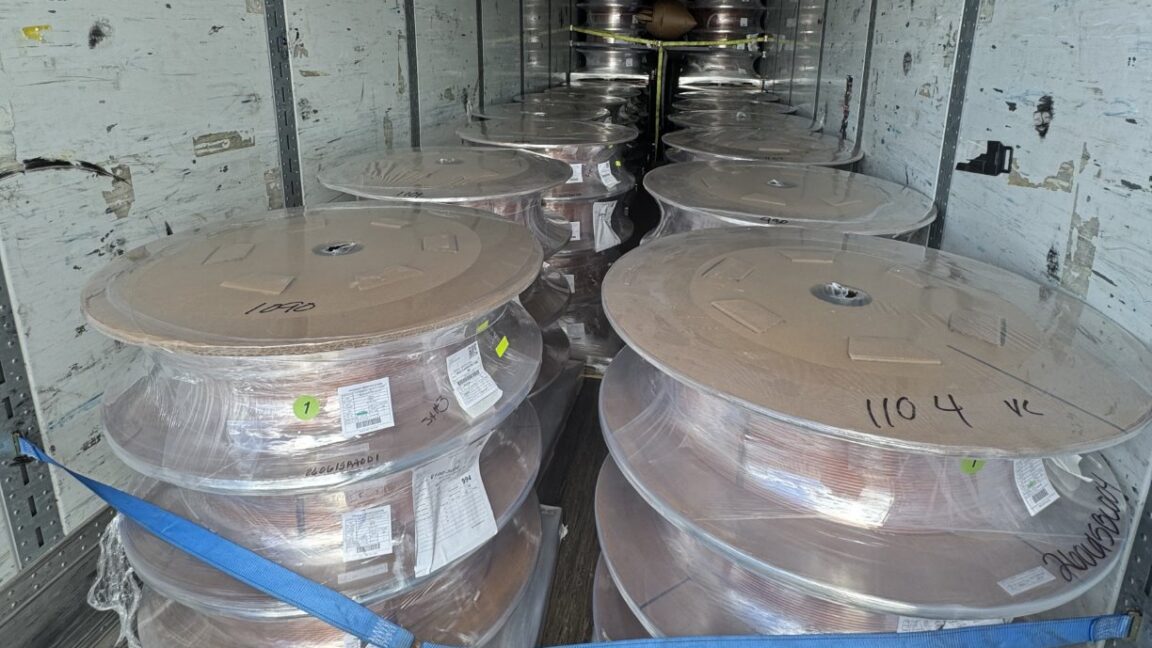 Photo: A freight trailer seized by law enforcement in Illinois containing stolen high-value data center power equipment. Source: Ars Technica (Cook County Sheriff’s Office)
GPS spoofing represents the most critical piece of the operational puzzle. Attackers compromise on-board electronic logging devices (ELDs) to feed fabricated telemetry back to tracking dashboards. While automated maps display a truck cruising steadily along interstate highways, the physical vehicle has already diverted into an unmonitored cross-dock facility.
In some operations, syndicates hire unwitting third-party drivers to run the initial leg. Once the trailer reaches an intermediary cross-dock, waiting accomplices transfer the cargo onto cloned trucks and disperse the freight.
This synthetic digital curtain masks real-world movements, granting thieves a critical multi-week head start before law enforcement or freight brokers even realize the load is gone.
Skyrocketing GPU Values Drive Highway Cargo Pirates
The shift in cargo theft targets stems directly from the exponential leap in hardware asset density. Highway cargo crews once targeted consumer monitors, apparel, or spools of copper wire—shipments where an entire 53-foot trailer rarely exceeded $1 million.
Modern AI hardware has upended that physical calculation. A single top-tier accelerator card commands tens of thousands of dollars, while high-density rack modules reach into the hundreds of thousands. With six pallets valued at $11.4 million—averaging nearly $1.9 million each—the entire haul fits into a tiny fraction of a standard trailer.
Olaf Groth, a faculty member at UC Berkeley’s Haas School of Business, observed that illicit arbitrage is the primary catalyst driving these targeted operations. Tight export curbs and supply shortages have turned advanced semiconductor nodes into high-demand contraband on international black markets.
Groth noted that cutting-edge AI server nodes listing domestically around $550,000 can easily fetch upwards of $1 million abroad. That 100% markup provides criminal organizations with an irresistible return profile.
Keith Lewis, VP of operations at cargo-theft tracking firm Verisk CargoNet, pointed out that stealing AI hardware offers higher profit density than hauling gold bullion—with significantly lower risk than robbing a bank vault. Since June 2026, the value of data center equipment stolen across the United States has surpassed $100 million.
Cloned Bills of Lading Feed Underground Smuggling Channels
Stolen enterprise computing hardware never appears on open secondary consumer channels. Every server node and accelerator carries unique hardware serial numbers etched into vendor production databases; listing them openly triggers instant security flags.
Law enforcement sources indicate these shipments are pre-sold to underground buyers before the heist is executed. Once the machinery enters an unmonitored warehouse, technicians disassemble the systems within 48 hours. They strip serial tags, asset tracking beacons, and chassis enclosures, reducing complex nodes to modular boards and bare accelerators.
These components are re-manifested under generic industrial automation codes and slipped into high-volume international maritime freight channels. Deep-pocketed buyers in restricted jurisdictions, desperate to assemble sovereign compute clusters, eagerly pay cash premiums for untraceable hardware.
This is far from the first time Nvidia hardware has been targeted. In 2025, commercial break-ins at logistics facilities in Fremont and Union City, California, yielded over $7.5 million in Nvidia equipment. Investigators confirmed the crew rented rental vans in Southern California specifically to raid Bay Area distribution nodes.
What began as opportunistic freight theft has matured into an underground logistical pipeline circumventing global technology export controls.
Escort Ramming Forces Industry to Rebuild Physical Security
Confronting relentless raids on AI compute shipments, supply chain operators are overhauling physical defenses. As thieves escalate their counter-surveillance tactics, dramatic errors and violent encounters have followed.
In September 2026, thieves targeted an Nvidia logistics hub in Newark, California. Burglars cut heavy perimeter gates outside an autonomous trucking facility operated by PlusAI, making off with two commercial trailers emblazoned with Nvidia and PlusAI co-branding logos.
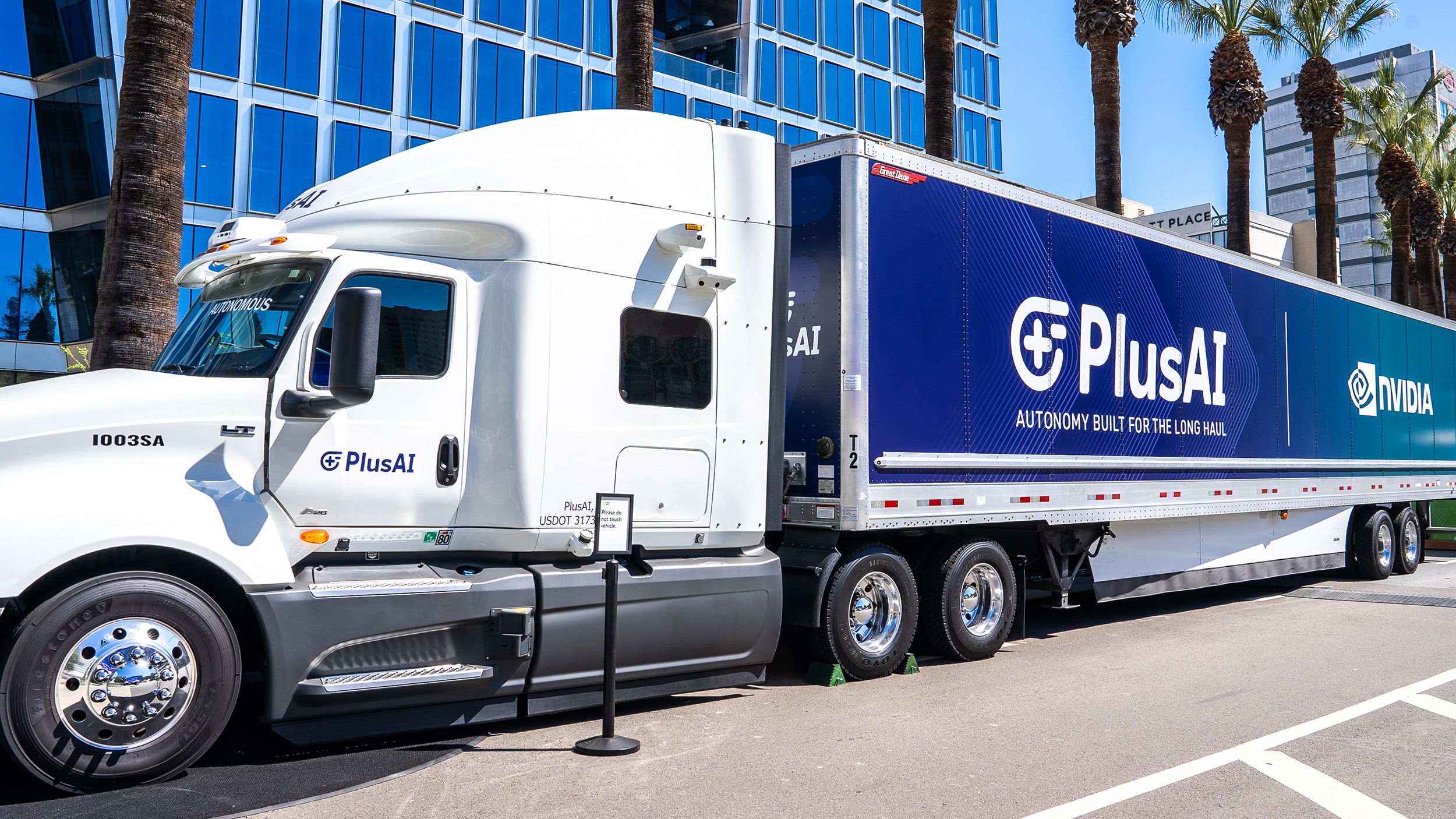 Photo: The autonomous test trailer recovered in Newark, California, displaying Nvidia and PlusAI livery. Source: Wired (PlusAI)
When the thieves forced open the cargo doors, they discovered 40,000 pounds of industrial sand. PlusAI had been benchmarking autonomous tractor load-bearing algorithms, using sandbags as inert ballast. Frustrated, the crew abandoned both trailers by the side of the road.
Other encounters have turned openly hostile. During a California-to-Texas escort operation protecting a $10 million rack shipment, suspects in an SUV intentionally rammed an escort security vehicle. The collision forced the security team off the roadway, allowing the transport truck to escape visual contact.
A similar attack unfolded near a data center in Fayetteville, Georgia. As off-duty officers escorted a $13 million server convoy, an unplated sedan sideswiped the security patrol car, pinning guards to the shoulder while the cargo was cut off.
Scott Cornell, chairman of the Transported Asset Protection Association (TAPA Americas), emphasized that software verification and digital dashboards alone are insufficient. If logistics providers fail to slow down and rigorously authenticate carrier credentials and physical drivers, cyber-enabled crews will continue penetrating freight corridors with ease.
The AI arms race has transformed silicon into currency, reshaping underground criminal incentives along the way. When a routine dry van carries the monetary value of an armored bank transport, tech giants can no longer rely solely on data center perimeter security—they must build a fortified physical defense along the open highway.
Reference Links:
- Ars Technica: Nvidia hardware worth $11.4M vanished between Oakland and Texas
- Ars Technica: Highway thieves are spoofing GPS to steal millions in data center-bound cargo
- NBC News: Grand Theft AI: Highway thieves are stealing millions in data center gear
- The Mercury News: Police investigating $11.4 million Nvidia cargo theft from Oakland
- Wired: Thieves Stole Nvidia Trailers, They Got 20 Tons of Sand