Watching Unfolded Hits a Charging Blind Spot: The Bottom Port Blocks Desk Use
On November 14, 2026, accessory maker ESR officially launched a magnetic wireless charger for the iPhone Duo. 9to5Mac reviews editor Michael Burkhardt followed with a hands-on report. At $36.99, the little accessory targets the most awkward interaction blind spot of large foldables.
Unfolded, the iPhone Duo has a 7.8-inch inner display with plenty of room. Many users like to prop it on a desk for long videos or documents. But at 255 grams unfolded, it quickly tires the wrist, so setting it on a desk is the natural choice for most people.
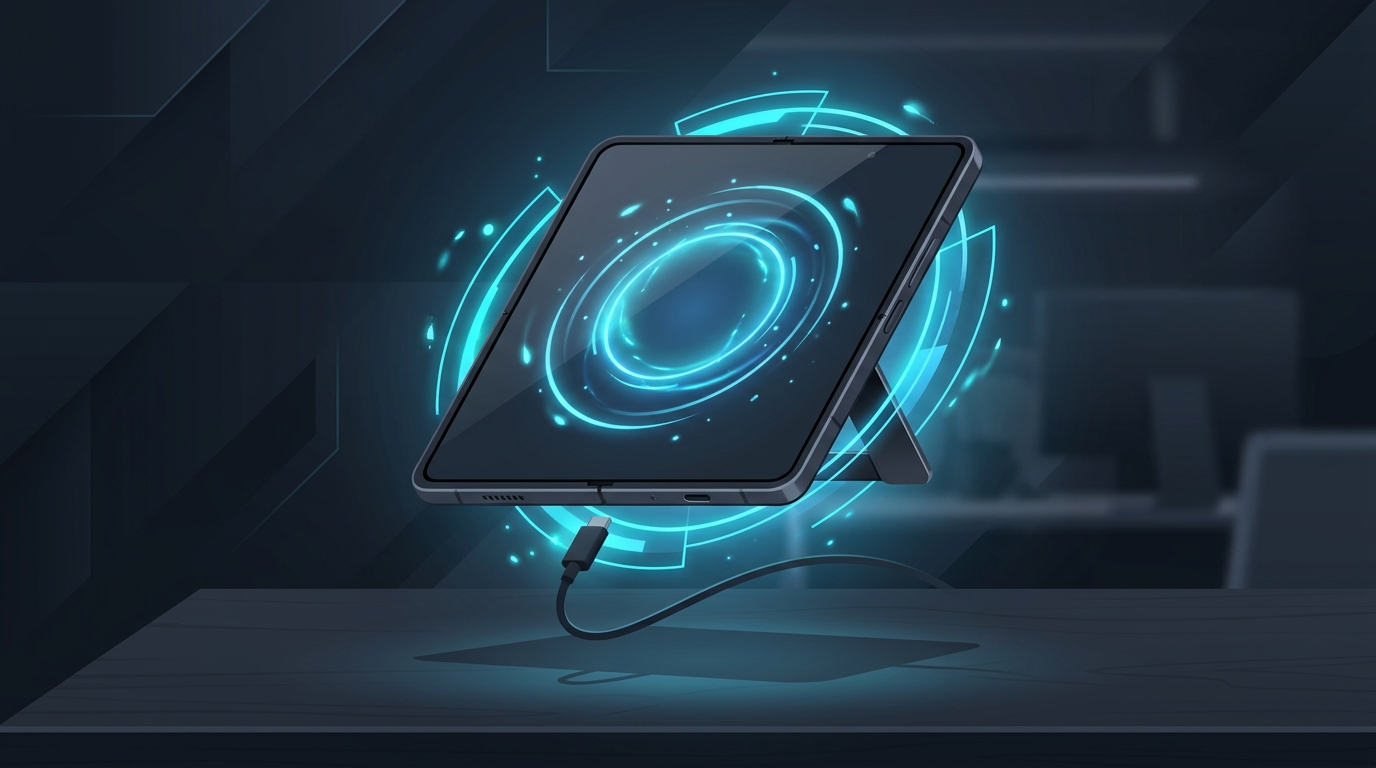
Desk use immediately runs into a hardware flaw. The iPhone Duo’s USB-C port sits at the very bottom of the body. Stand the phone up to charge and watch, and the plugged-in cable end presses against the desk. The phone can’t stay upright unless you turn it upside down.
Flipping it avoids the cable but creates a new mess: the power and volume buttons end up at the bottom or reversed, so blind presses often go wrong. The built-in hinge does allow some hovering angles, but upright the center of gravity is high and a light touch can make it wobble. A single charging port on the bottom edge makes desk placement of the big screen and continuous power mutually exclusive.
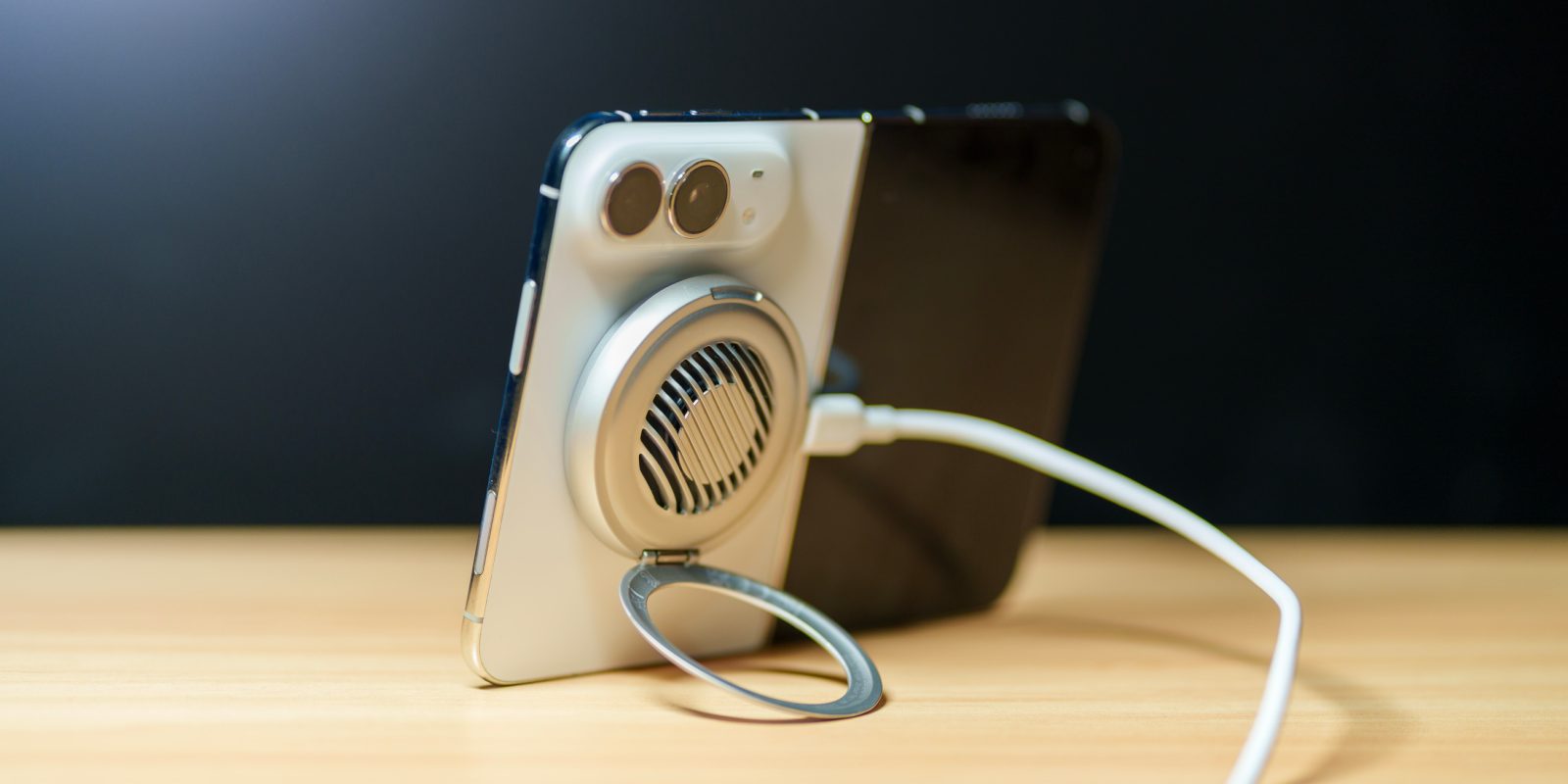 Image: The ESR magnetic kickstand charger attached to the back, propping up the big screen on a desk. Source: 9to5Mac.
A $37 Kickstand Fixes Ergonomics as Magnets Take Over the Center of Gravity
To resolve the clash between support and cabling, accessory makers turned to the MagSafe magnet array on the back. ESR’s charger integrates a foldable metal hinged stand. Black and white versions list for $36.99 online, while the Burgundy Red version is $42.99.
The attachable magnetic stand has a clear engineering edge in space. A case with a built-in stand would add to the 8.9 mm folded thickness and badly hurt one-handed grip. A third-party snap-on accessory is stuck on when needed and taken off for storage.
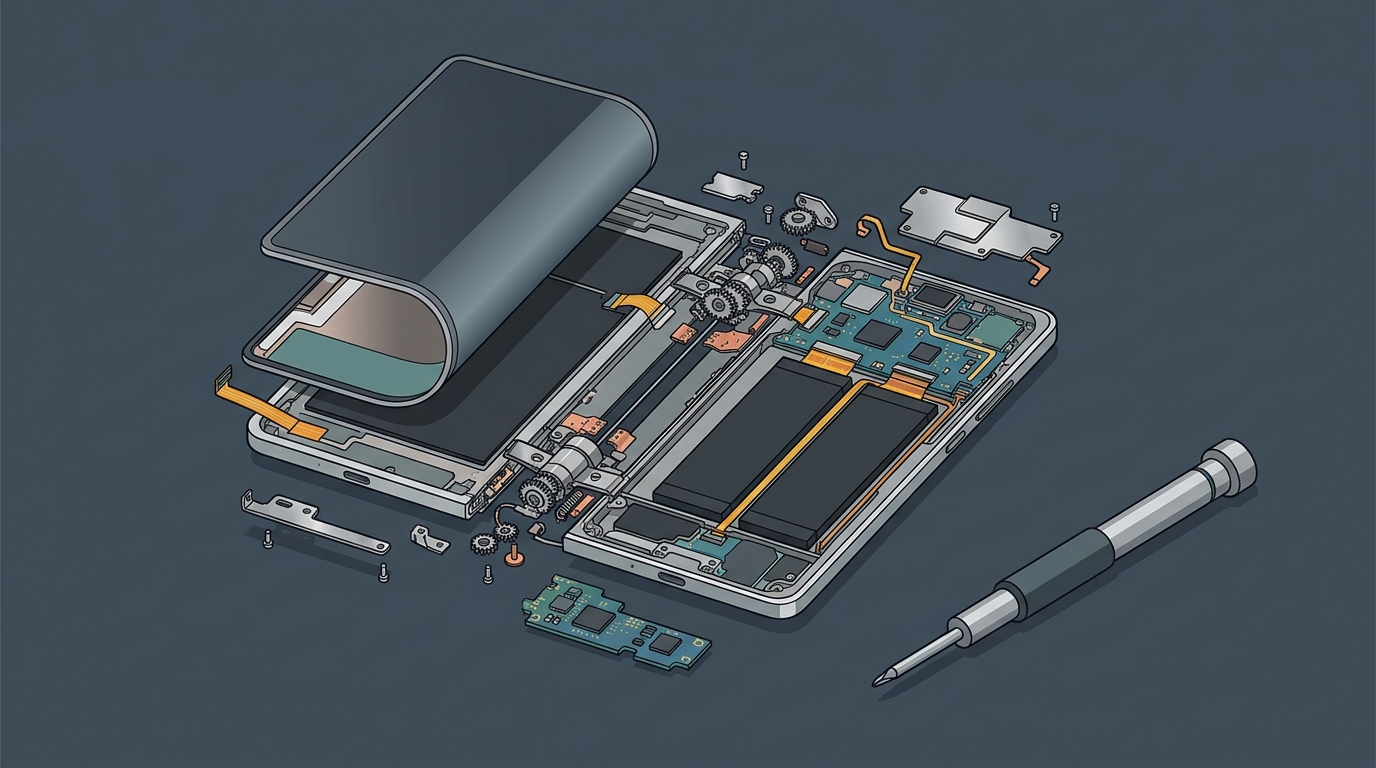
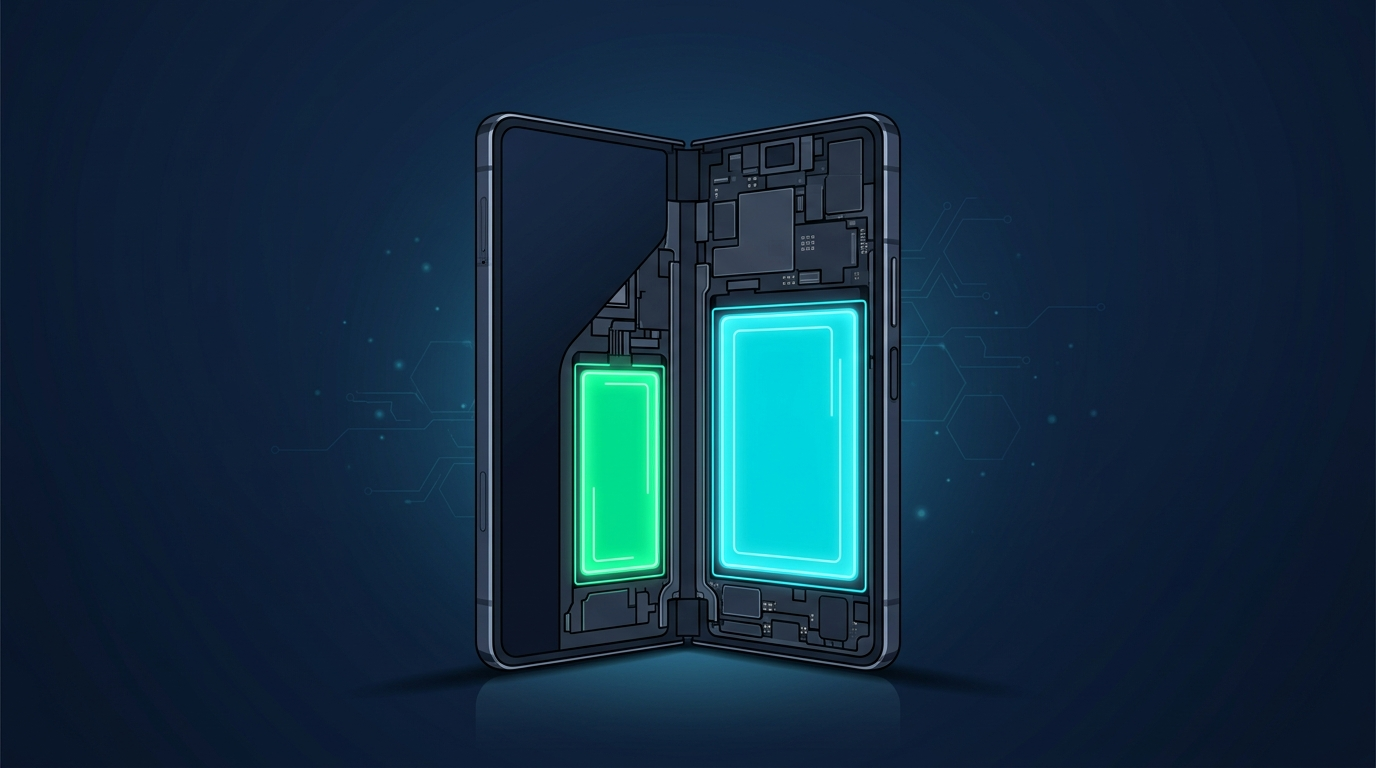
The magnetic module takes over the device’s load center. Unfolded, the iPhone Duo’s two halves are weighted differently: the left holds a 2,962 mAh battery, the right the mainboard and a 1,921 mAh battery. Finding a balance point one-handed is hard. Held to the center of the back by a strong magnet ring, the extended metal stand carries the weight evenly to the desk.
In landscape or portrait, the metal hinge gives enough damping. Swiping across the 7.8-inch screen, the phone stays planted on the desk, sparing the muscles from holding it in the air. The magnetic stand decouples support from the phone itself and fixes the imbalance at minimal weight cost.
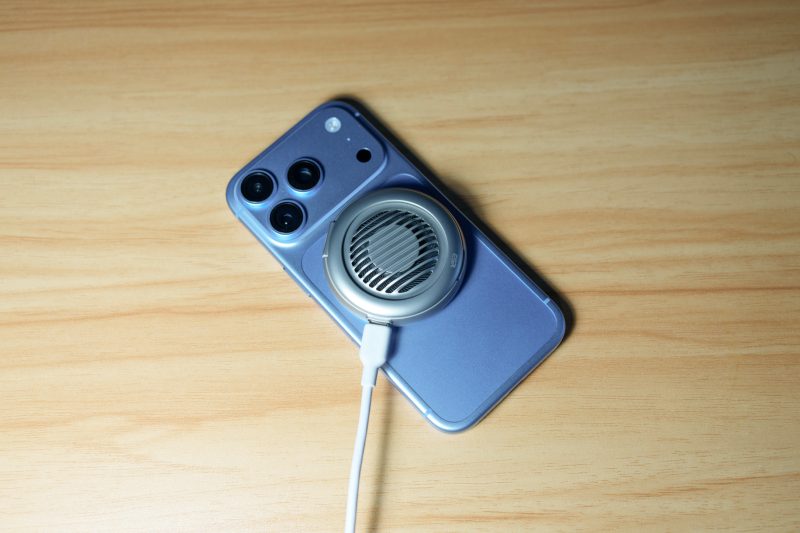 Image: The hinged stand structure and pivot detail on the back of the charger. Source: 9to5Mac.
Qi2 High Power Meets Dual-Screen Heat, and an Active Fan Holds Throttling Back
With physical support solved, heat buildup is the next challenge. The ESR base supports 25W wireless fast charging under Qi2. In typical simulated tests, it added 50% to an iPhone 18 Pro in 25 minutes, matching Apple’s official magnetic charging pad.
High-power wireless charging faces a harsh thermal environment on a large foldable. While playing HD video, both panels’ backlights and driver ICs run at full load. Eddy-current losses in the charging coil also build up heat quickly on the cramped back. A big foldable’s interior is tight, leaving far less room for heat dissipation than a regular slab phone.
Once temperature crosses the 40°C safety line, the system forces thermal protection. Brightness drops, and charging power plunges from 25W to 7.5W or even 5W, so charging while using turns into losing battery while using. To hold power steady, ESR embedded a miniature turbine fan in the base for active cooling.
Cool air is drawn in through side grilles and blown at high speed across the phone’s back and the coil surface. Testing shows the active airflow effectively lowers back-plate temperature rise, extending 25W fast-charging cycles. Users enjoy big-screen video as the battery climbs steadily, with no backlight dimming from overheating. Active cooling in the wireless charging module locks in peak performance under sustained heavy load.
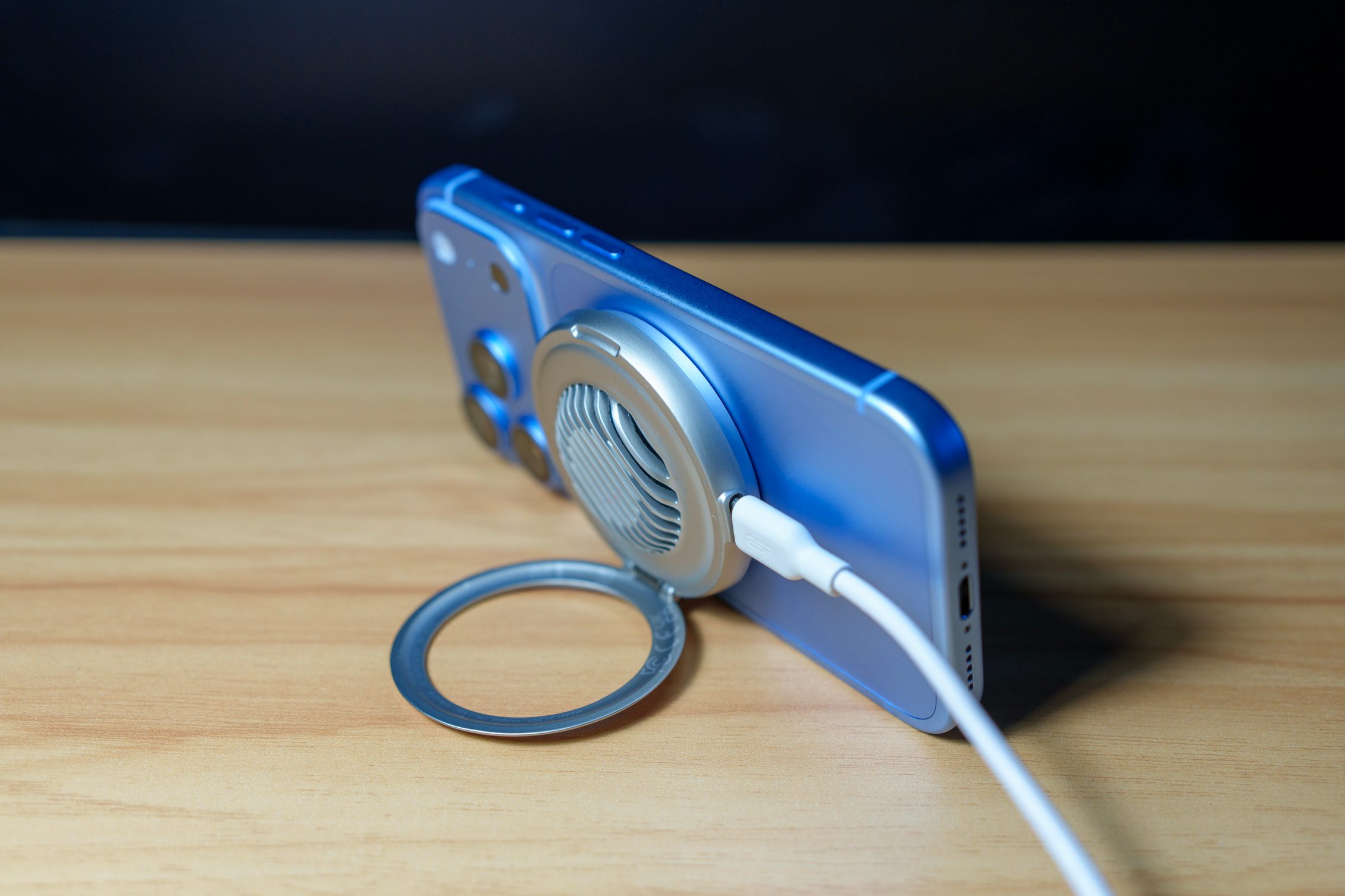 Image: Side air duct and cooling grille design of the charging base. Source: 9to5Mac.
Hinge Hovering Can’t Solve Charge-and-Use, So the Accessory Ecosystem Compensates
Today, makers generally sell multi-angle hinge hovering as a core feature of large foldables. Many launch events emphasize hovering selfies and half-folded viewing. But in continuous daily desk use, a purely mechanical hinge shows a functional gap.
The hinge adjusts the viewing angle but can’t supply power. When the battery runs low, users must plug in, and a cable in the bottom edge immediately takes away the upright posture. With a thin body and complex internal routing, makers can’t add a second USB-C port on the side frame.
This physical compromise in hardware design shifts the job of completing the experience to external accessories. Supporters see the attachable magnetic approach as the most pragmatic combination right now. It avoids needlessly thickening the phone and uses a mature magnetic protocol to get support and cooling at very low cost when needed.
Skeptics can’t be ignored either. Some enthusiasts point out that users spending nearly $2,000 on a flagship must carry an extra accessory weighing tens of grams just to charge and use it decently at a desk. The base’s small fan also whirs faintly in quiet night settings, and risks dust buildup and aging over time. Shifting the shortcoming from the phone to the accessory bag reflects the compromise at the heart of today’s foldable form.
Add-On Hardware Can’t Hide the Form Factor’s Compromise, and the Race to Slim Down Isn’t Over
Third-party accessory makers reacted sharply and filled a key gap in everyday big-foldable use. A $37 spend really does make the iPhone Duo more usable, bringing big-screen productivity to the desk. Behind this accessory boom lies a deeper contradiction in foldable hardware evolution.
Foldables try to merge a phone’s portability with a tablet’s field of view. But physics hasn’t changed. Greater torque when unfolded, grip fatigue and cable interference can’t be removed by software alone. Today’s form pushes the ergonomic problem onto the external ecosystem.
As long as the phone’s weight can’t fall to regular-phone levels, and as long as port layout is bound by the mechanical hinge, users will keep weighing pocket burden against desk add-ons. ESR offers the best answer for now, but the real endgame is still in the phone makers’ hands. Only when materials technology lightens the whole device can big foldables shed their reliance on add-ons and truly mature.
Reference links:
- 9to5Mac hands-on report
- ESR official product specifications