44 hours versus 31 hours. Apple’s official tech specs for the iPhone Duo spotlight a stark runtime contrast in video playback. Folded shut using the external cover display, the device rivals the endurance of top slab flagships; unfold the 7.8-inch internal canvas, however, and continuous playback plummets by 13 hours.
As pre-orders opened, Apple submitted its formal product information sheet—model identifier A3720—to European Union regulatory bodies. This statutory document officially confirms the rated battery capacity of Apple’s first foldable: 4,883 mAh. Built from two separate physical cells joined across the hinge, the setup establishes the endurance baseline for Apple’s foldable debut.
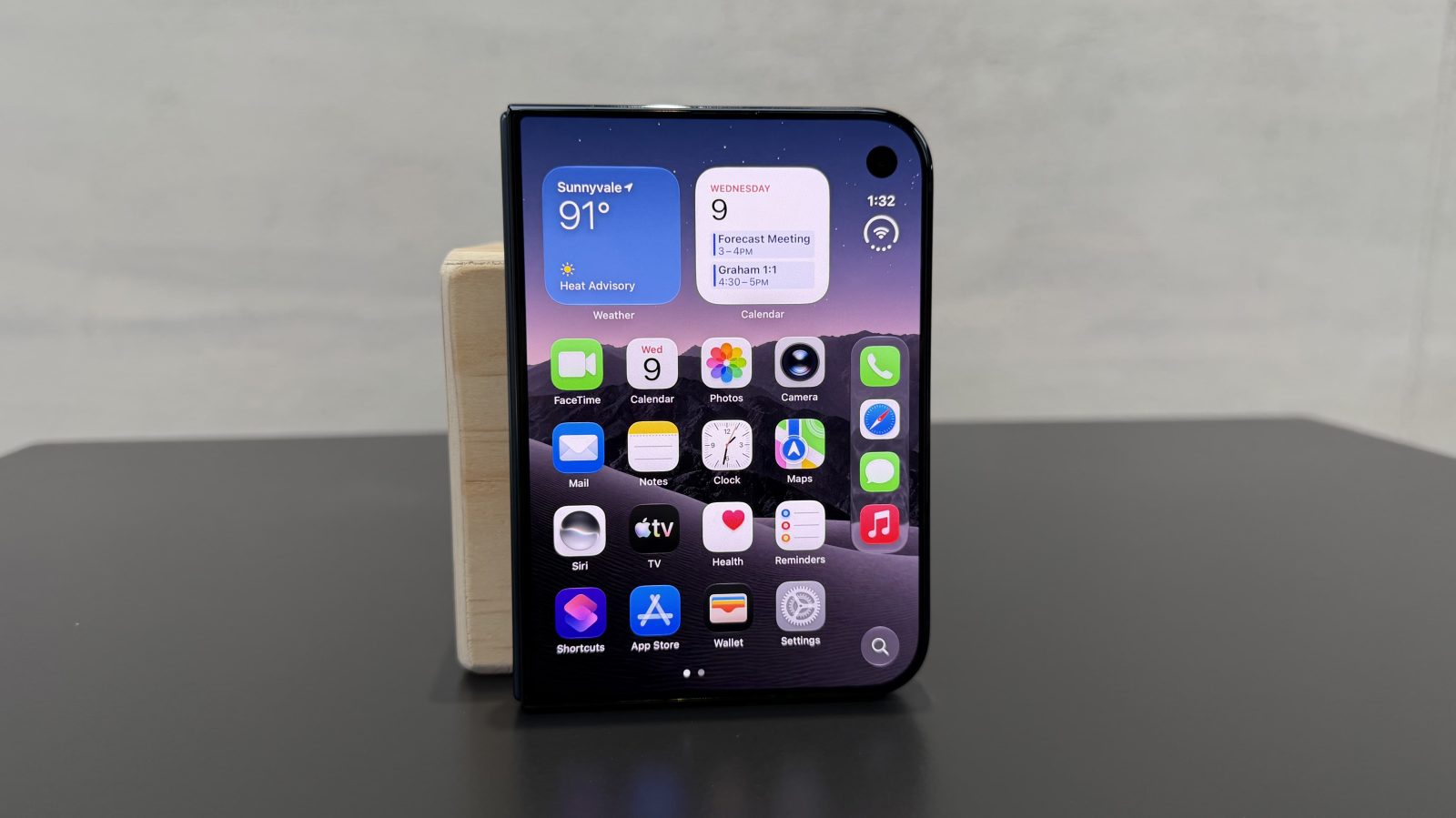 Photo: The iPhone Duo in unfolded and folded configurations, housing asymmetric dual battery cells across the central hinge. Source: 9to5Mac.
EU Regulatory Filing A3720: 4,883 mAh Baseline Anchors Global Specs
Apple traditionally stays quiet on milliamp-hour figures during keynote presentations. The European Union’s updated smartphone energy labeling regulations effectively bypass that custom. The regulatory database lists comprehensive test results under model number A3720, awarding the phone an Energy Efficiency Class A rating alongside a rated single-charge endurance cycle of 51 hours and 30 minutes.
The 4,883 mAh rated capacity applies universally worldwide. The iPhone Duo eliminates physical SIM slots globally, adopting an eSIM-only internal architecture across all regional variants. Past discrepancies in battery capacity between US and international iterations—often caused by physical SIM tray spatial constraints—do not apply here. Every customer worldwide receives an identical 4,883 mAh dual-pack assembly.
Under official cycle-life longevity testing, the regulatory filing confirms over 1,000 full charging cycles under default operating conditions, matching the durability rating of the iPhone 18 Pro series. The formal confirmation of a 4,883 mAh capacity sets an unambiguous global energy and power envelope for Apple’s first foldable generation.
2,962 mAh Meets 1,921 mAh: A 60/40 Asymmetric Split Tackles Center of Gravity
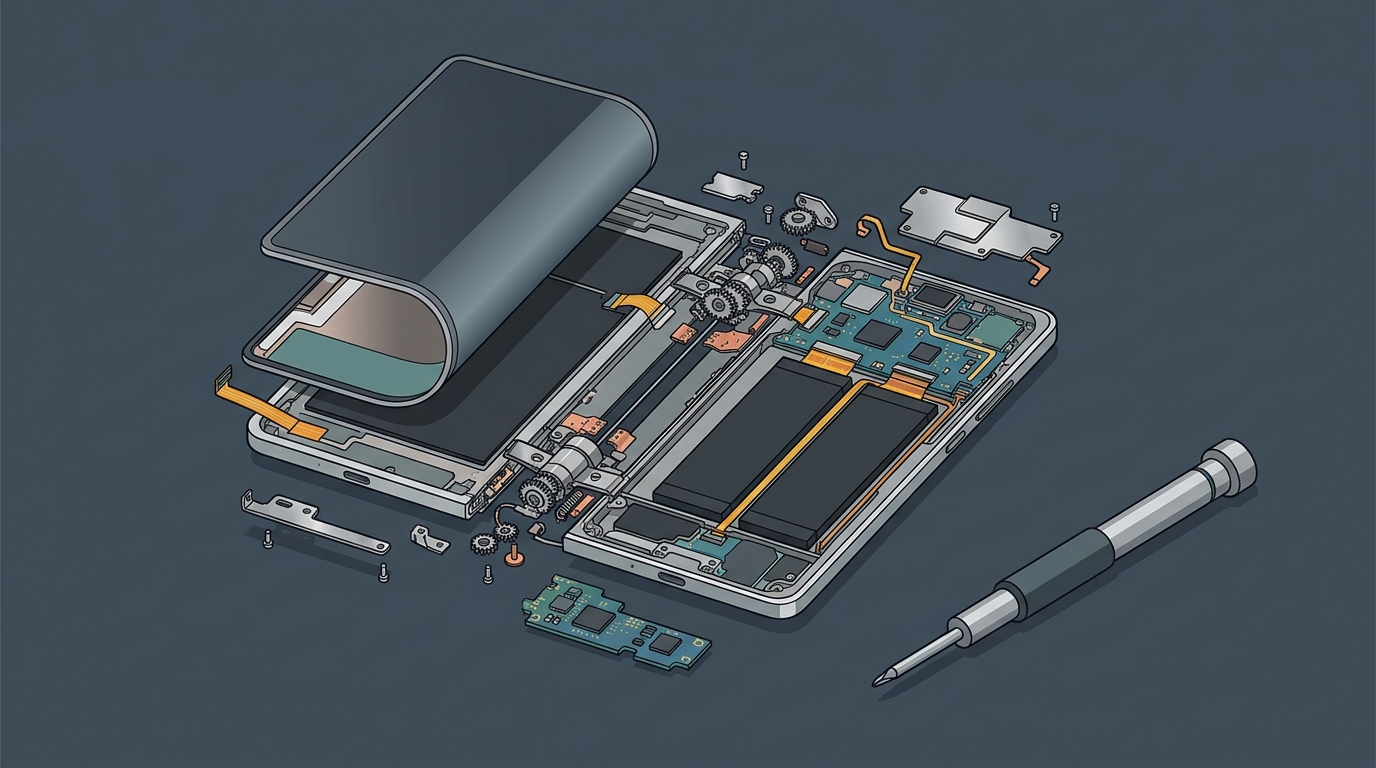
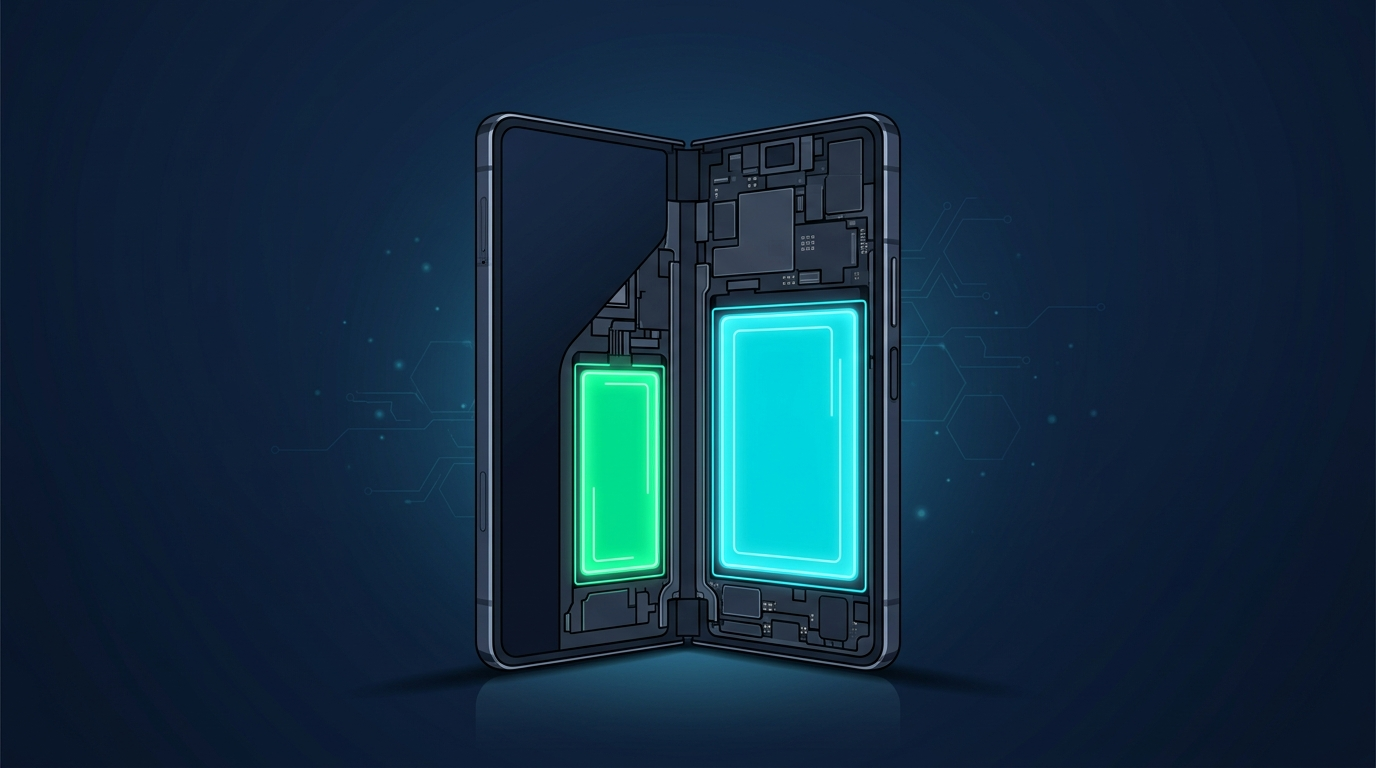
The compliance paperwork corroborates earlier supply-chain teardown reports: the 4,883 mAh pack is not a single contoured unit, but a combination of two distinct cells measuring 2,962 mAh and 1,921 mAh. The volume ratio between the two chassis halves sits near 60/40, representing an energy discrepancy exceeding 1,000 mAh.
The root cause of this asymmetry lies in component packaging competition. Inside the right chassis half, Apple crammed dual 48-megapixel camera modules, sensor-shift optical stabilization hardware, and the primary logic board packing the 2nm A20 system-on-chip. This high component density heavily restricted available z-height and volume, shrinking the battery allowance on that side to 1,921 mAh. Conversely, the left chassis half—free of bulky camera optics and logic silicon—comfortably accommodates a much larger 2,962 mAh storage unit.
This cell distribution fundamentally alters physical weight distribution. When holding an unfolded foldable phone with one hand, unequal weight distribution creates noticeable rotational torque. Placing the heavier, higher-capacity cell in the left housing directly counterbalances the dense motherboard and optical stack on the right. This 60/40 asymmetric layout resolves two simultaneous engineering headaches: severe internal spatial congestion and lopsided hand-feel balance.
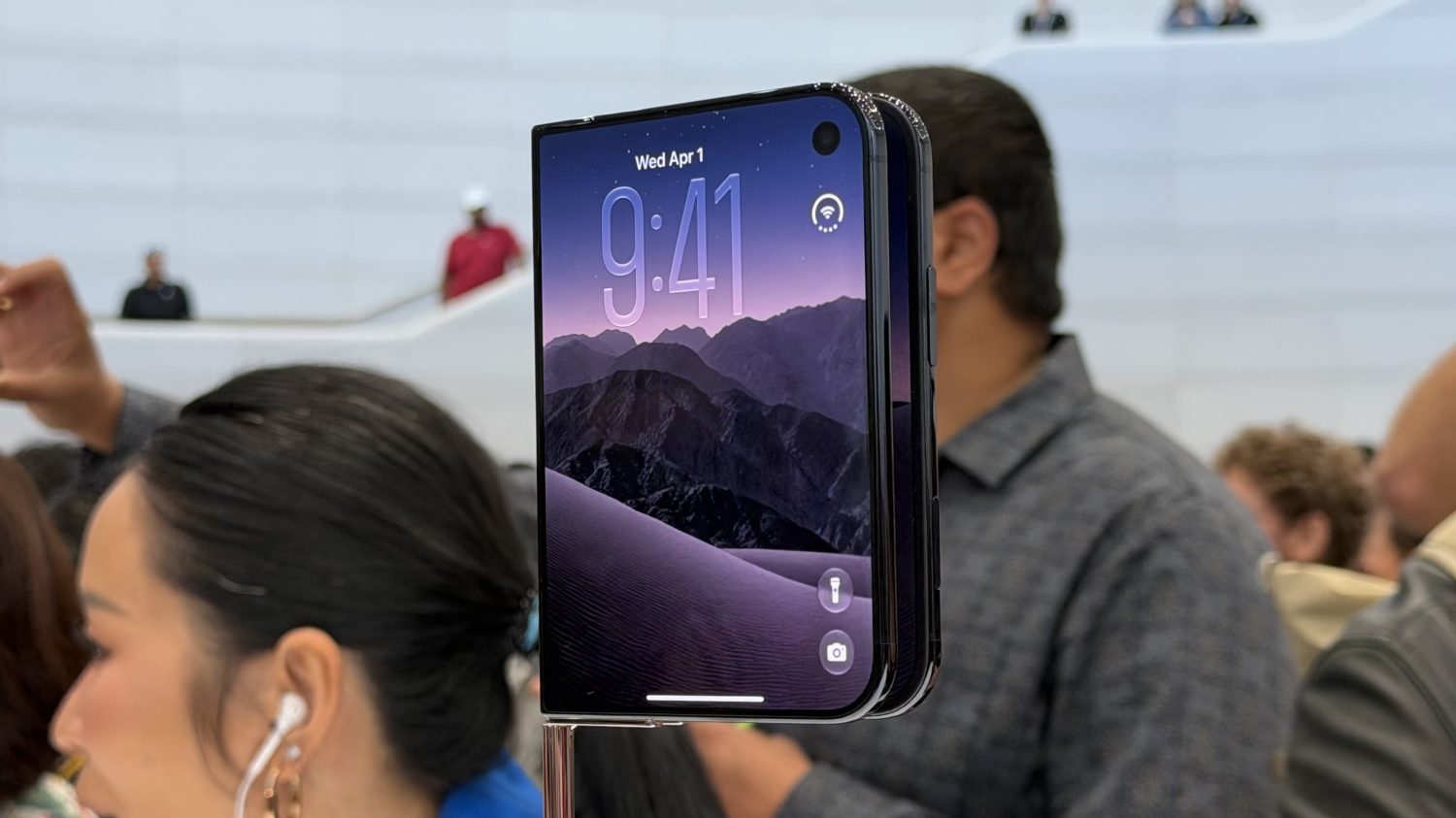 Photo: Structural details of the iPhone Duo hinge and outer perimeter; internal spatial density directly dictated individual cell thickness. Source: 9to5Mac.
Cover 44 Hours vs. Inner 31 Hours: Large Flexible OLED Draws 30% More Power
The dual-cell capacity yields divergent results depending on operating mode. When streaming video exclusively on the external cover screen, the 4,883 mAh capacity lasts up to 44 hours. That runtime falls just one hour short of the massive 5,567 mAh iPhone 18 Pro Max, while easily outpacing the 36 hours of the iPhone 18 Pro.
Unfold the device, and battery draw accelerates dramatically. Powering the expansive 7.8-inch internal OLED panel drops continuous video playback to 31 hours. That 13-hour deficit represents an effective 30% jump in power consumption in tablet mode. Unfolded endurance not only trails the iPhone 18 Pro, but falls below the two-year-old iPhone 16 Pro Max (4,685 mAh).
The physical emission area of the flexible inner OLED panel is more than double that of the external screen. Even with the A20 chip leveraging a dedicated secondary display engine alongside aggressive adaptive refresh-rate scaling, the raw physics of driving a broader emitter area cannot be avoided. The gap between 44 hours on the cover screen and 31 hours unfolded places the iPhone Duo between a marathon pocket phone and an energy-hungry mini tablet.
Positioned Between Pro and Pro Max: Sacrificing 5,500 mAh to Keep an 8.9mm Profile
Within the broader iPhone hierarchy, 4883 mAh sits squarely between the two mainstream pro tiers. It offers 14% more capacity than the iPhone 18 Pro (4,288 mAh), while trailing the iPhone 18 Pro Max (5,567 mAh) by 12%. Compared against competing Android foldables, Apple edges out the Samsung Galaxy Z Fold 7 (4,400 mAh) and nears the Google Pixel 10 Pro Fold (5,015 mAh).
Early engineering prototypes reportedly evaluated battery configurations between 5,400 mAh and 5,800 mAh. Apple’s hardware teams ultimately shelved those higher-capacity designs. Fitting a 5,500 mAh pack would have pushed the unfolded chassis thickness well past 5mm, forced the folded profile beyond the crucial 10mm ceiling, and driven total weight toward 270 grams.
This trade-off has prompted spirited debate across enthusiast circles. Some pre-order buyers argue that a $1,999 halo device should carry at least 5,000 mAh to better sustain heavy productivity workloads on the large canvas. Proponents counter that maintaining a sub-8.9mm folded thickness and manageable hand-weight matters far more than an extra two hours of screen time. By declining a 5,500 mAh cell, Apple prioritized thin pocketability over sheer capacity.
Repairability Score of 2.65: Adhesives and Split Assembly Elevate Service Barriers
Beyond publishing capacity figures, EU regulations require a comprehensive repairability rating. The iPhone Duo earned a composite repair score of 2.65 out of 5, landing in the C tier. Fastener accessibility scored just 2.24, while tool requirements cratered at 1.12.
These modest scores highlight the maintenance complexities inherent to a split dual-cell foldable. Both battery packs are adhesively bonded inside their respective midframe housings, connected by intricate ribbon cables threading through the hinge mechanism. Replacing the batteries demands dissolving perimeter water-resistant adhesives and detaching multiple delicate flexible printed circuits (FPCs). Any non-professional repair attempt risks damaging the flexible display assembly or hinge alignment.
Mechanical drop reliability data in the filing reinforces these maintenance concerns. Folded shut, the chassis survived over 140 drop cycles without functional failure. With the inner screen unfolded, defect-free survival dropped sharply to 35 drops. A 2.65 repairability score paired with unfolded drop vulnerability indicates that owners will face higher costs for service and out-of-warranty repairs.
The 4,883 mAh dual-cell architecture of the iPhone Duo stands as an authentic engineering snapshot of Apple’s first foldable device. The split layout balances an expansive unfolded workspace against an ultra-thin folded form factor. By carving out a middle ground between the Pro and Pro Max, Apple has established a clear technical baseline for future foldable generations.
Reference Links:
- Apple EU Energy Label Product Information Sheet (A3720 Product Information Sheet)
- 9to5Mac Detailed Comparison Analysis
- MacRumors News Coverage