
On July 16, 2026, Chinese phone brand OnePlus officially announced it would stop launching new products in the North American and European markets. The OnePlus 15 will be the swan song for both regions.
The news touched off a heated discussion on Hacker News, reaching 521 points and 307 comments. A brand that once stormed into the West as a “flagship killer” and was adored by tech enthusiasts for a decade — why did it come to this?
The author combed through the official announcement, multiple tech-media reports, and the stories in the HN comments that only insiders would know. What moved the author most was a passage written by a self-described former employee using the handle “adamsmark.”
A story of “signature” and “seal”
This former employee once ran the Amazon channel operations at OnePlus. He gave a quite positive assessment of OnePlus’s product quality: “The OnePlus 11, 12, 13, and 15 are all great phones. Especially the 13 and 15 — their battery life is absurdly good; I’ve never run one down to empty in a single day.”
But then he told another story.
In the company’s internal invoice-approval system, submitting an expense report required two steps. The buttons read “Signature” and “Seal.”
For Chinese employees, these two words are perfectly natural — “sign” plus “stamp” is a basic daily operation in Chinese companies. But for American employees, the word “seal” left them completely baffled: as an ordinary employee, where am I supposed to find a stamp to “seal” my expense report?
The former employee later surmised that the original Chinese was “签字” (sign) and “盖章” (stamp). The word “盖章” reflects China’s seal culture — whether a personal name chop or a company official seal, a stone stamp dipped in ink and pressed onto a document carries formal authorizing power in Chinese legal and business practice. The translation tool faithfully rendered “盖章” as “seal,” yet nobody stopped to think that, for American employees, the word “seal” should have been replaced with a process they’d recognize from their daily work.
“It’s a small thing,” he wrote, “but it captures a deeper problem well: internal processes designed around Chinese business conventions were translated word-for-word and dropped straight onto American employees, with almost no localization done at all.”
In the same thread’s comments, another user who said they had worked at OPPO and OnePlus’s Shenzhen headquarters added: “When I signed a contract, I’d first put down my own name, and then I still had to go find someone in procurement to stamp it with a seal.”
Put the two experiences together and a picture emerges: whether a particular button was translated well isn’t the point — the real problem is that an entire way of working, effective in China, was transplanted into a completely different business environment without any cultural translation.
996, attrition, and a “hollowed-out” organization
The same former employee mentioned another detail: “The company culture leaned heavily toward 996 — 9 a.m. to 9 p.m., six days a week. The period when I was there was especially turbulent, and by that point many positions had been hollowed out.”
The term 996 is no stranger to China’s internet industry. But when this work rhythm is brought to overseas branches, friction with local labor laws and workplace culture is almost inevitable. Europe’s strict working-hour limits and America’s emphasis on work-life balance are structurally at odds with the management style the Chinese headquarters is used to.
Attrition and organizational hollowing-out mean decisions are increasingly concentrated in the Shenzhen headquarters. And the Shenzhen management, in the former employee’s words, “often seemed not to understand the American market.”
This creates a vicious cycle: the local team’s judgment is weakened, and the gap between headquarters’ decisions and the actual market keeps widening. The product itself is fine, but the positioning, marketing, channel strategy, and after-sales experience — all the things that need “local instinct” to get right — are compromised by the way the organization operates.
An analyst interviewed also expressed a similar judgment: “OnePlus didn’t lose on the product. Its problem is that, while maintaining a distinct brand identity, it failed to achieve the channel footprint, investment level, and scale effects needed for sustainable competition.”
Technically ahead, yet leaving the market: the silicon-carbon battery story
While writing this article, the author noticed a poignant detail.
The former employee mentioned that OnePlus and Motorola are the only two major brands selling phones with silicon-carbon batteries in the U.S. market. Silicon-carbon batteries are a relatively new battery technology that, compared with traditional lithium-ion cells, deliver higher energy density at the same volume. That’s why the OnePlus 13 and 15 have “absurdly good” battery life — you can barely drain them in a single day.
Apple and Samsung, meanwhile, have yet to adopt this technology in their flagship models.
In other words, at the level of product capability, OnePlus didn’t fall behind. In some dimensions it was even ahead. But technical leadership is not enough to compensate for the “translation failure” at the level of organizational culture.
This in itself is not surprising, but against the backdrop of OnePlus exiting the West, it’s especially poignant: a company can build industry-leading batteries, yet can’t get an English button in its expense system right.
Of course, the author isn’t saying a button’s translation decided the company’s fate. But the systemic communication barrier this button represents — disconnected Chinese-English tooling, management’s weak understanding of overseas markets, and process design lacking cross-cultural adaptation — is what’s truly worth attention.
Market demand is shrinking too
To be fair, OnePlus’s exit can’t be wholly attributed to internal management problems. The external environment is deteriorating too.
According to Counterpoint Research, global smartphone shipments in 2026 have fallen to their lowest level since 2013. IDC data shows global smartphone shipments declined year-on-year in the first quarter of 2026, breaking the growth trend that had held since mid-2023.
Multiple factors are stacked behind this: the AI industry’s massive demand for memory chips has driven up the prices of DRAM and NAND flash; by one analysis, RAM alone now accounts for over a quarter of a flagship phone’s bill of materials. The global phone market is going through a broad price hike, and consumers’ willingness to upgrade is weakening.
In a market of cut-throat competition over a fixed pie, smaller players being forced off the table is no surprise. OnePlus is simply the first among many brands to make adjustments under Oppo’s restructuring.
Back to the beginning: the two faces of OnePlus
After sorting through all this, the author offers an observation of his own.
OnePlus’s story has two faces.
One face is product success. From its founding in 2013 and the launch of the OnePlus One in 2014, the brand built a loyal following among geeks with its “high specs, low price” positioning. Its invite-code marketing and its “Never Settle” slogan genuinely represented something exciting for a long time. Even today, its phones remain competitive in battery life, performance, and charging speed. The former employee’s assessment was heartfelt — “They’re really good phones.”
The other face is the predicament of going global. When a Chinese company tries to operate long-term in the West, the challenges go far beyond product design and supply-chain management. Labor culture, management communication, internal tooling, legal compliance, brand positioning, channel relationships — the localization difficulty of this “soft infrastructure” may be far higher than stuffing a silicon-carbon battery into a phone.
OnePlus’s exit is less a story of “failure” than a story of “translation.” Technology can be translated — hardware specs, software interfaces, marketing copy, all have mature solutions. But organizational culture, work practices, decision logic, and how people collaborate — translating these is far harder than imagined.
What happens next?
According to the official announcement, the short-term impact on existing users is limited. OnePlus pledges to keep providing software updates and after-sales service for the duration of device support. However, starting with Android 17, OnePlus phones will switch from OxygenOS to Oppo’s ColorOS. The two systems are highly similar under the hood, so ordinary users may not notice much difference.
In the European market, the Oppo brand will take over OnePlus’s position and continue operating. But in the U.S., things look different — Oppo has never formally entered the American market and has explicitly stated it has no plans to launch products there. This means that after OnePlus exits, the U.S. market will lose a substantial Android option. The Samsung-Apple duopoly may thereby become even more entrenched.
In China and India, the OnePlus brand will continue to exist, at least for now. Parent company Oppo’s other sub-brand, realme, has taken the opposite route — exiting the Chinese market and focusing overseas.
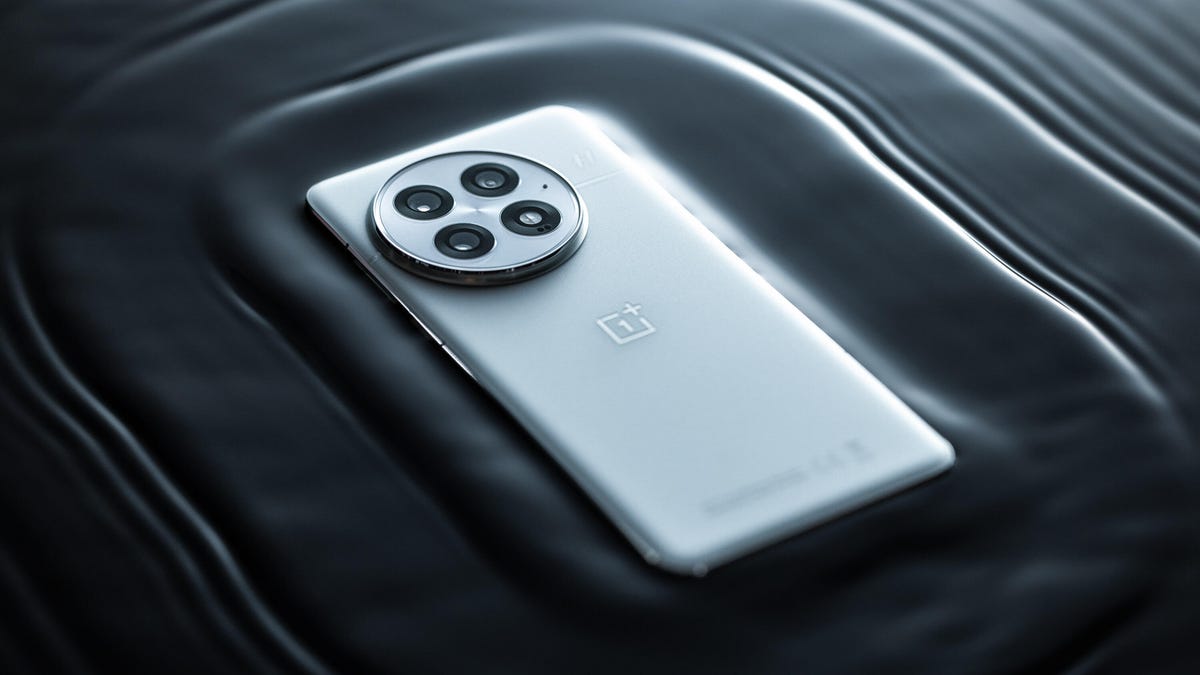 The product itself is fine, but the cost of translating organizational culture may be the real barrier to going global.
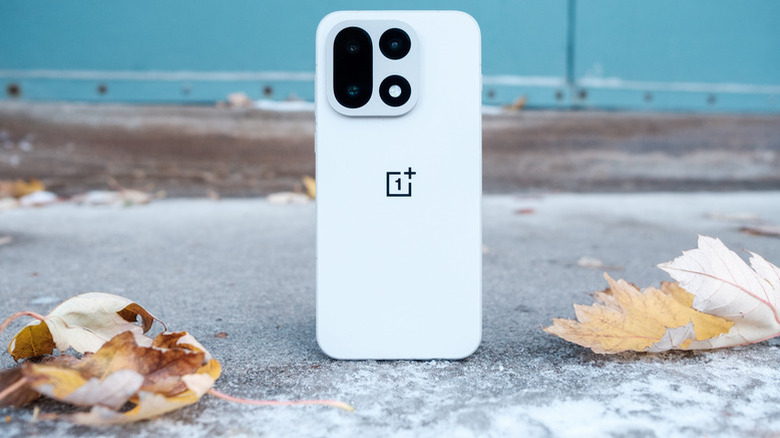 From “flagship killer” to exiting the West — OnePlus took a decade.
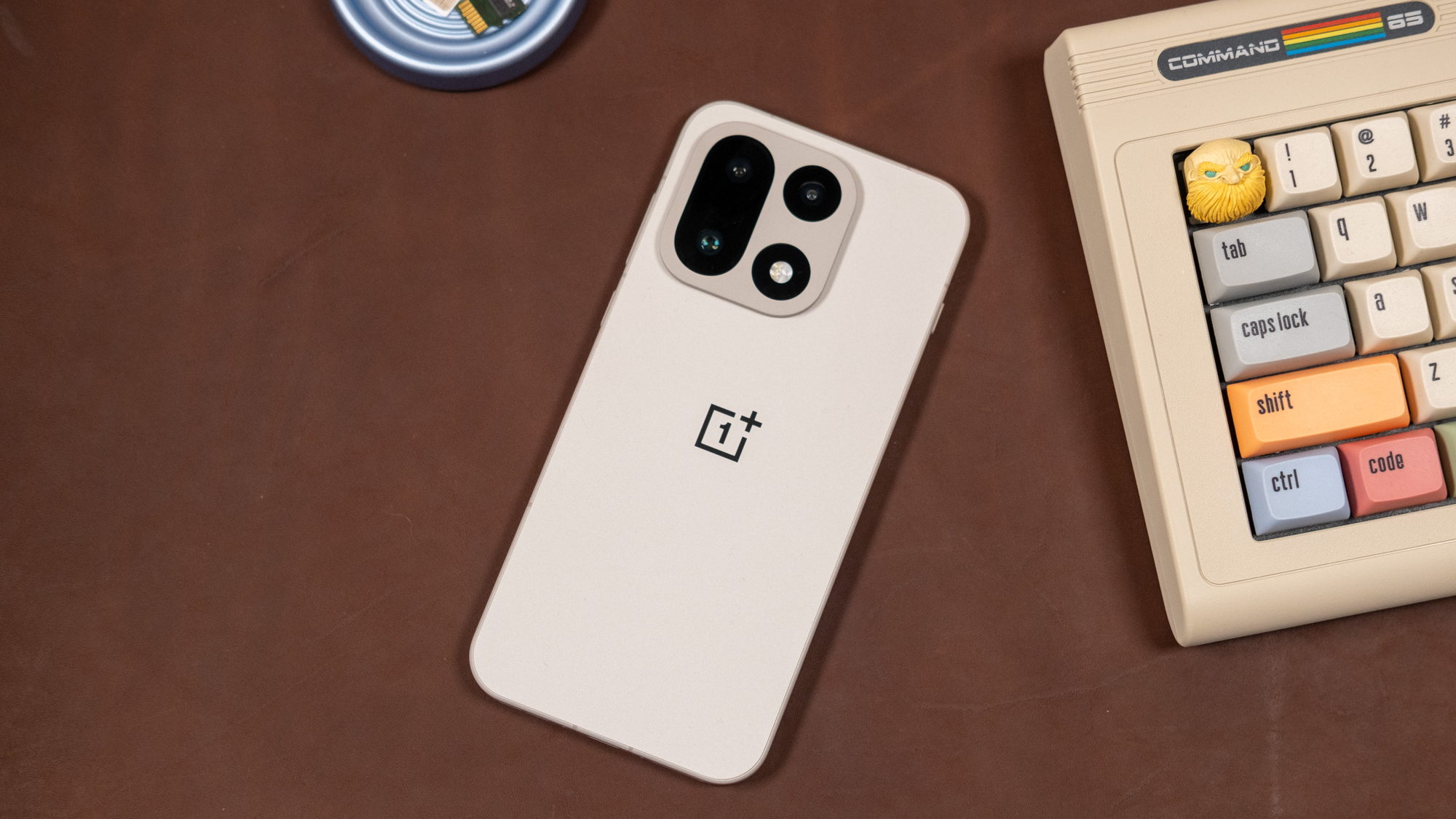 The OnePlus 15 becomes the swan song in Western markets.
Reference links:
- OnePlus official community announcement
- HN discussion (item?id=48932539)
- Android Authority report
- Ars Technica report
- CNET report
- Engadget report