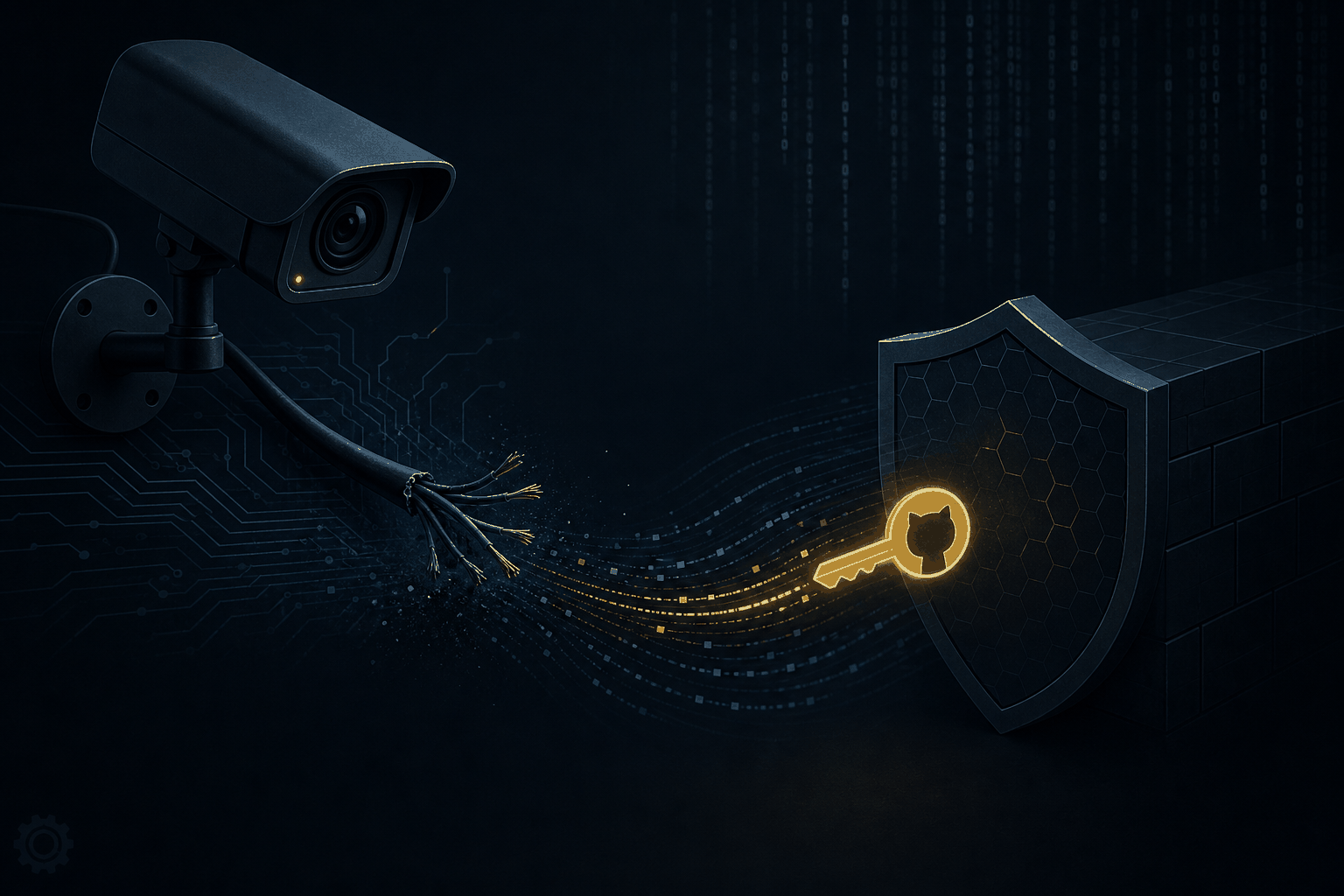
On July 24, 2026, an independent security researcher purchased a Hanwha security camera (model Wisenet XNP-9300RW) to inspect its firmware for vulnerabilities. Within a few hours, he realized he held the keys to the company’s entire private codebase: a fully valid, active GitHub administrator token providing access to hundreds of private repositories across Hanwha’s GitHub organization—including source code, CI/CD pipeline configurations, and internal documentation. All of this was extracted directly from the camera’s web login page.
 Photo: The Hanwha Wisenet XNP-9300RW, an outdoor PTZ security camera with 4K resolution and 30x optical zoom—and the center of this security leak.
The discovery caused an immediate uproar across the tech community. On Hacker News, the post reached over 480 points and sparked more than 160 comments. What makes this incident alarming is how it highlights an extraordinarily widespread yet neglected reality: every connected device you install on your network could be a key into the manufacturer’s internal systems—one left hanging in the lock by the vendor itself.
How Did Private Code End Up Inside a Camera?
To understand the leak, consider the basic setup. A modern IP security camera is essentially a compact embedded Linux computer. It features its own processor, memory, operating system (typically a stripped-down Linux distribution), and a local web administration interface for system management. Like any web app, when you access the camera’s IP in a browser, it downloads frontend JavaScript code to render the dashboard.
That is where the breakdown occurred.
The researcher unpacked the camera’s firmware (essentially its OS installation package) and located the JavaScript assets for the management portal. Inside, embedded in plaintext across nearly 30 separate files, was a valid GitHub personal access token.
Think of a GitHub token as a master safe key. Once issued, anyone holding it inherits all the permissions attached to that token—in this case, full read/write access to Hanwha’s corporate repositories. Best practices dictate that such elevated credentials should remain restricted to core engineers, stored in secure secret vaults, and revoked immediately after transient CI tasks.
Instead, this admin token was bundled into millions of shipped security cameras worldwide.
Anyone capable of loading the camera’s login interface—or simply connecting to its network IP—could extract the token.
What Went Wrong in the Build Process?
Tracing the researcher’s analysis reveals a stark conclusion: a multi-billion-dollar security giant employed an egregiously reckless software build pipeline.
Hanwha used Vite, a popular frontend build tool, to package the camera’s web management interface. During compilation, the build script was configured to inject all environment variables (process.env) directly into the final static JavaScript bundle. The CI (Continuous Integration) builder executing this build task had the high-privilege GitHub administrator token exported as an environment variable in its execution context.
As a result, the entire CI environment context—including GitHub admin tokens, Kubernetes cluster endpoints, npm registry keys, and internal service domain names—was baked directly into the frontend web assets, compiled into firmware images, and shipped to customers globally.
It is the software equivalent of a five-star hotel printing the master vault combination on every guest room keycard wrapper.
An Even More Chilling Discovery
Beyond the GitHub token, the researcher uncovered several unusual IP addresses in the firmware binaries. IP lookup tools confirmed these addresses belong to ranges assigned to the U.S. Department of Defense (DoD).
To put this into context, Hanwha Group is one of South Korea’s top 10 conglomerates. While recognized internationally for Hanwha Vision security cameras, the parent group operates extensively in defense, aerospace, finance, and energy. Its sister subsidiaries include:
- Hanwha Aerospace
- Hanwha Defense USA
- Manufacturers of the K9 Thunder self-propelled howitzer, K2 Black Panther main battle tank, and SGR-A1 sentry robot
 Photo: Hanwha Group produces military hardware alongside commercial security cameras. Shown here is a K9 Thunder self-propelled howitzer operated by the Finnish Army. Source: Wikimedia Commons
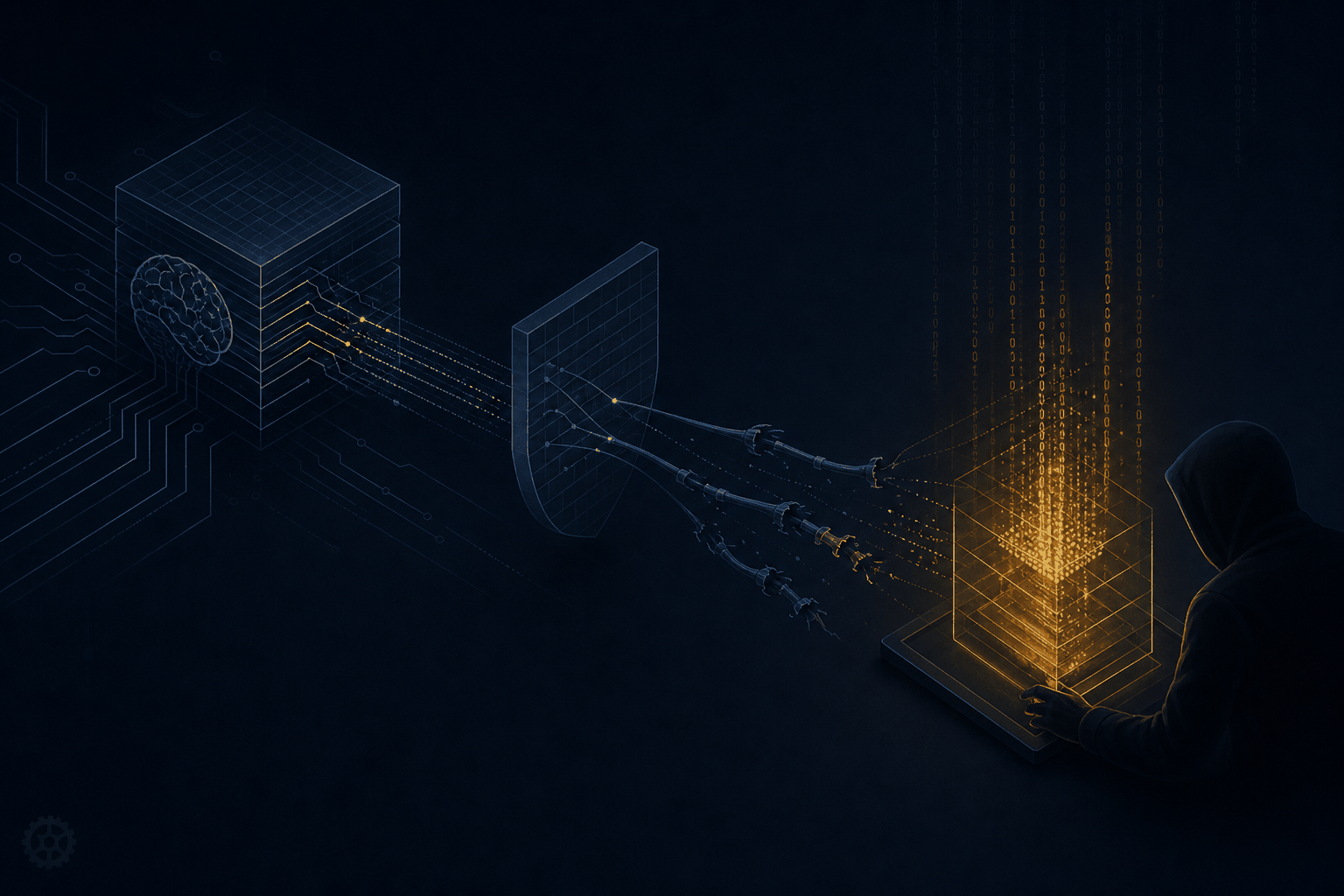
This means consumer security camera firmware harbored internal network addresses pointing toward U.S. DoD infrastructure. The researcher hypothesized that Hanwha divisions—commercial vision, defense, and aerospace—may share common CI/CD infrastructure. A vulnerability in a commercial security camera could theoretically act as a foothold into defense infrastructure.
While part of this connection remains speculative, the implication itself underscores the severity of the supply chain risk.
Isolated Incident or Systemic IoT Failure?
Unfortunately, this issue is far from isolated to Hanwha. The broader IoT industry continues to operate in a state of perpetual insecurity.
The security community has flagged these recurring vulnerabilities for years:
- Missing Firmware Signature Verification: Devices accept unsigned or tampered firmware updates.
- Hardcoded Credentials: Factory-default credentials (e.g., admin/admin) left dependent on user intervention.
- Unencrypted Firmware Delivery: Updates downloaded over unencrypted HTTP channels, susceptible to MITM attacks.
- Secrets Hardcoded in Client-Side Code: Baking API keys, database credentials, or access tokens into frontend web code remains a chronic anti-pattern in software development.
However, baking a master GitHub admin token into a camera login page stands out as a textbook worst case of supply chain negligence.
What Should End Users Do?
If your home or enterprise network deploys Hanwha cameras (including brands like Hanwha Vision, Wisenet, or legacy Samsung Techwin), direct remediation of vendor firmware supply chain flaws is beyond your control. Hanwha revoked the leaked token within 12 hours of receiving the vulnerability disclosure. However, how long that token remained exposed—and whether unauthorized actors retrieved it beforehand—remains unknown.
Security practitioners recommend the following defense-in-depth steps:
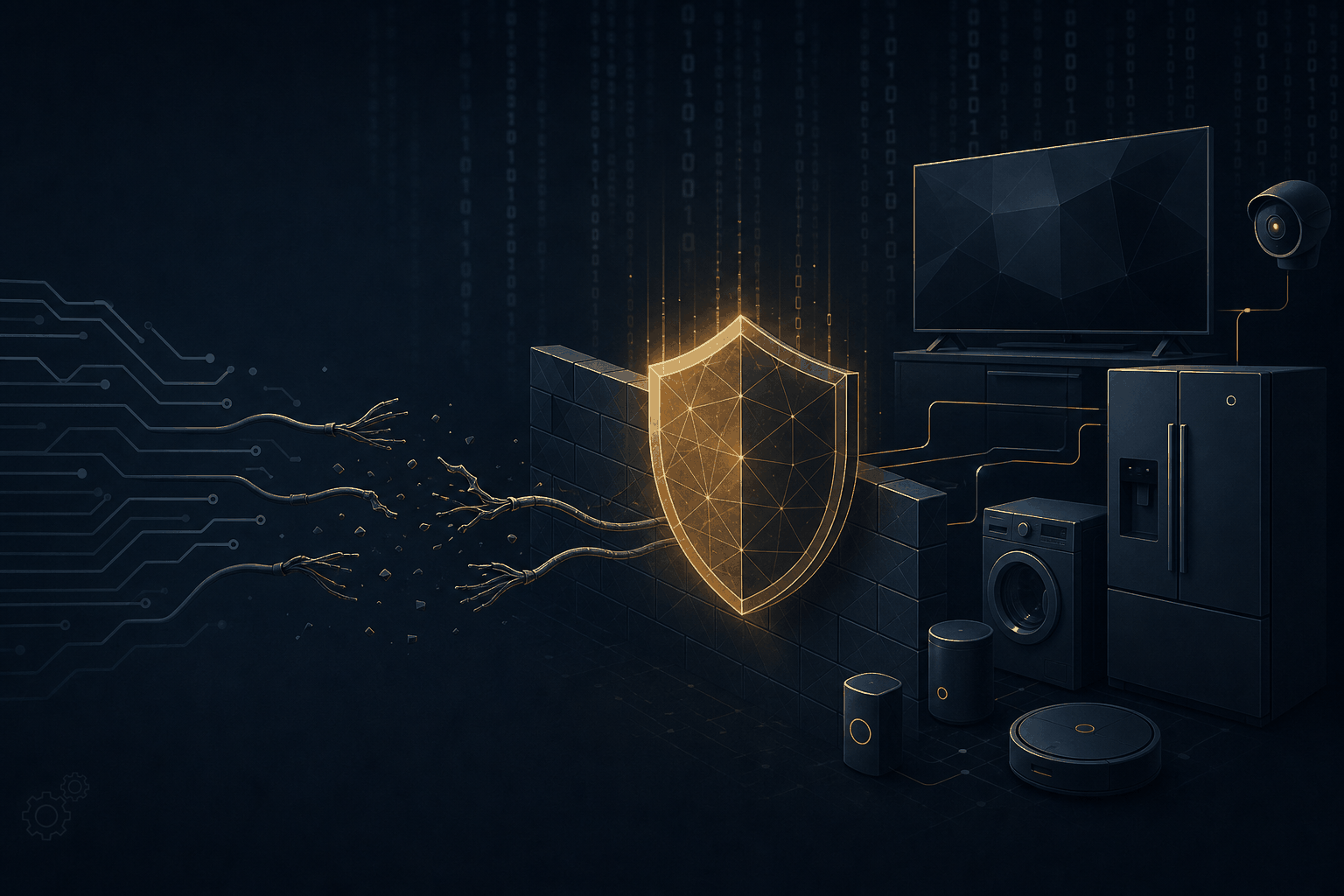
- Isolate Security Cameras on a Dedicated VLAN: Segment all IoT devices (cameras, smart appliances, TV hardware) into an isolated network or guest VLAN, restricting direct communication with primary workstations and personal devices.
- Deploy ONVIF-Compliant Hardware with Open NVRs: Utilize cameras supporting open ONVIF standards alongside self-hosted, open-source Video Management Software (VMS), bypassing vendor-provided cloud portals and proprietary web interfaces.
- Adopt Zero-Trust for Connected Hardware: Treat every connected physical device as a potential threat vector. Purchasing hardware inherently imports the software supply chain risks associated with its manufacturer.
Final Thoughts
The most concerning aspect of this breach is not merely that an oversight occurred—mistakes happen in engineering. The true concern is that a $10B+ defense and security conglomerate lacked basic automated guardrails to prevent an admin credential from being compiled into consumer production firmware.
If a tier-one vendor exhibits build pipeline gaps of this magnitude, the risk profile of unbranded or low-cost IoT devices is exponentially worse.
In the IoT era, the distance between “installing a security camera” and “handing out the keys to corporate vaults” can be as thin as a single misconfigured build script.
References:
- HHH: My security camera shipped a GitHub admin token in its login page (Original Article)
- Hacker News Discussion (ID: 49034292)
- El Solitario: GitHub Token Leaked in Hanwha Cameras
- Wikipedia: Hanwha Group
- Hanwha Vision Official Site