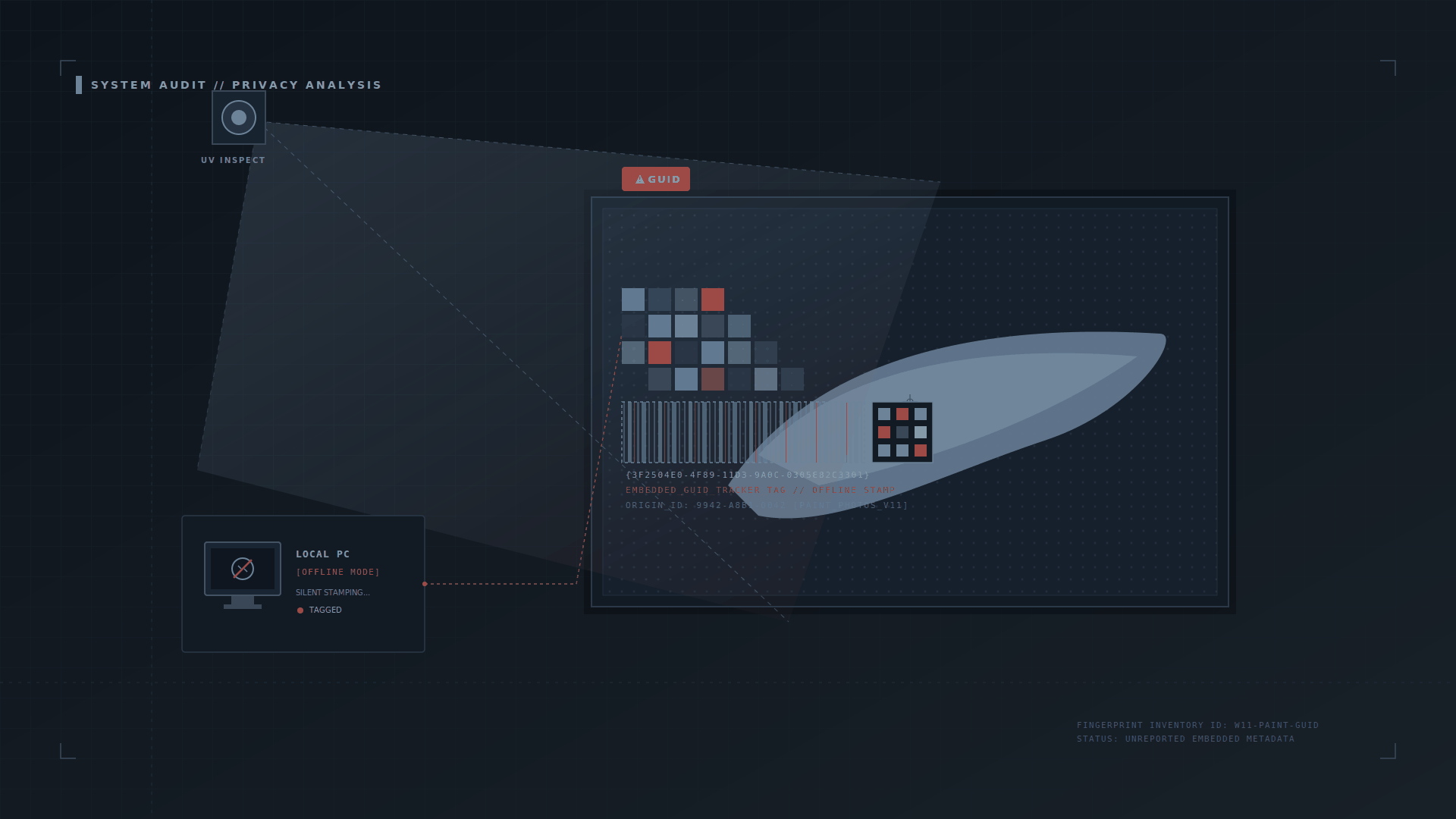
Open the built-in MS Paint on a Windows 11 PC completely disconnected from the internet, doodle something, and save it as a local image file—what seems like a fully private personal file has already been tagged with an exclusive invisible tracking code. Technical analysis recently published by reverse engineering security researcher Xusheng reveals that Microsoft has silently embedded a tracking module into the native Paint and Photos applications in Windows 11. Whenever a user saves an image locally, the system generates a Globally Unique Identifier (GUID) and writes it directly into the file’s underlying metadata.
This discovery triggered ongoing discussions across tech communities such as Hacker News. In the past, the public generally accepted cloud AI services embedding provenance data when generating images, as online services inherently run on service providers’ servers. However, MS Paint is a purely local offline tool that has operated for decades. By pushing tracking mechanisms typically reserved for web services down into users’ local creative environments, Microsoft has drawn a highly controversial line of confrontation in the realm of digital privacy.
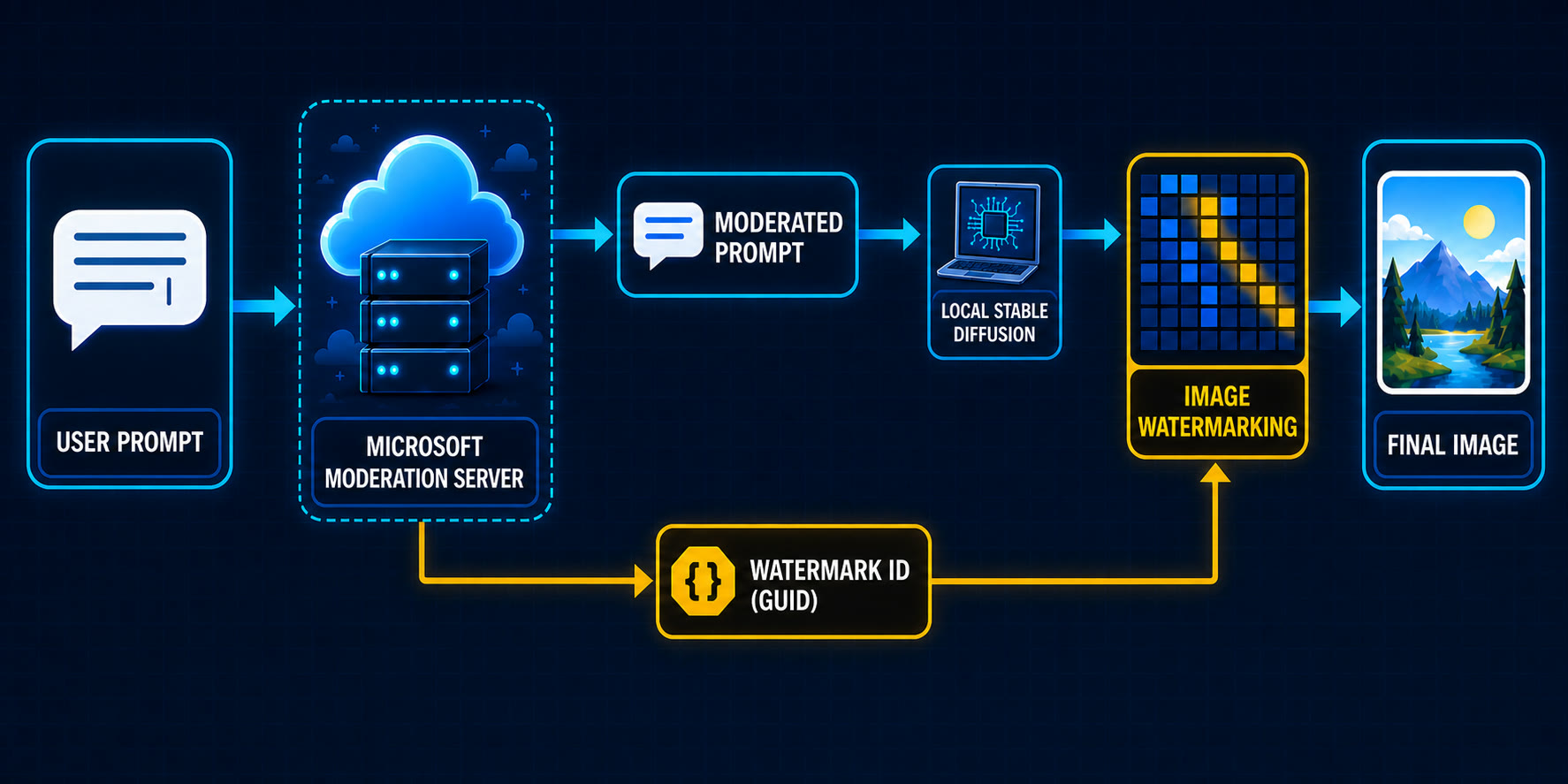 Figure: Preview of the MS Paint invisible watermark analysis article. Source: xusheng.dev
Secret Stamps in Offline Tools: The Tracking Chain Behind a Single Doodle
During disassembly analysis of the built-in Windows 11 Paint app, security researchers caught an anomalous dynamic-link library call. When handling image export logic, the application invokes the system-level watermarker.dll module. This module creates a proprietary field named CoImageParam within the output PNG or JPG file structure and injects a freshly generated GUID into it.
A GUID is a 128-bit Globally Unique Identifier, offering theoretically $3.4 \times 10^{38}$ possible combinations. Mathematically, the probability of any two devices anywhere in the world generating the exact same GUID at any time is practically zero. This means Microsoft is effectively issuing a unique digital ID card for every image exported from the local Paint app; anyone holding two such images need only compare this field to determine whether they originated from the same device environment.
If a user edits and exports multiple images on the same computer, the identifier fields embedded in these files often display session-level or device-level correlation patterns. Should the user publicly post these metadata-laden images on online forums or social media platforms, third-party trackers need only scrape and extract these string values to link separate anonymous accounts back to the exact same physical entity.
Reverse Engineering: How Microsoft Hides Identity in Metadata Gaps
Analyzing the binary structure of watermarker.dll reveals that Microsoft did not employ Least Significant Bit (LSB) steganography—which alters pixel colors—but instead opted for a safer container metadata injection approach. When saving PNG files, the program writes a proprietary ancillary chunk into the file stream; when saving JPEG files, it uses an APP marker segment to carry the parameter.
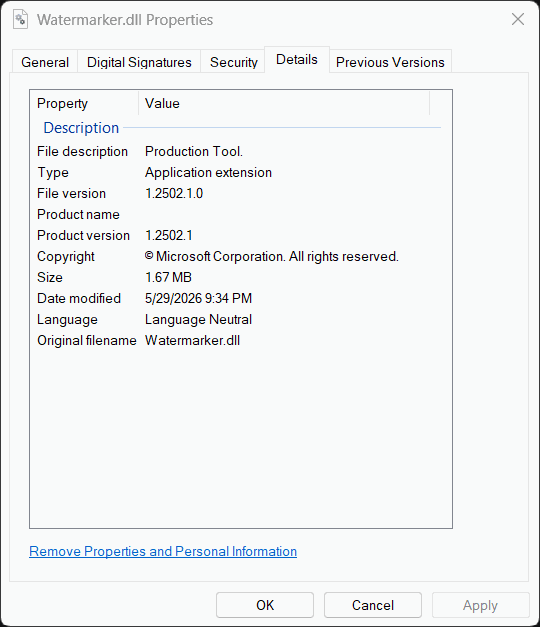 Figure: Properties of watermarker.dll responsible for watermark generation in Windows. Source: xusheng.dev
This implementation is extremely conservative in terms of storage overhead, with the added data typically amounting to less than 1 KB. Compared to high-resolution images that easily span several megabytes, this tiny sub-fractional increase neither slows down save performance nor gets displayed by standard image viewers. Only with a hex editor or professional Exif parsing tools can one catch a glimpse of the complete GUID buried deep inside the binary data blocks.
Microsoft previously spearheaded the adoption of C2PA (Coalition for Content Provenance and Authenticity) standards across cloud generative AI products like Bing Image Creator and Microsoft Designer to mark AI-generated content. Compiling watermarker.dll directly into native Paint and Photos applications indicates that Microsoft is attempting to port compliance and tracing technologies—originally designed for cloud services—directly onto hundreds of millions of standalone offline devices.
Anti-Counterfeiting Provenance vs. Overreaching Surveillance: Polarized Community Debate
The disclosure of this silent tracking mechanism ignited fierce conflict between the security community and end users. Proponents of Microsoft’s move argue that in an era flooded with deepfakes and synthetic media, building end-to-end content provenance systems carries defensive value. If offline editing tools remain untracked inspection vacuums, malicious actors could easily launder image origins by re-saving or screenshotting via local MS Paint, undermining provenance defenses built by platforms.
Conversely, opposing voices and privacy advocates have strongly questioned this unannounced, silent behavior. MS Paint has a 41-year history dating back to Windows 1.0 in 1985; users’ fundamental expectation is a completely private local workbench. Quietly stamping user-generated offline images with device-level identifiers—without explicit pop-ups or user consent—violates user data sovereignty over local applications.
Furthermore, this mechanism introduces unintended privacy spillover risks. The vast majority of average users do not routinely strip Exif metadata before sharing screenshots or doodles. When journalists, sensitive industry workers, or everyday internet users upload locally saved files to the web, these silently embedded device identifiers could morph into publicly exposed digital fingerprints.
Testing the Ownership Limits of Local Creative Spaces
The MS Paint invisible watermark incident exemplifies an aggressive probe by an operating system giant into endpoint data control. In the past, a clear boundary separated online services from local standalone tools: staying connected offered collaborative convenience, while working offline guaranteed absolute privacy. As Microsoft forcibly pushes web tracking logic into local offline sandboxes, the physical isolation barrier users traditionally trusted faces collapse.
The balance between technical provenance and personal privacy must be built on full transparency and informed consent. Quietly stripping users of their offline anonymity under the banner of combating misinformation will, in the long run, only erode foundational trust in the operating system itself. In an era marked by tension between cloud governance and endpoint autonomy, safeguarding the purity and ownership of local files remains a vital line of defense that creators cannot afford to surrender.
Reference Links:
- xusheng.dev Tech Blog: Invisible Watermark Analysis in MS Paint
- Hacker News Discussion: Windows 11 Paint App Embeds Traceable GUID
- C2PA Content Provenance and Authenticity Technical Specification Document