Acid Dissolves the Mechanical Heart
On September 13, 2026, Canadian hardware enthusiast DiscoStarslayer publicly detailed the full process of extracting the firmware from the original PlayStation 2 security chip, CXP102064. Manufactured alongside the initial production run of consoles in 1999, this central controller held its ground for 26 years before finally succumbing to concentrated chemical reagents and high-magnification microscopes. Sony’s multi-layered hardware encryption defenses were dismantled at the physical layer.
In video game console history, the PS2 stands unmatched with over 155 million units sold globally. With such an enormous install base and multi-decade lifespan, keeping its core hardware as a black box meant low-level repairs and hardware-level emulation were forced to rely on workarounds and guesswork.
The dedicated chip, known as the MechaCon (short for Mechanism Controller), is far more than a routine computation unit. It directly manages the optical disc drive mechanics and flash memory read/write operations, while also serving as the sole hardware conduit for MagicGate memory card authentication and KELF core executable decryption. Locking down these keys effectively locked down the console’s ultimate authority over physical media and external storage.
When these initial units left the factory, Sony engineers had hard-wired the security logic deep inside the epoxy resin. Attempting to traverse its internal state space through conventional software fuzzing or brute-force testing was far beyond the computational limits of the era.
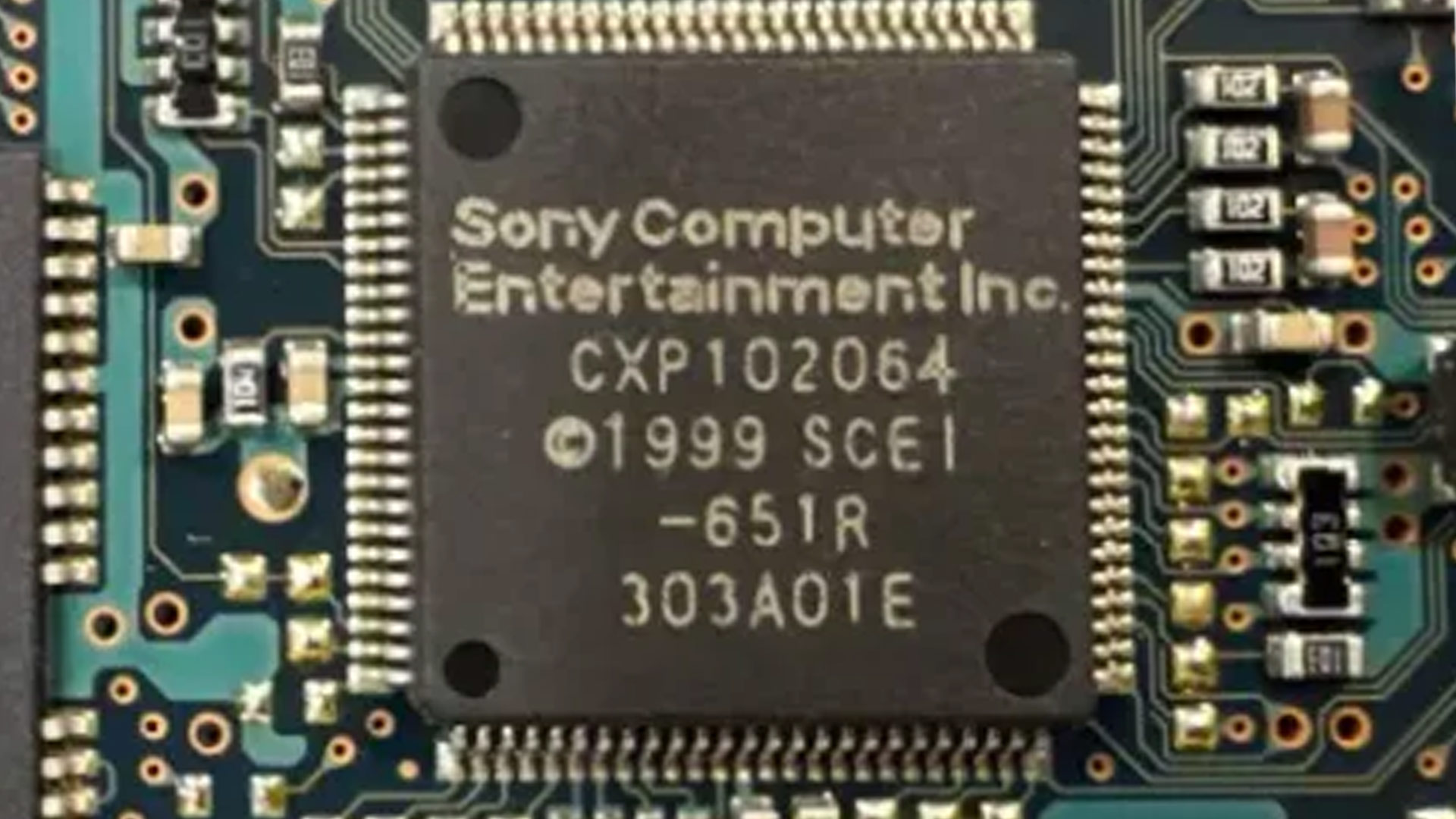 Figure: The PS2 security chip with its bare silicon die exposed after chemical decapping. Source: Tom’s Hardware
Acid Baths and Microscopes Strip the Silicon
Chemical decapping is heavy physical laboratory work involving hazmat gear and highly corrosive liquids. The researchers spent four full years heating concentrated acid solutions to dissolve the chip’s external plastic packaging layer by layer, until the microscopic circuitry etched into the silicon die was fully exposed to the air.
Optical extraction followed as the next crucial phase. Under high-powered microscopes, the team took high-resolution photographs of the exposed silicon die layer by layer. Through visual comparison and algorithmic stitching, they reconstructed the physical logic gates from the imagery back into digital logic. Through sheer engineering endurance, raw physical hardware was systematically translated back into human-readable code.
Hardware encryption never offers an impenetrable barrier. As long as the silicon physically exists in the real world, the physical defenses relied upon by the defender inevitably degrade into a matter of time and effort for the attacker.
During the final stretch of this tug-of-war, the team achieved an unexpected breakthrough. Working through the noisy, still imperfect optical dump data, security researcher Libby discovered an exploitable software flaw that drastically shortened the path to dumping the complete firmware image.
Participants Establish Three Technical Boundaries
Major hardware reverse-engineering milestones are often exaggerated as they spread through the community. However, in the discussion comments of technical reporting, developer uyjulian, who participated in the project, personally drew clear technical boundaries around what this breakthrough actually achieves.
He emphasized that simply possessing the dumped chip firmware does not instantly produce a plug-and-play hardware optical drive emulator (ODE). Current chip dumping methodologies still require extensive write operations to specific memory segments, leaving several physical interfacing hurdles before achieving perfect, non-destructive reproduction.
| Attack Vector / Application | Community Workarounds (Past 20 Years) | Tangible Engineering Gains from Low-Level Code |
|---|---|---|
| Running Backup Game Discs | Reliant on memory card flaws, HDD exploits, or external softmods | Verification bypass no longer relies on guesswork, targeting precise mechanism flaws |
| Building Optical Drive Emulators (ODEs) | Required specific motherboard revisions and complex hardware interception | Enables drop-in replacement boards that directly substitute the core security chip |
| Cross-Region Booting & Permissions | Relied on chained software privilege escalation tools | Provides ground-truth source code for reverse-engineering projects |
Grounding a technical breakthrough in concrete engineering utility is far more valuable than declaring an unreserved victory. Game disc contents were never encrypted in the first place, and aside from elements relying on online verification, this firmware dump offers no shortcuts for decrypting game assets.
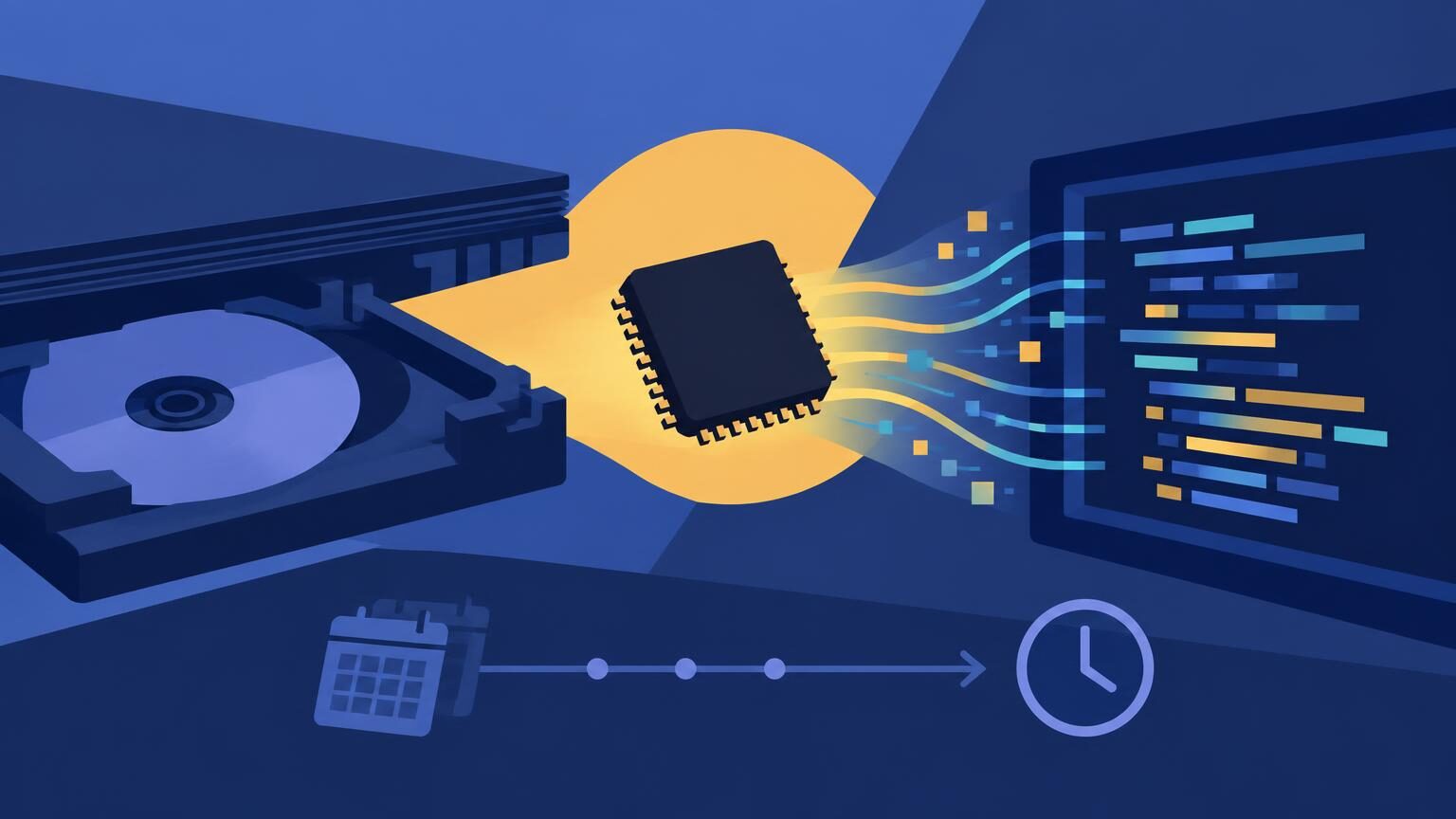 Figure: PS2 motherboard architecture and MechaCon chip placement. Source: Neoteo
Software Exploits vs. Hardware Reverse Engineering
Prior to this physical teardown, homebrew research on early PS2 consoles largely centered on discovering software vulnerabilities. Whether utilizing well-known boot exploits or buffer overflows triggered via disc mechanics, these approaches ultimately amounted to patching holes within Sony’s pre-established system permission boundaries.
The proprietary security chip sits at the very root of trust for the entire console. As long as it operated as a black box, developers attempting to build cycle-accurate emulators were forced to reverse-engineer its behavior strictly from unexplained input and output signals.
Hardware reverse engineering is fundamentally different because of its physical permanence. Software privilege escalation bugs can easily be patched in subsequent hardware revisions, but a silicon die sealed in epoxy in 1999 has its transistor layout permanently frozen to the manufacturing standards of that exact moment.
Once optical microscopy records the hard-wired state of the read-only memory, the entire cryptographic blueprint is laid bare. While spending dozens of months deciphering blurry microscopic images is arduous, it yields a universal solution that is independent of transient software exploits.
Building Low-Level Infrastructure for the Digital Era
For players merely looking to run homebrew software, that need was met more than a decade ago by an array of softmods and hardware patches. Later hardware revisions even allowed users to boot unsigned discs directly through injected patches.
The true value of acquiring the chip’s internal logic lies in low-level hardware emulation and long-term digital preservation. When a 20-year-old motherboard’s capacitors dry out and its proprietary security chip physically burns out, preservationists and repair technicians will no longer need to scour secondary markets for functional donor boards.
With a comprehensive understanding of the hardware-level authentication mechanisms and executable decryption rules, the open-source community will eventually be able to use inexpensive, modern Field-Programmable Gate Arrays (FPGAs) to flawlessly replicate every timing signal and response of this vintage security chip.
The defenses of such security chips have always been an asymmetric trade-off between computational capability and invested time. The lasting impact is transforming console preservation from relying on finite, aging silicon sitting in someone’s drawer into an open code asset that can be reproduced infinitely and recompiled across modern platforms. When future emulators seek to faithfully reproduce the original hardware environment, developers can now build directly from an open-source blueprint.
References:
- Tom’s Hardware Reporting
- Lobsters Discussion
- PSDev Wiki
- MechaPwn / TonyHax Projects
- Public Notes by DiscoStarslayer