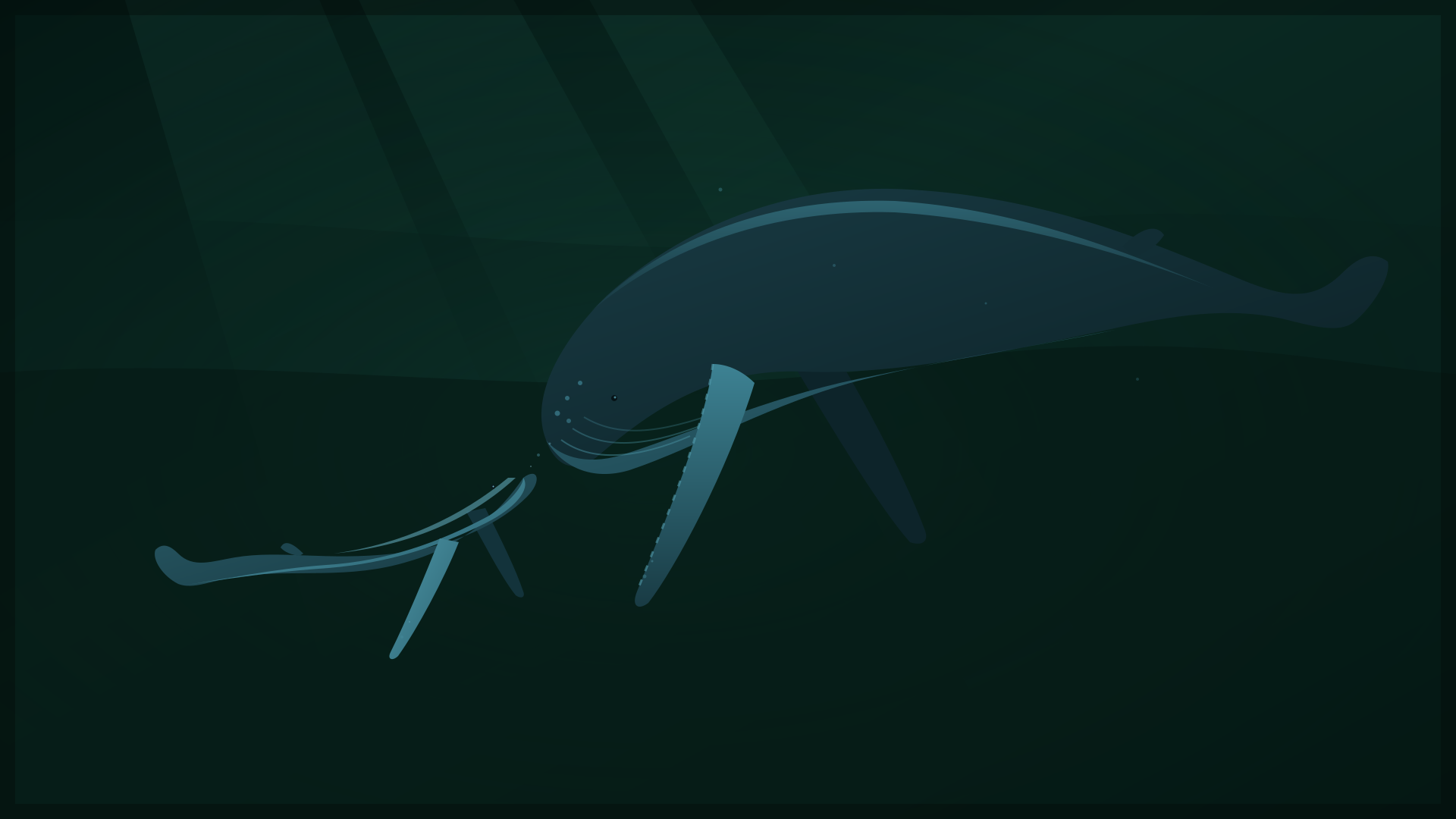
One day in 2025, Andrew Mulville, a rescue vessel captain with the Sea World Foundation, was patrolling off the coast of the Gold Coast in southern Queensland, Australia. At first, he assumed the two humpback whales idling on the surface were simply resting. But as the boat approached, underwater video shattered every expectation: an adult female humpback was positioned tightly against the lifeless body of her newborn calf, while another adult companion lingered quietly beside them. It was far from anything the crew anticipated encountering that morning.
This encounter, spanning several hours, culminated in a scientific case study published in the journal Discover Animals and quickly ignited a vigorous discussion on Hacker News. Yet the fundamental significance of this record does not lie in rushing to a facile, anthropomorphic conclusion that “whales feel grief.” Its true value emerges from what happens when the observational subject switches from toothed whales to baleen whales: the established ethological framework for evaluating death-related responses instantly collapses. Confronted with underwater behavioral footage, researchers find it impossible to draw a hard line between hardwired maternal instinct and higher-order emotional mourning. The scientific response has remained remarkably disciplined: withhold definitive verdicts, and methodically catalog every frame of this rare event into the empirical record.
When the Lens Turns to Baleen Whales, Legacy Metrics Collapse
The field observation was led by researchers from Griffith University and the Sea World Foundation. When their paper, titled “First documentation of humpback whale (Megaptera novaeangliae) post-mortem attendance of a stillborn,” appeared in Discover Animals, it immediately exposed a significant void in marine mammal biology. Dr. Jan-Olaf Meynecke, head of the Whales and Climate Research Program at Griffith University, laid out the reality: previous records of cetacean “post-mortem attentive behavior” were almost exclusively documented in toothed whales (Odontoceti), such as dolphins and orcas. Within the baleen whale suborder (Mysticeti), to which humpbacks belong, reliable published accounts of such behavior are virtually absent from the scientific literature. Shifting across phylogenetic branches abruptly invalidated decades of behavioral baselines.
Toothed whales and baleen whales exhibit fundamentally different physical responses when coping with infant mortality. In historical records, toothed whale mothers often engage in high-energy, conspicuous behaviors—repeatedly pushing or lifting a dead calf above the water’s surface to breathe. By contrast, the humpback mother off the Gold Coast chose to stay submerged for extended intervals, pressing her massive body against the calf as it rested on the seabed. This dramatic drop in kinetic activity leaves traditional visual indicators completely blind.
Even more striking for researchers was that the humpback maintained clear underwater eye contact. She remained by the calf’s side for hours, potentially even across several days. This quiet, deep vigil ruled out any chance encounter. But the low-frequency underwater movement meant researchers could not extract discrete, quantifiable data points the way they tally surface-pushing events in dolphins. Traditional ethological scoring rubrics simply cannot be completed when confronted with stillness.
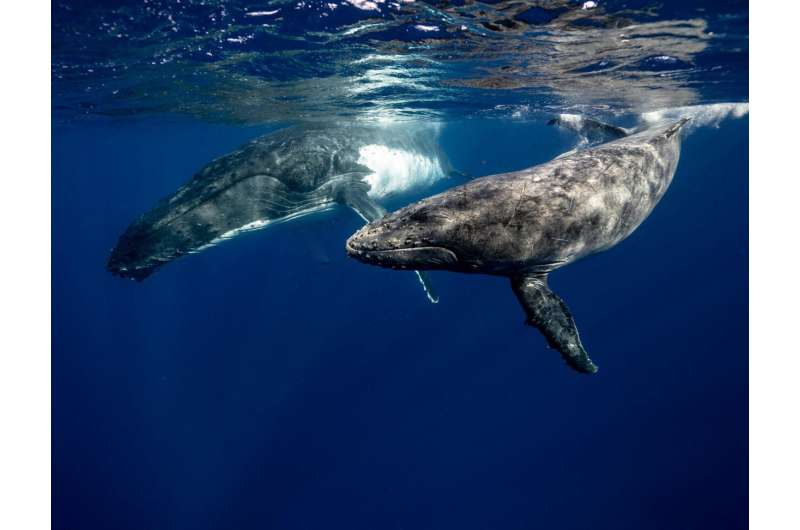 Image: Humpback whale. Source: Elianne Dipp / Pexels, via phys.org
Resisting the Urge to Equate Maternal Instinct with Mourning
The study’s authors established a rigorous academic perimeter in their phrasing. They classified the observed underwater interactions as “consistent with caregiving and nurturing behaviors,” noting that they align with post-mortem attentive responses observed in socially complex mammals. Replacing emotional speculation with kinetic description is an engineering-like mindset: decomposing actions into physical contact, orientation, and dwell time strips away the data contamination introduced by subjective projection.
The paper ultimately pointed to “strong maternal attachment.” This is an intentionally measured biological term—one that acknowledges the profound bond between mother and offspring while refusing to leap across species boundaries to stamp human notions of “mourning.” Dr. Meynecke’s statements were similarly restrained. He acknowledged that while such observations are heartbreaking and exceedingly rare, this encounter represents only a tiny piece of the larger puzzle in understanding the cognitive and emotional dimensions of baleen whale responses to death. A single data point cannot support an expansive cognitive narrative.
Rather than hastily declaring the emotional richness of the animal kingdom, science must first confront the severe limitations of its data collection. Meynecke emphasized the immediate operational priority: systematic documentation of neonatal mortality events must continue. The scarcity of data points remains the primary technical debt in this field. Until sample sizes reach statistical confidence, any inference that extends beyond observable physical mechanics will unravel under the magnifying glass of peer review.
Developer Communities Stress-Test the Study’s Logical Rigor
When the paper was featured on phys.org and reached Hacker News, it drew over 220 points and more than 160 comments. Unlike casual wildlife enthusiasts, software engineers and researchers who spend their working hours dealing with logical predicates focused their attention on boundary-testing the methodology. They were less concerned with sentimental narratives and far more focused on whether the empirical conditions and conclusions were logically self-consistent.
User SapporoChris challenged a specific rhetorical choice in the paper, questioning the claim that the mother stayed “for several hours and possibly even days”:
“She remained with it for several hours and possibly even days.” Interesting article, but that comment veers into speculation. Speculation diminishes the value of a scientific article.
In code logic, a word like “possibly” implies a Boolean state that could just as easily evaluate to false as to true. Introducing speculative timeframes into a conclusion dilutes the core value of a scientific paper. Observational data demands unequivocal start and end timestamps; otherwise, inferences about the intensity of maternal attachment risk becoming a fragile structure built on shifting sand.
To cross-validate the findings, another user, zer00eyz, cited external reference data. They highlighted official National Oceanic and Atmospheric Administration (NOAA) records documenting killer whales carrying deceased calves for days. Because orcas belong to the toothed whale suborder, this corroborating data provided real-world support for the cross-species prevalence of post-mortem attendance. Using known toothed whale datasets as a frame of reference adds plausibility to baleen whale behavior, yet hardware differences across neural systems still introduce architectural adaptation risks into such extrapolations.
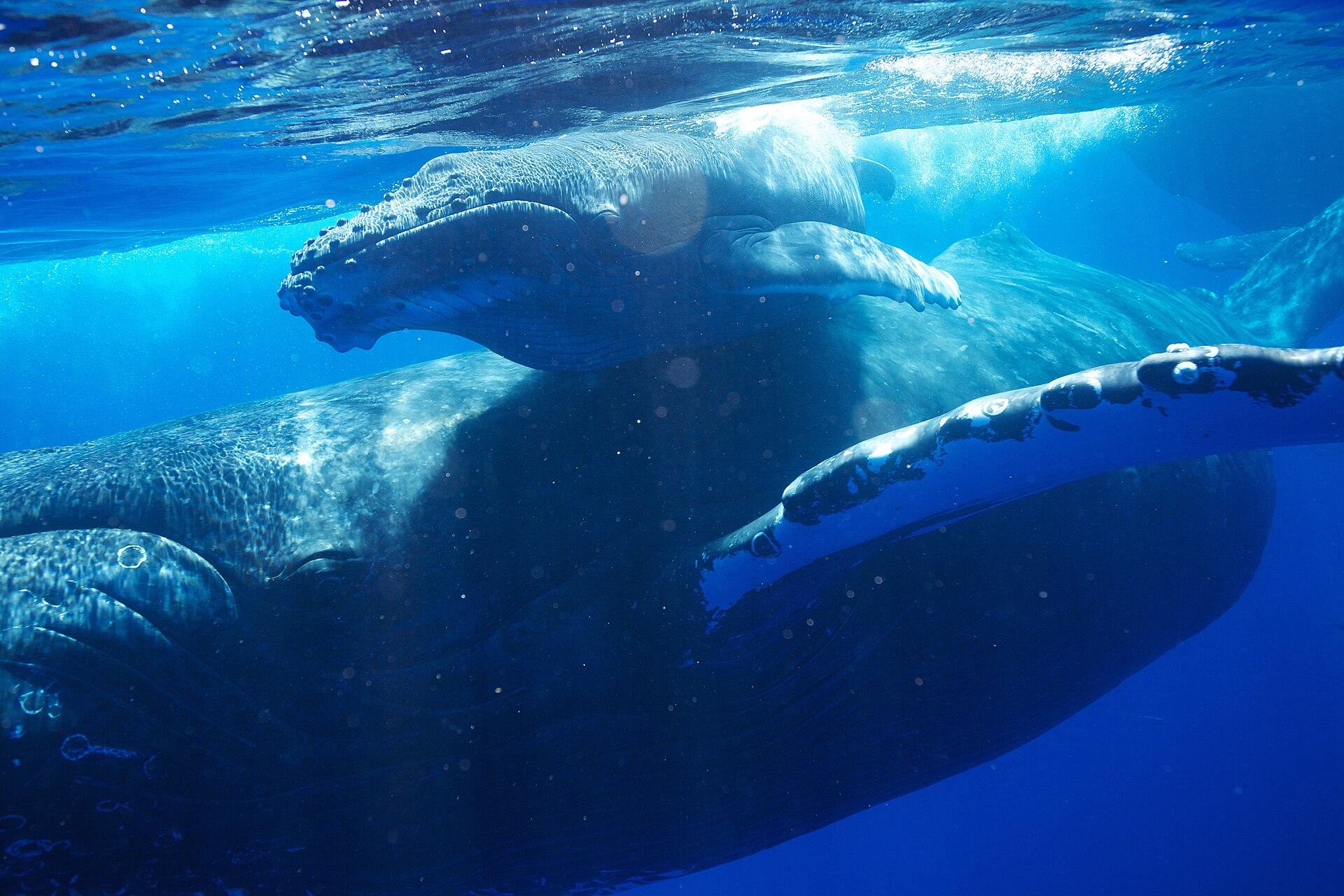 Image: Humpback whale mother and calf. Source: Hawaiian Islands Humpback Whale National Marine Sanctuary / Wikimedia Commons
Dismantling Human Exceptionalism: How Whale Cognition Challenges Old Models
Beyond cold debates over methodology, the discussion also elicited profound personal resonance. User gigatexal shared an empathy grounded in lived experience:
“Any parent here who has known this loss can relate. Didn’t think I’d see this on HN but yeah this is heartbreaking.”
The immobilizing shock triggered by grief in human parents mirrors the quiet underwater stillness of that humpback mother with startling fidelity. At the neurobiological level, stress and loss mechanisms among mammals may run on fundamentally shared low-level code.
Pursuing this thread, user georgemcbay delivered the most highly upvoted insight of the discussion:
“Blows my mind that so many people just have this hardened internalized idea that we’re somehow significantly different than any other animal. Sure, we’ve got them beat on language and planning, but we’re currently in the process of being passed up on both those fronts by multi-dimensional arrays of floating point numbers sitting inside of sand. So, like, how special is that then, really?”
Humanity has long internalized an absolute axiom: that we are fundamentally distinct from all other animals. This feeling of species exceptionalism erected the traditional barriers of animal behavioral research. Society grew accustomed to downgrading animal responses to mere conditioned reflexes while reserving complex emotional processing as a uniquely human capability.
Yet technological progress is puncturing that conceit. georgemcbay laid bare an inescapable reality: our core advantage in language is rapidly being matched by matrix calculations. When silicon-based large language models can exhibit emergent complex reasoning, a 40-tonne carbon-based mammal processing the death of her newborn is unlikely to be running a trivial internal mechanism. The cognitive modules inside a humpback’s brain are far deeper than our current observational probes can penetrate.
Confronting a 40-Tonne Unknown System: Science Starts by Gathering Data
Back in the waters off the Gold Coast, that mother humpback’s silent vigil is now an immutable entry in the Discover Animals database. This observation peeled back the surface of animal affective research, exposing the methodological scarcity beneath. The old ruler calibrated for surface lifts cannot measure the depth of an underwater gaze. Discarding outdated metrics and architecting an observation system tailored to baleen whales is now an urgent priority for marine biologists.
The tension between the academic paper and the community debate illustrates two competing engineering instincts when grappling with an unknown system. One insists that without measurable temporal boundaries, no conclusions should be drawn; the other seeks to dismantle interspecies barriers through shared neurobiological logic. The dispute itself is far more valuable than a hasty consensus. It compels researchers to set sail next time equipped with tighter observation checklists and longer-endurance sensory equipment.
Science does not need to project human sentiment onto animal behavior to justify its importance. What it needs is a suite of reproducible test cases capable of capturing a 40-tonne mammal in its natural state. The hours this humpback spent beneath the waves filled a long-standing void in baleen whale behavioral research. The next real breakthrough will arrive when the “possibly” in “possibly even days” is replaced by an indisputable, exact figure.
References:
- First documentation of humpback whale post-mortem attendance of a stillborn (Discover Animals)
- Hacker News Discussion (item?id=49735159)