When fever strikes, our immediate instinct is to purge viruses from our systems. Yet unravel the double helix tucked inside human cells, and a startling truth emerges: we are, in no small part, made of viruses. The human genome spans roughly three billion base pairs.
Nearly half of that vast sequence belongs to transposable elements—or transposons—DNA sequences capable of self-replicating and leaping across the genome like a biological copy-and-paste command. Approximately 8% consists of ancient retroviral ghosts: infectious agents that once stitched their own genetic blueprints directly into host DNA, leaving behind code deeply embedded within the cellular foundation.
For decades, biologists broadly dismissed these restless sequences as selfish parasites or meaningless genomic junk. But as modern sequencing technologies matured, researchers realized that these mobile elements did not doom their hosts. Instead, they evolved into an indispensable engine powering rapid evolutionary innovation.
Half of Our 3 Billion Base Pairs Are on the Move
Translating the scale of the human genome into everyday terms puts this phenomenon into sharp focus. If our nuclear DNA were a 3,000-page biological instruction manual, the protein-coding genes responsible for building our bodies and driving physiological functions would fill only about 45 pages—a mere 1.5% of the book.
The remaining 1,500-plus pages are densely packed with mobile genetic elements. Chief among them are retrotransposons, which copy their DNA sequence into mobile RNA strands before reverse-transcribing back into DNA at new genomic locations, proliferating through a relentless copy-and-paste routine.
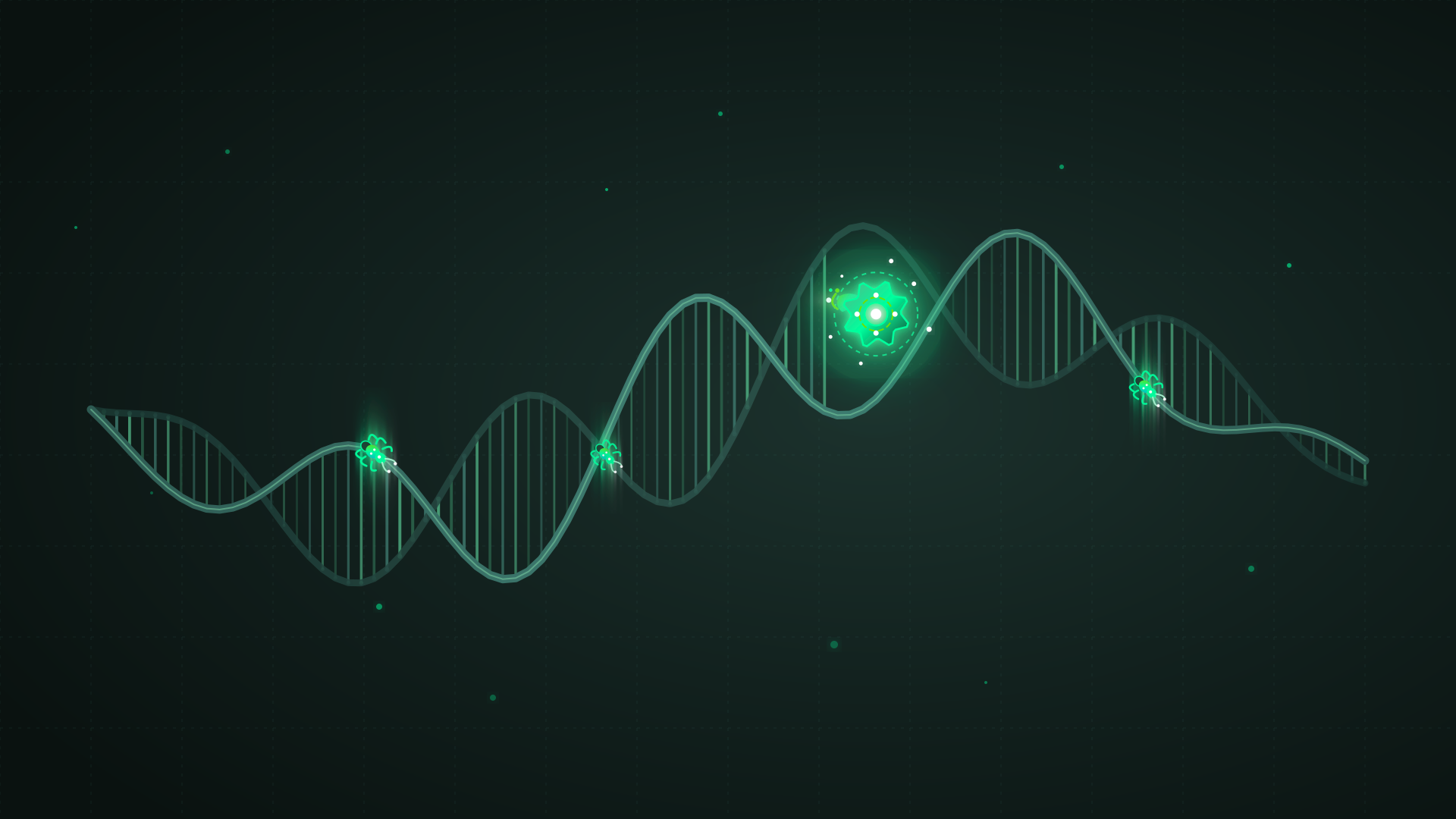
 Figure: A DNA transposon pops out of one chromosome and inserts into another location. Source: Samuel Velasco / Quanta Magazine
The accumulated viral scar tissue alone outweighs all human protein-coding genes more than fivefold. These ancient infections struck our distant ancestors tens of millions of years ago, embedding viral sequences into germline DNA that has been dutifully handed down across countless generations.
How Speckled Corn Kernels Rewrote Genetics
The path to understanding jumping genes was steep and contentious. In the 1940s, American geneticist Barbara McClintock observed an anomaly while studying maize kernels at Cold Spring Harbor Laboratory: kernels on the same ear of corn frequently displayed erratic, speckled patterns of pigmentation.
Scrutinizing chromosome structures under the microscope, McClintock deduced that genes were far from static beads on a string. Instead, specific genetic elements broke free from their native sites, jumped into color-producing genes to disrupt pigment production, and could subsequently jump out again to restore color expression.
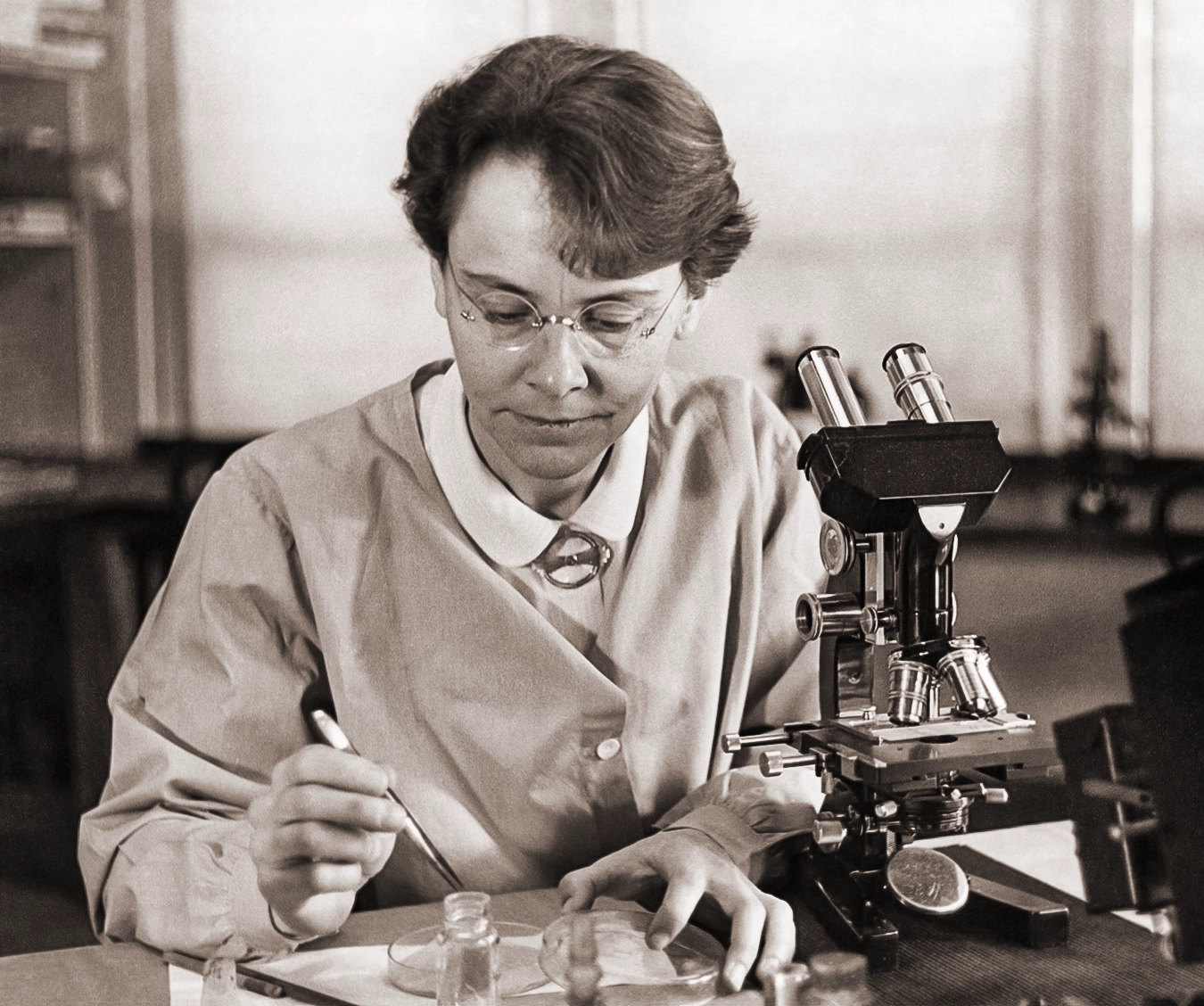 Figure: Geneticist Barbara McClintock at her microscope; she won the 1983 Nobel Prize for her discovery of transposons. Source: Smithsonian Institution Science Service
At a time when genetics held dogmatically that genes were rigidly fixed in place, McClintock’s insight was half a century ahead of its time and was initially met with widespread skepticism. Only in the 1980s, when molecular biology confirmed the physical reality of transposons, was McClintock awarded the 1983 Nobel Prize in Physiology or Medicine.
A Jumping Gene That Turned Peppered Moths Black in 1819
While McClintock unraveled the mechanism, Britain’s peppered moth (Biston betularia) demonstrated the raw power of transposons in nature. Before the 19th-century Industrial Revolution, nearly all peppered moths wore a speckled pale gray pattern that camouflaged them against lichen-encrusted tree trunks.
As factory soot blackened the woodlands, a melanic, all-black morph surged to dominance within decades. In 2016, geneticists sequencing the moth’s genome pinpointed the cause: a massive transposable element had inserted itself into the cortex gene, which regulates wing development.
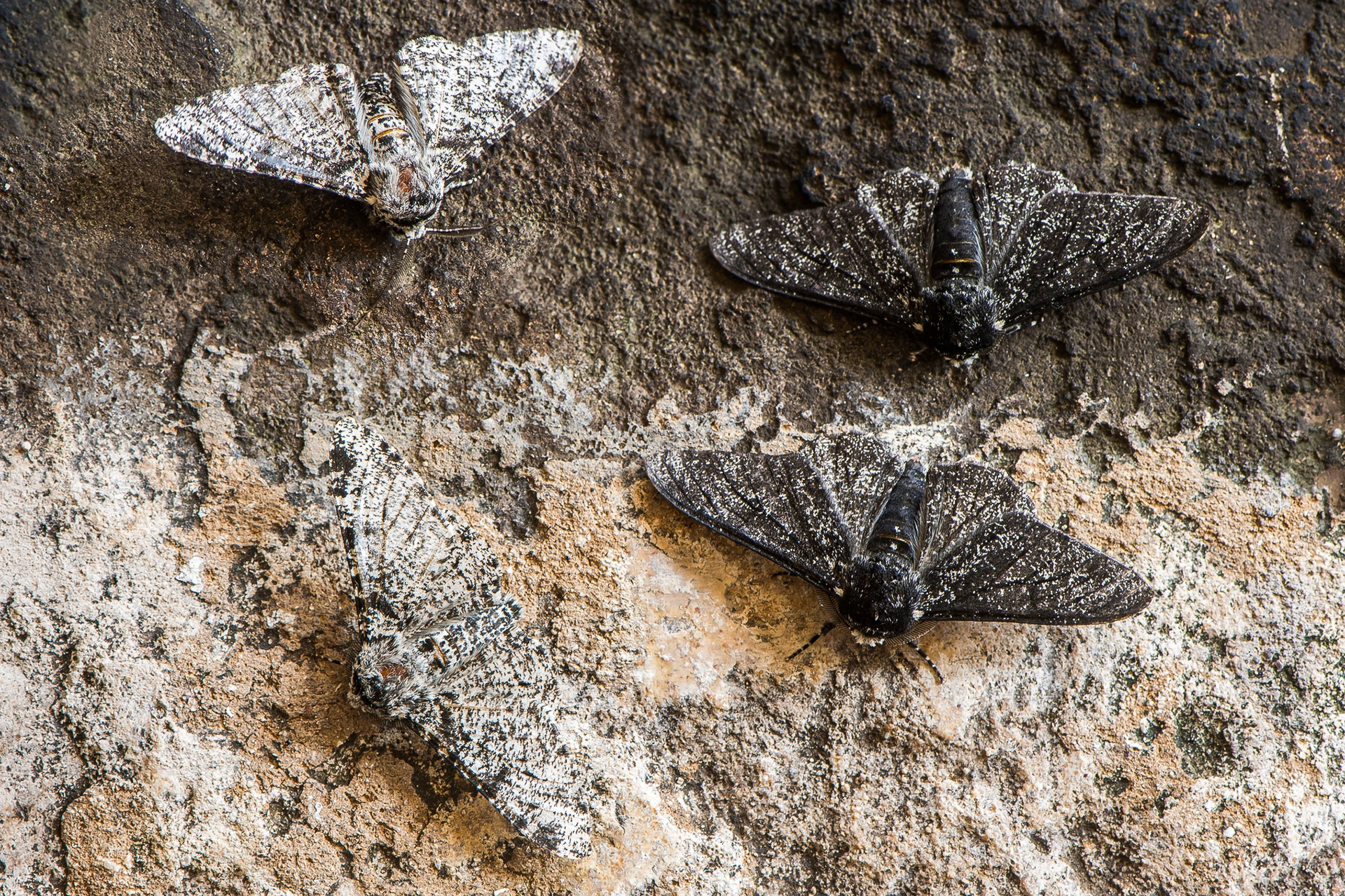 Figure: Typical and melanic forms of the peppered moth on tree bark; the dark morph arose from a transposon insertion. Source: Ian Redding
Researchers estimated the transposition event occurred around 1819. Pierre Baduel, a geneticist at the French National Center for Scientific Research (CNRS) in Paris, noted that this finding overturned traditional views on adaptation. While point mutations accumulate slowly over vast timescales, a single transposon jump can generate a radical new trait overnight, ready for immediate natural selection.
Transposons do not merely hop within a single species; they can cross evolutionary divides entirely. A 2020 study across 307 vertebrate genomes identified nearly 1,000 horizontal transfer events, often ferried between aquatic species by hitchhiking on passing viruses.
How Mammals Co-Opted Viral Residues to Nurture New Life
If jumping genes only tweaked moth coloration, they might still be viewed as evolutionary curiosities. In reality, the cornerstone organs of mammals and higher vertebrates bear the indelible imprint of domesticated transposons.
Consider the mammalian placenta. Sclerosing the boundary between maternal and fetal blood while funneling oxygen and nutrients requires a specialized syncytial fusion membrane. Biologists discovered that the essential proteins orchestrating this cell fusion originated from an ancient retroviral envelope gene, captured and tamed by mammalian ancestors.
A viral weapon once deployed to breach host cell membranes was repurposed by the mammalian genome into a foundational structural tool. Without this domesticated viral remnant, the months-long in utero gestation that defines mammalian life could not exist.
Furthermore, the emergence of the vertebrate eye and the adaptive immune system in jawed vertebrates both co-opted raw genetic material from jumping transposons. Rather than destroying their hosts, these ancient invaders helped spark entirely new evolutionary trajectories.
Turning Parasite Defenses Into Master Cellular Switches
While unchecked transposon mobility unleashes immense evolutionary variation, uncontrolled insertions risk mutating vital genes. To prevent these genomic travelers from inducing chaos, organisms evolved sophisticated defense mechanisms.
Cells devised epigenetic silencing—chemical tags that switch off gene expression without altering the underlying DNA sequence, akin to placing safety locks over dangerous genomic switches. Research by Susan Wessler, a geneticist emerita at the University of California, Riverside, showed that regulatory machinery originally invented to suppress genomic parasites was later co-opted by cells for their own routine governance.
Every cell in the human body shares an identical genome, yet differentiates into hundreds of specialized tissues and organs. That delicate network of on-off switches rests largely upon the very chemical barriers first erected to keep transposons at bay.
As Cornell University geneticist Cedric Feschotte emphasized, these viral remnants are far more than passive hitchhikers—they have been coevolving with organisms from the beginning. Comprising nearly half of our genetic tapestry, jumping genes have provided life with its most inventive and resilient evolutionary toolkit.
Reference:
- Quanta Magazine: How Virus-like ‘Jumping Genes’ Became Our Partners in Evolution