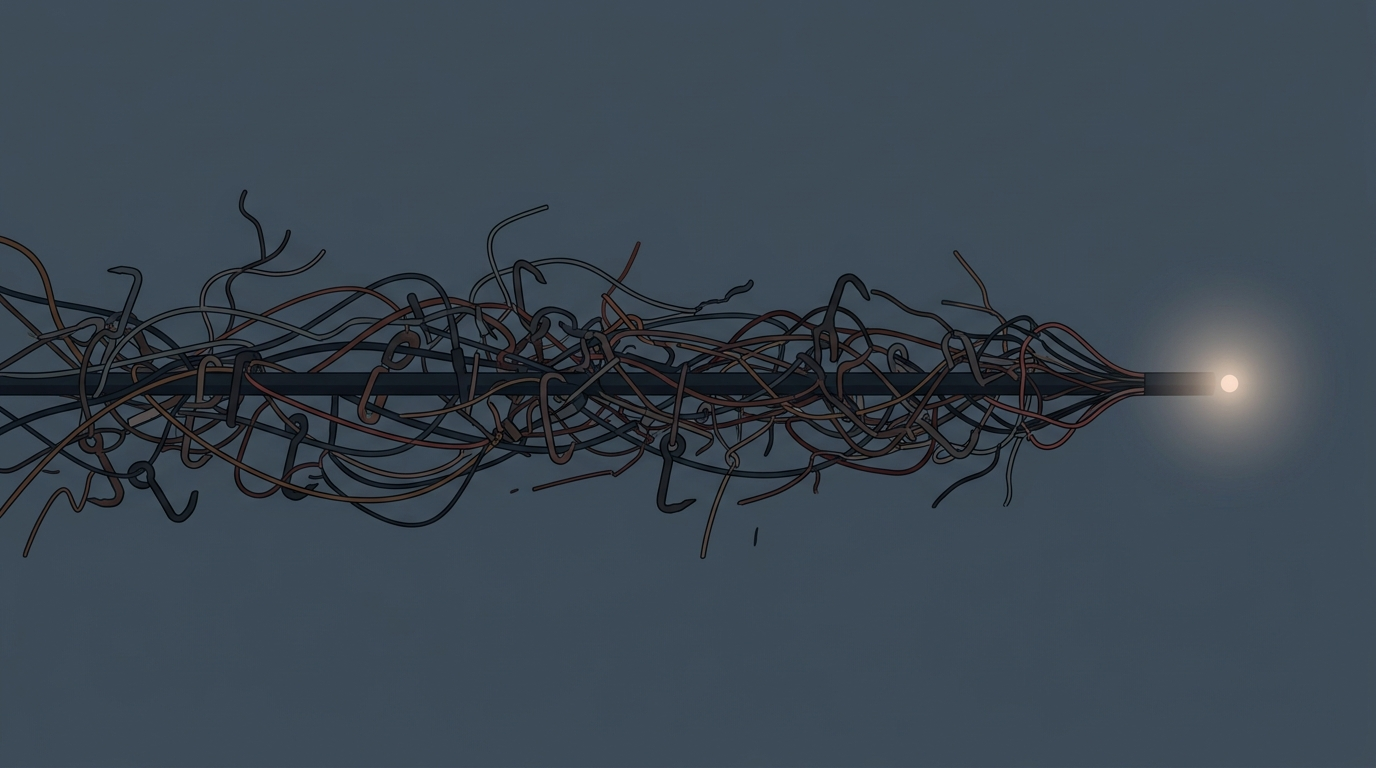
On a freezing winter morning in 2002, Delhi woke up to its third major blackout of the week. In a metropolis supporting tens of millions of residents, more than 50% of generated electricity vanished into thin air before ever reaching billed consumers. These catastrophic losses broke local transformers and drained utility balance sheets. Today, Delhi’s power distribution losses have plummeted to between 5% and 6%—a performance on par with France and Belgium.
Unbilled Current and the Thermal Death Spiral
Many assume that an aging electrical grid inevitably suffers astronomical physical losses. But Delhi’s fundamental crisis was never the wear and tear of transformer coils or aluminum busbars. Around 2002, the average transmission and distribution (T&D) loss across Indian states stood near 37%. Delhi’s losses exceeded 50%. Yet core transformer iron losses and line copper losses accounted for only a fraction of that shortfall. The bulk of the missing power was driven by widespread theft and uncollectible arrears.
Power theft was hardly an activity confined to marginalized slums. In early-2000s Delhi, major industrial enterprises, neighborhood retailers, and even utility insiders participated in this open secret. Factory owners bypassed meters to depress manufacturing overhead, while street vendors casually hooked copper wires with makeshift hooks onto overhead distribution lines for free evening illumination.
The laws of physics exact a severe toll on such behavior. The fundamental formula for line loss is I²R—current squared multiplied by resistance. When legions of consumers tap power without metering, the grid carries not only the active current powering household appliances, but also immense reactive power that inflates total current. Because resistive losses scale quadratically with current, the physical distribution network was pushed past its breaking point.
This triggered a rapid engineering death spiral. Massive total currents caused precipitous voltage drops at feeder terminals, often leaving lines unable to reliably start water pumps and induction motors. To maintain required output power, inductive loads pulled even higher current. Rising currents multiplied losses; mounting losses collapsed voltages; collapsed voltages forced equipment to draw even more current. Under peak summer or winter loads, vintage transformers repeatedly blew out in cascade.
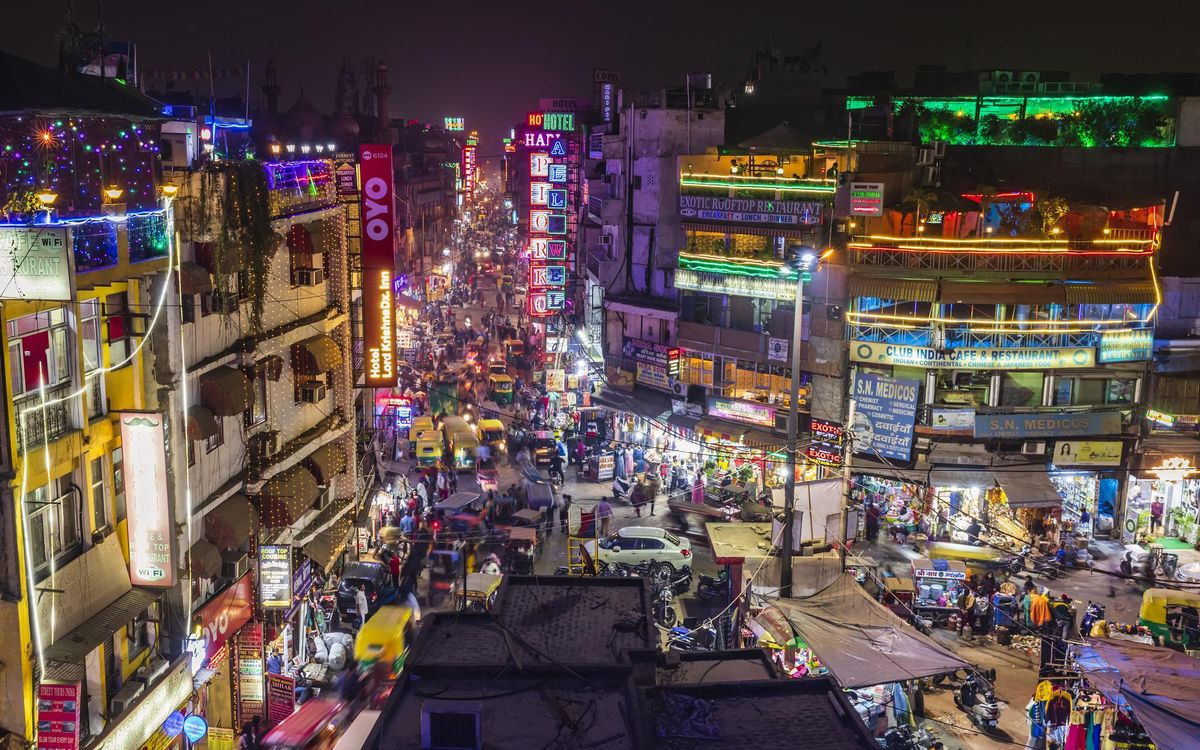 Figure: Delhi streetscape at night, with heavy traffic and glowing shopfronts driving nighttime demand ever higher. Source: IEEE Spectrum
Without Disconnection Rights, Bills Are Just Scrap Paper
Prior to 2002, Delhi’s billing and collection system was trapped in the pen-and-paper era. On designated days each month, meter readers visited every doorstep, manually copying numbers from mechanical dials into physical ledgers. After covering their beats, they returned to headquarters where data-entry clerks retyped the figures into desktop software.
This cumbersome, human-mediated chain made under-reading and selective omission a lucrative commercial racket. A modest bribe slipped to a meter reader easily shaved kilowatt-hours off the page. Revenue that should have funded substation modernization bled away across thousands of doorstep inspections.
An institutional loophole proved even more devastating: distribution utilities lacked the legal authority to disconnect delinquent users. Power was transmitted and consumed, invoices were generated, but when customers simply refused to pay, utilities had no statutory power to sever the wire. Without the legal power to disconnect, the most sophisticated metering system merely logs an inventory of unrecoverable losses.
Real transformation occurred only when regulatory reforms granted utilities explicit statutory powers to cut off service for non-payment. Electricity transitioned from an unregulated entitlement into an enforceable commercial contract. If an invoice lapsed, field technicians could physically snip the service cable. For the first time, recalcitrant businesses and affluent non-payers faced real, immediate consequences.
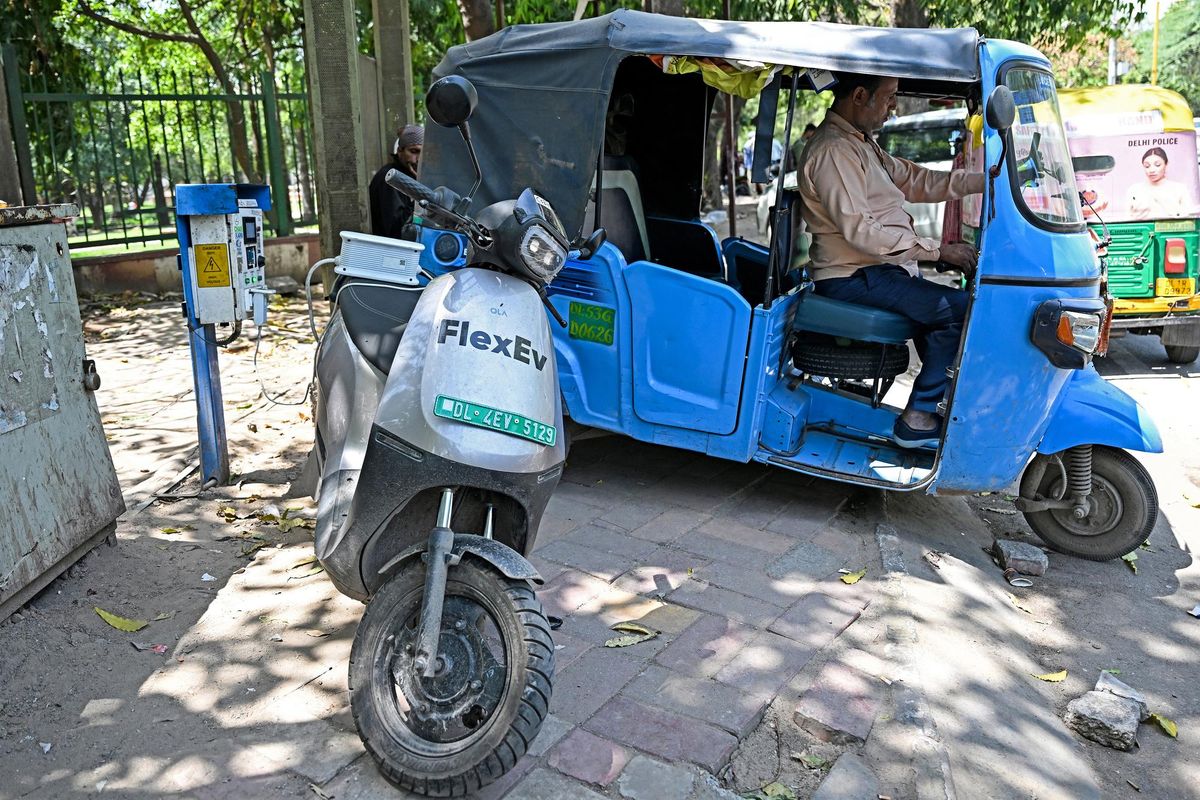 Figure: An electric rickshaw driver charges his vehicle on the streets of Delhi, where soaring energy demands test the local grid. Source: IEEE Spectrum
Metering Precision Defines the Grid’s Boundaries
Beginning in 2003, Delhi’s privatized utilities initiated an aggressive rollout of tamper-evident electronic meters, followed progressively by Automated Meter Reading (AMR) systems. This hardware upgrade carved the steepest reduction into the city’s loss curve. In the Tata Power-DDL distribution zone, aggregate technical and commercial losses tumbled from 53.1% in 2002 to just 6.3% by 2023. Once automated metering closed the human loopholes at data capture, genuine load profiles became reliable foundations for dispatch planning and grid expansion.
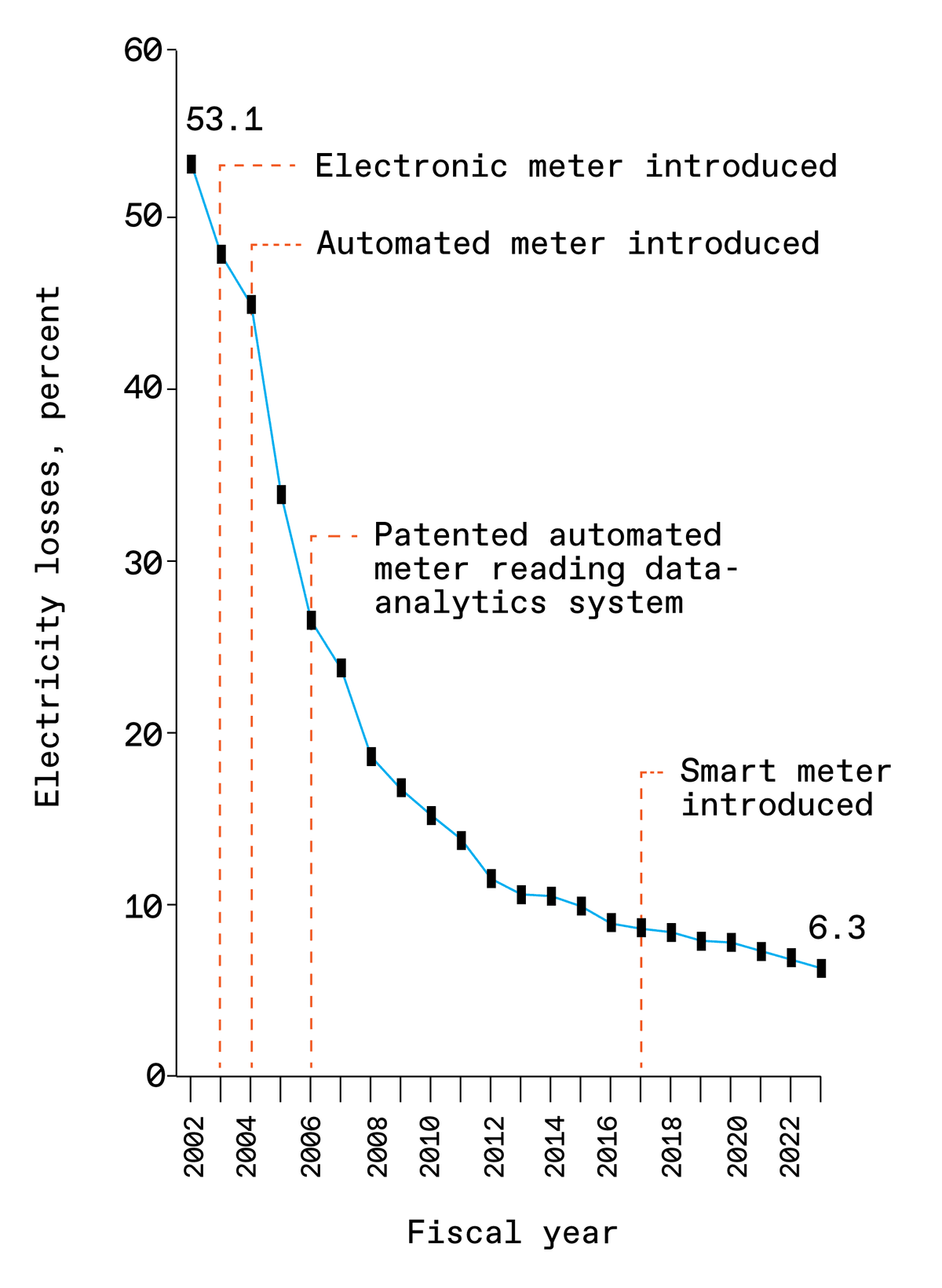 Figure: Power losses falling year over year following the 2003 introduction of electronic meters and subsequent automated reading. Source: Tata Power
A World Bank comparative survey tracking 11 nations illustrates the diverging paths created by institutional governance. Between 2002 and 2023, Singapore squeezed its electrical losses from 6.6% down to 0.2%. Conversely, metrics in Jamaica and Argentina worsened over the identical period. Without targeted regulatory and technical reform, time alone does not heal a sick power grid.
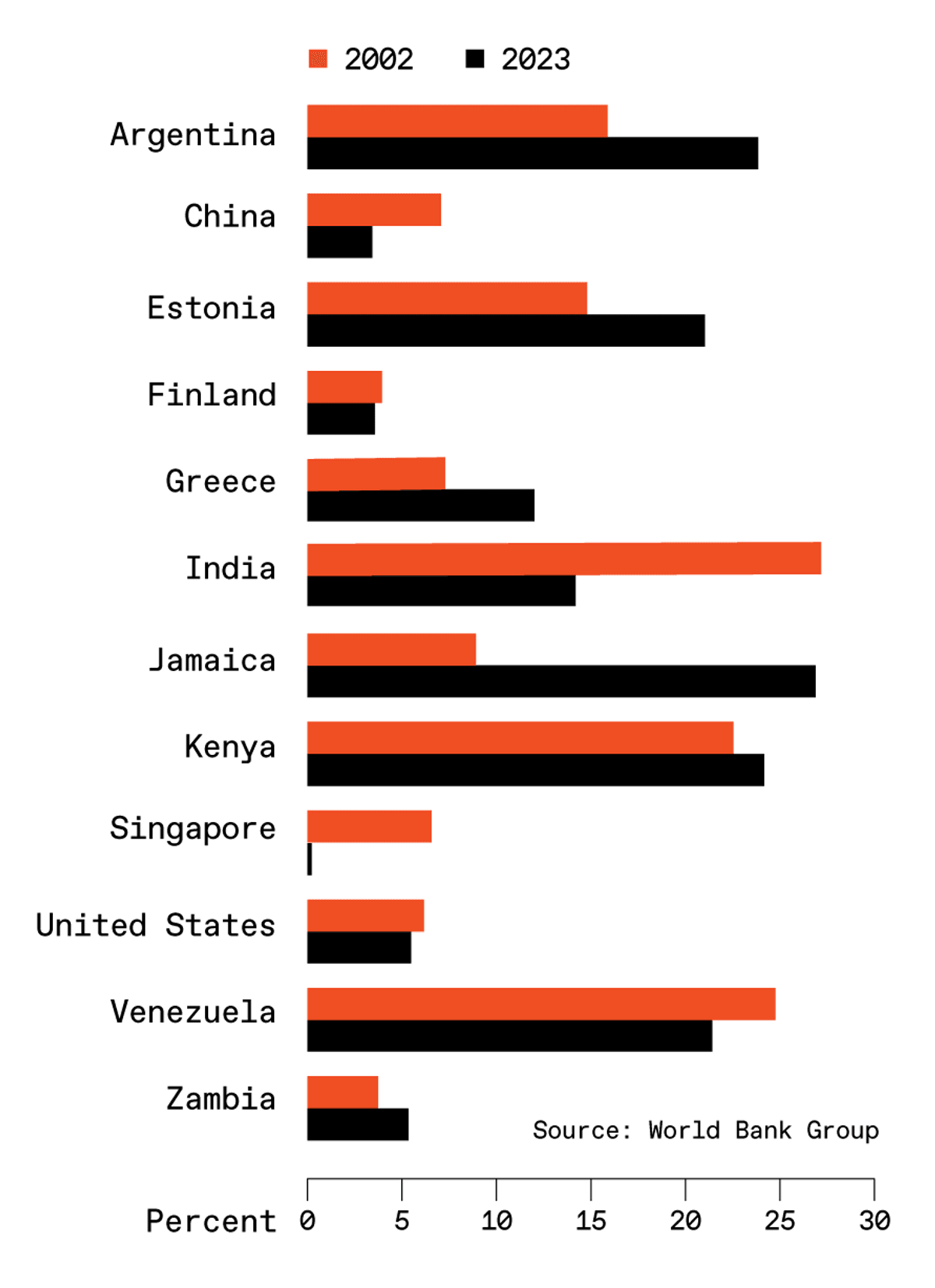 Figure: Electricity distribution losses across 11 nations comparing 2002 and 2023. Source: World Bank Group
Reinvesting Revenue into Underground Cables
Only once cash flow was stabilized could utilities finance the physical hardening of their networks. In earlier decades, dense overhead wire tangles presented trivial targets for theft: anyone with a wire hook could steal kilowatts in seconds.
With revenues secured, Tata Power systematically replaced exposed overhead lines with underground cabling. Nearly five kilometers of overhead routes were buried, and distribution boxes received tamper-resistant locking mechanisms. These civil engineering projects eliminated the physical attack surface for hooked lines, drastically elevating the cost and risk of illegal taps.
Today’s Delhi operates on an energy scale unimaginable twenty years ago. In 2026, the urban population approaches 23 million, with peak demand reaching an all-time record of 8,748 MW. Less than one-fourth of this immense load is generated within city borders; roughly 76% must be wheeled over long distances from central generating stations and independent power producers in neighboring states.
Meanwhile, Delhi’s generation mix has undergone broad diversification: coal accounts for 48.5%, natural gas provides 26.5%, and hydro delivers 15.6%, supplemented by an expanding share of zero-carbon renewables. Under tremendous cross-regional dispatch demands, Delhi’s power distribution reliability index nevertheless leaped from 70% in 2002 to over 99.9% today.
Delhi’s twenty-year journey demonstrates that distribution loss is fundamentally a governance challenge. What governs grid health is not mere physical capacity, but precision metering that accounts for every kilowatt-hour, statutory authority to disconnect non-paying customers, and an automated collection chain. When the largest variable in the line loss equation is no longer stolen current, the laws of physics naturally yield the efficiency they were meant to deliver.
Reference Links:
- IEEE Spectrum
- World Bank Group
- Tata Power-DDL
- Hacker News Discussion