In the third week of September 2026, the homepage of the FBI’s primary recruitment portal was defaced with a brazen taunt: “this site has been seized by ShinyHunters.” The cybercriminal syndicate did not stop at vandalizing the landing page; they leaked a 5,000-record sample containing sensitive personal information belonging to active federal agents directly to the press. Breaching an outward-facing job application portal yielded residential addresses, personal phone numbers, and spouse records of active-duty special agents. The intrusion tore open one of the most fragile fault lines in modern government cybersecurity.
5,000 Verified Records Shatter Cross-Validation Defenses
In the immediate aftermath of a high-profile breach, verifying sample authenticity is the primary engineering objective. Independent investigative outlet 404 Media obtained the 5,000-person dataset from ShinyHunters and immediately launched a multi-faceted cross-validation effort. Reporters ran randomly selected phone numbers from the cache through OSINT Industries, an open-source intelligence lookup tool. The queried social media profiles and verified names matched the breached records with pinpoint precision.
Shortly after, cybersecurity intelligence firm District 4 escalated the verification pipeline. Analysts conducted automated cross-referencing against commercial breach repositories using Darkside. The phone numbers not only belonged to real individuals, but a substantial concentration of the records directly mapped to known Department of Justice personnel rosters. When independent OSINT tooling and enterprise threat intelligence suites converge on the same federal workforce, authenticity is locked down at the technical level.
The breached records included full names, physical home addresses, phone numbers, dates of birth, and explicit details regarding spouses. In their public statement, ShinyHunters claimed to possess complete databases covering “all FBI employees and applicants.” Whether this 5,000-record dump represents an arbitrary output limit from an automated database query or a tactical teaser slice, the defensive perimeter was conclusively breached. On Hacker News, an extensive thread of 187 comments bypassed the usual skepticism over breach veracity, focusing almost exclusively on validating the breach vector and categorizing the systemic failure.
Why Leaking Family Addresses Is More Dangerous Than Stolen Operational Secrets
Conventional wisdom often assumes that cyber adversaries prioritize hardened intranet servers packed with classified case files. In real-world intelligence operations, however, human intelligence targeting follows a very different calculus. Criminals within the ShinyHunters ecosystem already have an alarming track record: actors previously purchased underground telecom records to physically stalk, swat, and intimidate FBI agents actively investigating them. Exposing home addresses and spouse names on the dark web shatters an agent’s physical security envelope.
A stolen operational docket might compromise a single active sting or indictment. If home telemetry for thousands of federal agents falls into the hands of foreign intelligence services, adversaries can reverse-engineer the bureau’s staffing footprint, departmental rotations, and operational command structures. In many respects, acquiring a comprehensive applicant database poses an even greater long-term counterintelligence threat than compromising current staff rosters. Intelligence operatives can cross-reference rejected candidates who sought entry into federal law enforcement but were turned away.
 Figure: Illustration from the 404 Media report. Source: 404 Media, original photo by jossuppy / Flickr
These individuals frequently possess specialized technical or analytical backgrounds, yet may have been disqualified due to personal financial strains or background clearance issues—vulnerabilities that make them prime targets for recruitment, coercion, or compromise. Anchoring such high-value relational data behind a public-facing job portal represents a catastrophic architectural mismatch. Classified case repositories are typically ring-fenced with physical air gaps, stringent multi-factor authentication, and immutable audit logging. Human resources workflows, by contrast, routinely trade zero-trust isolation for user convenience.
Ambiguous Scope Conceals the True Attack Surface
The most unsettling aspect of the breach is the opacity surrounding where the perimeter actually failed. On Tuesday, Apply.fbijobs.gov and dedicated special agent recruitment portals were pulled offline entirely. Hackers asserted that the breach had occurred the previous evening. The FBI has yet to confirm the data source or clarify whether the intrusion breached a third-party managed service provider or penetrated deep into internal federal infrastructure.
These scenarios represent vastly different tiers of architectural negligence. If only an external vendor’s cloud environment was breached, the failure points to lax supply-chain governance and vendor vetting. In that case, revoking API credentials and decommissioning the vendor limits immediate blast radius. If, however, intruders leveraged a web application vulnerability on the recruitment portal to pivot laterally into internal personnel databases, it indicates that multi-million-dollar internal network segmentation was completely illusory.
| Attack Vector Hypothesis | Systems Involved | Remediation Difficulty | Breach Impact Assessment |
|---|---|---|---|
| Third-Party Contractor Compromised | Outsourced cloud-hosted servers | Low (sever API connections) | Limited to applicant data during initial resume submission |
| Standalone Job Portal Breached | Edge applications on FBI network perimeter | Medium (rebuild portal and patch vulnerabilities) | Affects recent hires and external applicant history |
| Core HR Infrastructure Compromised | Internal federal HR database instance | Extremely High (full shutdown, audit, and isolation required) | Comprehensive exposure of active agents, families, and historical records |
Without clear architectural transparency, the 5,000-record leak functions as a dangerous black box. While ShinyHunters claims to hold data on every employee, releasing only 5,000 entries could stem from default database query pagination limits or an automated egress detection throttle. The bureau’s inability to immediately establish the boundary of the exfiltration demonstrates an alarming absence of granular data loss prevention (DLP) telemetry.
Legacy Public Portals Invite Lethal Intrusions
Within technical discussions, seasoned security researchers converged on a specific engineering hypothesis: the vulnerable vector was likely an internet-facing PeopleSoft instance. Widely deployed across government bodies for enterprise onboarding, PeopleSoft frequently requires deep, persistent integrations with foundational active directory and authentication databases. Hanging a monolithic HR application directly on the public internet essentially issues an open-ended invitation to automated vulnerability scanners.
Enterprise HR software suites harbor sprawling codebases riddled with decades of legacy business logic. An attacker need only uncover an unpatched deserialization flaw, arbitrary file upload, or broken object level authorization to achieve remote code execution (RCE). Once the external perimeter collapses, adversaries can execute high-privilege queries against backend datastores, siphoning off the entire organizational graph.
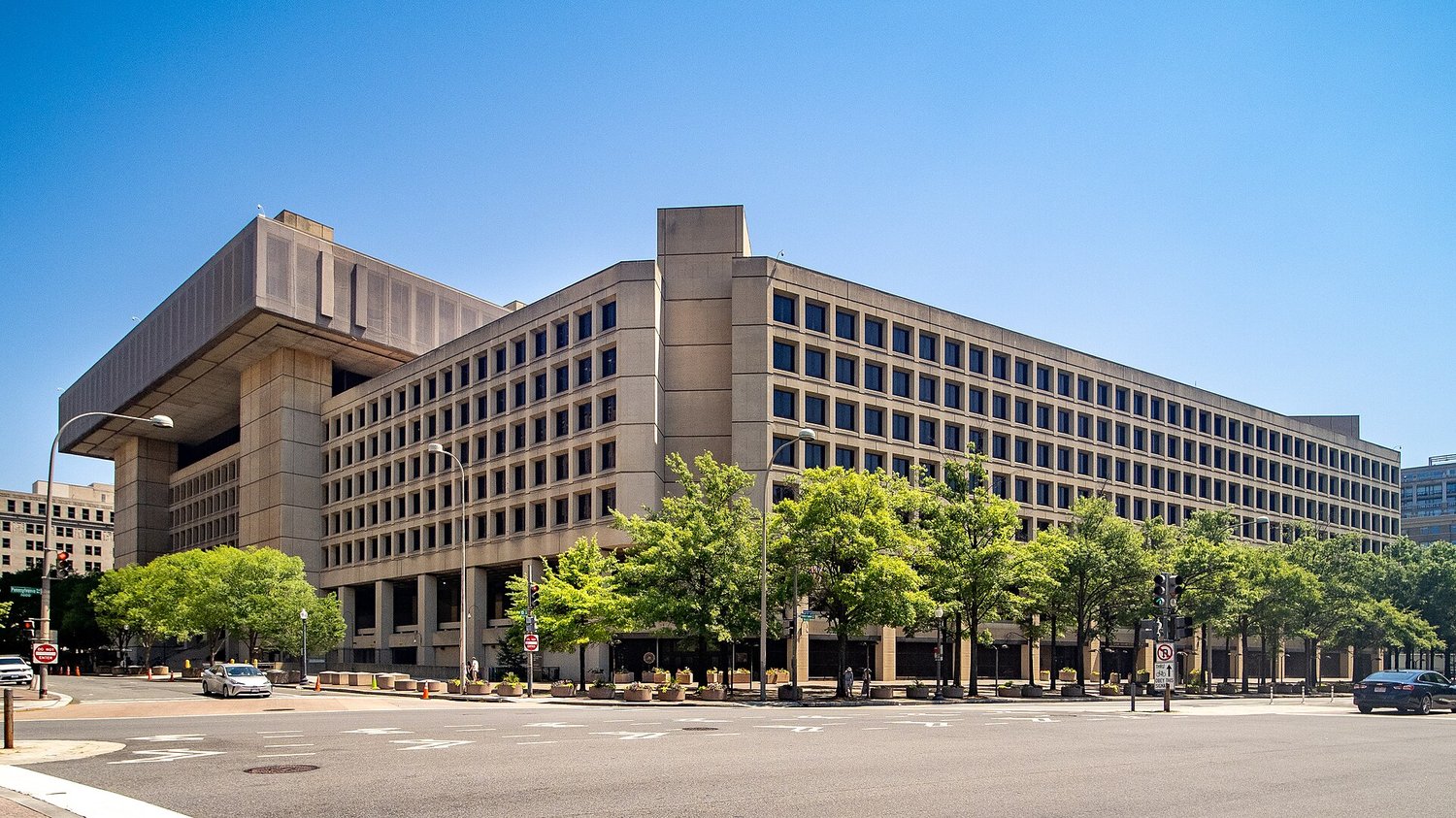 Figure: The J. Edgar Hoover FBI Building in Washington, D.C. Source: Wikimedia Commons, CC BY 2.0
Exposing components handling sensitive personally identifiable information (PII) directly to the open web is an inexcusable architectural anti-pattern today. Many institutions routinely defer perimeter defense refreshes on these portals, assuming that public recruitment forms do not warrant the defense-in-depth protections applied to mission systems. Yet personnel data is high-grade counterintelligence fuel. When peripheral job sites lack strict, brokered authentication boundaries with core intranets, an external web form becomes an express lane directly into the agency’s inner sanctum.
Budget Slashing Stalls Application Modernization
This incident cannot be pinned solely on software vendors; its root causes trace back to upstream budgetary politics. Successive federal budget cuts targeting enterprise IT infrastructure have left peripheral enterprise systems stranded without pathways to modernization. True application modernization demands breaking monolithic deployments into containerized microservices enforced by zero-trust network architectures—the most potent defense against lateral movement.
In practice, funding a multi-million-dollar overhaul for a candidate-facing portal rarely wins political backing. Government budget allocations naturally prioritize systems with immediate operational yield: facial recognition pipelines, automated intercept networks, and criminal intelligence platforms receive generous appropriations. Meanwhile, administrative and human resource back ends are kept on life support indefinitely, so long as pages continue to load.
Legacy systems run decade-old architectures, hobbling along without refactoring capital until attackers blow them wide open. When maintenance and modernization budgets are stripped to the bone, systemic vulnerability is locked into the infrastructure. Underfunded maintenance compromises even rudimentary patch management cadences. As a result, edge systems run archaic code without centralized logging, telemetry, or behavioral anomaly detection.
The Collapse of Peripheral Systems Sounds the Ultimate Alarm
In the wake of exfiltration, organizations inevitably find themselves trapped in reactive damage control. Unless funding mandates pivot toward systemic infrastructure hardening, structural collapses of this magnitude will continue to recur. The fall of peripheral portals not only reflects chronic technical debt; it exposes an institutional blind spot in how agencies classify data asset criticality.
Adversaries will always seek out the path of least resistance. So long as edge portals maintain implicit trust pathways to centralized data lakes, physical air gaps and internal defense perimeters remain mere theater. When a basic resume portal can hand over the home addresses of 5,000 active federal agents to criminal syndicates, the traditional concept of network perimeter defense has fundamentally collapsed. The crisis now confronting the FBI is the accrued bill for decades of neglected federal IT infrastructure.
References:
- 404 Media Report
- Hacker News Discussion (item?id=49805278)