Replacing Prompts with 0-to-1000 Coordinates
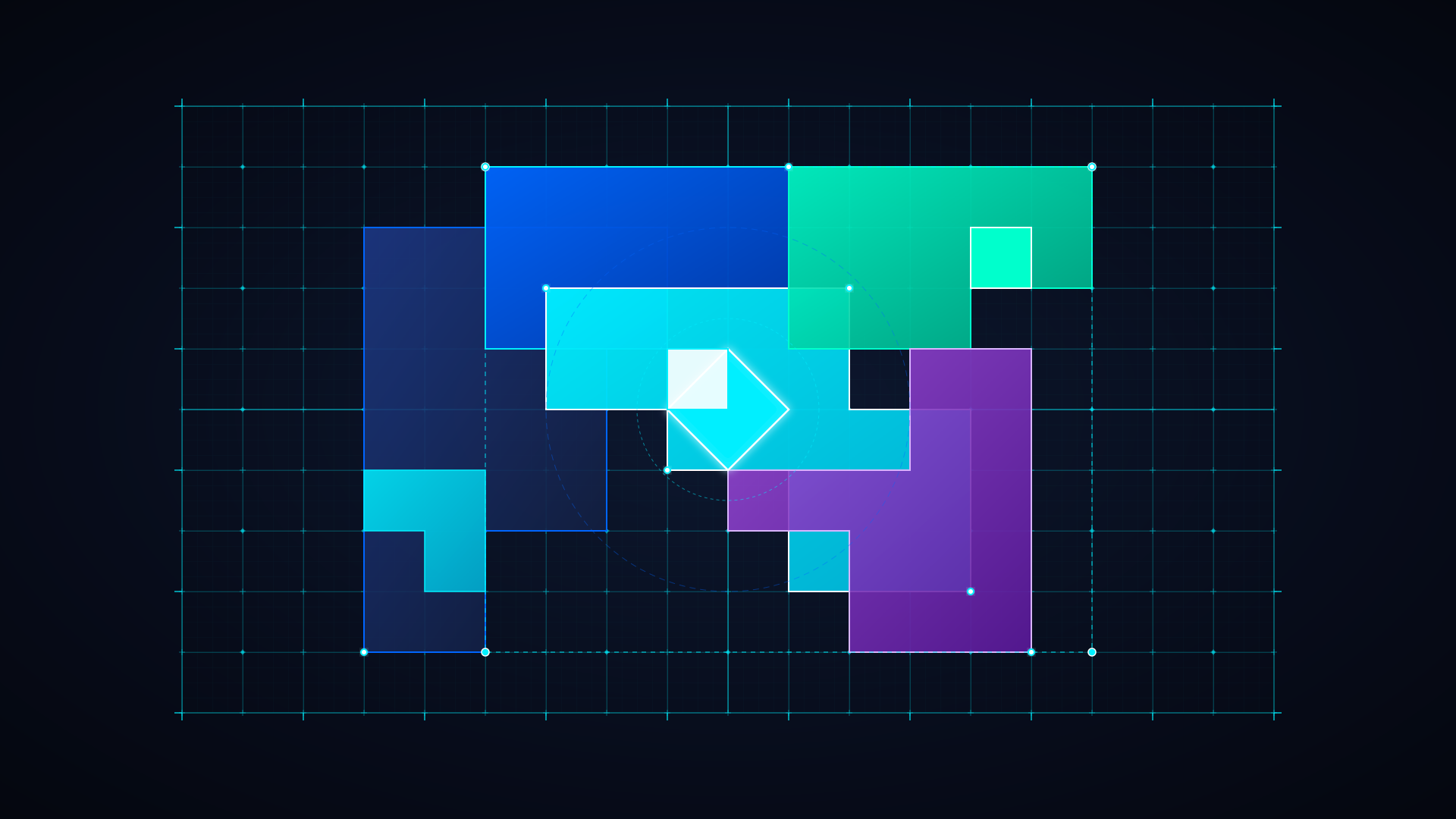
Image generation has long been constrained by the ambiguities of natural language descriptions, often forcing designers to tweak prompts repeatedly and hope for lucky rolls. With FLUX 3 Image, bounding box inputs have become the default interaction paradigm. Users specify the position of each element within a normalized coordinate grid from 0 to 1000, and the model renders subjects strictly within those bounds. Shifting from prompt gacha to deterministic grid control crosses the threshold required for professional design workflows.
Traditional text prompts struggle to capture intricate spatial arrangements—such as requiring a specific occluding object to occupy the left third of a character. In a 0-to-1000 coordinate grid, top-left and bottom-right points rigidly lock down an element’s physical space, reducing the accompanying text description to merely refining properties within that designated region. This absolute control transforms the generative model from an unpredictable artist into a disciplined construction crew; designers no longer need to negotiate compositions with AI, only deliver explicit blueprints.
Imposing bounding box constraints requires the model to learn a tight coupling between spatial geometry and semantic concepts during training, forcing visual features to converge within designated boundaries. The bleeding and attribute leakage that plagued earlier generative models are cleanly severed by physical boundaries. However, this level of spatial obedience comes at the price of steep annotation overhead: training requires vast datasets labeled with highly accurate bounding boxes.
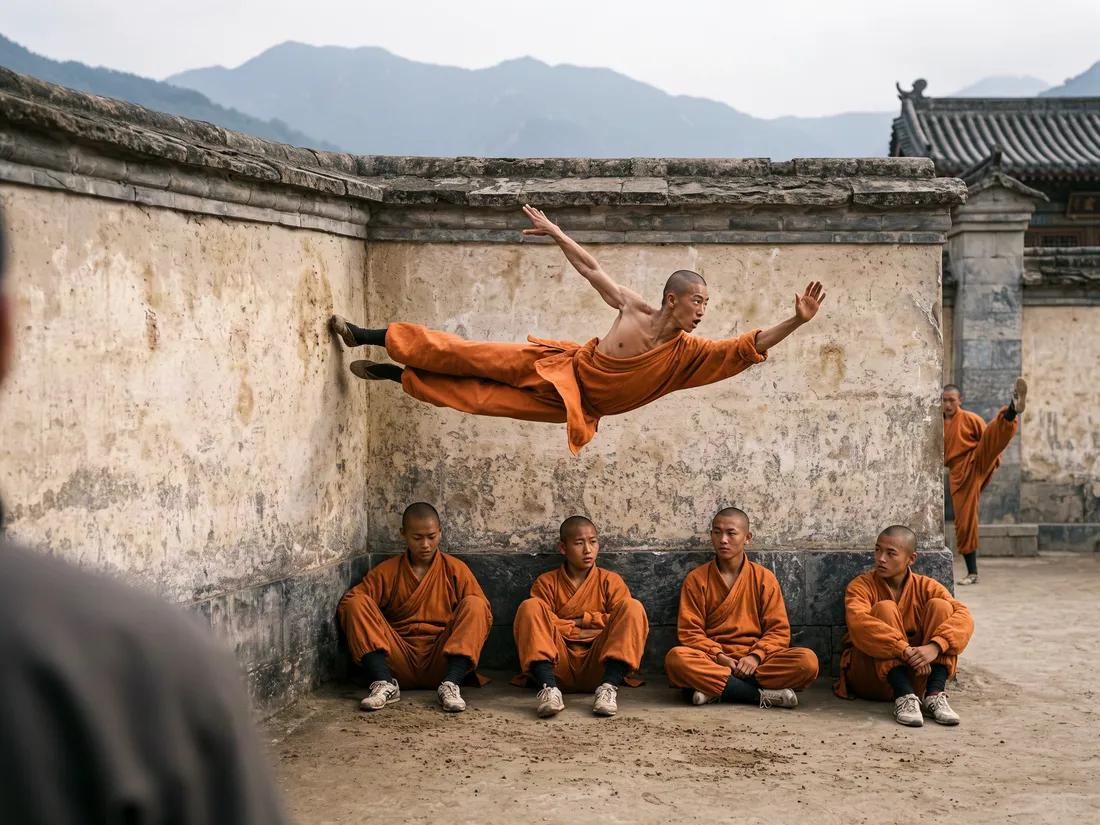 Figure: Specifying spatial relationships between character and background elements via bounding boxes. Source: Black Forest Labs
10 Reference Images and Multi-Turn Editing Slash Repainting Costs
A single reference image rarely satisfies complex commercial demands, where character identity, ambient lighting, and color grading often need to be sourced from distinct assets. FLUX 3 Image accepts up to 10 reference images to collaboratively define composition and key subject characteristics. Multi-reference conditioning breaks the bottleneck of single-feature extraction, making generative production viable for commercial e-commerce banners and UI assets.
The heaviest expense in visual design stems from endless revisions targeting specific details. The team promises support for precise multi-turn editing that leaves surrounding pixels untouched, severing the collateral damage associated with standard regeneration. Targeted touch-ups no longer derail the global composition. Modifying a client-specified corner becomes a low-cost operation, behaving as predictably as working across isolated Photoshop layers.
Combining 10 reference images with surgical inpainting establishes a predictable iteration pipeline. Visual attributes are decoupled into independent variables: altering a subject’s outfit does not disrupt background lighting, and swapping a product asset preserves the overarching compositional framing. This operational determinism is the prerequisite for widespread industrial adoption of generative tools.
4K Native Output Eliminates Post-Processing Upscaling
Constrained by VRAM budgets, most open-source models top out at megapixel-scale native resolutions, requiring bolted-on upscalers before images are even remotely usable in production. FLUX 3 Image pushes maximum native output directly to 5456 × 3072 pixels. At approximately 16.8 megapixels, this native resolution clears the threshold required for professional print production and premium asset libraries, bypassing cumbersome post-processing pipelines.
Native high resolution and post-generation upscaling follow fundamentally different technical philosophies. Upscaling algorithms essentially guess and fill in missing high-frequency details, frequently introducing an artificial, plasticky sheen along texture edges. By contrast, native 5456 × 3072 output samples high-frequency features directly during the generative diffusion phase, preserving organic material textures and physical plausibility.
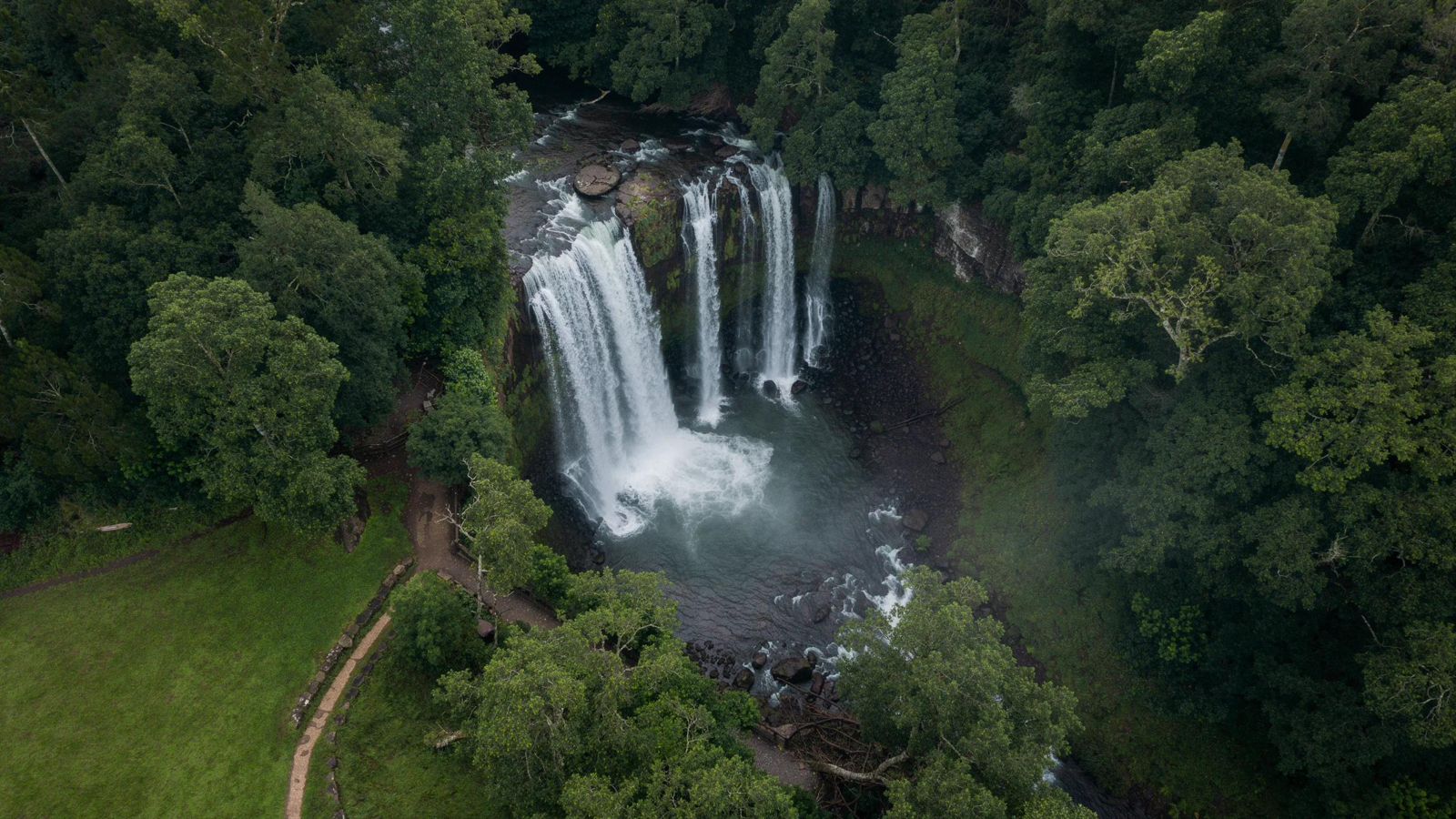 Figure: High-resolution output preserving delicate hair and fabric textures. Source: Black Forest Labs
Consolidating high-resolution synthesis into a single pass dismantles brittle multi-stage pipelines. Previously, generating production-grade assets required jumping through multiple hoops: base generation, outpainting, and upscaling. Chaining these distinct models amplified cumulative error rates. An all-in-one generation step drastically simplifies inference architecture and eliminates the wasted compute of intermediate stages.
Open Weights Pushed to the End of the Release Schedule
In July 2026, Black Forest Labs unveiled their unified multimodal flow matching architecture. FLUX 3 Video followed in August, and FLUX 3 Action arrived alongside partner announcements in September. Yet the core image generation capabilities did not go live until October 1—and only via the official API. Pushing FLUX 3 Dev weights back by several weeks disrupted the momentum of the open-source community.
Image generation commands the widest user base, yet it was deliberately scheduled behind video and action models. Looking at the launch trajectory, locking enterprise customers into closed-source API subscriptions before releasing open weights weeks later offers the most straightforward explanation for this staggered rollout.
During the FLUX.1 era, prompt weight releases quickly established the model as the de facto baseline of the local generation ecosystem. This delayed release strategy buys a crucial promotional window for the hosted API. As ecosystem partners build habitual workflows around official endpoints, the urgency for self-hosted deployments wanes. This artificial timing gap effectively segregates paying enterprises from enthusiasts pursuing free local setups.
Commercial Tiering Splits Local and Cloud User Bases
The generative ecosystem is undergoing an irreversible divergence: on one side are power users demanding local sovereignty; on the other are commercial pipelines dependent on precision control. With multi-reference conditioning and surgical editing available via its API, FLUX 3 Image captures commercial customers willing to pay for certainty. The cloud tier removes the technical friction of local deployment through sheer operational predictability.
Enterprises requiring strict data governance and domain-specific fine-tuning are left with no choice but to purchase expensive commercial weights for self-hosting. Meanwhile, if local baseline models are not updated in a timely manner, local hobbyists remain stuck in the prompt-gambling era. This sharp split between cloud and edge mirrors the perennial tension between open democratization and monetization.
The API control layer establishes a reliable baseline floor: users need only focus on business logic without worrying about operator kernel optimizations. While local self-hosting offers higher customizability, its steep tuning overhead and trial-and-error costs exclude the vast majority of non-technical designers. Through this differentiation, foundational model vendors capture outsized pricing leverage.
Competition in image generation is shifting from prompt roulette to deterministic layout control. When creators can position elements using 0-to-1000 coordinates and anchor aesthetics across 10 reference images, generative AI transforms from a slot machine into a structured blueprint. This represents a watershed moment for integrating AI into design workflows. Yet keeping these foundational control capabilities locked behind an API while withholding open weights underscores that cutting-edge precision remains a privilege for paying customers. In the balancing act between open source and closed commercialization, model builders have learned to segment their audience through precision control. The true game-changer is no longer just what a model can generate, but how precisely designers can govern the output.
Reference Links:
- Black Forest Labs Official Website
- BFL API Developer Documentation