Just after 2:00 PM on August 1, 2026, in Twin Falls, Idaho, 66-year-old Dale Schultz and his wife were returning from a family reunion. They stopped to recharge at a Supercharger station next to an In-N-Out Burger. Inside the restaurant, gunman Chad Williams opened fire before being driven out by two armed civilians. Fleeing toward the charging stalls, Williams sprayed bullets into two parked Teslas. Schultz was killed instantly; his wife, seated in the passenger seat, suffered critical injuries. In the adjacent car, rideshare driver Terry Dudley took two rounds to the back and survived.
As surveillance footage circulated online, the EV community zeroed in on a haunting detail: both vehicles were still plugged in. By default, Teslas strictly prohibit shifting into gear while charging. The standard procedure to disconnect requires tapping “Unlock Charge Port” on the center display, waiting for the locking pin to retract, stepping outside to physically unplug the handle, and only then shifting into Drive. Staring down the barrel of a gun, that routine is an impossible luxury.
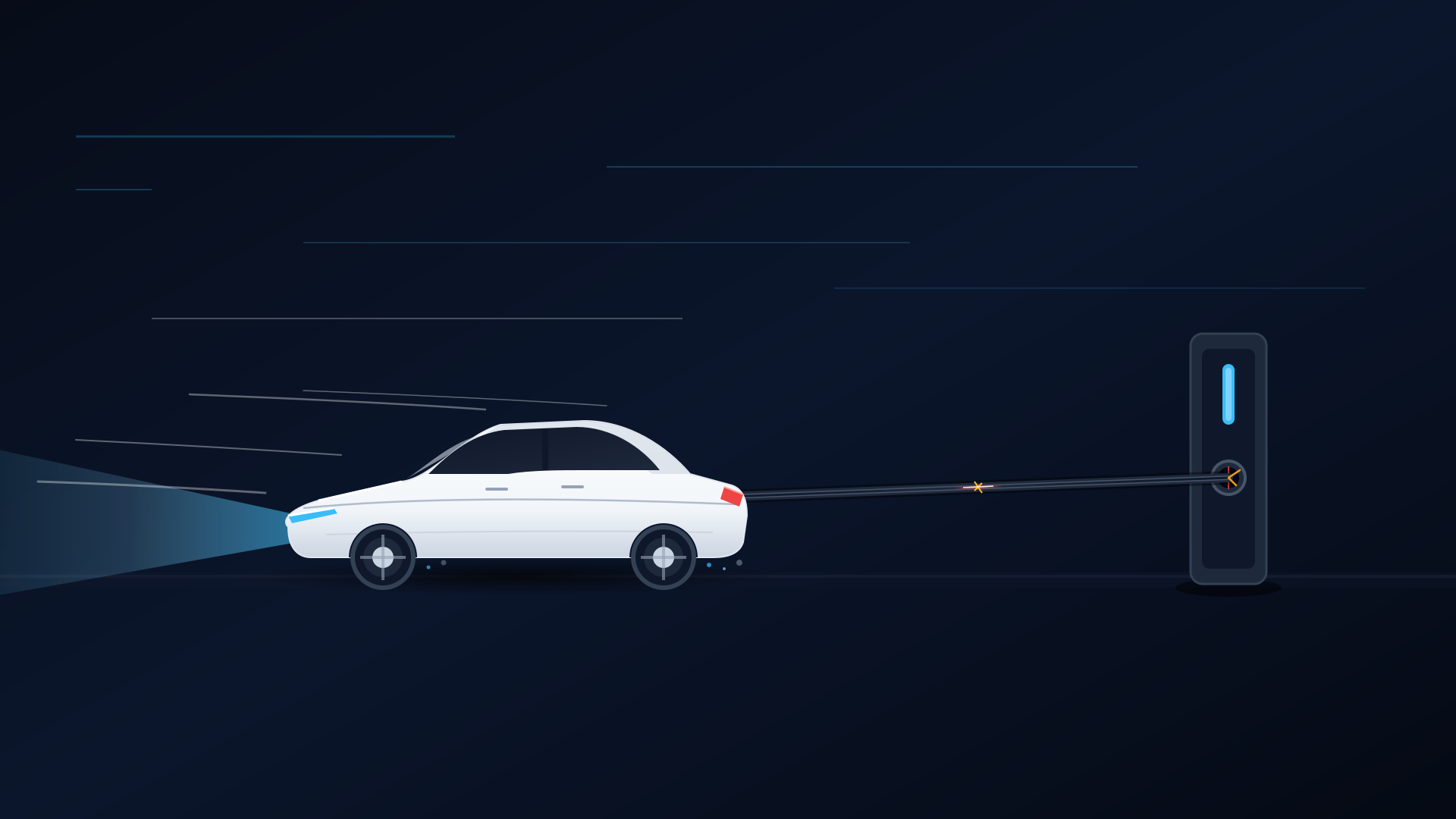
On October 1, Tesla’s charging engineering team posted a 36-second demonstration video on X debuting “Emergency Drive Away.” With firmware 2026.38.3, drivers can shift directly into Drive while actively charging, hold down the brake pedal, confirm a prompt on the touchscreen, and violently pull away with the cable still attached. Tesla’s release omitted any mention of Twin Falls, but the timeline needed no explanation—it arrived precisely two months after the shooting.
Why Charging Handles Are Locked
To understand the change, one must first understand why cars are locked in place at all. Major DC fast-charging standards—including NACS, CCS, and J1772—strictly mandate a mechanical interlock while high-voltage current flows. The lock prevents inadvertent disconnection under load, which would trigger lethal electrical arcing. It is the baseline safety guarantee across every direct-current fast charger on the planet. Regardless of badge or manufacturer, every EV plugged into a rapid charger is tethered by design.
Under ordinary conditions, that interlock protects human life. On the afternoon of August 1, it pinned people in the line of fire.
Tesla was uniquely positioned to dismantle this trap with elegance. Because it owns both the vehicle software and the Supercharger hardware, the entire handshake—cutting high voltage, popping the locking solenoid, and permitting drive-away—operates inside a closed, proprietary protocol stack. Following the Twin Falls tragedy, owner sentiment coalesced around a simple demand: give drivers an in-cabin emergency release switch, even if it carries a software fee.
Trading One Brake Pedal for a Survival Route
The solution delivered in firmware 2026.38.3 takes an uncompromising, mechanical approach:
| Phase | Previous Protocol | Emergency Drive Away |
|---|---|---|
| Shifting while charging | Refused; prompt to disconnect first | Allowed into Drive; triggers warning modal |
| Secondary confirmation | None | Hold brake pedal + tap “Activate” on screen |
| Charge cable | Manually unlock, step out, physically pull | Driven away directly; ripped out by force |
| Subsequent damage | A few lost seconds | Significant damage to vehicle and Supercharger |
Tesla’s on-screen warning pulls no punches: “Use of this feature will damage your vehicle and the Supercharger.” When questioned on X regarding the severity of the damage, the official account cited repair costs reaching up to $25,000 for electrical and structural repairs. The company added that intentional abuse would result in “additional penalties,” without elaborating on what those might entail.
The compatibility matrix also tells an important story: it requires the 2026.38.3 firmware update; pre-2021 Model S and Model X vehicles are excluded; and Tesla confirmed that all Superchargers across the United States support the function without requiring field hardware retrofits. Meanwhile, Canadian Supercharger stalls use the exact same NACS physical interface, yet the feature remains disabled north of the border—an omission Tesla officially characterized as “for now.”
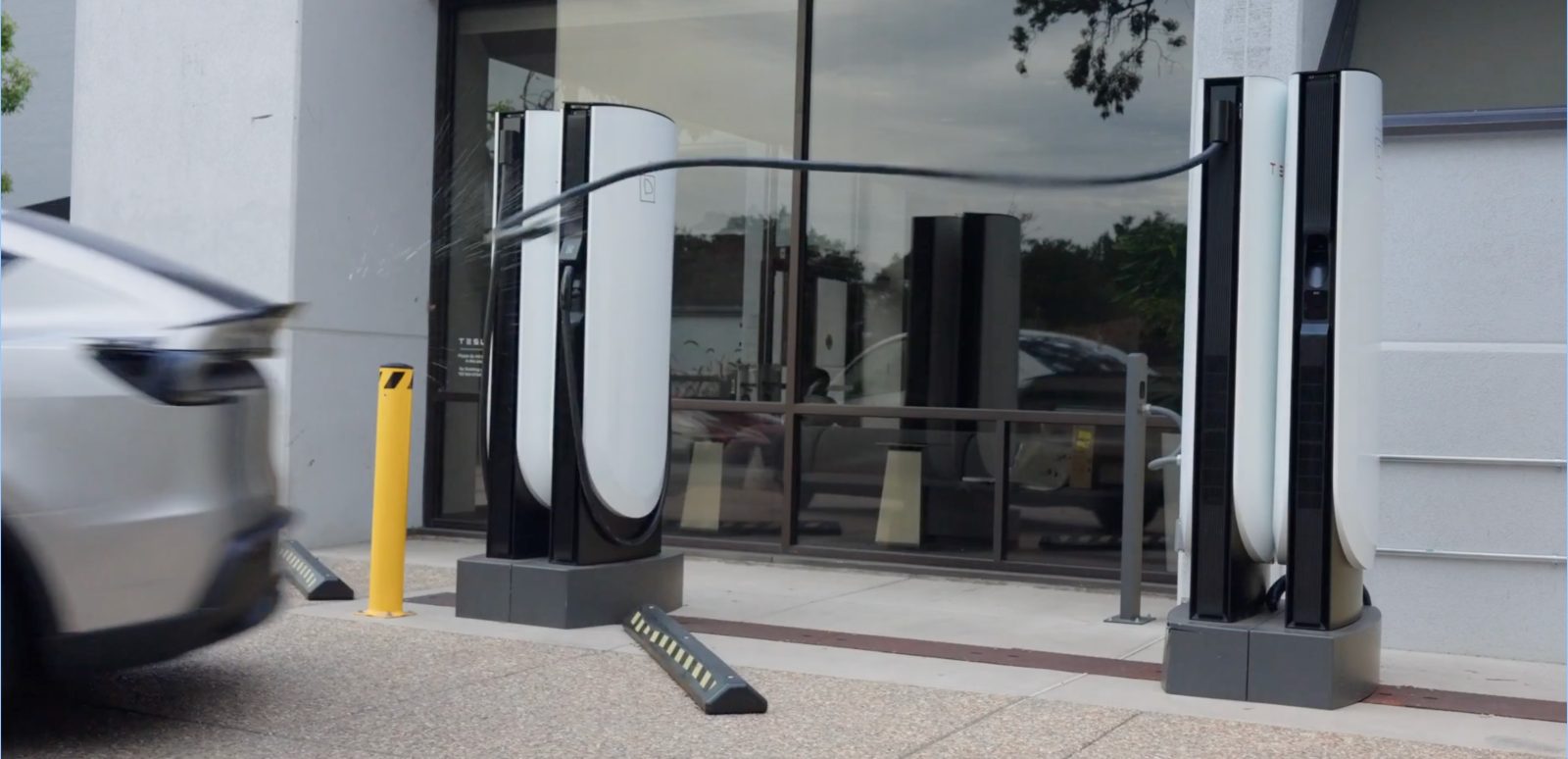 Coverage of Tesla’s Emergency Drive Away feature. Source: electrek.co
An Official EVject Without the Elegance
In the wake of the Idaho shooting, EV communities heavily promoted a third-party accessory called EVject. Selling for $299, it is a sacrificial, breakaway adapter placed between the Supercharger nozzle and the vehicle port. In an emergency, the driver hits the throttle and the adapter separates mechanically without destroying the car’s bodywork. The product has a contentious history: Tesla sued EVject in 2024, alleging that after 30 minutes of high-amperage charging, the adapter surface could reach 100°C without thermal throttling. EVject subsequently revised its thermal design, and Tesla dropped the lawsuit. The Twin Falls incident catapulted an accessory once dragged into federal court into an essential survival gadget.
By comparison, Tesla’s in-house implementation is effectively an “official EVject”—except it foregoes the sacrificial part, choosing brute mechanical tear-out and inevitable body damage. Industry observers had hoped for a graceful implementation: an instant vehicle-to-stall digital signal, immediate contactor opening, solenoid release, and a clean drive-off. Electrek’s follow-up coverage captured the underlying frustration plainly: Tesla simply disabled a software interlock and warned users that their cars would be wrecked.
Physical realities undoubtedly played a role. Superchargers pump hundreds of kilowatts into battery packs. Safely severing that flow requires millisecond-level contactor actuation and active arc suppression, and remotely commanding the mechanical latch requires synchronized stall firmware. Tesla opted against modifying any station hardware, opting strictly for a vehicle-side software override that offloads the physical violence of disconnection to the emergency scene. In terms of turnaround time—shipped within 60 days of the shooting—it was the fastest minimum viable product possible. In terms of engineering finish, it remains an admitted half-measure.
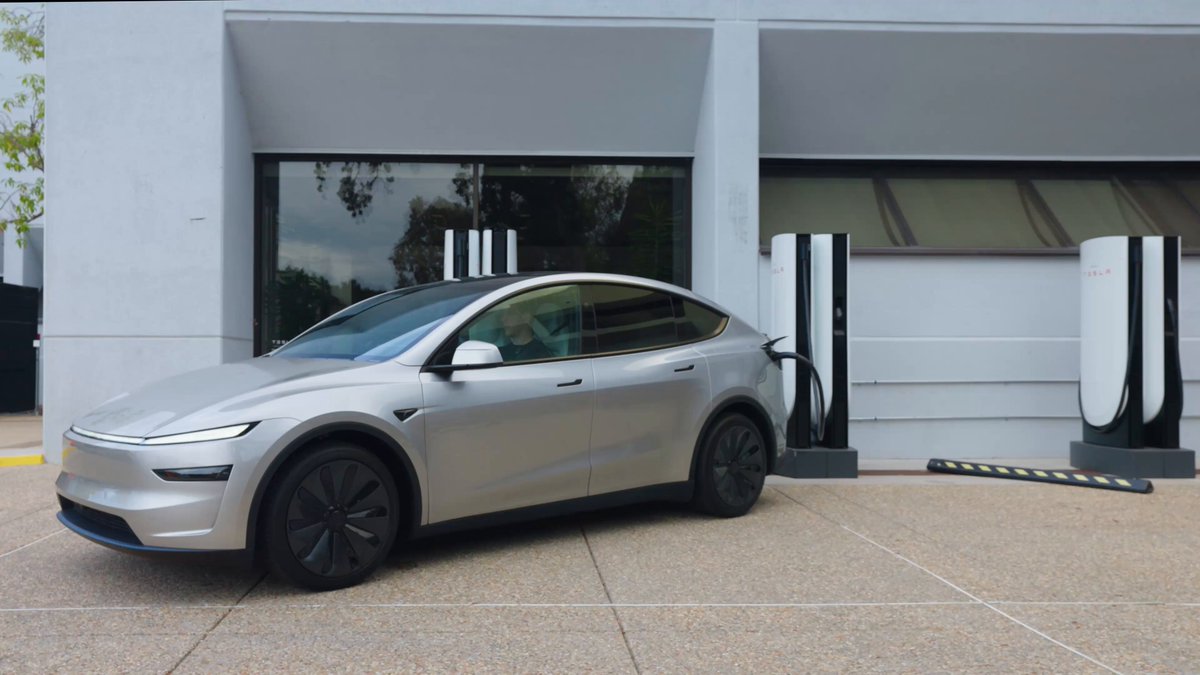 Tesla Charging official demonstration footage. Source: X @TeslaCharging
US-Only: The Geopolitics of a Feature Flag
Restricting a software feature to a single country is technically just a feature flag; sociologically, it represents an uncanny alignment with local market conditions. This marks the second time a Supercharger station has served as the backdrop for fatal gunfire—in 2023, a Colorado driver was shot dead following an argument at a charging stall. That an automotive engineering team wrote a formal product requirement document for “surviving an active shooter while recharging” is a grim milestone that belongs in the historical annals of 2026.
On Hacker News, a top-voted comment crystallized the realization: “I never realized that while charging, you’re a sitting duck.” A reply beneath it drove the point home: “In America, wherever you’re sitting, you’re a sitting duck.” Canadian owners voiced frustration: if the charging standard and hardware are identical, why does personal safety stop at the 49th parallel? Tesla’s silence suggests a harsh calculus—on the global heat map of gun violence risks, only one market glows deep red.
A Reality Audit of the Escape Window
Juxtaposing the polished promotional video against the chaotic reality of an armed assault reveals significant caveats regarding how much protection the feature actually confers:
- In Twin Falls, the assailant approached the vehicles on foot, firing directly through the driver’s side windows. From the initial gunshot to impact, victims would have had to recognize what was happening, shift into Drive, hold the brake, and accurately tap an on-screen dialog. The demonstration was filmed in clinical tranquility; real life offers no such composure.
- The visual design of the confirmation button drew immediate scrutiny. Top commenters on Engadget pointed out that under acute physiological stress, fine motor skills rapidly deteriorate. Requiring an accurate press on a modest-sized “Activate” button represents an anti-pattern in high-stress ergonomics.
- The $25,000 repair liability cuts both ways. While it effectively deters reckless misuse—nobody will tear off a charging port just to beat traffic—Tesla has not stated whether it will waive repair costs for verified life-threatening emergencies. The risk of traumatized victims receiving massive repair bills remains an open liability.
From a systems design perspective, the gatekeeping mechanism is textbook: explicit intent, high friction signaling, and clear consequences for abuse. Yet the deeper engineering debt remains unaddressed at the industry protocol level. True safety demands a standardized, instantaneous stall-side power cutoff and solenoid release, allowing any electric vehicle from any brand to decouple cleanly in an emergency. Until that standard exists, every driver plugged into a DC fast charger shares the same vulnerability. Tesla simply applied a rough patch over its own corner of the problem.
Epilogue
The phrase “software-defined vehicle” has circulated across the automotive sector for over a decade. Usually, it conjures images of autonomous lane changes, customized ambient lighting, or subscription-locked heated seats. In October 2026, the concept gained a somber new application: an over-the-air firmware push that turned fleeing an active shooter from a mechanical impossibility into a software toggle. In two months, Tesla delivered the smallest viable intervention it could—a survival corridor that openly acknowledges it will break hardware.
It is progress, undeniably. Yet the larger solution remains buried in global charging standardization committees, and in social challenges unique to the nation where it debuted. Both are far harder to refactor than a software feature flag.
References: Electrek: Tesla adds Emergency Drive Away at Superchargers after deadly shooting Engadget: Tesla rolls out an emergency drive-away feature after Supercharger shooting Tesla Oracle: Tesla Emergency Drive Away feature can cost $25K in Supercharger damages Wikipedia: 2026 Twin Falls shooting KIVI-TV: Twin Falls police release video breakdown of In-N-Out mass shooting USA Today: Chilling video details Idaho In-N-Out mass shooting Tesla Charging official announcement on X Hacker News Discussion (49931772)