In October 2026, BYD delivered 305,743 battery-electric vehicles (BEVs). According to automotive valuation firm Kelley Blue Book, total pure-electric sales across all brands in the United States barely topped 262,500 units for the entirety of the third quarter. In just one month, a single automaker’s all-electric shipments outpaced three full months of deliveries across the entire US market.
The auto industry often treats figures like these merely as manufacturing milestones. Yet dissecting the month’s delivery mix reveals an internal growth engine that has quietly shifted gears. Plug-in hybrids, long the foundation of BYD’s volume, are tapering off, while pure-electric models are surging aggressively.
The primary momentum behind this BEV surge stems from a doubling of overseas exports. With intense domestic price competition settling down, car carriers laden with hundreds of thousands of electric vehicles are setting sail for distant shores. The Chinese EV leader’s direct competitors are no longer just domestic startups, but entrenched multinational legacy automakers across Europe and Southeast Asia.
Crossing the 300k Monthly BEV Mark Shatters Quarterly Comparisons
According to official monthly delivery disclosures, BYD’s total new energy vehicle (NEV) sales reached 490,168 units in October, marking an 11% increase year-over-year. This represented the company’s highest monthly result of the year, extending month-over-month and annual growth streaks for six consecutive months. Battery-electric vehicle sales specifically hit 305,743 units, climbing 37% year-over-year.
This marks the first time in BYD’s history that monthly pure-electric deliveries crossed the 300,000-vehicle threshold. BEVs accounted for 63% of the automaker’s total volume for the month. The dynamics of past years—relying primarily on low-cost plug-in hybrids to unlock mass-market penetration—have decisively changed.
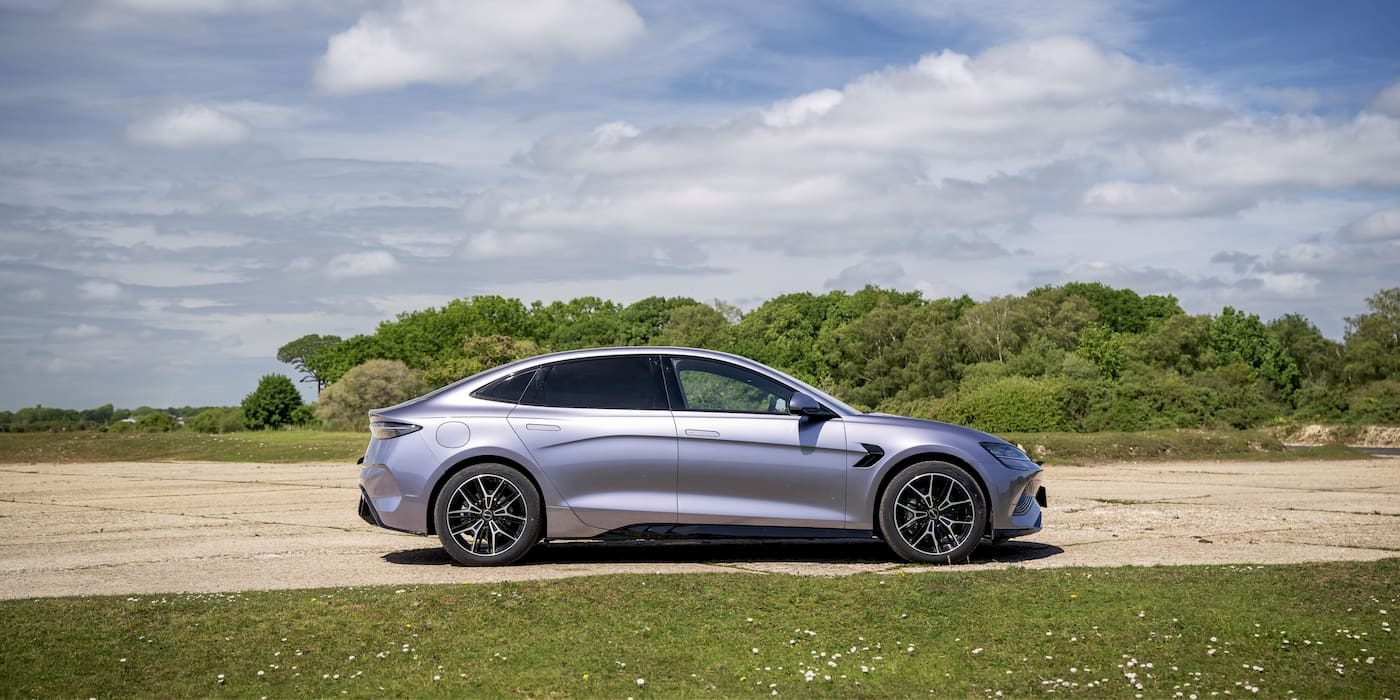 Figure: BYD October sales volume and delivery mix. Source: BYD / Electrek
Compared to North American market figures, the delivery disparity is striking. Even after the US recorded its best quarterly EV sales of the year, its three-month total still lagged behind a single month of BYD’s BEV production. Outstripping an entire nation’s quarterly sales in a single month highlights an order-of-magnitude difference in manufacturing scale and delivery execution. As European and American automakers decelerate their electrification plans, the industrial manufacturing gap between the two sides is widening.
A 20% Slump in Plug-in Hybrids Forces a Strategic Lineup Shift
While pure electrics continue to surge, plug-in hybrid electric vehicles (PHEVs) are showing clear signs of fatigue. In October, BYD sold 177,382 plug-in hybrids, down 17% year-over-year. Year-to-date PHEV deliveries stood at 1,625,969 units, shrinking 11% compared to the same period last year.
Plug-in hybrids have completed their historical trailblazing mission in China’s domestic market. Over the past three years, minimal fuel consumption and competitive pricing enabled PHEVs to breach the defensive lines of joint-venture combustion models. But as competing automakers rapidly deployed similar architectures, domestic growth ceilings for mainstream family PHEVs were reached.
The dividend window of relying purely on plug-in hybrids for volume expansion is closing. Meanwhile, year-to-date BEV sales reached 1,953,700 units, up 6% year-over-year, logging three consecutive months of positive annual growth. The decline of hybrids and the takeover by pure electrics is accelerating a full pivot across the product lineup. The anchor sustaining long-term growth has returned squarely to all-electric models built for mainstream global markets.
Doubling Export Volumes Pushes the Battle to Overseas Ports
With the domestic car market entering a zero-sum phase, incremental shipments are being absorbed almost entirely by export markets. In October, BYD’s overseas sales reached 170,194 units. Across the first ten months of the year, cumulative exports surpassed 1.5 million vehicles—nearly double the volume recorded during the same period last year.
Full-year 2026 overseas shipments are projected to exceed 2 million units, with an internal target eyeing upwards of 2.5 million by 2027. BYD’s proprietary fleet of roll-on/roll-off (Ro-Ro) vessels is in constant motion, ferrying thousands of vehicles to major ports across Europe, Southeast Asia, and Latin America. In-house control over ocean transport capacity has become the essential foundation securing stable delivery timelines abroad.
Going global has redrawn the competitive perimeter. At home, competitors were domestic EV startups; on the high seas, BYD faces the likes of Volkswagen, Toyota, and other multinational legacy giants. Operating custom shipping fleets and establishing local assembly plants bypasses punitive tariffs and shipping bottlenecks, bringing the commercial front line directly to legacy auto’s backyard. The dealership networks long held by legacy brands overseas are now confronting an influx of high-value, cost-competitive pure EVs.
Blade Battery 2.0 and Flash Charging Leapfrog Infrastructure Gaps
The practical challenge confronting electric vehicle exports is the relative immaturity of charging infrastructure abroad. Charging plugs across Europe and Southeast Asia remain fragmented, while aging electrical grids struggle to handle high-wattage fast charging. Legacy multinational automakers frequently cite these infrastructure hurdles as justification to delay their own pure EV development, hoping to protect cash flows from combustion sales.
BYD is countering this infrastructure disparity by pushing premium battery technology downmarket. Several refreshed and new models are rolling off lines equipped with Blade Battery 2.0 and Flash Charging technology, touting significantly longer range and ultra-fast turnaround times. High-voltage fast-charging architectures are now standard equipment across mainstream pricing tiers.
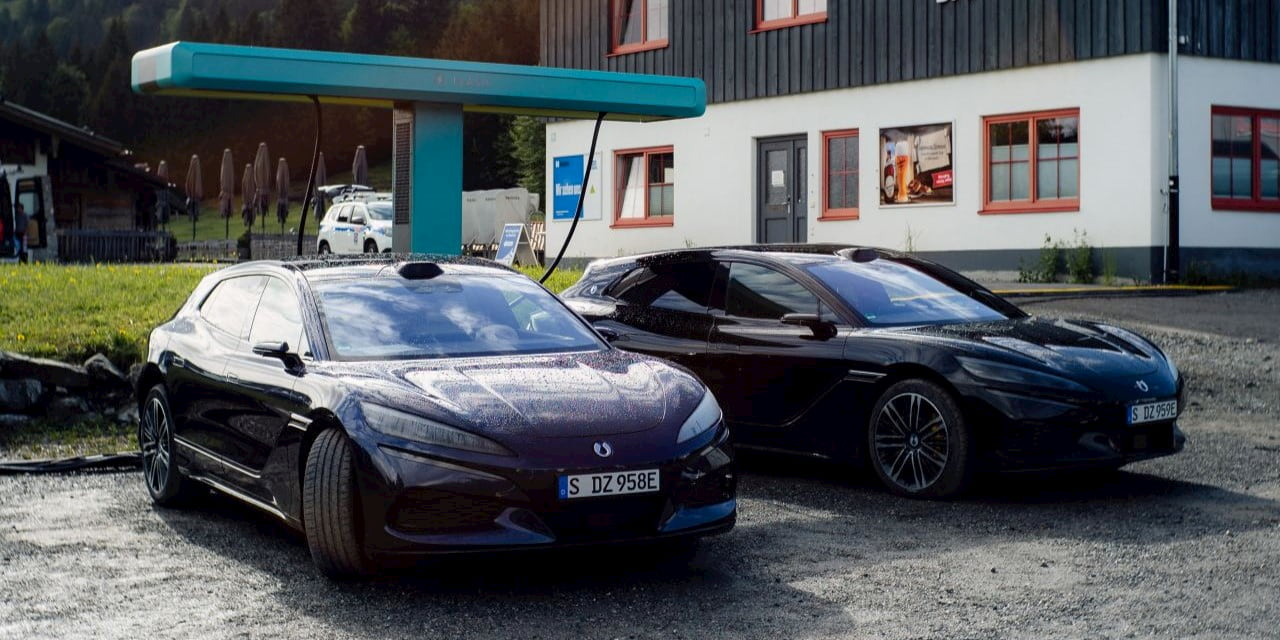 Figure: One of BYD’s first operational Flash Charging stations in Germany. Source: Klaus Hartmann / BYD
Alongside vehicle shipments, charging networks are deploying concurrently. As battery range and fast-charging capabilities bridge infrastructure gaps, combustion vehicles are losing their last real advantage: refueling convenience. Hesitations among international buyers regarding EV efficiency and usability are steadily eroding in the presence of dedicated charging hubs and long-range architectures.
Multinational Giants Retreat Behind Tariff Barriers
Faced with the aggressive international expansion of Chinese electric vehicles, traditional automakers have responded slowly. Major European and American carmakers have repeatedly trimmed their EV budgets, in some cases reversing course to reinvest in internal combustion engines. Meanwhile, several Western governments have erected steep protective tariffs in an attempt to shield domestic incumbents with regulatory walls.
Yet tariffs can do little to reverse the shifting geographic gravity of the global auto industry. China manufactures well over half of the world’s electric vehicles, underpinned by a tightly integrated, highly coordinated supply chain. In open, competitive markets across Latin America and Southeast Asia, legacy multinational brands are seeing their market share compressed rapidly.
Delivering over 300,000 pure-electric vehicles in a single month marks a defining inflection point in global automotive competition. Plug-in hybrids continue to defend the home turf in China, while pure BEVs capture territory on the international stage. With its growth engine shifting decisively overseas, China’s EV leader is now locked in a head-to-head battle with multinational legacy giants defending their native home markets.
Reference Links:
- Electrek Report
- BYD Official Sales Release
- Kelley Blue Book Q3 Electric Vehicle Sales Report