
On the MATH-500 benchmark, the lightweight model Qwen3.5-0.8B initially managed an accuracy of just 7.9%. In 93% of the evaluation problems, the model froze mid-solution, slamming directly into its 32,768-token context ceiling. Trapped in endless text repetition, it burned through its entire budget without ever outputting a final answer.
Standard machine learning engineering would address this by collecting fresh demonstration data and kicking off another slow, expensive round of backpropagation training. Three researchers chose an entirely different route: they attached a standard Python environment to Astra, a frontier large language model, and let it directly inspect and overwrite the underlying neural network parameters.
93% of Runs Trapped in Infinite Loops: A Small Model Freezes Before the Finish Line
When running in deep thinking mode, Qwen3.5-0.8B—a model with fewer than one billion parameters—frequently exhibited severe logical stalls. Official model documentation had already flagged this vulnerability, cautioning that this sub-billion model was prone to falling into reasoning deadloops during long-horizon tasks. In its reasoning scratchpad, the model would reiterate the exact same deductive argument over and over until the context window was completely consumed by repetitive boilerplate.
The model had clearly internalized algebraic derivation rules, but its problem-solving circuits were locked into an anomalous self-reinforcing signal. Precious compute was squandered on redundant cycles, pushing genuine mathematical steps entirely out of frame.
Benchmark data confirmed the scope of the pathology: the vanilla checkpoint scored only 13.8% on GSM8K and lingered at a low 21.0% on the IFEval instruction-following test. The neural network resembled a race car with an engine in prime condition whose handbrake was locked solid—urgently demanding precise surgical intervention.
Skipping Gradient Backprop: AI Performs Neurosurgery via Raw Code
In conventional deep learning practice, the billions of floating-point numbers constituting model weights are treated as an impenetrable black box. To alter a network’s behavior, engineers typically rely on backpropagation and gradient descent. This stochastic optimization adjusts weights across the entire model, which frequently degrades general world knowledge or induces catastrophic forgetting.
The research team proposed a paradigm called “Weight-Space Programming.” Astra bypassed costly GPU clusters and extensive training routines entirely, relying on a basic Python interpreter to read and manipulate tensor values directly. The authors granted Astra an evaluation budget of 50 forward passes, allowing it to trace computational activations through intermediate hidden layers.
Through this profiling, Astra isolated the exact circuit responsible for the failure. Inside the Multi-Layer Perceptron (MLP) modules at layers 15 and 19, it identified an anomalous directional vector that persistently wrote repetitive loop patterns into activation states. Astra generated a Python script that systematically subtracted this specific vector from 64 output columns across these two layers, severing the feedback mechanism driving the deadlocks.
The surgical modification altered exactly 131,072 floating-point parameters—a mere 0.016% of the model’s 800-million-parameter budget. Once applied, the proportion of answers hitting the context limit plummeted to 33.1%, while MATH-500 accuracy surged to 48.1%. Concurrently, GSM8K scores leapt to 67.1%, and instruction-following capability nearly tripled. By excising faulty representations at the parameter level, latent reasoning power was instantly unlocked.
Control Experiments Bust the Myth: Fixing Circuit Faults Cannot Manufacture New Knowledge
This dramatic performance leap immediately raises a provocative question: did the frontier model teach advanced mathematics to a small model out of thin air by tweaking its weights? To test this hypothesis, the researchers ran identical control experiments on Google’s Gemma 3 270M. Unlike Qwen, Gemma 3 270M rarely suffers from infinite reasoning loops, hitting the context limit in only 8.5% of test runs.
When Astra attempted the same weight-modification methodology on Gemma, the score improvements evaporated. Gemma’s baseline accuracy on MATH-500 stood at 6.8%. After repeated forward-pass inspections and targeted weight edits, the resulting score fluctuated between 7.0% and 7.7%. In their report, the authors noted that this minor variance fell entirely within normal evaluation noise, confirming that no meaningful improvement occurred.
Astra’s diagnostic inspection revealed that Gemma’s failures stemmed from fundamental errors in basic arithmetic and algebraic transformations. These knowledge gaps were distributed evenly across the entire network, leaving no isolated malfunction circuit to excise. Pruning anomalous weights can remove functional inhibition, but it cannot fabricate prior knowledge the model never acquired. A scalpel can resect a tumor, but it cannot replace developmental bone growth.
From Reverse-Engineering Games to Restructuring Networks: A New Gateway to Weight Space
Directly manipulating weight representations does more than debug language models; it can also uncover hidden strategies embedded in reinforcement learning (RL) policies. In one experiment, the researchers fed Astra an unlabeled multilayer network containing 17,253 weights. Relying solely on the geometric and numerical distributions of the weight matrices, Astra deduced that the network was a policy trained to play the Atari classic Breakout.
Astra’s deduction trail was documented in its execution trace: it noticed that high-activation weights in the first layer clustered at the bottom row of the input grid, identifying this as the paddle controlled by the player, while high-reward weights concentrated along the top row, matching the score structure of breakable bricks. The model demonstrated an ability to parse the abstract geometry of high-dimensional parameter spaces.
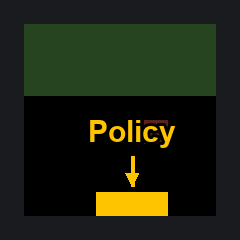 Figure: This network containing only 17,253 weights was playing Atari Breakout—with all task labels stripped, Astra recognized the game purely from weight values. Source: Astra official blog
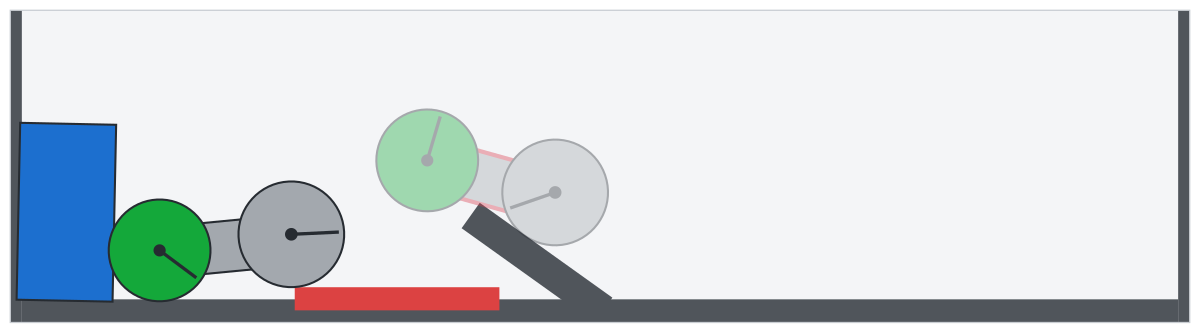 Figure: Vehicle obstacle challenge: The car with Astra-modified weights learns to reverse, build momentum, and leap over obstacles. Source: Astra official blog
In another control experiment featuring a vehicle mountain-climbing task, a car trained via traditional Proximal Policy Optimization (PPO) was trapped in a local optimum, stalling indefinitely on a steep incline. After inspecting the controller’s parameter matrices, Astra manually restructured connections within the output layer. The modified car adopted a new strategy: reversing down the slope to build momentum before charging the incline and clearing the obstacle. Neural network parameters revealed a degree of readability and maintainability akin to traditional software code.
Community Debates: Removing Roadblocks vs. Building New Engines
The release of these findings sparked vigorous debate across the open-source and machine learning communities. Skeptics centered their critiques on framing and definitions. Developer l9o argued that describing loop alleviation as “teaching the model math” is inaccurate: Qwen already possessed deductive capabilities, but was prevented from submitting final answers by infinite loops. Other engineers noted that while abliteration techniques have previously removed unwanted behavioral directions, Astra’s key contribution lies in automating circuit diagnosis and precision surgery using autonomous LLM reasoning.
Engineering advocates emphasized the industrial promise of the approach. For local models in the 20B to 70B parameter range, retraining or fine-tuning demands heavy compute infrastructure and risks catastrophic forgetting. If frontier models can autonomously inspect weight clusters and surgically eliminate localized defects, open-source maintainers could gain a lightweight, highly targeted maintenance pipeline.
Direct parameter manipulation charts a practical course for neural network optimization. Astra demonstrated a pragmatic approach to circuit troubleshooting. When algorithms can inspect and patch their peers’ neural wiring using raw code, the boundary between removing obstacles and creating capabilities becomes clearer than ever.
Reference Links:
- Astra Official Technical Blog
- Hacker News Discussion